Birth in Wuxi
Born on the 14th day of the 2nd month in Wuxi, Changzhou, into an esteemed scholarly household; displayed child prodigy talents.
尤袤
You Mao (尤袤, 1127–1194), courtesy name Yanzhi (延之), art name Suichu Recluse (遂初居士), and posthumously titled Wenjian (文简), was an illustrious literary master, celebrated bibliophile, and upright statesman of the Southern Song Dynasty from Wuxi, Changzhou. Alongside Yang Wanli, Fan Chengda, and Lu You, he was celebrated as one of the Four Great Masters of Southern Song Poetry. In 1148, during the reign of Emperor Gaozong, You…
You Mao (尤袤, 1127–1194), courtesy name Yanzhi (延之), art name Suichu Recluse (遂初居士), and posthumously titled Wenjian (文简), was an illustrious literary master, celebrated bibliophile, and upright statesman of the Southern Song Dynasty from Wuxi, Changzhou. Alongside Yang Wanli, Fan Chengda, and Lu You, he was celebrated as one of the Four Great Masters of Southern Song Poetry. In 1148, during the reign of Emperor Gaozong, You Mao passed the imperial examination as a jinshi. Early in his bureaucratic career as magistrate of Taixing, he abolished abusive local exactions and fortified the city ramparts; when Jurchen armies under Wanyan Liang launched a massive invasion across the Huai River in 1161, sacking neighboring prefectures, Taixing stood alone unscathed behind its sturdy walls, prompting grateful townsmen to erect a living shrine in his honor. Entering the imperial court, he served as Assistant Director of the Palace Library, Junior Compiler of Historiography Academy, and Reader-in-Waiting to the Heir Apparent, before being transferred to govern Taizhou after opposing the elevation of royal in-laws to the Bureau of Military Affairs. In Taizhou, he remitted poll taxes for over thirteen thousand landless peasant households and constructed formidable stone embankments that preserved the urban core against torrential floods. Impressed by secret reports of popular acclaim and his poetic talent in the Donghu verses, Emperor Xiaozong appointed him Ever-Normal Granary Commissioner of Eastern Huai and Eastern Jiangnan. During his tenures in Jiangnan and as Transport Commissioner of a Circuit in Jiangxi, You Mao vigorously implemented Zhu Xi's innovative famine-relief policies, remitting rent for destitute tenants and preserving countless lives from starvation. Returning to the capital under Emperor Xiaozong, he advanced to Vice Minister of the Court of Imperial Sacrifices and Provisional Vice Minister of Rites, successfully resolving contentious court debates by securing the temple name of Emperor Gaozong over rival proposals. Under Emperor Guangzong, You Mao was elevated to Palace Remonstrance Official and Minister of Rites, presiding over the Chancellery's power of imperial remonstrance. Confronting the emperor's arbitrary promotions, nepotism, and court indulgences, You Mao fearlessly returned more than ten irregular imperial decrees, decisively halting the unearned promotions of palace eunuchs and imperial relative Han Tuozhou. Even when the enraged monarch tore his memorials to pieces in the throne room, You Mao refused to compromise, shelving the improper edicts and preserving institutional law. A passionate bibliophile known as the Living Bookcase, You Mao assembled over thirty thousand volumes in his Suichu Hall, transcribed thousands of manuscripts by hand, and compiled the Suichu Hall Catalogue, China's earliest extant milestone in edition bibliography. He died in 1194 at age sixty-eight and was posthumously honored as Grand Master of the Palace with Golden Seal and Purple Ribbon and bestowed the posthumous name Wenjian.
Born on the 14th day of the 2nd month in Wuxi, Changzhou, into an esteemed scholarly household; displayed child prodigy talents.
Passed the jinshi examination in the highest tier; waited seven years in scholarly retirement before receiving official posting.
Appointed Magistrate of Taixing; eliminated predatory corvee levies and rebuilt outer city ramparts.
Jurchen armies invaded the Huai region and captured surrounding cities; Taixing alone survived intact due to its fortified defenses.
Demoted from Reader-in-Waiting to the Heir Apparent to Prefect of Taizhou after protesting the elevation of imperial in-law Zhang Shuo.
Remitted taxes for thirteen thousand poor households and heightened city dikes, winning the deep admiration of Emperor Xiaozong.
Promoted to Ever-Normal Granary Commissioner and Transport Commissioner of a Circuit for Jiangxi; implemented Zhu Xi's famine relief models.
Elevated to Vice Minister of the Court of Imperial Sacrifices and Provisional Vice Minister of Rites; decisively settled Gaozong's imperial temple name.
Emperor Guangzong ascended the throne; You Mao admonished the new monarch against favoritism and checked Han Tuozhou's early ambitions.
Returned irregular imperial decrees granting unearned military titles; Emperor Guangzong tore the memorial in fury, yet You Mao held firm.
Promoted to Minister of Rites; repeatedly persuaded Emperor Guangzong to visit the Chonghua Palace to comfort Emperor Xiaozong.
Passed away from exhaustion at his estate in Wuxi at age sixty-eight; posthumously granted Grand Master of the Palace with Golden Seal and Purple Ribbon and titled Wenjian.
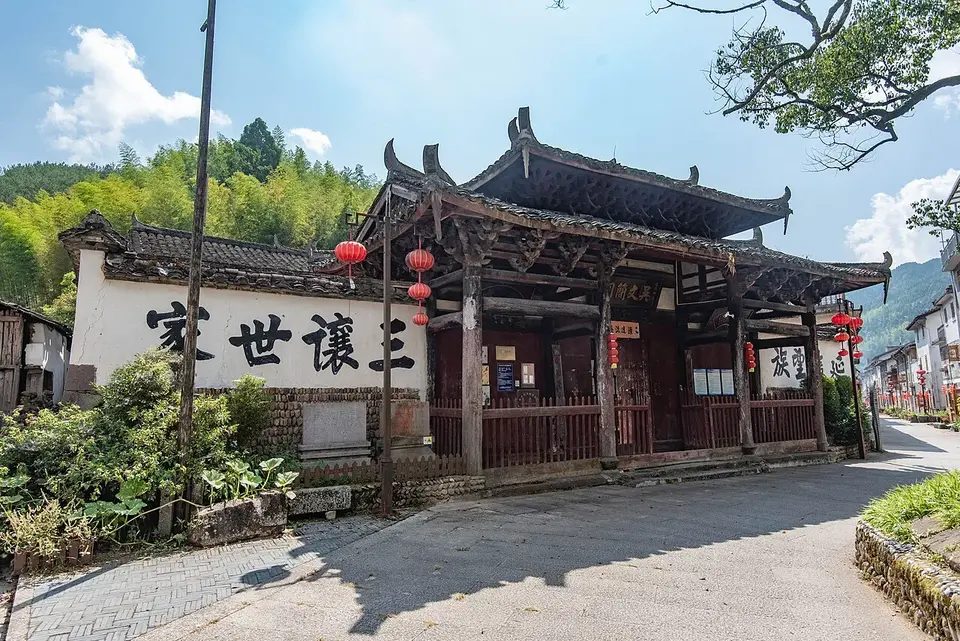
You Mao was born on the fourteenth day of the second month in 1127, the second year of Jingkang, amidst the catastrophic collapse of the Northern Song Dynasty. His father You Shibao led the family south, establishing their estate along the scenic Liangxi River in Wuxi, Changzhou. Immersed in classical letters from infancy, You Mao displayed astonishing precocity: he composed sophisticated verses at age five, earned widespread renown as a child prodigy at age ten, and dominated literary salons across the Piling region by age fifteen with his brilliant rhymed prose. Prominent literati Jiang Xie and Shi Jiong proclaimed him an unparalleled genius of the age.
In 1148, the eighteenth year of the Shaoxing era under Emperor Gaozong, the twenty-two-year-old You Mao triumphed in the metropolitan examinations, earning top honors in the Ministry of Rites test. Appointed initially as an education instructor in Jiangyin, You Mao faced administrative waiting lists and waited seven years for formal assignment. Rather than lamenting delay, he utilized these seven quiet years to devour historical chronicles, classical exegesis, and institutional treatises, laying a monumental foundation of scholarship. In 1160, he was named magistrate of Taixing, a vulnerable frontline county along the lower Yangtze and Huai frontier. Discovering that local peasants were crushed by exorbitant extortion under the guise of provisioning Jurchen diplomatic missions and transporting straw levies, You Mao boldly petitioned superior commanders and secured the total abolition of both abuses. Furthermore, recognizing that Taixing's ancient ramparts lay in ruins, he mobilized local civilian battalions to reconstruct a towering exterior wall. In the tenth month of 1161, Jurchen ruler Wanyan Liang violated the peace accord and invaded with a massive army; while major urban centers such as Yangzhou and Zhenzhou were captured and ravaged, Taixing stood entirely unharmed behind its formidable stone walls. When You Mao revisited the county years later, thousands of residents knelt by the roadside weeping with gratitude, acclaiming him as their protective father and dedicating a living shrine in his honor.
Recognizing his administrative brilliance and incorruptible character, senior ministers Chen Junqing and Yu Yunwen recommended You Mao to the court. Following the accession of Emperor Xiaozong, You Mao was summoned to the capital and appointed Grand Judge of the Imperial Clan, later transferring to Assistant Director of the Palace Library, Junior Compiler of Historiography Academy, and Examining Editor of the True Records Institute, before advancing to Gentleman Compiler and Reader-in-Waiting to the Heir Apparent. Eminent philosopher Zhang Shi inspected the library and lauded You Mao as a genuine master of imperial archives.
In 1172, Emperor Xiaozong favored imperial relative Zhang Shuo, intending to elevate him as Assistant Commissioner for Military Affairs. Outraged by this subversion of meritocracy, senior courtiers resigned in protest, while You Mao led the scholars of the three imperial libraries in submitting fierce petitions and categorically refused to pay court to Zhang Shuo. Zhang retaliated through covert palace slanders, securing the dismissal of Grand Councilor Liang Kejia and engineering You Mao's demotion as Prefect of Taizhou in late 1173. Arriving in coastal Taizhou, You Mao discovered that over thirteen thousand destitute households without arable land were forced to pay double poll taxes. He immediately petitioned the throne and erased these arrears. Furthermore, observing that previous prefect Zhao Ruyu had constructed only a fraction of the city wall in flimsy fashion, You Mao directed the complete rebuilding of the ramparts into a massive stone barrier within several months. The following year, a historic tidal flood battered the coast; while neighboring areas were inundated, the roaring torrent struck Taizhou's newly heightened walls without breaching them, saving tens of thousands of urban residents from drowning.
Envious courtiers back in Kaifeng attempted to slander You Mao, prompting Emperor Xiaozong to dispatch a confidential investigator to inspect Taizhou in secret. The investigator encountered universal public reverence for the prefect and returned to court with transcripts of You Mao's Donghu poems, which laid bare the hardships of governing through verses such as: A hundred festering wounds require gentle soothing, yet the official is ashamed of clumsiness in demanding grain. Deeply touched by You Mao's selfless dedication to popular welfare, Emperor Xiaozong discarded all suspicion and promoted him to Ever-Normal Granary Commissioner of Eastern Huai, later transferring him to Eastern Jiangnan.
Serving as Ever-Normal Granary Commissioner in Eastern Jiangnan during a severe drought, You Mao traveled alone by light carriage through distressed counties, auditing grain depots and coordinating emergency food loans across circuits. When eminent philosopher Zhu Xi served as Prefect of Nankang and developed an innovative famine relief system that fully exempted tenants cultivating small parcels, You Mao recognized its brilliance and systematically enforced the policy throughout his jurisdiction, ensuring that not a single starving peasant perished. For these achievements, he was appointed Auxiliary of the Imperial Archives and Transport Commissioner of a Circuit for Jiangxi concurrently Prefect of Longxing.
In 1182, upon the strong recommendation of Liang Kejia, Emperor Xiaozong recalled You Mao to Kaifeng as an official in the Ministry of Personnel and Expositor-in-waiting of the Heir Apparent, subsequently advancing him to Examiner of the Bureau of Military Affairs and Left Companion for the Heir Apparent. During the severe summer drought of 1183, Emperor Xiaozong issued an edict soliciting unvarnished political critiques. You Mao submitted his renowned memorial on the Eight Sources of Public Resentment, offering a blistering analysis of imperial administrative decay: Crushing tax extraction causes peasant resentment; predatory customs tolls cause merchant resentment; bureaucratic delays cause literati resentment; diminished army stipends cause soldier resentment; sluggish trial verdicts cause prisoner resentment; unredressed injustices cause victim resentment; pardoning violent murderers causes the slain to resent; and delayed state payments cause petty peddler resentment. He implored the monarch to reform governance and restore harmonious balance to the realm, creating an electrifying impression across the court.
In late 1187, on the eve of Emperor Gaozong's death, You Mao was elevated to Vice Minister of the Court of Imperial Sacrifices. In the chaotic aftermath of the sovereign's demise, ancient funerary rites were scattered and ministers were bewildered; all complex ritual negotiations were entrusted to You Mao, who adjusted classical protocols with flawless decorum. When eminent scholar Hong Mai insisted that Gaozong should be granted the temple title of Shizu (Generational Progenitor) in imitation of Emperor Guangwu of Han, You Mao led ritual officials in resolute opposition, demonstrating that in dynastic ancestral law, progenitor titles belonged exclusively to founders Taizu and Taizong, whereas Gaozong inherited dynastic legitimacy as a direct royal son. The assembled court adopted You Mao's judgment, officially confirming the temple title of Emperor Gaozong.
In early 1189, Emperor Xiaozong abdicated to Crown Prince Zhao Dun, who ascended the throne as Emperor Guangzong. Having served as the prince's tutor, You Mao was appointed Provisional Secretariat Drafter concurrently Auxiliary Hanlin Academician, drafting historic abdication and accession edicts whose classical elegance won universal acclaim. Within two weeks of Guangzong's coronation, You Mao stood before the imperial lecture altar, delivering a solemn warning: All matters under heaven are lost at the very beginning; if one stumbles at the outset, subsequent ruin cannot be averted. Citing Emperor Taizong of Tang's refusal to favor personal retainers, You Mao urged the new monarch to guard against favoritism and refrain from arbitrary promotions.
However, Emperor Guangzong proved weak-willed and erratic, indulging palace favorites and allowing sycophantic courtiers such as Jiang Teli to dominate affairs. Factional adversaries slandered You Mao as a partisan of retired chancellor Zhou Bida, forcing his temporary reassignment as Prefect of Wuzhou and Taiping. In 1190, Guangzong recalled him to Kaifeng as Palace Remonstrance Official. Assuming control over the Chancellery's remonstrance apparatus, You Mao declared to his colleagues: I am an old man with nothing to lose; whenever imperial relatives or palace favorites seek improper appointments that violate state law, even if conveyed by direct imperial decree, I will resign before I execute them!
Within days of taking office, when four favored eunuchs sought promotion to executive military ranks, You Mao submitted three consecutive remonstrance memorials, blocking the appointments. Soon afterward, imperial relative Han Tuozhou, then serving as Grand Master of Military Merit and Defense Commissioner of Hezhou, sought to bypass statutory regulations and jump multiple bureaucratic grades on the pretext of ceremonial service. When Guangzong issued a personal rescript commanding execution, You Mao boldly counter-memorialized, exposing that Han had already been promoted twenty-seven years ahead of lawful schedule and that granting further unearned ranks would degrade imperial honors into private patronage. His defiance completely blocked Han Tuozhou's ambition, provoking Han's lifelong enmity.
During the Shaoxi era, Emperor Guangzong became estranged from his father, Retired Emperor Xiaozong, refusing to visit the Chonghua Palace to pay filial respects. Deeply alarmed by rumors destabilizing the realm, You Mao and Vice Minister Lou Yue submitted joint memorials urging the emperor to fulfill filial obligations. Through You Mao's persistent remonstrances, Guangzong reluctantly visited the retirement palace, briefly restoring civilian confidence.
However, Guangzong's mental instability deepened. Bypassing regular civil procedures, the emperor issued an arbitrary decree appointing palace favorite Yelu Shimo as Pacification Commissioner. You Mao rejected the decree twice. When Guangzong issued an absolute command ordering execution, You Mao returned a third impassioned protest: The empire belongs to the ancestral founders, and official honors belong to the ancestral founders; how can Your Majesty take ancestral honors and squander them upon men condemned by public opinion? Enraged by this unbending defiance, Emperor Guangzong ripped You Mao's memorial into shreds before the court. Undaunted, You Mao instructed Chancellery clerks to archive the torn fragments and refused to issue the appointment, effectively nullifying the imperial command.
Recognizing You Mao's peerless prestige, the court elevated him to Minister of Rites. Yet, witnessing Guangzong's descent into madness and the rise of unscrupulous sycophants, You Mao fell gravely ill from sorrow and exhaustion. He repeatedly petitioned to retire to his estate in Wuxi, but his requests were ignored. In his dying testament, You Mao expended his final strength urging the monarch to honor his imperial father, practice diligent administration, and protect virtuous scholars. On the fourteenth day of the second month of 1194, You Mao died peacefully in his Liangxi residence at age sixty-eight. Emperor Guangzong was stunned by the loss and posthumously conferred upon him the title Grand Master of the Palace with Golden Seal and Purple Ribbon. In 1212, during the reign of Emperor Ningzong, he was granted the posthumous title Wenjian.
You Mao's most enduring scholarly achievement was his creation of China's earliest systematic work of edition bibliography, the Suichu Hall Catalogue (Suichu tang shumu). A bibliophile of legendary proportions, You Mao devoted his life to assembling rare manuscripts, earning the contemporary moniker The Living Bookcase.
Taking advantage of his decades of service within the imperial archives and libraries, You Mao transcribed over three thousand rare books by hand with the help of his family, famously declaring: When hungry I read books as meat; when cold I read them as furs; when lonely I read them as friends; and when sorrowful I read them as music. At his Suichu Hall in Wuxi, he gathered more than thirty thousand volumes, including complete sets of Northern Song imperial dynastic records and rare regional imprints. Based on this monumental collection, You Mao compiled the Suichu tang shumu in one volume, categorizing over 3,200 titles across forty-four subheadings. Uniquely in Chinese bibliographical history, he recorded multiple distinct print editions (such as Sichuan imprints, Zhejiang imprints, and palace editions) for individual works, inaugurating the modern discipline of comparative edition studies.
Alongside Lu You, Yang Wanli, and Fan Chengda, You Mao stood as one of the Four Great Masters of Southern Song Poetry. In an era dominated by the artificial diction of the Jiangxi poetic tradition, You Mao spearheaded a literary revolution toward naturalness, emotional sincerity, and patriotic engagement.
His poetry was distinguished by crystalline clarity and profound social concern, capturing the suffering of commoners and the tragedy of dynastic dismemberment. His famous Huai River Ballad (Huai min yao) recorded the devastation of civilian populations following Jurchen incursions, serving as an irreplaceable historical witness to the human cost of the border wars. Although the majority of his sixty-volume poetic corpus was lost to fire after his death, the surviving verses compiled by his descendants in the Liangxi yigao remain revered as pinnacles of Southern Song lyric art.
During his tenure as magistrate of Taixing in 1160, You Mao demonstrated rare military vision and civil courage. Recognizing that peace accords with the Jurchen Jin dynasty were fragile, he prioritized the fortification of the frontier county, organizing the construction of an expansive stone exterior wall.
When Wanyan Liang's armies surged across the Huai River in 1161, laying waste to the entire region and reducing neighboring garrison cities to ash, Taixing's new defenses repulsed every assault. Through You Mao's foresight, the lives of more than one hundred thousand civilians were safeguarded, establishing an extraordinary historical model of local civil administration preserving national stability.
Serving as Palace Remonstrance Official and Minister of Rites, You Mao was the foremost guardian of constitutional governance during the tumultuous reigns of Emperors Xiaozong and Guangzong. At a time when royal in-laws and corrupt eunuchs sought to dismantle bureaucratic protocols, You Mao restored the integrity of the Chancellery's remonstrance mechanism.
He systematically intercepted irregular palace decrees, thwarted the premature promotion of future dictator Han Tuozhou, and defended the legitimacy of Neo-Confucian Cheng-Zhu scholars against hostile political purges. His courageous willingness to have his memorials torn to pieces rather than surrender institutional principle established him as one of the most morally resolute civil ministers of the Song Dynasty.
FIGURES ASSOCIATED WITH THIS DYNASTY