Birth in Gusu
Born in Xietang Town, Changzhou County, Suzhou Prefecture, into a classical scholarly family.
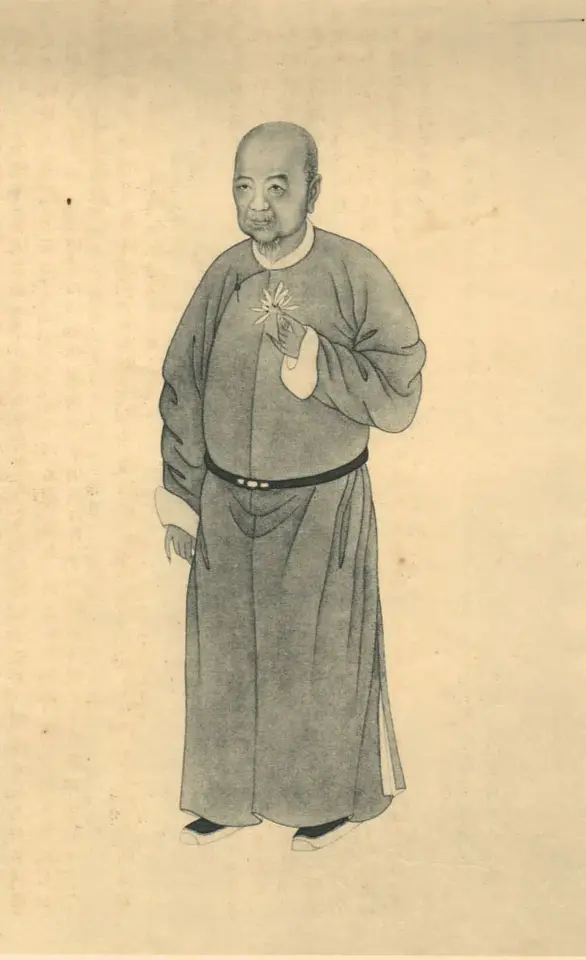
尤侗
You Tong (1618–1704), courtesy names Tongren and Zhancheng, art names Genzhai, Xitang, Hui'an, and Hepiao Daoren, was a native of Changzhou County (modern Suzhou), Suzhou Prefecture, Jiangsu Province. He was an eminent early Qing dynasty literary figure, dramatist, poet, and historian. Acclaimed nationwide for exuberant creative brilliance and encyclopedic erudition, he was celebrated alongside Wang Shizhen, Wang Wan, and…
You Tong (1618–1704), courtesy names Tongren and Zhancheng, art names Genzhai, Xitang, Hui'an, and Hepiao Daoren, was a native of Changzhou County (modern Suzhou), Suzhou Prefecture, Jiangsu Province. He was an eminent early Qing dynasty literary figure, dramatist, poet, and historian. Acclaimed nationwide for exuberant creative brilliance and encyclopedic erudition, he was celebrated alongside Wang Shizhen, Wang Wan, and Song Wan as one of the preeminent geniuses of his generation. Recognized as a child prodigy from an early age, You nonetheless experienced persistent setbacks in the civil service examinations. Under the Qing dynasty, he qualified through court evaluation as a senior licentiate and was appointed judicial commissioner (tuiguan) of Yongping Prefecture in Zhili in 1652. In office, he impartially enforced the law, vigorously resisting the enclosure of civilian farmland by Manchu banner grandees and redressing miscarriages of justice, which won him deep popular affection. However, after caning an abusive bonded servant who had falsely accused commoners, he fell foul of early Qing regulations shielding banner households. Slandered by hostile bureaucrats, he indignantly resigned his post in 1656. Retiring to his Xitang studio in Suzhou, he devoted himself to dramatic writing and classical literature. His chuanqi opera Juntian Yue (Celestial Music) and five zaju dramas created a literary sensation, while his celebrated essay analyzing an amorous glance from Romance of the Western Chamber deeply captivated the Shunzhi Emperor. In 1679, the Kangxi Emperor convened the prestigious Boxue Hongci special examination. The sixty-one-year-old You passed and was granted the post of examining editor in the Hanlin Academy, assigned to compile the official History of Ming (Ming Shi). There, he authored more than three hundred biographies and compiled the five-volume Bibliographical Treatise (Yiwenzhi), earning high acclaim from contemporaries. In 1682, upon his eldest son You Zhen passing the metropolitan examinations, You retired to live in Suzhou for more than two decades. During his southern inspection tours through Suzhou, the Kangxi Emperor repeatedly summoned him, bestowing an imperial calligraphic plaque reading "Cranes Perched in Lofty Shade," imperial poetry, and promotions to expositor and reader of the Hanlin Academy. He passed away at home in 1704 at age eighty-seven. His legacy is preserved in Juntian Yue, Xitang Yuefu, and his 100-volume compilation Xitang Quanji.
Born in Xietang Town, Changzhou County, Suzhou Prefecture, into a classical scholarly family.
Took refuge in the countryside during the Qing conquest; placed first in the Changzhou county examination to become an official licentiate.
Placed first in the provincial qualification examinations and was appointed as the foremost senior licentiate (bagong).
Selected following court examinations to serve as judicial commissioner of Yongping Prefecture in Zhili, vigorously curbing corrupt land grabs.
Caned a false accuser who concealed his status as a banner-affiliated client, violating protective statutes and receiving a proposed two-rank demotion.
Resigned his post in protest before the demotion was finalized, returning to Suzhou and naming his retreat Kanyun Caotang.
Penned the monumental chuanqi drama Juntian Yue while traveling in Quzhou, which nearly provoked political prosecution when staged in Suzhou.
The Shunzhi Emperor praised You's analytical examination essay, ordered copies of Xitang Zazu, and inquired into his career through disciple Xu Yuanwen.
Mourned the passing of the Shunzhi Emperor; composed the renowned zaju drama Diao Pipa at Mount Yu after a dream about Wang Zhaojun.
Responded to the weeping at the temple and tax arrears purges in Jiangnan by authoring the zaju plays Taohuayuan and Heibai Wei.
Passed the special Boxue Hongci examination, appointed Hanlin examining editor, and drafted over three hundred biographies for the History of Ming.
Following his eldest son You Zhen's jinshi success, retired with honors to live at Xitang within his Suzhou estate.
Granted an audience by the Kangxi Emperor during his second southern inspection tour at his traveling palace in Suzhou.
Summoned during the Kangxi Emperor's third southern tour, presented with the plaque "Cranes Perched in Lofty Shade," and promoted to Hanlin expositor.
Summoned aboard the imperial barge during Kangxi's fourth tour, granted an imperial poem, and elevated to Hanlin reader.
Passed away peacefully at his Xitang residence in Suzhou on the 15th day of the 6th lunar month at the age of eighty-seven.
You Tong was born in 1618 in Xietang Town, Changzhou County, Suzhou Prefecture. His family had resided in Suzhou for generations, steeped in classical traditions. His father, a student at the Imperial Academy during the late Ming, read widely across classical canons but chose not to pursue bureaucratic office, remaining in his village to instruct local youths. Blessed with uncommon intellectual precocity, You could recite the Four Books and Five Classics at age five. Disliking formulaic examination prose, he was drawn to ancient historical records such as Zuo Zhuan, Shiji, Hanshu, and the poetry of Li Sao. Possessing an eidetic memory, he won acclaim from local scholars, who hailed him as a child prodigy and admitted him as a county student before he reached adulthood.
In 1645, following the fall of the Southern Ming Hongguang court, Qing armies crossed the Yangzi River, plunging Jiangsu and Zhejiang into warfare. You escorted his parents to rural Xietang to escape the violence. Once hostilities subsided, the twenty-eight-year-old returned to Changzhou to participate in the local licentiate examination. Impressed by his unorthodox prose, the county magistrate and prefect ranked him first, and the provincial director of education enrolled him fifth as an official licentiate. However, he failed the subsequent provincial examinations in Jiangning.
In 1646, You sat for the provincial examination in Shuntian Prefecture, but despite examiners praising his striking rhetoric, he was relegated to the secondary list for deviating from examination formatting. In the summer of 1648, Provincial Education Commissioner Su Quan ranked him first in the qualifying trials. Although he fell short in the main provincial triennial, he was chosen as the premier senior licentiate (bagong). In 1649, You placed seventh in the imperial court evaluation for senior licentiates, qualifying for appointment as judicial commissioner. However, chief examiner Zhang Duan, admiring his genius, encouraged him to return home to pursue the regular metropolitan degree.
In 1652, at age thirty-five, You returned to Beijing for bureaucratic appointment and was officially commissioned as judicial commissioner of Yongping Prefecture in Zhili. Strategically guarding Shanhaiguan to the east and Jizhou to the west, Yongping served as a military gateway to the capital. However, since the dynastic transition, warfare had left the prefecture devastated and its population impoverished. Worse, its proximity to Beijing made it a target for predatory land enclosures by Manchu banner aristocrats. Unscrupulous local opportunists registered civilian lands under banner households to seize ancestral estates, while previous officials turned a blind eye.
Upon assuming office, You took immediate steps to restore legal equity. Above the doors of his yamen, he inscribed a couplet declaring his determination to clarify right and wrong and to protect the defenseless against the predatory. He named his official residence the Zhuhu Lou (Pillar of Ivory Scepter Tower), pledging to defend the public interest. When a corrupt client seized ancestral lands belonging to ordinary villagers and deeded them to banner nobles, sparking public outcry, You examined the deeds and fearlessly ruled in favor of the original owners, ordering the restitution of all enclosed plots and forbidding banner overseers from intimidating local magistrates.
In the spring of 1654, Yongping was struck by severe famine, and Vice Minister of Personnel Tong Dai was dispatched to supervise grain relief. Hostile subordinates whom You had reprimanded conspired with the commissioner, setting an impossible deadline for You to transport tens of thousands of bushels of grain across frozen rivers. You worked night and day, delivering the shipments on schedule without a single grain lacking. In 1655, a Luan County resident named Xing Keshi brought a false suit against an innocent villager. During trial, Xing concealed his status as a banner-affiliated client, and You ordered thirty blows of the light bamboo in accordance with the penal code. Xing subsequently petitioned the Ministry of Justice, accusing You of caning a banner person. Taking advantage of the incident, Prefect Liu Hanjie fabricated charges against You. Under harsh early Qing statutes shielding banner servants, local officials faced severe punishment, but intervention by sympathetic capital ministers reduced the penalty to a two-rank demotion.
In the spring of 1656, unwilling to suffer the indignity of a punitive demotion, You submitted his resignation. In the seventh lunar month, he returned to Suzhou with his family, cutting his ties to bureaucratic factionalism. Adopting the art name Hui'an (Hermit of Regret), he constructed a study named Kanyun Caotang (Watching Clouds Thatched Hut), drawing on Du Fu's verse regarding watching clouds with a cane in one's twilight years, and resolved to live a life of literary seclusion.
In the autumn of 1657, You traveled through western Zhejiang to Changshan County in Quzhou, where, moved by his checkered career, he composed the chuanqi drama Juntian Yue. The play utilized a celestial civil service examination to satirize the venality of earthly examiners. In 1658, Hanlin Expositor Jiang Tufu visited Suzhou, and You staged the drama in his mansion. At that moment, Surveillance Commissioner Lu Shenyan was hunting authors of seditious plays following the Jiangnan Examination Scandal. Mistaking the satire for treasonous subversion, armed runners raided the theatre and nearly arrested You, who traveled to Beijing in person to clear his name.
In the autumn of 1658, while discussing Chan Buddhist koans with Grand Secretary Wang Xi, the Shunzhi Emperor was shown You's celebrated eight-legged examination essay on an amorous glance from Romance of the Western Chamber. Delighted, the emperor lauded him as a genius of the realm and dispatched palace officers to purchase copies of Xitang Zazu. When You's student Xu Yuanwen took first place as zhuangyuan in 1659, the emperor repeatedly asked after You's welfare during hunts at the Southern Park, planning an extraordinary imperial promotion. However, the Shunzhi Emperor passed away in early 1661. Viewing the late monarch as his lifelong patron, You penned eight mournful elegies. Later that year, inspired by a dream about Wang Zhaojun at Mount Yu, he wrote the acclaimed zaju play Diao Pipa. In 1663, shaken by the executions following the weeping at the temple and tax arrears cases, he penned the zaju Taohuayuan, using Tao Yuanming to express moral defiance against political terror.
In the first lunar month of 1678, the Kangxi Emperor convened the prestigious Boxue Hongci examination to reconcile southern Han scholars with the Qing dynasty. Minister of War Wang Xi and Minister of Works Chen Geyong jointly recommended You. Unable to decline, You traveled north to Beijing, but shortly after his arrival received news that his first wife, Lady Cao, was gravely ill; she died on October 23, leaving him devastated in his capital lodgings.
In the third lunar month of 1679, the Kangxi Emperor presided over the examination of 143 eminent scholars in the Baohe Palace. Drawing from vast classical knowledge, the sixty-two-year-old You produced an expansive policy treatise that placed him twelfth in the second class. He was appointed examining editor in the Hanlin Academy and assigned to the Historiography Institute to compile the official History of Ming.
In the institute, You shouldered an enormous editorial burden, drafting more than three hundred biographies and compiling the five-volume Bibliographical Treatise. At a time when political taboos were intense regarding sensitive events such as the Jianwen abdication, the Jingnan Campaign, the Donglin movement, and the martyrdom of the Chongzhen Emperor, You insisted on writing unvarnished truth. Drawing on imperial records, secret memorials, and private histories, he praised the integrity of Donglin martyrs such as Yang Lian and Zuo Guangdou, documented the border defense achievements of General Yuan Chonghuan to vindicate his execution, and chronicled the lives of Ming loyalist recluses. His lucid prose and balanced judgments earned praise from chief compilers Xu Yuanwen and Zhang Yushu. During this period, personal tragedy struck repeatedly as his second son You Rui, fifth brother You Jun, and second elder brother You Jia died within a single year, prompting him to repeatedly contemplate retirement.
In 1682, You's eldest son, You Zhen, earned the metropolitan jinshi degree, fulfilling You's lifelong academic ambition. Declaring that at past sixty with his son established, his worldly obligations were complete, You petitioned for retirement due to advanced age. The Kangxi Emperor granted his request, allowing him to retire with full official titles. In the seventh lunar month, You bid farewell to his Hanlin colleagues and returned to Suzhou, residing in his Xitang estate to enjoy a tranquil life of writing and instructing his grandchildren.
In his final years, You was venerated as the doyen of southeastern literature. Scholars, officials, and travelers visiting Suzhou thronged his residence to request prefaces, poems, and funerary inscriptions. In 1689, during his second southern inspection tour, the Kangxi Emperor summoned You to his traveling palace in Suzhou, accepted a volume of poems, conversed at length, and treated him to an imperial banquet.
In 1699, during the emperor's third southern tour, the eighty-two-year-old You presented his hundred-volume collection, Xitang Quanji. Delighted, the emperor presented him with a calligraphic plaque reading "Cranes Perched in Lofty Shade" and conferred upon him the title of Hanlin expositor. In 1703, during his fourth tour, Kangxi summoned the eighty-six-year-old You aboard the imperial barge, granted him an imperial poem, and elevated him to Hanlin reader. On July 16, 1704, You passed away peacefully at his Xitang home at age eighty-seven, leaving the intellectual world in widespread mourning.
You Tong occupies an exalted position in Chinese theatrical history as a transformative playwright whose output included the full-length chuanqi opera Juntian Yue and five celebrated zaju plays published collectively as Xitang Yuefu (comprising Du Lisao, Diao Pipa, Taohuayuan, Heibai Wei, and Qingping Diao).
Juntian Yue represents the pinnacle of You's dramatic craft. In two volumes, the play displays structural rigor and philosophical depth. The first half portrays talented Jiangnan scholars Shen Bai and Yang Yun facing continuous failure in the examinations, satirizing examiners who demand bribes and shallow aristocrats who purchase degrees. In the second half, the lovers die in grief, but the Jade Emperor, moved by their plight, convenes an imperial examination in heaven, where they take first place and are dispatched back to earth as celestial inspectors to punish corrupt officials and right past injustices. Fusing romantic fantasy with sharp social realism, the play utilized the supernatural realm to expose systemic corruption.
In his zaju dramas, You dismantled the rigid Yuan conventions that restricted singing to a single actor across four fixed acts. He introduced polyphonic singing, duets, and choral passages to intensify dramatic tension, while utilizing prologues and epilogues to heighten emotional contrasts. Du Lisao, written following his dismissal from Yongping, channeled Qu Yuan's exile to express his own anguish at unmerited persecution; Diao Pipa subverted conventional depictions of Wang Zhaojun's submission to barbarian marriage, depicting her suicide by drowning and the return of her spirit to the Han court to rebuke imperial cowardice; and Taohuayuan confronted the terror of literary inquisitions by transforming Tao Yuanming into an immortal wine god embodying personal autonomy.
Additionally, Heibai Wei personified black and white Go stones to symbolize the unpredictable perils of bureaucratic life, while Qingping Diao contrasted the opulence of the High Tang with the devastation of the An Lushan Rebellion, meditating on the impermanence of political glory. Combining northern operatic boldness with southern lyrical melody, Xitang Yuefu stands as an early Qing masterpiece of theatrical literature.
Endowed with exceptional versatility, You pioneered a hybrid prose style that utilized satirical subversion and unorthodox literary forms to challenge traditional orthodoxies. His writings encompassed official memorials, proclamations, rhymed rhapsodies, judicial rulings, and civil service examination essays.
His most celebrated and daring tour de force was his eight-legged essay on a line from Romance of the Western Chamber describing an amorous backward glance. Taking a scene of romantic encounter, You strictly applied the orthodox formulas of the civil service examination—including thematic statement, introduction, beginning, and parallel paired columns—to present an exhaustive psychological analysis of romantic passion in the voice of scholar Zhang. By employing the sacred forms of the examination system to articulate youthful love, he exposed the artificial posturing of neo-Confucian dogmatism. The essay was praised by the Shunzhi Emperor and canonized in Zhiyi Conghua as a daring masterpiece of examination literature.
Additionally, You penned A Declaration of War on Fighting Cocks, using the solemn rhetoric of military proclamations to depict city gamecocks; A Reprimand to Falcons, adopting the format of a legal indictment to denounce predatory raptors as an allegory for tyrannical government; and The Western Mountain Proclamation, satirizing opportunists who posed as mountain hermits during dynastic upheaval only to chase imperial degrees under the new regime.
In literary theory, You's Gen Zhai Juan Gao established natural expression and authenticity as foundational criteria, asserting that every era possesses its distinct aesthetic character shaped by contemporary social developments. Rejecting the conflation of poetic and prose genres, he maintained that each literary form possessed its authentic domain, establishing an influential framework for early Qing rationalist criticism.
You was an original voice in early Qing song lyric (ci) composition, authoring the six-volume Baimo Ci. Although he modestly described his work as a minor offshoot of the Huajian and Caotang traditions, his compositions transcended the decorative, decadent tropes of late Ming poetics with tragic weight and moral vigor.
Championing emotional sincerity, You insisted that lyrics must reflect historical upheaval and personal conscience. Baimo Ci broke with conventional feminine salon lyrics to embrace expansive meters. His forty-eight long-meter suites in Man Jiang Hong, Nian Nu Jiao, and Qinyuan Chun possessed austere gravity and rhythmic power, using historical landmarks to lament dynastic fall and human suffering.
Across his postings in Yongping, his rural retirement in Suzhou, and his tenure in the capital, You utilized ci poetry to document his inner world. Combining classical epic sensibility with flexible meters, his work helped transform early Qing poetics from superficial decadence to heroic gravitas, exerting an enduring influence on the Yangxian and Zhexi poetic schools.
From 1679 to 1682, You served as examining editor in the Historiography Institute, functioning as a core contributor to the compilation of the official History of Ming.
During his three-year tenure, You authored more than three hundred biographies and compiled the five-volume Bibliographical Treatise. Confronted by severe ideological sensitivities surrounding early Ming imperial successions, eunuch despotism, and the fall of Beijing, You adhered strictly to the ethos of ancient historians, cross-referencing secret court files, verified annals, and private histories to present objective judgments.
He celebrated the moral integrity of Donglin martyrs like Yang Lian and Zuo Guangdou, systematically documented General Yuan Chonghuan's border defense achievements to refute fraudulent charges of treason, and preserved biographies of Ming loyalists who refused Qing co-optation. His historical sketches, marked by classical concision and balanced critique, won praise from chief compilers Xu Yuanwen and Han Tan as exemplifying classical historiographical standards. Preserved in his collected works under Ming History Miscellanies, these drafts provided vital source materials for the final Qianlong edition of the History of Ming.
You composed over 4,600 extant poems, making him one of the most prolific and stylistically diverse poets of the Qing dynasty. His lifework was ultimately compiled into the monumental 100-volume Xitang Quanji.
In poetic theory, You rejected the conventional dogmatism that elevated Tang poetry while denigrating Song verse. In his Preface to Selected Song Poetry, he argued that Tang and Song poetry possessed distinct excellences and urged poets to cultivate authentic sentiment rather than engage in slavish imitation. His own verse combined the dramatic scope of the High Tang with the intellectual lucidity of the Song.
His early and mid-career poetry contained powerful social realism. Narrative ballads such as The Old Peasant, Slaying Locusts, Lament of Bitter Rain, Distributing Grain, Cooking Porridge, Journey Beyond the Pass, and Popular Ballads documented the horrors of famine, exorbitant taxes, and military displacement with poignant grief, leading contemporaries to revere them as poetic history. Furthermore, his one hundred verses on the History of Ming summarized dynastic transitions, while his Bamboo Branch Lyrics on Foreign Lands recorded early Qing interactions with European nations and southwestern frontier tribes, expanding the geographical horizon of Qing poetry. Late Qing critic Zhu Yizun remarked that You's verse resembled an inexhaustible spring bursting from the earth, while Wang Shizhen praised his soaring imagination.
In classical rhapsodies and prefaces, You demonstrated deep command of the Han and Six Dynasties styles alongside acute theoretical discernment.
His rhapsodies were crowned by the companion masterworks Summoning the Soul and Counter-Summoning the Soul. While the former adopted the Chu ci format to praise the rural beauty and friendships of his native home, the latter inverted the trope, drawing on Bao Zhao's Rhapsody on the Ruined City and Wei Zhuang's Lament of the Lady of Qin to document the devastation and civilian massacres inflicted on Jiangnan during the dynastic transition, urging departing souls never to return to a ruined world. Fusing expansive Han parallelism with harrowing historical reality, the piece achieved monumental tragic power.
You authored dozens of influential prefaces, including commentaries on Tang and Song poetic anthologies and musical collections. These essays systematically articulated his doctrines of generational literary evolution, the unity of aesthetic form and emotional truth, and the enduring power of literature to transcend mortality, making his critical writings foundational texts for early Qing literary scholarship.
FIGURES ASSOCIATED WITH THIS DYNASTY