Birth in Yunnan
Born into an esteemed scholar-gentry lineage in Mengzi County, Lin'an Prefecture, Yunnan
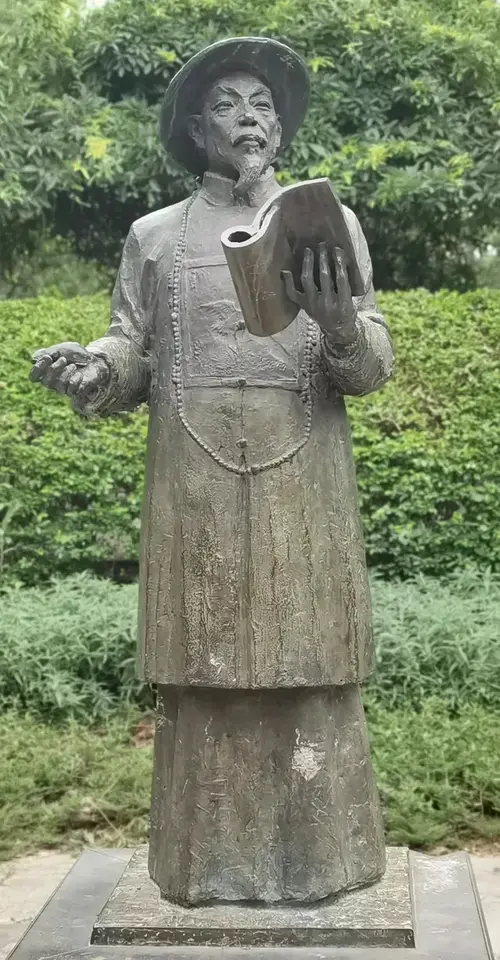
尹壮图
Yin Zhuangtu (尹壮图, 1738–1821), courtesy name Shouli and art name Zhiting, was a native of Mengzi County, Yunnan, and one of the most celebrated upright officials and moral remonstrators of the Qianlong and Jiaqing eras in the Qing Dynasty. Passing the imperial metropolitan examination as a jinshi in 1766, he was admitted to the Hanlin Academy as a bachelor and appointed compiler. Over the subsequent decades, he served in the…
Yin Zhuangtu (尹壮图, 1738–1821), courtesy name Shouli and art name Zhiting, was a native of Mengzi County, Yunnan, and one of the most celebrated upright officials and moral remonstrators of the Qianlong and Jiaqing eras in the Qing Dynasty. Passing the imperial metropolitan examination as a jinshi in 1766, he was admitted to the Hanlin Academy as a bachelor and appointed compiler. Over the subsequent decades, he served in the Ministries of Rites and Civil Personnel, as well as an Investigating Censor and Assistant Prefect in Yunnan. Known for his unyielding integrity and concern for common welfare, he was elevated in 1787 to Grand Secretariat Sub-Chancellor concurrently serving as Vice-Minister of Rites. In 1790, during Emperor Qianlong's lavish eightieth birthday jubilee, the imperial administration was plagued by the unchecked greed of Grand Councillor Heshen and systemic embezzlement of provincial treasuries. Defying personal mortal danger, Yin submitted direct memorials attacking Heshen's despotism and exposing that provincial governors were falsifying accounts and extorting civilian populations to fund tribute gifts. Outraged by the perceived slight to his "golden reign," the Qianlong Emperor dispatched Yin alongside Vice-Minister of Revenue Qingcheng to inspect provincial treasuries across Zhili, Shanxi, Shandong, and Jiangsu. Tipped off by Heshen's network, local officials concealed deficits with borrowed private silver, leading the court to condemn Yin for slander and sentence him to immediate execution. Qianlong commuted the sentence to demotion, allowing Yin to retire to Yunnan. In 1799, upon the death of Qianlong and the execution of Heshen, the Jiaqing Emperor publicly rehabilitated Yin, praising his unmatched moral courage. In his final decades, Yin directed the Wuhua Academy in Kunming, passing away in 1821 at age eighty-three.
Born into an esteemed scholar-gentry lineage in Mengzi County, Lin'an Prefecture, Yunnan
Passed the imperial metropolitan examination, admitted to Hanlin Academy and appointed compiler
Served in the Ministries of Rites and Civil Personnel before becoming an Investigating Censor
Promoted to Sub-Chancellor of the Grand Secretariat concurrently serving as Vice-Minister of Rites
Submitted memorials exposing Heshen's tyranny and massive provincial treasury deficits
Dispatched to inspect provincial vaults; sabotaged by Heshen's agents and sentenced to demotion
Resigned from imperial office on grounds of filial devotion to his elderly mother
Jiaqing Emperor purged Heshen, vindicated Yin's integrity, and recalled him to high office
Retired due to advanced age and directed the prestigious Wuhua Academy in Kunming for two decades
Passed away peacefully in Kunming at the age of eighty-three, commemorated in local shrines
Yin Zhuangtu was born into an agrarian scholar-gentry family renowned for moral probity in Mengzi County, southern Yunnan. Endowed with exceptional scholarly discipline, he mastered the Confucian classics and statecraft treatises in his youth. In 1766, he sat for the metropolitan examination in Beijing, successfully achieving the jinshi degree and being selected into the elite Hanlin Academy. Upon graduating as an academy compiler, he participated in compiling imperial annals and drafting edicts.
During his years in the central bureaucracy, Yin scrupulously avoided factional affiliations. Reassigned to the Ministries of Rites and Civil Personnel, he firmly resisted illicit patronages in civil appointments. Promoted to Investigating Censor, he utilized his statutory authority to impeach corrupt magistrates and petition against predatory fiscal exactions, establishing a reputation as one of the most incorruptible voices in the capital.
In 1784, Yin served as Assistant Prefect in Yunnan, winning widespread acclaim from regional viceroys and common subjects for his impartial adjudication and relief management. In 1787, in recognition of his administrative competence and moral integrity, the throne appointed him Grand Secretariat Sub-Chancellor concurrently serving as Vice-Minister of Rites, placing him among the core decision-makers of the central ministries.
However, the late Qianlong era was marked by severe institutional degeneration. Grand Councillor Heshen enjoyed the sovereign's supreme favoritism, operating an empire-wide patronage web. Provincial viceroys and governors systematically looted local vaults, falsifying accounts to finance extravagant tributes for Qianlong's birthday tours. Under a superficial facade of universal prosperity, administrative rot and civilian destitution were reaching alarming proportions.
In late 1790, while the capital was engulfed in celebrations for Qianlong's eightieth birthday, Yin Zhuangtu shattered the court's sycophancy by submitting two searing memorials. Yin explicitly warned that imperial policies forbidding secret denunciations had emboldened viceroys to loot state revenues with impunity, boldly stating: "Provincial governors have utterly ruined their reputations; merchants and peasants everywhere lament that state treasuries are depleted and the populace exhausted."
The Qianlong Emperor was infuriated, viewing Yin's candid warning as an attack upon dynastic glory. Incited by Heshen, Qianlong demanded that Yin name specific provincial officials and embezzled sums. Yin stood firm, explaining that systemic corruption was universal rather than isolated. To settle the controversy, Qianlong ordered Vice-Minister of Revenue Qingcheng and Yin to personally inspect grain and silver depositories across Zhili, Shanxi, Shandong, and Jiangsu. However, Heshen mobilized express couriers to alert his provincial proteges. Before the imperial commissioners arrived, governors coerced private merchants into transferring private silver to temporarily fill the vaults. Consequently, Yin's inspections in Datong and Zhengding found the books nominally balanced.
In early 1791, Qianlong condemned Yin for "manufacturing rumors to slander senior ministers." The Ministry of Punishments, acting on Heshen's orders, recommended that Yin be beheaded immediately. Facing death without fear, Yin maintained his moral composure. Recognizing that executing a sincere remonstrator would alienate the scholar-gentry, Qianlong commuted the capital sentence to demotion as an expectant secretary in the Ministry of Punishments. Disillusioned with court intrigues, Yin requested leave in 1792 to care for his elderly mother, departing Beijing for his native Yunnan.
In 1799, following the death of the Retired Emperor Qianlong, the Jiaqing Emperor executed Heshen and eradicated his corrupt faction. On February 28, 1799, Jiaqing issued an imperial decree of complete rehabilitation, explicitly praising Yin's prophetic courage: "The treasury deficits reported by Yin Zhuangtu were absolute truth; he is indeed a pillar of unbending loyalty!"
Yin was restored to his ministerial ranks and recalled to Beijing as Reader in the Grand Secretariat. Expressing profound gratitude, the aging scholar declined political power due to declining health, retiring permanently in 1801. He accepted the directorship of the Wuhua Academy in Kunming, dedicating the final twenty years of his life to classical education. Integrating Neo-Confucian ethics with practical statecraft, he mentored hundreds of talented frontier youths who went on to serve as upright administrators throughout the empire. He passed away in Kunming in 1821 at eighty-three, deeply revered across southwestern China.
At the absolute height of Heshen's autocratic ascendancy in 1790, Yin Zhuangtu demonstrated peerless civic courage by submitting unvarnished remonstrances directly to the Qianlong Emperor. His fearless exposure of falsified provincial treasuries and official extortion challenged the dynastic complacency of the late Qianlong court. While his mission was temporarily sabotaged by entrenched bureaucratic conspiracies, his memorials served as the definitive historical indictment of late eighteenth-century Qing misgovernance, cementing his legacy as one of imperial China's greatest moral censors.
During his twenty-year tenure as director of the Wuhua Academy in Kunming, Yin transformed southwestern frontier education. He overhauled institutional regulations, expanded library collections, and emphasized that moral rectitude must accompany practical administrative ability. His pedagogical leadership turned the academy into the premier intellectual center of southwestern China, producing a distinguished generation of scholar-officials who championed clean governance and regional stability during the subsequent Daoguang and Xianfeng eras.
FIGURES ASSOCIATED WITH THIS DYNASTY