耶律敌烈
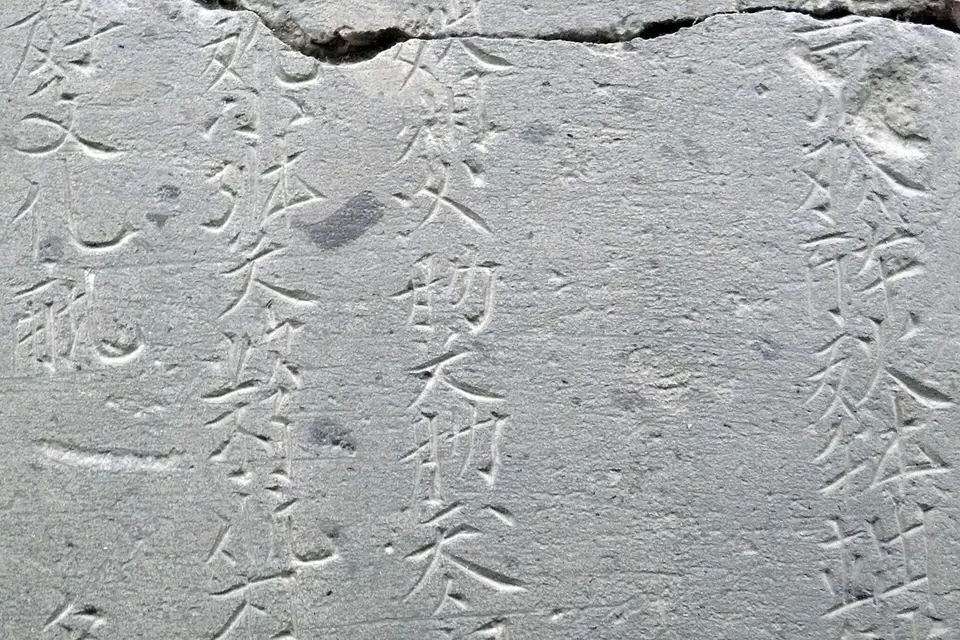
Mausoleum / epitaph / stele (Yelu Dilie)
Image credits三猎 · CC BY-SA 4.0Image source

Historical figure

Yelu Dilie (耶律敌烈)

耶律敌烈

Yelu Dilie (耶律敌烈, ?–979), courtesy name Basujin, was an imperial prince, distinguished statesman, and senior military commander of the Khitan Liao dynasty. He was the fourth son of Emperor Taizong (Yelu Deguang), a younger half-brother of Emperor Muzong (Yelu Jing), and an uncle to Emperor Jingzong (Yelu Xian), occupying an exalted status within the imperial royal clan. In his early career, Yelu Dilie served across the…

Era not stated

PROFILE

Yelu Dilie (耶律敌烈, ?–979), courtesy name Basujin, was an imperial prince, distinguished statesman, and senior military commander of the Khitan Liao dynasty. He was the fourth son of Emperor Taizong (Yelu Deguang), a younger half-brother of Emperor Muzong (Yelu Jing), and an uncle to Emperor Jingzong (Yelu Xian), occupying an exalted status within the imperial royal clan. In his early career, Yelu Dilie served across the reigns of Taizong, Shizong, and Muzong, renowned for equestrian archery and tactical readiness. In 959, repulsed by Emperor Muzong's tyrannical alcoholism and arbitrary executions of palace attendants, he plotted a coup alongside Regional Commissioner Haisi. When the plot was exposed, Muzong spared his life out of deference to their fraternal ties, subjecting him to detention. Following the accession of Emperor Jingzong, who pursued a policy of reconciliation toward the imperial clan, Yelu Dilie was rehabilitated and officially created Prince of Ji in 969. Confronting the northern expansion of the Northern Song dynasty against the Northern Han kingdom, the Liao court adopted the grand strategy of allying with Northern Han to counterbalance Song power. In 976, when Song forces besieged Northern Han, Yelu Dilie joined Southern Chancellery Prime Minister Yelu Sha in commanding the relief cavalry, shattering the Song blocking force at Shiling Pass, relieving Taiyuan, and earning promotion to Acting Grand Guardian. In 979, when Emperor Taizong of Song personally led an imperial army to extinguish Northern Han, Yelu Dilie again led vanguard cavalry south. At the Battle of Baimaling, reckless pursuit across a mountain torrent led into an ambush orchestrated by Song general Guo Jin. Raked by crossbow fire, Liao lines broke. Yelu Dilie and his eldest son, Yelu Wage, refused to retreat and fell heroically in combat, marking a pivotal turning point in the early Song-Liao conflict.

Courtesy Name
Basujin
Date of Death
979 (First year of the Qianheng era, Liao / Fourth year of the Taiping Xingguo era, Song)
Highest and Primary Offices
Prince of Ji, Acting Grand Guardian, Commander of the Relief Expedition to Northern Han
Accurate Identity Orientation
Imperial prince and general of the Liao dynasty; fourth son of Emperor Taizong; ennobled as Prince of Ji; commander killed in action at the Battle of Baimaling

LIFE TIMELINE

Relationship graph

BIOGRAPHY

Chronology

  • ca. 930 (Later Tang era) | Birth into Imperial Clan | Born in the imperial tents as the fourth son of Emperor Taizong, trained from youth in equestrian archery.
  • 959 (Ninth year of the Yingli era, Liao) | Opposition to Tyranny | Plotted a palace coup against the tyrannical Muzong; spared execution due to close blood ties after the conspiracy was leaked.
  • 969 (First year of the Baoning era, Liao) | Ennobled as Prince of Ji | Rehabilitated upon Emperor Jingzong's enthronement and formally created Prince of Ji.
  • 976 (Eighth year of the Baoning era, Liao) | Relief of Northern Han | Led cavalry south alongside Yelu Sha, routing Song blocking forces at Shiling Pass and receiving the title Acting Grand Guardian.
  • 979 (Third month, first year of the Qianheng era, Liao) | Second Southern Campaign | Mobilized elite cavalry to relieve the siege of Taiyuan against Song Taizong's grand expedition.
  • 979 (Fourth month, first year of the Qianheng era, Liao) | Martyrdom at Baimaling | Ambushed by Song commander Guo Jin while crossing a ravine; died in hand-to-hand combat alongside his eldest son.

Life and Career

Imperial Scion and the Coup of the Yingli Era

Yelu Dilie was born into the imperial tent encampment of the Khitan empire. His father was Emperor Taizong (Yelu Deguang), who conquered the Later Jin dynasty and formally established the Great Liao empire. Ranked fourth among Taizong's sons, Yelu Dilie received rigorous training in the steppe hunting and equestrian arts from childhood, developing into a physically robust, skilled archer and commander.

Following the passing of Emperor Taizong, the Liao imperial house was rocked by frequent succession crises under emperors Shizong and Muzong. Emperor Muzong was notorious for his violent dissipation, spending nights in alcoholic stupors and sleeping through daylight hours, earning the moniker "Sleeping Sovereign." When intoxicated, Muzong frequently tortured and murdered attendants, bodyguards, and cooks, casting an atmosphere of terror over the imperial camp.

In 959, Yelu Dilie, alarmed that the dynastic altars were endangered by Muzong's unhinged tyranny, formed a covert alliance with Regional Commissioner Haisi and imperial consort Xiao Dagan to stage a palace coup and depose the sovereign.

However, the plot was betrayed before it could be launched, and Muzong dispatched guards to arrest the conspirators. During interrogations, Muzong remembered that Yelu Dilie was the direct son of the late Emperor Taizong and his own younger half-brother. Reluctant to spill imperial blood, Muzong pardoned him from execution, merely stripping his titles and placing him under house arrest. By resisting tyranny, Yelu Dilie gained immense prestige and sympathy among the Khitan aristocracy.

Restoring Harmony and Ennoblement under Jingzong

In the second month of 969, Emperor Muzong was assassinated in his Heishan hunting pavilion by desperate attendants who could no longer endure his cruelty. Yelu Xian, son of Emperor Shizong, ascended the throne as Emperor Jingzong with the backing of the Xiao Chuo lineage.

Upon taking power, Emperor Jingzong reversed Muzong's tyrannical policies, enacting broad amnesties and working to heal internal rifts among imperial kinsmen. In the fourth month of 969, Jingzong issued an edict completely rehabilitating his uncle Yelu Dilie, formally creating him Prince of Ji in an elaborate investiture ceremony.

During this period, geopolitical dynamics south of the border underwent dramatic transformation. Following the founding of the Northern Song dynasty, Emperor Taizu methodically absorbed southern autonomous warlord regimes, bringing the imperial reunification campaign to the borders of Northern Han. Centered around the Taiyuan basin, Northern Han was militarily weak and had depended upon Liao protection since the Five Dynasties era, serving as an indispensable buffer zone shielding the Liao southern perimeter against Song expansion.

Confronting persistent Song pressure, Emperor Jingzong and the Liao grand council made preserving Northern Han the cornerstone of their northern frontier defense, and Prince Yelu Dilie was entrusted with leading elite cavalry armies to execute this geopolitical mission.

Victory at Shiling Pass and Relief of Northern Han

In the autumn of 976, Emperor Taizu of Song dispatched generals Dang Jin and Pan Mei to launch a coordinated offensive against Northern Han, advancing directly toward the ramparts of Taiyuan. Facing destruction, Liu Jiyuan, the ruler of Northern Han, sent urgent messengers to Youzhou and Linhuangfu pleading for imperial intervention.

Receiving the summons, Emperor Jingzong appointed Southern Chancellery Prime Minister Yelu Sha as supreme commander and Prince of Ji Yelu Dilie as deputy commander and vanguard general, mobilizing tens of thousands of elite Khitan cavalry to march south.

Yelu Dilie demonstrated masterly operational command, navigating past the rugged heights of Yanmen Pass and advancing rapidly to Shiling Pass north of Taiyuan. Confronting the entrenched Song blocking force, he deployed classic Khitan cavalry maneuvers, executing deep flanking envelopments that shattered the Song defensive line. Terrified of being trapped between the Taiyuan garrison and Liao cavalry, the Song siege army withdrew southward in haste, preserving the Northern Han state.

Following this brilliant triumph, Yelu Dilie's military reputation soared across Youzhou and the northern plains. In 977, Emperor Jingzong issued a decree elevating him to the exalted rank of Acting Grand Guardian, placing him among the foremost commanders of Liao frontier field forces.

Ambush at Baimaling and Heroic Martyrdom

In the second month of 979 (the fourth year of Taiping Xingguo), Emperor Taizong of Song resolved to complete dynastic unification, mobilizing an imperial army of three hundred thousand troops to invade Northern Han in person. Song forces surrounded Taiyuan with circumvallation walls and battered its fortifications day and night with artillery catapults.

In the third month, responding to desperate petitions from Northern Han envoys, Emperor Jingzong ordered Yelu Sha and Prince of Ji Yelu Dilie to rush south with thousands of elite cavalry to lift the siege.

On the twentieth day of the fourth month, the Liao vanguard reached Baimaling (northeast of present-day Yu County, Shanxi). The terrain was precipitous, dissected by a deep, swift mountain ravine. The Song blocking commander at Baimaling was the veteran general Guo Jin. Highly experienced in mountain warfare, Guo Jin concealed elite heavy infantry and crossbow squadrons along the forested slopes overlooking the southern banks.

When the Liao army reached the northern bank, both horses and men were exhausted from continuous marching. Assessing the treacherous terrain, supreme commander Yelu Sha urged the vanguard to pitch camp on the northern bank and wait for the main army to assemble before attempting a crossing.

However, Yelu Dilie was overconfident following his earlier triumph at Shiling Pass and underestimated the Song defenders. Insisting on immediate offensive action alongside division commander Yelu Dumin, he accused Yelu Sha of cowardice. Unable to restrain him, Yelu Sha watched as Yelu Dilie personally spurred his horse into the torrent alongside his eldest son, Yelu Wage, and his elite bodyguard cavalry.

As the Liao vanguard reached midstream, their formations jammed tightly within the narrow riverbed, the blare of war drums erupted from the southern bluffs. General Guo Jin unleashed his concealed forces, showering the riverbed with torrential volleys of heavy crossbow bolts. Caught in the water, hundreds of Khitan cavalrymen were impaled or trampled, plunging the column into total panic.

Refusing to flee, Yelu Dilie dismounted on the southern bank alongside his son Yelu Wage and his personal guards, drawing his saber to fight on foot. However, heavily armored Song infantry closed in from all sides. Suffering dozens of wounds and fighting to his final breath, Yelu Dilie fell in hand-to-hand combat alongside his son Yelu Wage and commander Yelu Dumin.

Yelu Sha managed to rally survivors and escape only through the timely arrival of Yelu Xiezhen's relief division. The catastrophe at Baimaling annihilated the relief army and destroyed Liao hopes of rescuing Northern Han. Deprived of external support, Liu Jiyuan surrendered Taiyuan days later, bringing an end to Northern Han. As an imperial prince who fell on the frontlines of the Song-Liao wars, Yelu Dilie left behind a tragic and valiant legacy in early Liao military annals.
Key Achievements

Principled Conspiracy against Tyrannical Rule

Plotted an inner-palace coup against the drunken despot Emperor Muzong in 959 alongside Regional Commissioner Haisi. Spared death due to his imperial pedigree, gaining broad esteem within the royal house.

Ennobled as Prince of Ji and Aiding Jingzong's Court

Rehabilitated and formally created Prince of Ji upon Emperor Jingzong's accession in 969, actively supporting administrative stabilization and imperial clan harmony.

Relieving the Siege of Taiyuan at Shiling Pass

Co-commanded Liao cavalry in 976, shattering Song blocking lines at Shiling Pass and compelling the Song expeditionary army to abandon its siege of Taiyuan, earning promotion to Acting Grand Guardian.

Battlefield Martyrdom in the Battle of Baimaling

Mobilized as vanguard commander during the 979 expedition to rescue Northern Han from Song Taizong's invasion. Ambushed by Song general Guo Jin at Baimaling, he fought heroically to the death alongside his eldest son.

Personal Relationships

  • Imperial Father: Yelu Deguang (Emperor Taizong of Liao, dynastic founder and Yelu Dilie's father).
  • Despotic Brother: Yelu Jing (Emperor Muzong of Liao, half-brother whose life was targeted in Dilie's coup and who spared Dilie's life).
  • Nephew Sovereign: Yelu Xian (Emperor Jingzong of Liao, nephew who rehabilitated Dilie and created him Prince of Ji).
  • Military Colleague: Yelu Sha (Southern Chancellery Prime Minister, co-commander during the campaigns to relieve Northern Han).
  • Martyred Son: Yelu Wage (Eldest son of Yelu Dilie, who fought and died alongside his father at Baimaling).
  • Adversary Commander: Guo Jin (Distinguished Northern Song general who orchestrated the ambush at Baimaling, defeating the Liao vanguard).

Historical Appraisals

  • Tuotuo in History of Liao: "The fourth son of Emperor Taizong, Dilie was created Prince of Ji, renowned for valor and archery skill. In the early Qianheng era he campaigned to rescue Liu Jiyuan, perishing in battle at Baimaling. He was truly one who faced mortal danger without shrinking!"
  • Zhang Dai in Shikui Shu: "When the Liao forces marched deep into the interior, Prince of Ji Dilie rushed across the waters to attack; Guo Jin struck from the heights, destroying their commanders in a single engagement, rendering the fall of Northern Han inevitable."
  • Miao Quansun in Studies on the History of Liao and Jin: "During the early reign of Liao Jingzong, among the imperial princes only Yelu Sha and Yelu Dilie wielded paramount military authority. Though Dilie fell at Baimaling through impetuous haste, he dedicated his life to imperial service, honoring the martial legacy of Emperor Taizong."

Related Entries

  • [[Yelu Deguang]]
  • [[Emperor Jingzong of Liao]]
  • [[Yelu Sha]]
  • [[Battle of Baimaling]]
  • [[Guo Jin]]
  • [[History of Liao: Table of Imperial Princes]]

FIGURES ASSOCIATED WITH THIS DYNASTY

Bibliography

  • History of Liao, Volume 64, "Tables 2: Table of Imperial Princes"
  • History of Liao, Volume 8, "Basic Annals 8: Emperor Jingzong Part 2"
  • History of Liao, Volume 96, "Biographies 26: Biography of Yelu Sha"
  • Long Draft of the Comprehensive Mirror for Aid in Government, Continued, Volume 20, "Fourth Year of Taiping Xingguo"
  • Comprehensive Mirror for Aid in Government (Zizhi Tongjian), Volume 294, "Later Zhou Chronicle 5"
  • Records of the Khitan State (Qidan Guo Zhi), Volume 4, "Emperor Jingzong Xiaocheng"