Birth into Gentry Lineage
Born into an illustrious intellectual family in Wuxing; studied the Book of Han and dynastic histories under his father Yao Cha.
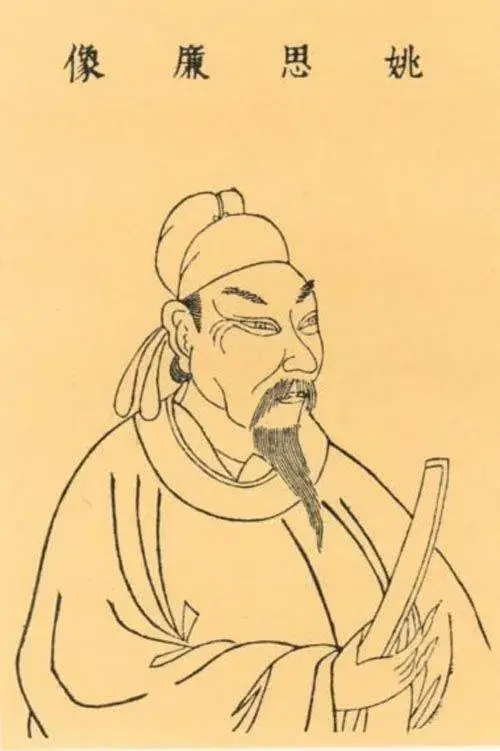
姚思廉
Yao Silian (姚思廉, 557–637), original personal name Jian, styled Silian, was a native of Wukang in Wuxing (modern Deqing, Huzhou, Zhejiang). Serving as a prominent minister across the Southern Chen, Sui, and Tang dynasties, he was an illustrious historian, man of letters, and one of the legendary Eighteen Scholars of the Qin Princely Mansion under Li Shimin (later Emperor Taizong). Yao hailed from a prominent Jiangnan…
Yao Silian (姚思廉, 557–637), original personal name Jian, styled Silian, was a native of Wukang in Wuxing (modern Deqing, Huzhou, Zhejiang). Serving as a prominent minister across the Southern Chen, Sui, and Tang dynasties, he was an illustrious historian, man of letters, and one of the legendary Eighteen Scholars of the Qin Princely Mansion under Li Shimin (later Emperor Taizong). Yao hailed from a prominent Jiangnan intellectual and medical lineage: his grandfather Yao Sengyuan was a celebrated scholar-physician, and his father Yao Cha served as Minister of Personnel in the Chen dynasty and Scholar of the Palace Library under the Sui. Immersed in the Book of Han and dynastic treatises from childhood, Yao Silian inherited the complete scholarly mantle of his family, developing an encyclopedic mastery of the institutional history of the Northern and Southern dynasties. He sequentially served as clerk in the princely establishment of the King of Kuaiji under the Chen, secretarial military officer in the Han princely establishment under the Sui, and reader-in-waiting to the Sui imperial child-heir Yang You. In 617, when Li Yuan's insurgent army stormed the Sui capital of Chang'an and metropolitan officials fled in terror, Yao Silian stood alone beside the imperial throne with hand on sword, courageously commanding the intruding soldiers to respect the young monarch. His unyielding moral fortitude won the profound admiration of Li Yuan. Following the establishment of the Tang, Yao was enlisted into Prince Li Shimin's elite literary academy, participating in confidential administrative drafting and subsequently advancing to Reader-in-Waiting to the Crown Prince, Historiographer, Scholar of Hongwen Pavilion, Director of Studies of the State Academy, and Cavalier Regular Attendant, being enfeoffed as Baron of Fengcheng. In 629, fulfilling the solemn deathbed command of his father Yao Cha, Yao was commissioned by Emperor Taizong to direct the compilation of the standard histories of the Liang and Chen dynasties. Utilizing his family's private drafts alongside southern documentary archives, he successfully produced the canonical fifty-volume Book of Liang and thirty-volume Book of Chen. Passing away in 637 at the age of eighty-one, he was posthumously granted the title Grand Master of Radiant Happiness and the posthumous name Kang, receiving the supreme imperial honor of being entombed at Emperor Taizong's Zhaoling Mausoleum.
Born into an illustrious intellectual family in Wuxing; studied the Book of Han and dynastic histories under his father Yao Cha.
Commenced bureaucratic career in the Chen dynasty as clerk in the establishment of the King of Kuaiji, renowned for his administrative efficiency.
Following the Sui conquest of Chen, accompanied his father to Chang'an, appointed secretarial officer to Prince of Han Yang Liang.
Received his dying father's solemn deathbed mandate to complete the official histories of the Liang and Chen dynasties.
Compiled imperial gazetteers alongside Cui Zujun; appointed official tutor and reader to the imperial grandson Yang You in Chang'an.
Stood alone beside the young prince Yang You as Li Yuan's troops captured Chang'an, winning Li Yuan's deep acclaim for his chivalric courage.
Recruited by Prince Li Shimin as one of the elite Eighteen Scholars of the Qin Princely Mansion, assisting in statecraft deliberation.
Appointed Historiographer and Scholar of Hongwen Pavilion following Li Shimin's accession as Emperor Taizong.
Commissioned by imperial decree to assume chief editorial direction over the compilation of the Book of Liang and Book of Chen.
Completed the monumental manuscripts of the Book of Liang and Book of Chen, receiving lavish imperial gifts and praise from Emperor Taizong.
Promoted to Director of Studies of the State Academy and Cavalier Regular Attendant, being enfeoffed as Founding Baron of Fengcheng.
Died peacefully in Chang'an at age eighty-one; posthumously conferred the name Kang and granted the privilege of entombment at Zhaoling.
Yao Silian was born in 557, the founding year of the Southern Chen dynasty, into a distinguished scholar-gentry lineage of Wuxing. His grandfather Yao Sengyuan was a celebrated physician and scholar who served as Grand Imperial Physician under the Northern Zhou, treating sovereigns and royal princes. His father Yao Cha was an intellectual giant of the late sixth century, accumulating an encyclopedic library exceeding 10,000 volumes and serving as Minister of Personnel under the Chen. Following the Sui unification, Emperor Wen of Sui remarked: "In conquering the Southern Chen, my sole true acquisition was Yao Cha!"
Under this scholarly atmosphere, Yao Silian displayed early brilliance. From childhood, he studied the Book of Han and pre-Qin classics beside his father, absorbing the methodology of documentary textual criticism. Towards the end of the Taijian reign, Yao entered government service as administrative clerk to Prince Chen Bozhi, the King of Kuaiji. In this provincial post, he organized public registries and judicial proceedings, acquiring renown across the southern elite for his meticulous administrative precision.
In 589, Sui forces crossed the Yangtze and conquered the Southern Chen. Yao Silian accompanied his father Yao Cha to the new capital of Chang'an. Recognizing Yao Cha's unrivaled authority on southern history, the Sui court commissioned him to compile the standard histories of the Liang and Chen dynasties. Yao Silian was assigned as secretarial officer in the princely establishment of Prince of Han Yang Liang. In the early Daye reign, Yao participated in compiling the national geographical gazetteer Quyu Tuzhi alongside palace diarist Cui Zujun.
In 606, Yao Cha fell mortally ill in Chang'an. Summoning Silian to his bedside, the dying scholar declared: "I received profound favors from the Liang and Chen dynasties and resolved to chronicle their annals. Though I have gathered documents for decades, the biographies and annals remain incomplete. This is my greatest regret. As my filial son, you possess rich learning; you must continue my mission and complete the standard histories of Liang and Chen!" Weeping bitterly, Yao Silian vowed to fulfill the injunction. Following his father's death, Emperor Yang permitted Silian to inherit his father's historiographical responsibility, concurrently appointing him reader-in-waiting to the young imperial grandson, Prince of Dai Yang You.
In late 617, as the Sui empire collapsed, Li Yuan launched his uprising from Taiyuan, leading veteran troops through the gates of Chang'an. Amidst panic, civil and military officials abandoned the palace and left the thirteen-year-old puppet monarch Yang You alone.
When armed insurgent soldiers breached the inner gates with drawn swords, they found the throne room deserted except for Yao Silian. Gripping his sword, Yao stood upright beside the young prince, eyes blazing with fury. As soldiers approached the dais, Yao shouted: "Duke Li launched righteous forces to defend the imperial house and pacify the realm! How dare you trespass and terrify the young prince!" His moral thunder stunned the mutinous troops, who retreated from the hall.
Informed of the confrontation, Li Yuan hurried to the throne room. Moved by Yao's chivalric integrity, Li Yuan declared: "He is a truly loyal minister! A righteous man who fears neither blade nor death!" Li Yuan ensured that Prince Yang You was treated with imperial dignity and commanded that Yao Silian be accorded high honor, establishing Yao's reputation across the empire.
Following the founding of the Tang dynasty, Prince of Qin Li Shimin established the Literary Pavilion to assemble eminent minds. Yao Silian was enlisted as one of the founding Eighteen Scholars of the Qin Princely Mansion. Within the pavilion, he collaborated with Fang Xuanling, Du Ruhui, and Yu Shinan, participating in high-level strategic consultations and preparing official proclamations.
Upon Emperor Taizong's accession in 626, Yao was appointed Historiographer and Scholar of Hongwen Pavilion. In 629, Emperor Taizong re-established the imperial historiographical bureau. Recognizing Yao's unrivaled expertise, the emperor issued an edict commissioning him to assume sole editorial authority over the Book of Liang and Book of Chen, with Censor Wei Zheng providing overall oversight.
Embracing his sacred paternal duty, Yao worked in seclusion. He utilized his father's original notes, cross-referencing them against southern private archives, stele inscriptions, and official records left by Xie Wu, Fu Zai, and Gu Yewang. He subjected the catastrophic events of the Hou Jing Rebellion and Chen Baxian's restoration to rigorous historical scrutiny.
After six years of labor, Yao completed the fifty-volume Book of Liang and thirty-volume Book of Chen in 635. The completed texts were praised for their structural rigor, lucid prose, and balanced judgments. Emperor Taizong issued lavish commendations, rewarding Yao with hundreds of bolts of silk.
In 636, honoring his completion of the dynastic annals, Emperor Taizong promoted Yao to Director of Studies of the State Academy and Cavalier Regular Attendant, enfeoffing him as Founding Baron of Fengcheng. Directing imperial education at the State Academy, the venerable scholar lectured on classical canons, earning the veneration of thousands of imperial students. Uncompromising in principle, he frequently submitted memorials cautioning Emperor Taizong against luxury and imperial complacency.
In 637, Yao Silian passed away peacefully in Chang'an at the age of eighty-one. Overcome with sorrow, Emperor Taizong posthumously conferred upon him the title Grand Master of Radiant Happiness and the posthumous name Kang ("Tranquil and Virtuous"). Furthermore, the emperor granted Yao the honor of being entombed at the imperial Zhaoling Mausoleum alongside founding statesmen Fang Xuanling, Wei Zheng, and Li Jing.
Yao Silian's foremost monument is his authorship of the Book of Liang (50 volumes) and Book of Chen (30 volumes). Alone among the early Tang standard histories, these two dynastic annals were conceived, compiled, and finalized across two generations of a single scholarly family.
Yao practiced rigorous historical objectivity, recording both imperial missteps—such as Emperor Wu of Liang's excessive Buddhist patronage—and heroic resistance during the Hou Jing Rebellion. His concise, dignified prose and structural balance established these works as canonical standard texts within the Twenty-Four Histories, preserving the documentary heritage of the southern dynasties for posterity.
During the collapse of the Sui dynasty, Yao Silian established an enduring moral ideal for the Confucian scholar-official. Standing alone with hand on sword to protect the thirteen-year-old puppet emperor Yang You against victorious troops, he exemplified the classical precept of remaining steadfast in the face of death.
His courage transcended pragmatic regime loyalty, reflecting the autonomous moral integrity of the righteous scholar. His stand won the lifelong respect of Emperor Gaozu and Emperor Taizong, becoming an immortal narrative of chivalric honor in Chinese historical tradition.
As one of the Eighteen Scholars of the Qin Princely Mansion and later Director of Studies of the State Academy, Yao contributed to the institutional and philosophical foundation of the Zhenguan reign.
In the Literary Pavilion, he advised Li Shimin on historical precedents and moral administration; at the State Academy, he nurtured a new generation of scholar-officials grounded in classical Confucian ethics, contributing to the administrative stability and cultural glory of the early Tang golden age.
FIGURES ASSOCIATED WITH THIS DYNASTY