Ancestral Legacy
Born in Shanzhou as the grand-nephew of the illustrious Kaiyuan chancellor Yao Chong.
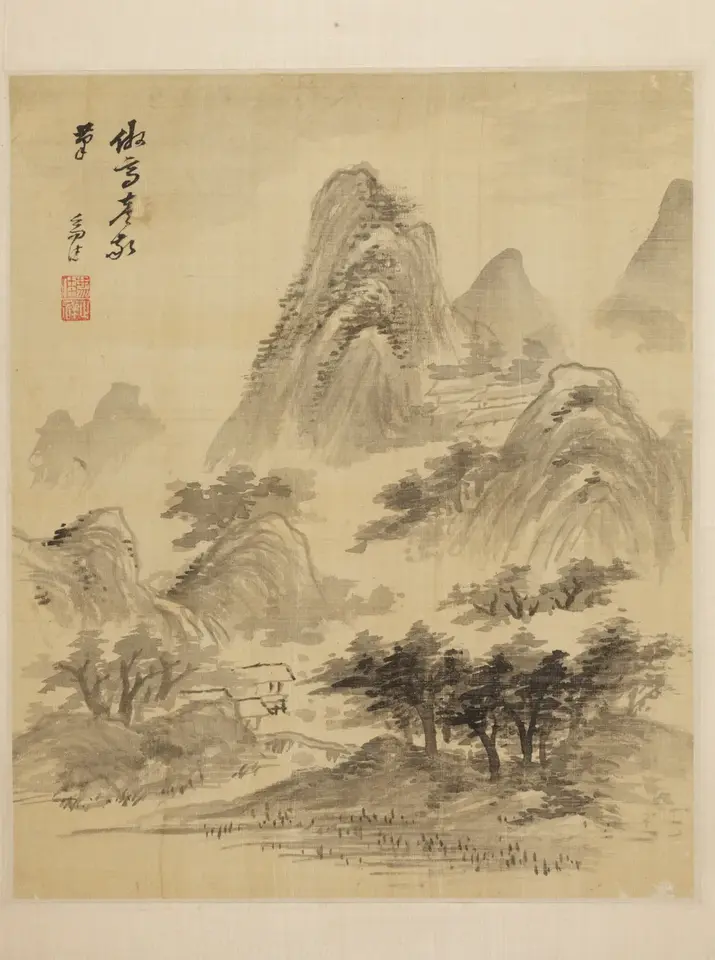
姚合
Yao He (姚合, 777–843), courtesy name Daning, posthumous title Yi, was a native of Shan County, Shanzhou (modern Shanzhou District, Sanmenxia, Henan) with ancestral roots in Wuxing (modern Huzhou, Zhejiang). He was the grand-nephew of the celebrated Kaiyuan chancellor Yao Chong and an eminent poet and court minister of the mid-to-late Tang dynasty. Passing the imperial examinations to earn the Jinshi degree in 816, he began his…
Yao He (姚合, 777–843), courtesy name Daning, posthumous title Yi, was a native of Shan County, Shanzhou (modern Shanzhou District, Sanmenxia, Henan) with ancestral roots in Wuxing (modern Huzhou, Zhejiang). He was the grand-nephew of the celebrated Kaiyuan chancellor Yao Chong and an eminent poet and court minister of the mid-to-late Tang dynasty. Passing the imperial examinations to earn the Jinshi degree in 816, he began his official career as Registrar of Wugong County. During this appointment, he devoted himself to five-character regulated verse, capturing the desolate landscapes of remote prefectures and the leisurely life of low-ranking officials, thereby founding the acclaimed Wugong Style. He later served as Defender of Fuping and Defender of Wannian, served on the military staff of Tian Hongzheng in the Weibox circuit, and was elevated to Investigating Censor and Vice Director in the Ministry of Revenue during the Baoli era. Between the Taihe and Kaicheng eras, Yao He governed with benevolence as Prefect of Jinzhou and Prefect of Hangzhou before being summoned back to the capital to serve as Director of a Bureau in the Ministry of Justice, Director in the Ministry of Revenue, Policy Admonisher, and Palace Remonstrance Official. In 839, he was appointed Surveillance Commissioner of Shan-Guo. In this regional post, recognizing genuine virtue, he protected and reinstated the young poet Li Shangyin, who had resigned in protest against a corrupt predecessor. During the Huichang era, Yao He concluded his career as Director of the Palace Library. He passed away on January 28, 843 (the twenty-fifth day of the twelfth month of the second year of Huichang) at the age of sixty-seven, receiving the posthumous title of Minister of Rites and the posthumous name Yi. In late Tang literary circles, Yao He enjoyed immense prestige alongside his close friend and fellow ascetic poet Jia Dao, with whom he was celebrated under the joint moniker "Yao-Jia." In his final years, he compiled the Tang poetry anthology Jixuan Collection (Jixuan Ji), selecting one hundred five-character regulated poems by twenty-one masters including Wang Wei. His refined aesthetic exerted a lasting impact on late Tang verse, the Four Luminaries of Yongjia in the Southern Song, and the Rivers and Lakes School.
Born in Shanzhou as the grand-nephew of the illustrious Kaiyuan chancellor Yao Chong.
Father Yao Han died in office at Xiangzhou; the family relocated to Hebei, where Yao studied assiduously.
Succeeded in the imperial examinations at age forty after decades of persistence under Chief Examiner Li Fengji.
Appointed Registrar of Wugong; composed Thirty Poems Written in Wugong, establishing his poetic reputation.
Served as Defender of Fuping and Wannian, then joined Military Commissioner Tian Hongzheng's staff in Weibo.
Promoted to Investigating Censor and Vice Director of Revenue, then served as Prefect of Jinzhou and Hangzhou.
Recalled to Chang'an, serving as Director of a Bureau in the Ministry of Justice and Revenue, then Policy Admonisher and Supervising Secretary.
Appointed Surveillance Commissioner of Shan-Guo; sheltered and reinstated Li Shangyin at Hongnong.
Appointed Director of the Palace Library; completed the Jixuan Collection; died in the twelfth month at age sixty-seven.
Escorted to Luoyang for burial by his disciple Fang Gan; posthumously promoted to Minister of Rites with the posthumous title Yi.
Yao He hailed from the prestigious Yao clan of Wuxing, tracing his descent as the great-grandson of Yao Yuanjing, younger brother of Yao Chong, Duke of Liang and chancellor during Emperor Xuanzong's Kaiyuan era. His grandfather Yao Suan was an official of high repute, and his father Yao Han served as magistrate of Linhe in Xiangzhou. In 777, during the Dali reign of Emperor Daizong, Yao He was born in Shan County, Shanzhou. He lost his father at an early age while the latter was serving at Linhe. With family resources drained and northern corridors ravaged by warlord skirmishes, Yao He accompanied his widowed mother and siblings to settle across the Hebei plains. Enduring poverty and displacement in foreign territory, Yao He resolved to revive his family fortunes through the civil service examinations.
During the Yuanhe reign of Emperor Xianzong, competition in the imperial examinations was brutally intense, with aristocratic lineages dominating quotas. Beginning in his early twenties, Yao He journeyed repeatedly to Chang'an, meeting repeated rejection. In his poem Failing the Examinations, he poignantly lamented his humiliation: "In vain nominated by my native district, my archery skills proved utterly deficient; on the return road I feel too ashamed to face inquiries, renting a humble room in the spring capital." It was not until 816, when Vice Minister of Rites Li Fengji presided over the examinations and recognized Yao He's dedicated craft and scholarly integrity, that the forty-year-old poet finally secured the Jinshi degree.
In 818, two years after attaining his degree, Yao He received his initial posting as Registrar of Wugong County in Jingzhao Prefecture (Junior Ninth Rank, Lower Grade). Situated approximately a hundred li west of Chang'an along the Wei River, Wugong was an isolated mountainous district. As registrar, Yao He oversaw archives, tax ledgers, and clerical paperwork for meager wages. Viewing his remote post with the detachment of a reclusive scholar, he planted bamboo and sedge outside his office, spent his leisure sipping wine by mountain streams, and treated his municipal quarters as a hermitage.
During his three-year tenure at Wugong, Yao He composed his famous poem cycles, Thirty Poems Written in Wugong and Ten Poems on Leisurely Living. Departing from the expansive, heroic resonance of High Tang verse, he concentrated on sketching desolate county scenery, small natural vignettes, and the tranquil monotony of bureaucratic retirement, writing lines such as: "The county lies distant from the imperial city; serving as an official is just like living in seclusion," and "Official ledgers consume the power of the eye, cups of wine deplete the spirit." These five-character regulated verses were characterized by pristine structure, ingenious parallelism, and effortless diction, creating grand resonance through understated detail. The literary community in Chang'an hailed his innovative approach as the "Wugong Style," earning him the enduring honorific "Yao Wugong."
In 820, having completed his term in Wugong, Yao He was transferred to serve as Defender of Fuping, soon advancing to Defender of Wannian in the capital prefecture. In 821, as unrest resurfaced in the Hebei circuits, Tian Hongzheng, the acclaimed commander who had transferred to lead the Weibo Circuit, invited Yao He to join his military headquarters as staff secretary. Yao He managed military memorials and correspondence with distinction. When mutinous troops led by Shi Xiancheng assassinated Tian Hongzheng, Yao He's prudence enabled him to survive the turmoil and return to the capital.
During the Baoli reign of Emperor Jingzong, Yao He's career ascended into the central administration. He was promoted to Investigating Censor, where he supervised official discipline with rectitude, later transferring to Vice Director in the Ministry of Revenue. In the early Taihe era, to broaden his administrative experience, the court dispatched him as Prefect of Jinzhou (modern Ankang, Shaanxi), subsequently reassigning him to the prosperous southeastern prefecture of Hangzhou. In both prefectural administrations, Yao He governed with gentleness and frugality, adjusting tax burdens, expediting legal dockets, and strictly prohibiting subordinates from harassing commoners. Recalled to Chang'an, he served as Director of a Bureau in the Ministry of Justice, Director in Revenue, Policy Admonisher, and Palace Remonstrance Official in the Chancellery, handling the review and sealing of imperial decrees for over a decade while maintaining personal modesty and distance from factional cliques.
In 839, Emperor Wenzong appointed Yao He as Surveillance Commissioner of Shan-Guo, stationing him in his native region of Sanmenxia. While governing Shan-Guo, he performed an act celebrated in Chinese literary history. The brilliant young poet Li Shangyin was serving as Defender of Hongnong County; refusing to endorse unjust criminal sentences ordered by Yao He's predecessor Sun Jian, Li Shangyin had resigned in indignation. Upon arriving in Shan-Guo, Yao He investigated the controversy, deeply moved by Li Shangyin's unbending integrity and literary genius. Yao He immediately sent messengers to recall Li Shangyin, received him with great respect, reinstated him as county defender, and invited him into his commissioner's headquarters as a literary advisor. In subsequent writings such as Letter to Jinshi Tao, Li Shangyin frequently expressed heartfelt gratitude for Yao He's benevolent mentorship.
In the early Huichang reign of Emperor Wuzong, burdened by advanced age and chronic illness, Yao He requested a transfer to a quiet capital post, receiving appointment as Director of the Palace Library (Junior Third Rank) in charge of the imperial archives. In his final years in Chang'an, he lived peacefully, completing the Tang poetry anthology Jixuan Collection and exchanging verses with his lifelong friend Jia Dao and junior protégés such as Fang Gan and Ma Dai. On January 28, 843, Yao He passed away peacefully at his private residence in Chang'an at the age of sixty-seven. In recognition of his decades of service and literary eminence, Emperor Wuzong posthumously bestowed upon him the rank of Minister of Rites and the posthumous name Yi. His disciple Fang Gan and fellow literati escorted his casket to Luoyang for burial.
While serving as Registrar of Wugong, Yao He established the historic Wugong Style through masterworks such as Thirty Poems Written in Wugong. Characterized by the delicate portrayal of natural elements, modest rural vistas, and the quiet routines of bureaucratic life, this poetic mode abandoned monumental bravura in favor of micro-aesthetic serenity and refined craftsmanship. Yao He brought meticulous precision to tonal harmony and balanced couplets while preserving an air of effortless spontaneity, vastly enriching the artistic boundaries and expressive depth of Tang regulated verse.
In late Tang poetry, Yao He and Jia Dao stood side by side under the collective title "Yao-Jia," revered as the twin pinnacles of late Tang ascetic regulated verse. While Jia Dao leaned toward severe austerity and jagged melancholy, Yao He displayed a more serene, translucent, and self-possessed demeanor, serving as the practical leader and patron of their poetic circle. His influence reverberated across centuries: early Song monastic poets known as the "Nine Monks" emulated his craft, while Southern Song masters including the Four Luminaries of Yongjia (Xu Zhao, Xu Ji, Weng Juan, Zhao Shixiu) and the Rivers and Lakes School revered Yao He as their primary stylistic model. Zhao Shixiu compiled their collective works into The Two Marvels Collection (Er Miao Ji), sealing their timeless reputation.
In 842, Yao He brought together the two-volume anthology Jixuan Collection, selecting one hundred five-character regulated poems by twenty-one preeminent Tang masters from the Kaiyuan through Dali eras, including Wang Wei, Zu Yong, Qian Qi, Lu Lun, and Sikong Shu. In his preface, Yao praised the contributors as "archers skilled enough to shoot eagles." Bypassing the sweeping works of Li Bai and Du Fu, the anthology concentrated exclusively on verse displaying pristine structure, transcendental mood, and meditative clarity, presenting a refined codification of pure lyricism.
Renowned for his generosity and reverence for genius, Yao He was embraced as an elder statesman of the literary world. His intervention to shelter, vindicate, and employ the young Li Shangyin during his tenure at Shan-Guo protected one of the greatest poetic talents of the late Tang from political ostracism. Furthermore, Yao He actively patronized commoner poets such as Fang Gan and Ma Dai, earning their lifelong reverence and leaving an enduring legacy of moral virtue in literary history.
FIGURES ASSOCIATED WITH THIS DYNASTY