Birth in Hongnong
Born into the ducal residence of Yang Jian as the eldest son, given the moniker Xiandifa.
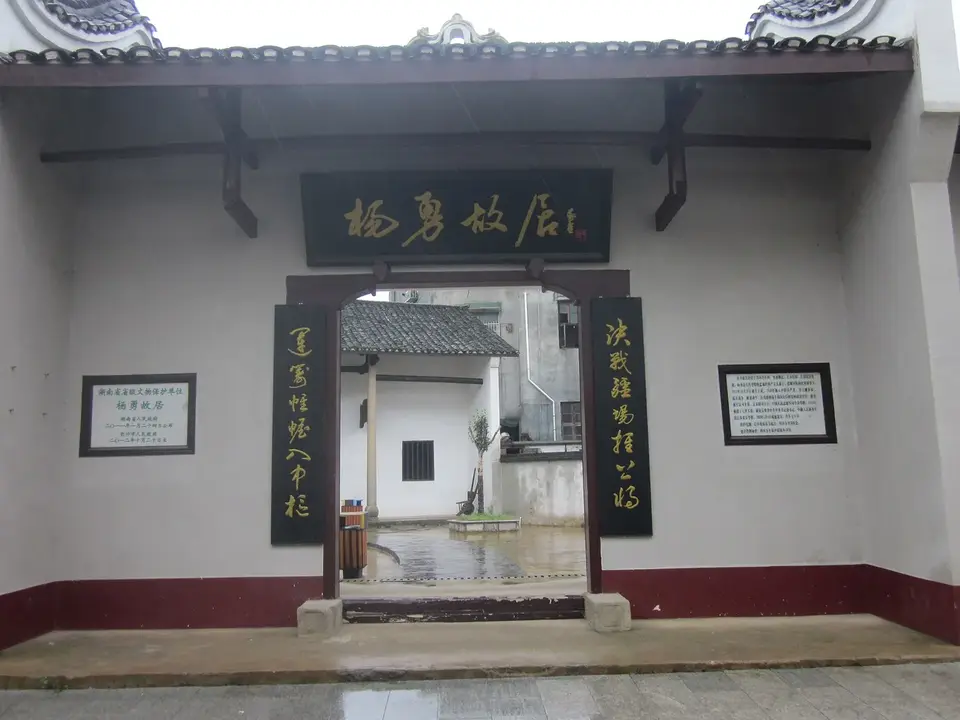
杨勇
Yang Yong (杨勇, 568–604), childhood name Xiandifa, was a native of Huayin, Hongnong (modern Huayin, Shaanxi), the eldest legitimate son of Emperor Wen of Sui (Yang Jian) and Empress Wenxian (Dugu Qieluo), elder brother of Emperor Yang (Yang Guang), and the founding Crown Prince of the Sui empire. Born into the preeminent military nobility of the Western Wei and Northern Zhou, Yang Yong held senior posts including Marquis of…
Yang Yong (杨勇, 568–604), childhood name Xiandifa, was a native of Huayin, Hongnong (modern Huayin, Shaanxi), the eldest legitimate son of Emperor Wen of Sui (Yang Jian) and Empress Wenxian (Dugu Qieluo), elder brother of Emperor Yang (Yang Guang), and the founding Crown Prince of the Sui empire. Born into the preeminent military nobility of the Western Wei and Northern Zhou, Yang Yong held senior posts including Marquis of Boping, Governor-General of Luozhou, and Grand Minister of War in his youth, commanding elite imperial guards. Upon Emperor Wen's accession in 581, Yang Yong was invested as Crown Prince. For two decades, he participated actively in state deliberations, adjudicating legal appeals below capital offenses, placating the eastern plains from Luoyang, and assisting in bureaucratic reform and logistical preparations for southern reunification. Although naturally benevolent, candid, and passionate about literary culture, Yang Yong displayed an indulgence in luxury and disregard for protocol that proved politically lethal. He decorated iron armor with gold and silver inlay and improperly accepted formal winter solstice congratulations from metropolitan officials, inciting the paranoid suspicions of his frugally minded father. Furthermore, his open favoritism toward Consort Yun and neglect of Crown Princess Consort Lady Yuan, whose sudden death aroused Empress Dugu's suspicions of poisoning, irrevocably alienated his mother. Exploiting these familial fractures, his younger brother Prince of Jin Yang Guang disguised himself in ostentatious asceticism and formed an alliance with Grand Chancellor Yang Su to systematically frame the heir. In 600, Emperor Wen deposed Yang Yong to commoner rank and placed him under house arrest. Following Emperor Wen's death during the Renshou Palace crisis in 604, Yang Guang usurped the throne, forged a deathbed decree, and dispatched General Zhang Heng to strangle Yang Yong at age thirty-seven, posthumously conferring the title Prince of Fangling.
Born into the ducal residence of Yang Jian as the eldest son, given the moniker Xiandifa.
Commissioned as Grand General and Grand Minister of War during Yang Jian's regency, securing the capital.
Invested as Crown Prince upon the founding of the Sui dynasty, authorized to adjudicate state affairs.
Dispatched to pacify the central plains and Luoyang, earning praise for broad tax relief and benevolence.
Accepted formal winter solstice homage from civil officials at the Eastern Palace, sparking imperial suspicion.
The sudden demise of Crown Princess Consort Yuan alienated Empress Dugu, intensifying succession intrigues.
Formally deposed by Emperor Wen following fabricated treason charges concocted by Yang Su and Yang Guang.
Strangled by General Zhang Heng under Emperor Yang's forged decree; posthumously named Prince of Fangling.
Yang Yong was born in 568 into the aristocratic Yang clan of Hongnong during the Northern Zhou dynasty. Possessing a tall, imposing stature and an affable disposition, he was deeply cherished by his grandfather Yang Zhong and parents Yang Jian and Lady Dugu. During the reigns of Emperor Wu and Emperor Xuan of Northern Zhou, he was enfeoffed as Marquis of Boping and appointed Governor-General of Luozhou, gaining valuable administrative experience. In 580, following Emperor Xuan's death, Yang Jian became Grand Chancellor and suppressed the revolts of the three regional commanders. Throughout this dangerous crisis, Yang Yong served as Grand General and Grand Minister of War, controlling elite guardsmen to secure the palace gates and neutralize political dissidents.
In the second lunar month of 581, Yang Jian founded the Sui dynasty as Emperor Wen, immediately proclaiming Yang Yong Crown Prince. Placing immense trust in his heir, Emperor Wen issued an edict decreeing: "All civil and military affairs of state and judicial cases below capital punishment submitted by the Department of State Affairs shall be decided by the Crown Prince." Yang Yong established his household, recruited esteemed Confucian scholars, and actively presided over administrative hearings. During the early Kaihuang era, he inspected Luoyang and the northern commanderies, comforting local populations, distributing grain, and successfully persuading Emperor Wen to cancel destabilizing plans to forcibly relocate wealthy families to frontier garrisons, earning broad popularity across the realm.
As the empire prospered, Yang Yong's psychological shortcomings and lack of political caution brought him into fatal tension with the throne. Candid, emotional, and devoid of guile, Yang Yong pursued refined literature, artistic patronage, and exquisite craftsmanship. On one occasion, he commanded palace artisans to ornament fine Sichuan iron armor with intricate gold and silver filigree. When the frugally obsessed Emperor Wen observed the armor, he rebuked Yang Yong severely: "Since ancient times, no ruler indulging in luxury has endured. The Zhou conquered Qi and the Sui supplanted Zhou because their rulers wallowed in waste. As Crown Prince, you must remember the toil of common weavers!" Although Yang Yong accepted the criticism, he failed to comprehend the profound ideological obsession with frugality driving his father's policies.
In the winter solstice of 593, following Northern Dynasties custom, hundreds of metropolitan officials assembled at the Eastern Palace to tender congratulations to the Crown Prince. Instead of declining, Yang Yong opened his gates and hosted a grand musical banquet. Emperor Wen was incensed upon hearing of the assembly, interrogating court ritualists as to why ministers should render sovereign homage to a prince. Interpreting the event as a direct challenge to his absolute authority, Emperor Wen forbade all future court congratulations to the heir, casting a permanent pall of suspicion over their relationship.
In his domestic life, Yang Yong made mistakes that alienated his most crucial protector, his mother Empress Dugu. An uncompromising moralist, Empress Dugu abhorred concubinage and unfaithfulness to primary wives. In the Eastern Palace, Yang Yong doted passionately on Consort Yun Zhaoxun, granting her vast stipends and fathering multiple sons with her, while treating his primary consort Lady Yuan (daughter of merit minister Yuan Xiaoju) with cold indifference. In 597, Consort Yuan died suddenly from an undiagnosed ailment. Empress Dugu suspected that Consort Yun had poisoned her with Yang Yong's complicity, unleashing scathing maternal condemnations upon the Crown Prince.
Watching from his regional command in Jiangnan, Yang Guang, Prince of Jin, recognized a golden opportunity. Extremely calculating, Yang Guang cultivated a public persona of ascetic modesty: he kept only a few plain concubines, treated Princess Consort Xiao with ostentatious devotion, rode dilapidated carriages, and wept bitterly before Empress Dugu, convincing both parents that he was a paragon of filial piety. Furthermore, Yang Guang lavished immense bribes on Left Vice Director Yang Su, forging a lethal factional alliance. Yang Su systematically fabricated false intelligence, accusing Yang Yong of harboring seditious resentment and secretly arming palace guards.
In 600, Emperor Wen resolved to purge the Eastern Palace. He ordered Yang Su to investigate the Crown Prince. Through torture of palace retainers, Yang Su assembled dozens of treasonous allegations. In the tenth lunar month, Emperor Wen summoned a full court assembly, issued an imperial decree condemning Yang Yong for impiety and extravagance, deposed him to commoner status, and confined him in the Palace Bureau. Yang Guang was installed as Crown Prince, while dozens of Yang Yong's senior advisors were executed. Imprisoned and isolated, Yang Yong repeatedly climbed high trees in the imperial park to shout his innocence toward the emperor's chambers, but Yang Su convinced Emperor Wen that the former prince was violently insane, resulting in total isolation.
In the seventh lunar month of 604, Emperor Wen lay dying at Renshou Palace. When the dying sovereign discovered Yang Guang's transgressive advances toward his favorite consort Lady Chen, he realized Yang Guang's villainy and commanded officials to recall Yang Yong. Before the order could be executed, Yang Guang and Yang Su launched a coup, executing a forged decree upon Emperor Wen's death. Right Guard General Zhang Heng arrived at Yang Yong's prison and strangled him with a silk sash at the age of thirty-seven. Ascending the throne as Emperor Yang, he posthumously enfeoffed his murdered brother as Prince of Fangling, while exterminating or banishing all ten of Yang Yong's sons into pestilential regions.
During the early Kaihuang era, the Sui confronted the dual strategic imperative of conquering the southern Liang and Chen while defending the northern borders against the Göktürks. Stabilizing the central plains and eastern territories was critical. During his administration in Luoyang and tours through Qi and Zhao, Yang Yong reduced corvée, alleviated taxes, and supervised grain transport routes along what became the Grand Canal. He established key granaries in Shanzhou and Luoyang, building the logistical bedrock for the southern campaign and soothing the anxieties of eastern elites.
During his twenty years as Crown Prince, Yang Yong served as an indispensable administrative anchor for the flourishing Kaihuang era. He managed imperial appeals, rectified judicial injustices, governed Yongzhou and the metropolitan region, and organized massive supply lines for the conquest of the Chen dynasty. His principled opposition to the forced migration of wealthy lineages prevented severe rural revolts, providing a crucial stabilizing counterweight to Emperor Wen's severe penal regime.
The deposition of Yang Yong marked the decisive historical turning point in the fate of the Sui dynasty. The purge destroyed the legitimate succession of primogeniture, catapulting the megalomaniacal Yang Guang onto the throne and initiating the ruinous wars and canal corvée that destroyed the empire. The execution of Yang Yong's retainers shattered the cohesion of the founding aristocracy, providing subsequent Tang monarchs such as Taizong with the primary historical negative example regarding the lethal perils of princely succession feuds.
Throughout his tenure in the Eastern Palace, Yang Yong actively recruited scholars and literati from across China. His palace gathered an extensive library, and scholars like Zou Wenteng and Tang Lingze were treated with boundless respect, engaging in classical exegesis and literary discussions. Yang Yong frequently hosted banquets where scholars deliberated ritual music, administrative codes, and statecraft. Although political rivals later smeared these gatherings as decadent revelry, they created a vital sanctuary for the cultural revival of the northern literati during the early Sui.
Yang Yong's personal tragedy illuminates the ruthless dynamics of medieval palace politics. As the eldest son of the founding emperor, he possessed warmth, generosity, and genuine empathy for commoners, yet lacked the calculating deceit necessary to survive despotic rivalry. His uninhibited indulgence in fine armor and ceremonial celebrations ran afoul of his father's paranoid autocracy and his mother's moral severity. Crushed between an ascetic father, an unforgiving mother, and an unscrupulous younger brother, his fall stands as one of the most poignant cautionary tales in imperial dynastic history.
FIGURES ASSOCIATED WITH THIS DYNASTY