Born in Xining
Born into a prominent banner officer family in Xining, mastering regional geography and minority customs.
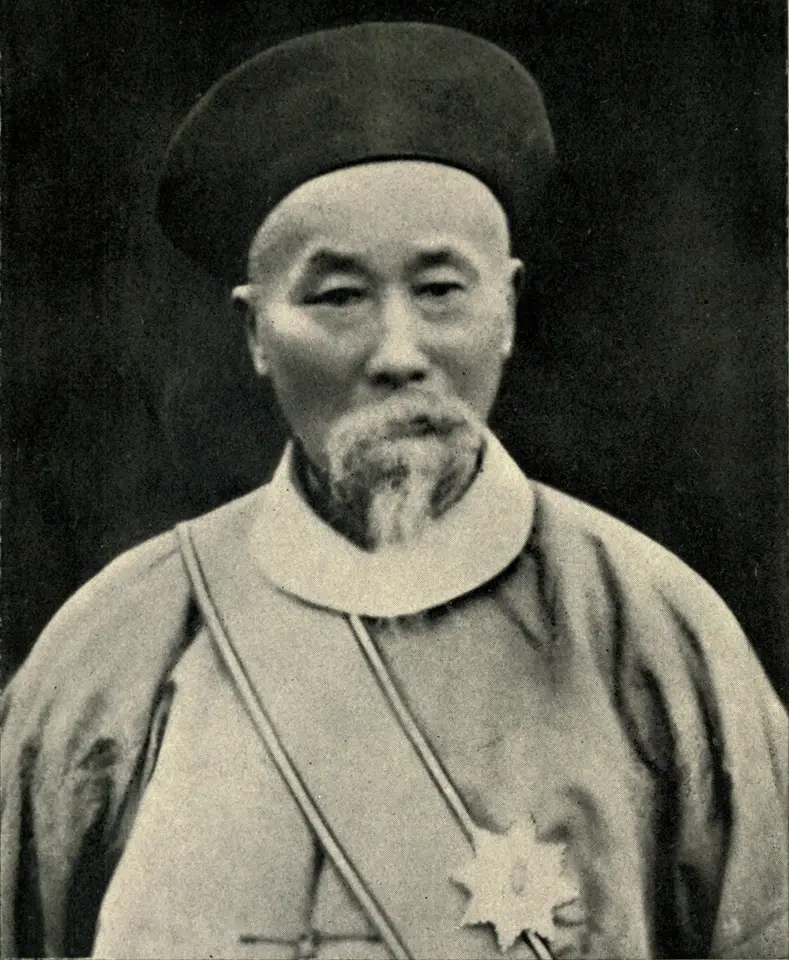
杨应琚
Yang Yingju (杨应琚, 1696 – 1767), courtesy name Peizhi (佩之), art name Songmen (松门), was a native of Xining, Qinghai, enrolled in the Plain White Banner of the Han Military Banners. He was a distinguished regional administrator and military viceroy of the Yongzheng and Qianlong reigns. Entering officialdom as a hereditary clerk in the Ministry of Revenue, Yang was appointed Circuit Intendant of Xining in 1733. Confronting…
Yang Yingju (杨应琚, 1696 – 1767), courtesy name Peizhi (佩之), art name Songmen (松门), was a native of Xining, Qinghai, enrolled in the Plain White Banner of the Han Military Banners. He was a distinguished regional administrator and military viceroy of the Yongzheng and Qianlong reigns. Entering officialdom as a hereditary clerk in the Ministry of Revenue, Yang was appointed Circuit Intendant of Xining in 1733. Confronting endemic raiding across isolated frontier borders, he constructed nine strategic forts in Heitucheng and Qianhuzhuang, establishing extensive border defenses while founding the Dongguan Muslim Community School to advance regional education. Subsequently, Yang served as Governor of Anhui, Viceroy of Liangguang, and Viceroy of Shaan-Gan. In 1765, he was appointed Viceroy of Yun-Gui to direct operations in the Sino-Burmese War. Unfamiliar with subtropical rainforest warfare, Yang advanced impetuously, suffering disastrous defeats against Konbaung forces while fabricating reports of nonexistent victories. When the truth was revealed, the Qianlong Emperor recalled him to Beijing in chains, ordering him to commit suicide in 1767 at the age of seventy-two.
Born into a prominent banner officer family in Xining, mastering regional geography and minority customs.
Commissioned as assistant department director in the Ministry of Revenue.
Appointed Circuit Intendant of Xining, organizing frontier garrisons and securing trade caravans.
Memorialized to construct nine stone forts across Guide, fortifying the northeastern Qinghai-Tibet plateau border.
Donated salary to found the Dongguan Muslim Community School in Xining, drafting foundational school regulations.
Promoted to Governor of Anhui, regulating Yangtze river dikes and auditing local granary reserves.
Commissioned Viceroy of Liangguang, reorganizing maritime defense batteries around Guangzhou.
Transferred to Shaan-Gan, managing massive supply lines supporting the pacification of the Western Regions.
Appointed Viceroy of Yun-Gui to direct frontier operations against the Burmese Konbaung dynasty.
Suffered severe defeats in Burma while falsifying memorials claiming major victories.
Arrested and escorted to Beijing; sentenced for deception and ordered to commit suicide at age seventy-two.
Yang Yingju was born in 1696 in Xining Prefecture, Qinghai Province. His family belonged to the Plain White Banner of the Han Military Banners and had garrisoned the northwestern frontier for generations. Raised in the high plateau, Yang acquired exceptional proficiency in horsemanship and archery, paired with broad literacy in classical Han literature and proficiency in Mongolian and Tibetan languages.
In 1729, Yang entered imperial administration as an assistant department director in the Ministry of Revenue. In 1733, at the age of thirty-eight, he was promoted to Circuit Intendant of Xining (Xining Dao). At that time, Xining occupied an isolated strategic salient plagued by nomadic raids and banditry, described by contemporaries as "connected east by a single road, exposed on three sides."
Upon arrival, Yang personally surveyed border passes. In 1739, he submitted an ambitious memorial requesting the construction of nine stone forts at key bottlenecks including Heitucheng, Qianhuzhuang, and Yizashi. Mobilizing local Tibetan and Muslim labor through paid relief programs, Yang completed the fortress network, sealing raiding corridors and bringing lasting security to merchants across the Hexi-Qinghai borderlands. Furthermore, in 1747, observing educational deprivation in the Muslim quarters of Xining, he donated his personal salary to establish the Dongguan Muslim Community School, personally drafting school charters and introducing modern state curricula to western minorities.
In 1754, Yang was elevated to Governor of Anhui, clearing judicial backlogs and reinforcing Yangtze embankments. In 1757, he was promoted to Viceroy of Liangguang, regulating coastal defenses and supervising maritime merchants in Guangzhou.
In 1759, during the imperial campaigns to suppress the Dzungar and Muslim revolts in Xinjiang, the court required an experienced administrator to direct northwestern logistics and appointed Yang Viceroy of Shaan-Gan. Stationed in Lanzhou, Yang coordinated supply caravans across thousands of miles through the Hexi Corridor, ensuring that grains, draft animals, and armaments reached front-line armies on schedule.
In the thirtieth year of the Qianlong era (1765), escalating incursions by Burma's Konbaung dynasty against native chieftain stockades along the Yunnan frontier prompted the Qianlong Emperor to order an invasion of Burma to display imperial power. The emperor appointed the seventy-year-old Yang Viceroy of Yun-Gui with supreme military command.
Yang assumed office in early 1766, but having spent his career in the arid northwest, he possessed zero understanding of subtropical jungle warfare or pestilential mountain vapors, severely underestimating Burmese musket defenses and fortified wooden stockade tactics. Following minor skirmishes recovering border posts in Pu'er, Yang became overconfident and ordered forces under Deputy Lieutenant-General Zhao Hongbang to advance rashly into Burmese territory. Trapped in dense rainforests, Qing columns were decimated by ambushes and virulent malaria, and the vanguard collapsed in rout. Terrified of imperial retribution and coveting unearned rewards, Yang concealed the catastrophe, fabricating miraculous battlefield reports claiming thousands of enemy decapitations and portraying disaster as historic conquest.
Frontline casualties and the flight of garrison commanders could not be concealed for long. The Qianlong Emperor dispatched imperial bodyguards and secret commissioners to Yunnan to investigate the frontlines, rapidly uncovering the complete truth: the vanguard was destroyed, key fortified posts abandoned, and Yang's glorious dispatches pure fabrications designed to deceive the throne. Reading the secret memorials, the Qianlong Emperor was overcome with fury, issuing scathing edicts condemning Yang for having lost his mind, disgraced the empire, and betrayed his oaths as an imperial minister.
In the second month of the thirty-second year of the Qianlong era (1767), imperial decrees stripped Yang of all offices and had him escorted to the Ministry of Punishments prison in Beijing in chains. Following joint deliberation by the Nine Ministries, he was convicted of imperial deceit and losing an army, carrying a sentence of immediate decapitation. In recognition of his distinguished frontier service in the northwest in his earlier decades, Qianlong commuted the sentence, granting him the privilege of committing suicide in prison. Yang took his own life in the capital prison at the age of seventy-two.
Yang's foremost enduring achievement was the systematic fortification of Xining's perimeter. By establishing nine interconnected masonry forts across mountain passes, he replaced reactive defenses with a permanent defense-in-depth system, enabling peaceful commerce throughout the Qinghai region for over a century.
In 1747, Yang founded the Dongguan Muslim Community School in Xining, establishing an unprecedented institutional model for minority education on the northwestern frontier. His detailed school charters (Xueshi) integrated classical Confucian ethics with legal education, fostering inter-ethnic harmony and civic literacy.
Throughout his northwestern posts, Yang championed ecological and agricultural development. In arid Xining, he personally directed irrigation canal construction from the Huangshui River, planting hundreds of thousands of willow and poplar saplings along waterways to stabilize desertified soils.
FIGURES ASSOCIATED WITH THIS DYNASTY