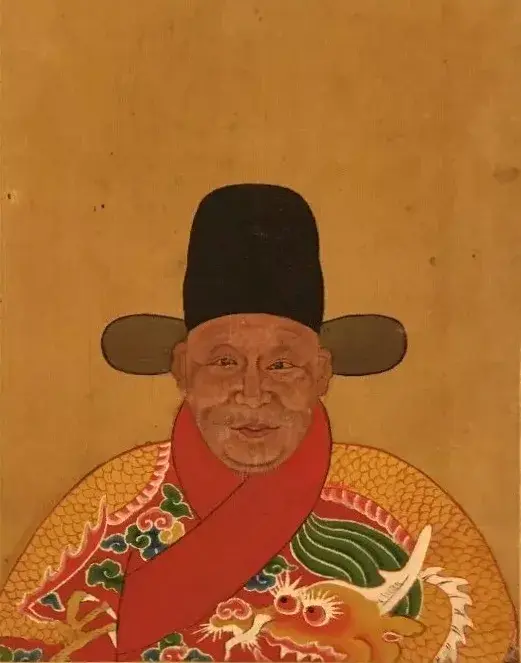
Life and Career
Prodigy Success and Education in the Northwest
Yang Yiqing was born on December 24, 1454, in the official residence of Huazhou, Guangdong Province, where his father Yang Jing served as Assistant Prefect. His ancestral home was Anning State in Yunnan. Endowed with astonishing intellectual gifts and total recall, Yang was celebrated across southern China as a child prodigy by the age of seven. Impressed by his early literary compositions, local authorities recommended him to Beijing, where the Chenghua Emperor issued a special rescript permitting him to study alongside imperial academicians in the Hanlin Academy. Passing provincial examinations at the tender age of fourteen, he achieved the jinshi degree in 1472 at the age of eighteen, receiving appointment as a drafter in the Central Drafting Office.
After serving in the capital, Yang was promoted to Assistant Censor of the Shanxi Surveillance Commission and subsequently Educational Intendant of Shaanxi. Over eight years of service in Shaanxi, Yang did not confine himself to academic examinations. Recognizing the critical geopolitical position of the northwestern frontier, he used his inspection tours to personally survey mountain passes, garrison walls, watchtowers, and river crossings along the border. He thoroughly analyzed the administrative deficiencies of the state tea-horse barter system and garrison agricultural colonies, cultivating intimate relationships with veteran border commanders and local frontiersmen. This extensive practical experience transformed Yang into the foremost civilian authority on northwestern defense in the Ming realm. He later returned to the central administration, holding posts as Junior Minister of the Court of Imperial Sacrifices and Chief Minister of the Nanjing Court of Imperial Sacrifices.
Supreme Commander of the Three Borders and Opposing Liu Jin
In 1502, during the fifteenth year of the Hongzhi reign, nomadic confederations mounted large-scale incursions along the northern borders. Minister of War Liu Daxia, aware of Yang's exceptional strategic abilities, memorialized the throne to appoint him Left Assistant Censor-in-Chief and Governor of Shaanxi, with concurrent oversight of frontier equestrian administration. Arriving in Shaanxi, Yang immediately overhauled garrison discipline, impeaching and cashiering corrupt military aristocrats such as Regional Commander Zheng Hong and stripping corrupt palace eunuchs of their extortionate stipends. In 1506, tens of thousands of Mongol cavalry invaded Guyuan while Regional Commander Cao Xiong hesitated in fear; Yang personally led elite light cavalry in a forced march from Pingliang, staging a sudden dawn raid that shattered the Mongol vanguard and stabilized the frontier.
Recognizing that the independent commands of Yansui, Ningxia, and Gansu failed to coordinate effectively during military crises, Yang proposed unifying the border defense under a single supreme regional commander. Liu Daxia endorsed the proposal, and the court promoted Yang to Right Censor-in-Chief and Supreme Commander of the Three Borders. Surveying the terrain, Yang observed that the open country between Huamachi and Lingzhou was barren and devoid of fortresses, inviting foreign cavalry penetrations. He supervised the construction of continuous Great Wall ramparts and watchtowers extending hundreds of li across Yansui and Ningxia. He also submitted visionary memorials urging the strategic reclamation of the Hetao loop and the ancient fortress of Dongsheng, arguing that establishing agricultural garrisons over thousands of fertile square li would permanently secure the northern frontier. The Zhengde Emperor warmly commended his initiatives, disbursing hundreds of thousands of taels of inner treasury silver to complete the defensive works.
However, despotic court eunuch Liu Jin was consolidating absolute power in the capital, demanding tribute and obedience from all provincial governors. Yang adamantly refused to bend to the dictator. Liu Jin retaliated by inciting subordinates to impeach Yang over the construction costs of the border wall, forcing Yang to retire on grounds of illness. Even after his departure, Liu Jin fabricated charges of embezzling border funds, dispatching the Embroidered Uniform Guard to arrest Yang and cast him into the imperial prison. Only through the desperate interventions of Senior Grand Secretaries Li Dongyang and Wang Ao was his life spared, resulting in dismissal and an extortionate fine of six hundred piculs of grain.
Strategic Plot to Overthrow Liu Jin
In April 1510, Prince of Anhua Zhu Zhihe staged a rebellion in Ningxia, citing popular outrage against Liu Jin's corrupt rule. The Zhengde Emperor reappointed Yang Yiqing as Supreme Commander of the Three Borders to quell the uprising, dispatching influential palace eunuch Zhang Yong with capital garrison troops to oversee the military expedition.
Before the main relief columns reached Ningxia, Yang's former subordinate officer Qiu Yue captured the rebel prince through a clever subterfuge. Arriving in Lingzhou, Yang issued general amnesties to conscripted civilians and restored public order. When Supervising Eunuch Zhang Yong arrived, the two men established an immediate mutual respect. Aware that Zhang Yong possessed an upright nature and was locked in bitter court rivalries with Liu Jin, Yang resolved to seize this historic opportunity. During a private banquet in his military headquarters, Yang dismissed all attendants, grasped Zhang Yong's forearm, and declared: "The rebellion of the vassal prince has been quelled through your grace, but while external treason is crushed, what shall become of the internal crisis threatening the state?" When Zhang inquired whom he meant, Yang dipped his finger in wine and drew the single character "Jin" on the eunuch's palm. Zhang hesitated, noting that Liu Jin's spies permeated the palace.
Yang delivered an impassioned strategic brief, outlining a meticulous plan: "You have achieved an immense triumph for the dynasty. When you present the captive prince at the imperial victory banquet, the sovereign will personally reward you. Wait until Liu Jin departs the hall, then prostrate yourself before the throne, present an indictment listing his seventeen capital crimes, and reveal that the prince revolted precisely in his name—dispatches which Liu Jin deliberately intercepted from the throne. If His Majesty wavers, weep aloud, strip off your cap, and offer to die on the palace steps to prove your sincerity. The Emperor will surely be moved." Fired by Yang's counsel, Zhang resolved to carry out the design. On the night of August 14, 1510, Zhang executed the plan to the letter. Wuzong ordered an immediate midnight search of Liu Jin's private mansion, uncovering treasonous seals, imperial robes, and armories of concealed weapons. Liu Jin was arrested and executed by slow slicing, along with dozens of conspirators. For his peerless statecraft, Yang was recalled to Beijing as Minister of Revenue and Junior Protector to the Crown Prince, subsequently transferring to Minister of Personnel.
Grand Minister of State and Third Frontier Command
As Minister of Personnel, Yang Yiqing presided over a thorough purification of the bureaucracy, reversing wrongful dismissals, promoting worthy scholar-officials, and coordinating military campaigns that suppressed internal peasant insurgencies across the central plains. When the Qianqing Palace caught fire and the throne solicited frank counsel, Yang submitted fearless memorials denouncing the emperor's tardy morning audiences, the lodging of frontier mercenaries within the palace, the extortionate imperial retail shops, and the disruptive imperial textile procurements in Jiangnan. In 1516, he entered the Grand Secretariat as Grand Secretary of the Wuying Hall. However, perceiving that military upstart Jiang Bin and favorite Qian Ning were systematically poisoning the sovereign's ear, Yang chose to resign, retiring to Mount Jiao in Zhenjiang to enjoy poetry and philosophical conversations with Buddhist monks.
Following the accession of the Jiajing Emperor in 1521, the young monarch recalled his late father's praise of Yang as the foremost statesman of southern China and treated the veteran with exceptional deference. In December 1524, facing intense nomadic pressure along the northwestern borders, the emperor issued a special rescript appointing Yang as Grand Preceptor, Minister of War, and Left Censor-in-Chief to serve a third term as Supreme Commander of the Three Borders. The appointment established a permanent dynastic precedent whereby cabinet-rank ministers governed vital frontier commands. Comparing Yang to the celebrated Tang loyalist Guo Ziyi, the court entrusted him with total administrative and military authority. Yang revitalized garrison morale, repelled nomadic raids, and normalized tributary trade relations with Turpan.
In 1526, Yang was recalled to Beijing to assume the supreme role of Senior Grand Secretary, alongside appointment as Grand Secretary of the Huagai Hall and Left Pillar of the State. The Jiajing Emperor presented him with two personal silver seals inscribed "Eminent Virtue and Loyal Rectitude" and "Correcting Errors and Curbing Transgressions," empowering him to submit confidential sealed memorials directly to the throne. Yang advocated military logistics reforms, expanded frontier ramparts, and aided the sovereign in navigating early administrative adjustments.
Late Slander, Impeachment, and Death in Reclusion
During the Great Rites Controversy that consumed the early Jiajing court, Yang, while residing in retirement, had privately praised Zhang Cong's ritual memorials as conforming to classical principles. Consequently, when Zhang Cong and Gui E gained ascendance, they initially courted Yang's favor. However, upon assuming the premiership, Yang maintained strict institutional impartiality, insisting on recalling veteran statesman Xie Qian to balance court power rather than aligning blindly with Zhang Cong's faction.
In 1529, when Imperial Guard officer Nie Nengqian was imprisoned for criticizing Zhang Cong, Yang intervened to save Nie from execution. Later, when supervising secretaries exposed corrupt bribery networks operated by Zhang Cong and Gui E, the emperor dismissed them temporarily. Panicked that their fall would drag him down, their partisan Huo Tao launched vicious denunciations against Yang, falsely accusing the premier of having accepted massive bribes from eunuchs Zhang Yong and Xiao Jing. Highly principled and deeply wounded by the baseless accusations, Yang submitted three successive retirement memorials. Although the emperor initially reassured him, Zhang Cong regained imperial favor and secretly memorialized that Yang was feigning resignation to test the throne. The emperor reluctantly granted Yang's retirement with customary monetary gifts.
In 1530, Zhang Cong's partisans orchestrated further judicial purges, falsely alleging that Yang had received silver from Zhang Yong's family for composing the eunuch's tomb epitaph, prompting an imperial decree stripping Yang of all official ranks. Residing in Zhenjiang at seventy-seven years of age, Yang was overcome with indignation upon learning of his cashiering, lamenting bitterly: "I am an old man, yet I have been traded away by these children!" Succumbing to profound grief and physical exhaustion, a virulent carbuncle erupted across his back. He passed away in his residence on September 5, 1530, leaving a final memorial defending his life's integrity. Regretting his harshness, the Jiajing Emperor ordered judicial investigations into the case suspended. In 1548, the court formally exonerated Yang of all false charges, restoring his honors, creating him Grand Tutor, and granting the illustrious posthumous title Wenxiang.