Aristocratic Birth
Born into the premier Hongnong Yang lineage, mastering Confucian scholarship and poetic prose.
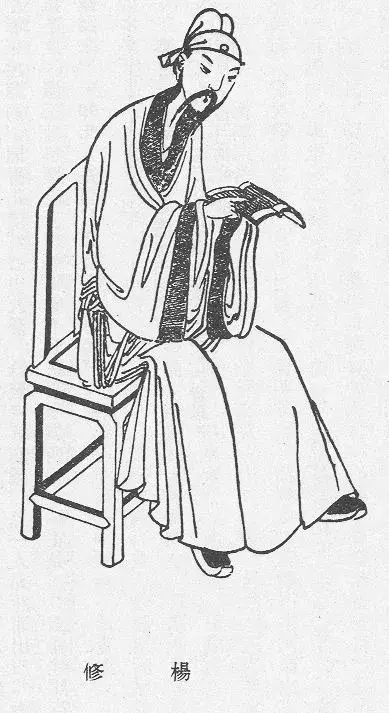
杨修
Yang Xiu (杨修, 175–219), styled Dezu, was a native of Huayin, Hongnong Commandery (modern Huayin, Shaanxi Province). He was an eminent scholar, stylist, and political figure of the late Eastern Han Dynasty. Originating from the aristocratic Hongnong Yang clan—renowned for holding the post of Grand Commandant across four generations—Yang was the son of Grand Commandant Yang Biao and a nephew of warlord Yuan Shu. Renowned for…
Yang Xiu (杨修, 175–219), styled Dezu, was a native of Huayin, Hongnong Commandery (modern Huayin, Shaanxi Province). He was an eminent scholar, stylist, and political figure of the late Eastern Han Dynasty. Originating from the aristocratic Hongnong Yang clan—renowned for holding the post of Grand Commandant across four generations—Yang was the son of Grand Commandant Yang Biao and a nephew of warlord Yuan Shu. Renowned for keen intellect, profound erudition, and literary brilliance matching the Seven Scholars of Jian'an, he entered government as Filial and Incorrupt, eventually recruited by Chancellor Cao Cao as Registrar to the Chancellor. In this role, Yang exhibited extraordinary administrative competence, managing secretarial, civil, and military archives with flawless discernment. However, during the fierce succession rivalry between Cao Cao's sons, Yang aligned himself intimately with Cao Zhi, preparing secret answer manuals for him that aroused Cao Cao's profound paranoia. In 219, during the Hanzhong Campaign, Yang deciphered Cao Cao's cryptic night password "Chicken Ribs" as an impending signal of retreat and packed his baggage, precipitating panic across the encampment. Fearing Yang's maternal ties to the Yuan clan, his unchecked brilliance, and his factional meddling in royal succession, Cao Cao executed him on charges of leaking state secrets, cutting his life short at age forty-five.
Born into the premier Hongnong Yang lineage, mastering Confucian scholarship and poetic prose.
Nominated Filial and Incorrupt, appointed Court Gentleman, acclaimed for dazzling intellect.
Recruited by Chancellor Cao Cao as Registrar, flawlessly coordinating administrative and military archives.
Befriended Cao Zhi, dedicating his strategic counsel to securing Cao Zhi's appointment as heir apparent.
Cao Pi secured appointment as Crown Prince; Cao Zhi was sidelined, leaving Yang Xiu in hazardous isolation.
Anticipated Cao Cao's retreat in Hanzhong; executed by Cao Cao in the autumn at age forty-five.
Yang Xiu was born in the fourth year of the Xiping era (175) into the eminent Hongnong Yang clan, which, alongside the Runan Yuan clan, formed the twin pillars of the Eastern Han high aristocracy. Four consecutive generations of the Yang family—Yang Zhen, Yang Bing, Yang Ci, and Yang Xiu's father, Yang Biao—had ascended to the supreme office of Grand Commandant, a distinction known across the realm as "Four Generations of the Three Excellencies." His mother was the sister of warlord Yuan Shu, endowing Yang Xiu with the combined prestige of the two most illustrious lineages of the empire. Blessed with photographic recall and razor-sharp intellect, Yang excelled in classical texts, state precedents, and rhymed prose. During the early Jian'an years, he was recommended as Filial and Incorrupt and commissioned as a Court Gentleman.
In 208, upon abolishing the Three Excellencies and declaring himself Chancellor, Cao Cao sought leading talents to staff his headquarters. He summoned the thirty-four-year-old Yang Xiu to serve as Registrar to the Chancellor. The Registrar oversaw confidential chancellery correspondence, troop logistics, and central memorials. Yang proved uniquely suited to the post. Whether fielding urgent military despatches, complex taxation accounts, or sensitive appointments, Yang synthesized details with effortless clarity, responding to Cao Cao's inquiries with instantaneous precision. In an era of non-stop military campaigning, his uncanny ability to divine Cao Cao's unspoken thoughts and draft decrees earned him the chancellery's universal admiration.
In the autumn of 208, following Cao Cao's pacification of Jingzhou, Liu Zhang of Yizhou dispatched his aide Zhang Song to pay respects. Zhang Song was unconventional and unattractive, leading Cao Cao to treat him with cold contempt. Yang Xiu immediately recognized Zhang Song's extraordinary intellectual gifts and urged Cao Cao to enlist him, though Cao Cao refused. To impress Zhang Song, Yang displayed Cao Cao's unpublished military treatises; Zhang read them once over banquets and recited them flawlessly from memory. Yang Xiu held him in high esteem, demonstrating his discerning eye for intellectual talent.
As Cao Cao advanced in years, rivalry over the succession to the Kingdom of Wei intensified. Cao Cao's eldest surviving son, Cao Pi, was calculating, cautious, and politically astute, whereas his fourth son, Cao Zhi, the Marquis of Linzi, possessed incomparable poetic talent and charismatic openness, making him Cao Cao's favorite. Drawn to Cao Zhi's literary passion, Yang Xiu formed a deep friendship with him, resolving to deploy his political intellect to install Cao Zhi as crown prince. Along with Ding Yi and Ding Yi (junior), Yang Xiu formed the core of Cao Zhi's intellectual entourage against Cao Pi's advisors, including Sima Yi and Chen Qun.
Cao Cao frequently tested the political competence of his sons with unannounced examinations on administrative policy and statecraft. To guarantee Cao Zhi's supremacy, Yang Xiu anticipated dozens of possible scenarios and composed exhaustive, elegant written responses, known as the Instructional Answers. Whenever Cao Cao dispatched messengers to query Cao Zhi, the young marquis recited Yang's pre-formulated replies with astonishing fluency. Initially delighted, Cao Cao grew suspicious of such unnatural perfection. A discreet investigation uncovered Yang Xiu's original drafted manuscripts in Cao Zhi's apartments.
On another occasion, Cao Cao ordered both sons to exit the city gates of Ye while secretly instructing the guards to deny passage, testing their initiative. Cao Pi hesitated and turned back, but Cao Zhi, coached by Yang Xiu to execute anyone defying royal orders, drew his sword and decapitated the guard. While Cao Cao initially admired the boldness, discovering that Yang Xiu had scripted the bloody deed filled him with deep disgust at such political manipulation.
Furthermore, when Cao Pi secretly smuggled his confidant Wu Zhi into his palace inside large woven hampers to strategize, Yang Xiu detected the move and alerted Cao Cao. Warned in time, Wu Zhi had empty hampers brought in the following day; Cao Cao found no stowaway and suspected Yang Xiu of fabricating slander against Cao Pi, permanently shattering his trust in the registrar.
In the spring of 219, Liu Bei captured Hanzhong, killing Cao Cao's top general, Xiahou Yuan. Cao Cao mobilized an army of several hundred thousand troops through the Xie Valley to contest the territory, but the campaign bogged down in a protracted war of attrition. Liu Bei maintained fortified high ground, while Cao Cao's supply lines through rugged mountain trails faltered, leaving his troops exhausted. Squeezed between the inability to advance and the humiliation of retreat, Cao Cao was paralyzed by indecision.
One evening, General Xiahou Dun entered the command tent to request the night patrol countersign. Lost in brooding thought, Cao Cao muttered a two-word phrase: "Chicken Ribs." Xiahou Dun relayed the password without comprehending its significance. Upon receiving the countersign, Yang Xiu returned to his personal tent and immediately ordered his servants to pack his baggage for departure. Startled by this action, Xiahou Dun hurried to consult Yang.
Yang Xiu smiled calmly and explained: "From tonight's countersign, one knows the King of Wei will soon withdraw. As for chicken ribs, there is too little meat to eat, yet they are too flavorful to discard. Now, to advance yields no victory, while to retreat invites mockery. Remaining here offers no benefit; it is far better to return home. The King will certainly issue the withdrawal order tomorrow." Convinced by his analysis, Xiahou Dun and other commanders began quietly packing their camp gear. During a nocturnal inspection, Cao Cao discovered the army packed and ready, tracing the source of the rumors directly to Yang Xiu.
Yang Xiu's public interpretation of the password shattered Cao Cao's patience. In Cao Cao's eyes, Yang's relentless habit of piercing imperial intentions not only undermined military discipline but challenged supreme command authority. Cao Cao ordered Yang Xiu arrested immediately on charges of subverting troop morale, leaking confidential instructions, and colluding with royal princes.
In the autumn of 219, Cao Cao executed Yang Xiu in the Hanzhong encampment at the age of forty-five. Standing before the executioner, Yang Xiu remained stoic, remarking: "I only wonder why my death has come so late!" He had long realized that his brilliance and factional entanglements made execution inevitable.
Following the withdrawal to Luoyang, Cao Cao granted an audience to Grand Commandant Yang Biao. Noticing that the venerable statesman appeared gaunt and frail, Cao Cao inquired hypocritically: "Why has Your Excellency grown so emaciated?" Yang Biao replied with sorrowful dignity: "I am ashamed that I lacked the foresight of Jin Midi, who executed his own sons, yet I cannot help feeling the tender love of an old cow licking her calf!" By citing Jin Midi, Yang Biao expressed filial grief while delivering a poignant reprimand to Cao Cao's brutality. Deeply embarrassed, Cao Cao dropped further retribution against the Hongnong Yang family.
During the Guandu campaign against Yuan Shao, Cao Cao mobilized workshops to manufacture military weapons and siege engines. When operations concluded, dozens of bushels of short bamboo pieces remained. Craftsmen considered them useless scraps and prepared to burn them. Cao Cao considered repurposing them into defensive shields but kept silent. He dispatched an envoy to query Yang Xiu. Without hesitation, Yang replied: "Weave these short bamboo segments together to construct light archery shields." His answer matched Cao Cao's thoughts precisely, showcasing his inventive pragmatism.
Yang Xiu's legendary mental agility generated famous anecdotes in Chinese literary tradition. In one episode, Cao Cao inspected the newly erected gateway of his chancellery palace. Dissatisfied with the proportions but offering no spoken critique, Cao Cao took a brush, wrote the single character for 'live' on the central door, and departed. Architects and courtiers were baffled. Yang Xiu immediately ordered the artisans to tear down the entrance and widen the portal, explaining that the character for 'live' placed inside 'door' formed the character meaning 'broad', signaling that the gateway was too wide.
On another occasion, a tribute box of Northern milk pastry arrived for Cao Cao, who inscribed the characters for 'One Box Pastry' on the lid. Yang Xiu walked into the chamber, picked up a spoon, and distributed the pastry to the attendants. When Cao Cao questioned his audacity, Yang answered without hesitation that the inscription could be read as 'One Spoonful Per Person', which he felt obliged to obey.
While traveling through Shangyu, Cao Cao and Yang Xiu visited the commemorative stele of the Han filial daughter Cao E. On the back of the monument, scholars discovered an enigmatic eight-character riddle inscribed by ancient polymath Cai Yong: "Yellow silk, youthful maiden, maternal grandson, mortar for pestling spices." Cao Cao asked Yang Xiu whether he understood it. Yang immediately replied that he did, but Cao Cao asked him to wait while he pondered it himself.
The pair rode together for another thirty li before Cao Cao solved it. He asked Yang Xiu to write down his solution first. Yang noted that 'yellow silk' meant dyed silk, which formed the character for 'exquisite'; 'youthful maiden' formed 'splendid'; 'maternal grandson' formed 'fine'; and 'mortar' formed 'diction', assembling the phrase 'Exquisite, Splendid, Fine Diction'. Cao Cao checked his own draft, found it identical, and sighed with genuine admiration: "My talent lags behind yours by thirty li!"
Beyond his secretarial agility and political acumen, Yang Xiu achieved distinction as an accomplished man of letters whose poetic stature ranked alongside the Seven Scholars of Jian'an. He mastered ornate rhapsodies, official memorials, and scholarly epistles marked by resonant diction and vigorous philosophical depth. Contemporary scholar Liu Zhen, writing to Cao Pi, praised Yang's extraordinary literary elegance as unmatched among court intellectuals.
In his extensive correspondence with Cao Zhi on literary theory, Yang argued that creative writing should embody high civic purpose and statecraft rather than trivial rhetorical ornamentation. His aesthetic outlook mirrored the passionate Jian'an style, fusing vigorous stoicism with profound emotional resonance. Although the political disgrace following his execution caused much of his collected works to be dispersed and lost during the Wei-Jin transition, surviving fragments—such as the Rhapsody on Seasonal Excursions and Rhapsody on the Divine Maiden—attest to his exquisite command of classical Chinese belles-lettres.
FIGURES ASSOCIATED WITH THIS DYNASTY