Birth in Wuling
Born on March 24 into a prominent military-bureaucratic family; son of Supreme Commander Yang He.
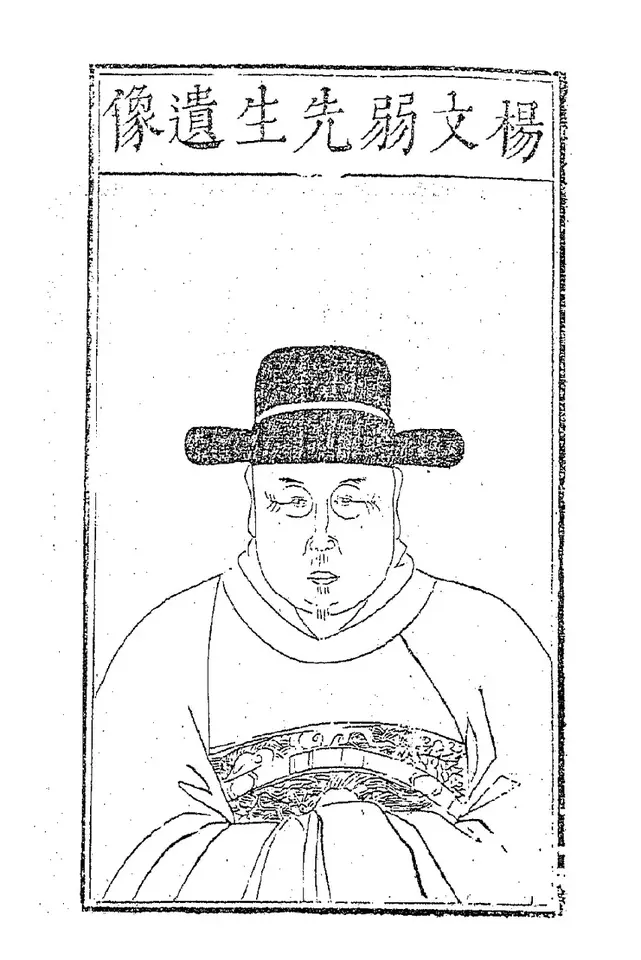
杨嗣昌
Yang Sichang (杨嗣昌, 1588–1641), courtesy name Wenruo (文弱), pseudonym Geng'an (羹庵), was an influential and controversial grand secretary, minister of war, and supreme commander during the reign of the Chongzhen Emperor in the late Ming Dynasty, hailing from Wuling, Changde Prefecture, Huguang. Attaining his jinshi degree in 1610 during the Wanli reign, Yang demonstrated mastery in state finance, tax logistics, and frontier…
Yang Sichang (杨嗣昌, 1588–1641), courtesy name Wenruo (文弱), pseudonym Geng'an (羹庵), was an influential and controversial grand secretary, minister of war, and supreme commander during the reign of the Chongzhen Emperor in the late Ming Dynasty, hailing from Wuling, Changde Prefecture, Huguang. Attaining his jinshi degree in 1610 during the Wanli reign, Yang demonstrated mastery in state finance, tax logistics, and frontier topography, compiling the twenty-volume fiscal compendium Diguan Ji during a period of retirement. Recalled under Emperor Chongzhen, he served with distinction as Governor of Shan-Yong and Supreme Commander of Xuan-Da and Shanxi, earning the deep trust and personal admiration of the monarch. In 1637, amidst simultaneous external assaults by the Manchus and widespread internal peasant rebellions, Yang was promoted to Minister of War, entering the Grand Secretariat the following year. He formulated the grand counter-insurgency doctrine of "Four Fronts, Six Corners, and Ten-Sided Netting," arguing that the court had to achieve domestic pacification before confronting foreign invaders (an nei rang wai), while advocating clandestine peace negotiations with the Qing Dynasty. To finance expanded standing armies, he levied massive surtaxes ("pacification tax" and "training tax"), which severely exacerbated peasant destitution. In 1639, when Zhang Xianzhong rebelled again in Hubei, Yang was granted an imperial sword and dispatched as Supreme Commander in Central China. Despite winning a major tactical victory at Manaoshan in 1640, his field generals proved insubordinate. In early 1641, Li Zicheng captured Luoyang and executed Prince Fu, while Zhang Xianzhong executed a lightning strike that seized Xiangyang and killed Prince Xiang. Stricken with despair and terror over imperial retribution, Yang refused food and died of illness at Shashi in March 1641 at the age of fifty-four, a tragedy that precipitated the final unraveling of the Ming Dynasty.
Born on March 24 into a prominent military-bureaucratic family; son of Supreme Commander Yang He.
Succeeded in the metropolitan examinations; held provincial educational and capital revenue posts.
Resigned to avoid the Eunuch Faction under Wei Zhongxian; compiled the fiscal compendium Diguan Ji.
Elevated to Governor of Shanhaiguan and Yongping, constructing the dual-wing fortification walls.
Appointed Vice Minister of War and Supreme Commander of Xuan-Da and Shanxi; impressed the emperor with strategic memorials.
Retained in office during parental mourning as Minister of War; promulgated the "Ten-Sided Netting" strategy and enacted additional military surtaxes.
Appointed Grand Secretary of the Eastern Pavilion; proposed covert peace overtures with the Qing to concentrate on domestic pacification.
Dispatched with the Imperial Sword to direct all imperial counter-insurgency field armies in Hubei, Sichuan, and Shaanxi.
Coordinated field armies to crush Zhang Xianzhong's rebel host at Mount Manao in Sichuan.
Following the falls of Luoyang and Xiangyang and the executions of two imperial princes, died of illness and self-starvation at Shashi at age fifty-four.
Yang Sichang was born on March 24, 1588, in Wuling, Huguang. He was the only son of Yang He, an eminent minister who rose to Vice Minister of War and Supreme Commander of the Three Frontiers of Shaanxi. Trained rigorously in classical philosophy, statecraft, and historical logistics, Yang passed the provincial examination in 1606 and attained the jinshi degree in 1610.
His early bureaucratic appointments included Professor in the Hangzhou Prefectural School, Doctor in the Nanjing National University, and Director in the Ministry of Revenue. In 1620, while overseeing military supply allocations, he petitioned the throne for funds to assist Dengzhou-Laizhou Governor Yuan Keli in rehabilitating refugee soldiers. As Grand Eunuch Wei Zhongxian established his tyrannical control over the court, Yang prudently cited illness and retired to his ancestral estate in 1622. Following his father's dismissal by the eunuch faction in 1625, father and son lived quietly in retirement. Watching the deterioration of the northeastern frontier against the Later Jin, Yang compiled his twenty-volume magnum opus Diguan Ji, systematically analyzing Ming fiscal allocations, granary networks, and frontier provisions.
Upon ascending the throne in 1627, Emperor Chongzhen eliminated the Wei Zhongxian clique and actively recruited capable administrators. Impressed by Diguan Ji, the emperor appointed Yang to regional surveillance circuits in Henan, Bazhou, and Shanhaiguan. In 1631, when his father Yang He was sentenced to death following the collapse of his pacification policy in Shaanxi, Yang submitted three desperate memorials offering to sacrifice his own life and official status to redeem his father. Emperor Chongzhen commuted the elder Yang's sentence to exile in Jiangxi and retained Yang Sichang in office.
In 1632, Yang was elevated to Right Assistant Censor-in-Chief and Governor of Shanhaiguan and Yongping. He repaired frontier fortifications, integrated cavalry patrols, and constructed the outer wing walls flanking Shanhaiguan. In 1634, he was promoted to Vice Minister of War and Supreme Commander of the Xuan-Da and Shanxi garrisons. Yang submitted comprehensive memorials proposing the reorganization of frontier defenses, the opening of local mines to employ displaced vagrants, and the rigorous auditing of military payrolls, convincing Emperor Chongzhen that he possessed rare strategic talent.
In 1636, following the death of his father in exile and subsequent maternal mourning, Yang retired home. However, amidst devastating Qing cavalry raids deep into the capital region, Emperor Chongzhen recalled Yang under special exemption (duoqing), appointing him Minister of War in 1637.
Confronted with the dual threats of the Qing armies in the north and burgeoning peasant rebel armies in the interior, Yang formulated his grand strategic doctrine: "Pacify the inside first to repel the outside" (an nei rang wai). He promulgated the famous "Four Fronts, Six Corners, and Ten-Sided Netting" plan: designating Henan, Huguang, Shaanxi, and Fengyang as the Four Fronts to engage in offensive combat, while Yan-Sui, Shanxi, Henan, Huguang, Jiangxi, and Sichuan served as the Six Corners to establish tight blockades, trapping rebel forces in a vast cordon. To fund this massive military buildup of 120,000 new soldiers, Yang instituted nationwide surtaxes, the "pacification tax" (jiaoxiang) and "training tax" (lianxiang), generating millions of taels of silver. However, these surtaxes fell directly upon an already destitute peasantry, driving hundreds of thousands into the arms of the rebel armies. In 1638, Yang was made Grand Secretary of the Eastern Pavilion. Believing that a two-front war was unwinnable, Yang advocated secret peace talks with the Qing Dynasty. When the plan was leaked, court officials launched a furious storm of impeachment, accusing Yang of treasonable appeasement.
In the summer of 1639, rebel leader Zhang Xianzhong re-ignited rebellion in Gucheng, Hubei. Deeply shaken, Emperor Chongzhen invested Yang Sichang with the Imperial Sword, appointing him Supreme Field Commander of Central China. Yang departed Beijing at the head of imperial divisions, establishing his supreme headquarters in Xiangyang.
Operating across the mountainous terrain of Hubei, Sichuan, and Shaanxi, Yang directed a coordinated offensive against Zhang Xianzhong. In February 1640, imperial forces scored a decisive victory at Mount Manao in Sichuan, slaughtering thousands of rebel fighters and capturing vast quantities of weaponry. However, Yang's strategic momentum was undermined by severe command friction. Senior regional commanders, notably Zuo Liangyu and He Renlong, resented Yang's micromanagement and disobeyed orders, while Yang sidelined seasoned commander Sun Chuanting.
In late 1640, rebel leader Li Zicheng emerged from the Henan mountains, gathering hundreds of thousands of starving peasants. In February 1641, Li Zicheng stormed Luoyang, capturing and executing Prince Fu (the uncle of Emperor Chongzhen) and pillaging the imperial granaries. Days later, Zhang Xianzhong executed a lightning counter-march, disguising his vanguard in imperial uniform to breach the undefended gates of Xiangyang. Zhang seized the vast military reserves of Yang's headquarters and executed Prince Xiang.
Stationed at Shashi in Jingzhou, Yang was paralyzed by horror upon learning that two imperial princes had perished and his strategic center was lost. Worn down by chronic respiratory illness, exhausted by relentless field campaigns, and terrified of imperial execution, Yang ceased eating and died of illness and despair on March 16, 1641, at the age of fifty-four. Emperor Chongzhen mourned his demise, ordering high posthumous honors, though contemporary critics and later historians largely held Yang's catastrophic fiscal and strategic policies responsible for the final collapse of the Ming Dynasty.
Yang Sichang possessed extraordinary strategic energy, literary eloquence, and administrative command, yet his relentless tax extractions and strategic miscalculations accelerated the downfall of the Ming state.
"Yang Sichang was eloquent, highly knowledgeable in military arts, and exceptionally diligent in administration. Yet his grand strategy lacked profound prudence; his crushing surtaxes provoked widespread hatred, causing the realm to disintegrate. When Xiangyang fell and he died of despair, for the catastrophe of Ming's fall, Sichang cannot escape primary blame." — History of Ming (Ming Shi), Scroll 136, "Biographies"
"Wenruo was by no means deficient in intellect, but his temperament was narrow and intolerant. His 'Ten-Sided Netting' served only to consume the lifeblood of the empire; when field discipline dissolved and the armies were routed, it stood as a sorrowful omen of dynastic extinction." — Tan Qian, Guoque
FIGURES ASSOCIATED WITH THIS DYNASTY