杨士勋
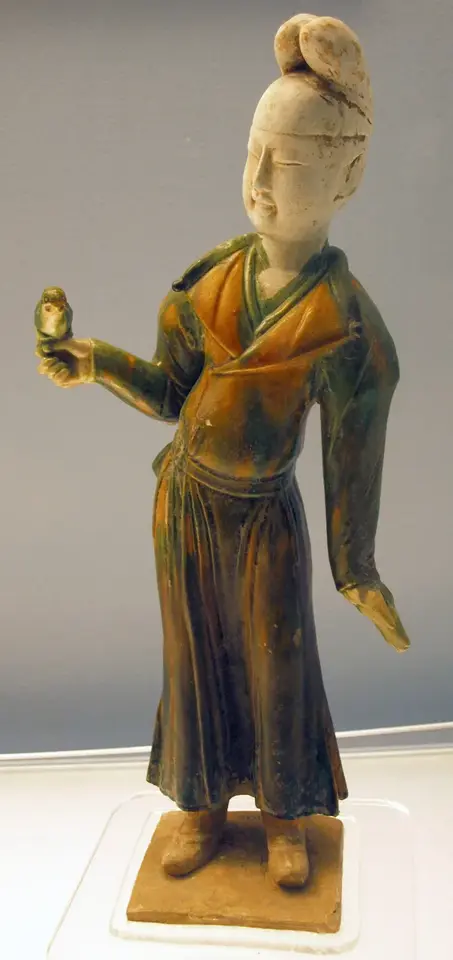
Historical sculpture of Yang Shixun
Image creditsUser:Captmondo · CC BY-SA 3.0Image source

Historical figure

Yang Shixun (杨士勋)

杨士勋

Yang Shixun, a native of Huayin in Hongnong (modern Huayin, Shaanxi Province), was an eminent classical exegete, philologist, and scholar during the early Tang dynasty. Endowed with vast classical erudition from youth, Yang mastered the pre-Qin Confucian canons and ancient commentaries. During the Zhenguan era of Emperor Taizong, he served as Assistant Teacher of the Four Gates College within the National Academy…

Era not stated

PROFILE

Yang Shixun, a native of Huayin in Hongnong (modern Huayin, Shaanxi Province), was an eminent classical exegete, philologist, and scholar during the early Tang dynasty. Endowed with vast classical erudition from youth, Yang mastered the pre-Qin Confucian canons and ancient commentaries. During the Zhenguan era of Emperor Taizong, he served as Assistant Teacher of the Four Gates College within the National Academy (Guozijian), subsequently rising to Erudite of the National Academy (Guozi Boshi) to lecture on the Spring and Autumn Annals. When Emperor Taizong commissioned Chancellor Kong Yingda to compile the authoritative national textbook Correct Meaning of the Five Classics (Wujing Zhengyi), Yang was summoned to join the editorial bureau, collaborating with scholars Gu Nalu and Zhu Changcai to edit the Correct Meaning of the Chunqiu. Concurrently, Yang dedicated himself to Dong Jin master Fan Ning's Collected Explanations on the Guliang Commentary, synthesizing Han, Wei, and Six Dynasties scholarship to author the twelve-volume Subcommentary to the Guliang Commentary (Guliang Shu). Marked by precise philological glosses and coherent institutional analysis, his work was codified as the empire's definitive standard for imperial civil examinations and permanently enshrined in the supreme canon, the Thirteen Classics with Commentaries and Subcommentaries (Shisanjing Zhushu).

Ancestral Home
Huayin, Hongnong (modern Huayin, Shaanxi)
Major Offices
Assistant Teacher of the Four Gates College, Erudite of the National Academy
Primary Identity
Early Tang classical scholar, author of the Subcommentary to the Guliang Commentary

LIFE TIMELINE

Relationship graph

BIOGRAPHY

Chronology

  • 630 (Zhenguan 4) | Teaching at the Four Gates | Entered the National Academy as Assistant Teacher of the Four Gates College, instructing imperial students.
  • 638 (Zhenguan 12) | Compiling National Canons | Appointed by imperial decree to assist Kong Yingda in editing the Correct Meaning of the Chunqiu.
  • 645 (Zhenguan 19) | Completing the Guliang Commentary | Finalized his monumental twelve-volume Subcommentary to the Guliang Commentary, submitting it to court.
  • 653 (Yonghui 4) | Imperial Promulgation | The Wujing Zhengyi and canonical subcommentaries were officially distributed to schools throughout the empire.
  • 655 (Yonghui 6) | Erudite of the Academy | Promoted to Erudite of the National Academy, presiding over advanced seminars and imperial examinations.

Life

Classical Heritage and the National Academy

Yang Shixun belonged to the illustrious Hongnong Yang clan of Guanzhong, a family celebrated for hereditary Confucian scholarship since the Eastern Han statesman Yang Zhen. Yang demonstrated exceptional intellect from childhood, dedicating himself to the Rites and the Spring and Autumn Annals. During the civil wars marking the collapse of the Sui, he preserved rare manuscripts amidst the flames, mastering paleography, phonology, and ancient semantic structures.

Following Emperor Taizong's pacification of China, the Zhenguan court prioritized cultural revival, establishing specialized academies in Chang'an. Recognized for his classical expertise, Yang Shixun was appointed Assistant Teacher of the Four Gates College. The Four Gates College trained sons of middle-ranking officials and exceptional commoners; Yang earned the profound admiration of his students for his clarity in expounding classical exegesis.

Imperial Commission and the Wujing Zhengyi

Confronted with conflicting Northern and Southern commentary traditions that confused examinees, Emperor Taizong issued an edict in 638 commanding Chancellor Kong Yingda and Vice Director Yan Shigu to assemble eminent scholars to produce the unified Correct Meaning of the Five Classics (Wujing Zhengyi).

Yang Shixun was drafted into this supreme commission alongside scholars Gu Nalu and Zhu Changcai, tasked specifically with collating the Spring and Autumn Annals. Under Kong Yingda's overall direction, Yang utilized his philological rigor to reconcile the tripartite traditions of Zuo, Gongyang, and Guliang, excising spurious interpolations and providing the unified empire with an authoritative ideological consensus.

Independent Exegesis and the Guliang Monument

While participating in state projects, Yang recognized that while the Zuo Zhuan excelled in narrative chronicle and the Gongyang Zhuan in esoteric allusions, the Guliang Zhuan was the most austere in articulating feudal hierarchy and ritual protocol. Although Eastern Jin scholar Fan Ning had produced a revered commentary, it was excessively terse, and subsequent Six Dynasties expansions remained rambling.

Working through independent research, Yang composed his definitive twelve-volume Subcommentary to the Guliang Commentary (Chunqiu Guliang Zhuan Shu). Methodically glossing every character, archaic usage, and ritual regulation, he supplemented Fan Ning's omissions while maintaining classical discipline. His work won acclaim across the capital, hailed as an exegetical standard equal to Kong Yingda's own contributions.

During the Yonghui era, Emperor Gaozong promulgated these canonical texts across the realm. Promoted to Erudite of the National Academy, Yang spent his remaining years teaching in Chang'an, educating an entire generation of civil statesmen.

Major Achievements

Codification of the Subcommentary in the Thirteen Classics

Yang Shixun's Subcommentary to the Guliang Commentary stands as a monumental landmark in traditional Chinese classical scholarship. Prior to his work, the Guliang lacked a comprehensive subcommentary integrating linguistic glossing with Confucian political philosophy. His treatise established the statutory standard for Tang and Song imperial examinations and was permanently integrated into the Thirteen Classics with Commentaries and Subcommentaries, influencing East Asian classical education for over a millennium.

Unifying Classical Doctrine in the Wujing Zhengyi

As a key member of Kong Yingda's editorial team, Yang helped eliminate centuries of regional scholastic divergence between the metaphysical Southern school and the pedantic Northern school. His collation of the Spring and Autumn Annals provided early Tang statecraft with a coherent, unified Confucian ideology that anchored the golden age of High Tang governance.
Relationships

  • Editorial Director: Kong Yingda, legendary early Tang classical scholar and Chancellor of the National Academy.
  • Colleague Scholars: Gu Nalu and Zhu Changcai, distinguished early Tang classicists who co-edited the Correct Meaning of the Chunqiu.
  • Classical Predecessor: Fan Ning, Eastern Jin master who authored the Collected Explanations on the Guliang Commentary, which Yang expounded.

Historical Evaluations

  • Qing Imperial Catalogue (Siku Quanshu Zongmu Tiyao): "Yang Shixun authored the twelve volumes of Subcommentary to the Guliang Commentary... active in the middle Zhenguan era. His commentary seamlessly expounds Fan Ning's text with immaculate philological rigor; among Tang scholars of the Guliang, none surpassed him."
  • Tang Dynastic Scholars: "While Master Kong compiled the Five Classics, Shixun achieved supreme mastery over the Guliang, lucid and profound—a genuine compass for classical studies."
  • Modern Classicist Pi Xirui: "The Tang compilation of the Wujing Zhengyi achieved classical unification. Yang Shixun's Guliang Subcommentary entered the Thirteen Classics, rendering immortal service to the Confucian gate."

Related Entries

  • Chunqiu Guliang Zhuan
  • Wujing Zhengyi
  • Kong Yingda
  • Thirteen Classics with Commentaries and Subcommentaries
  • Fan Ning

FIGURES ASSOCIATED WITH THIS DYNASTY

Bibliography

  • New Book of Tang, Volume 59, Treatise 49 (Literature 3)
  • Old Book of Tang, Volume 73, Biographies 23 (Kong Yingda)
  • Siku Quanshu Zongmu Tiyao, Volume 28 (Classics 2)