Birth in the Capital
Born on the sixth day of the eleventh lunar month in Xiaoshun Alley, Beijing, into an illustrious official family.
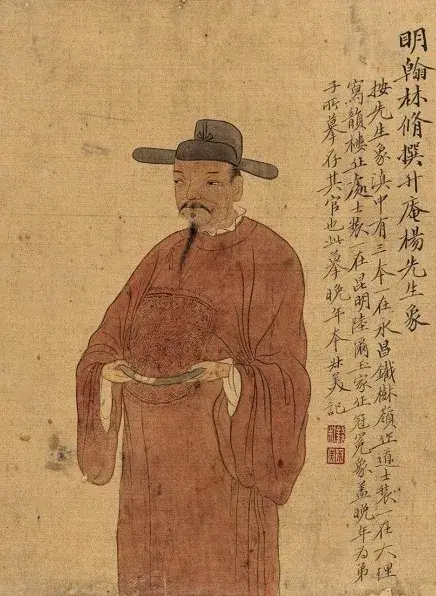
杨慎
Yang Shen (1488–1559), styled Yongxiu and literary name Sheng'an, was a celebrated statesman, literary titan, and encyclopedic scholar of the Ming dynasty. Born into the eminent household of Grand Secretary Yang Tinghe in Xindu, Sichuan, he demonstrated extraordinary prodigy in classical scholarship and poetry from an early age, placing first as the principal graduate (Zhuangyuan) in the palace examination of 1511. He served…
Yang Shen (1488–1559), styled Yongxiu and literary name Sheng'an, was a celebrated statesman, literary titan, and encyclopedic scholar of the Ming dynasty. Born into the eminent household of Grand Secretary Yang Tinghe in Xindu, Sichuan, he demonstrated extraordinary prodigy in classical scholarship and poetry from an early age, placing first as the principal graduate (Zhuangyuan) in the palace examination of 1511. He served as Senior Compiler in the Hanlin Academy and acted as an Imperial Lecturer, known for his unyielding integrity and erudition. During the Great Rites Controversy (Daliyi) under the Jiajing Emperor, Yang Shen courageously led hundreds of civil officials in a historic kneeling protest at the Zuoshun Gate to uphold ancestral dynastic ritual propriety. Brutally subjected to imperial court floggings twice, he was exiled for life to the remote southwestern garrison frontier of Yongchang, Yunnan. Throughout thirty-five years of punitive banishment, he embraced scholarly seclusion and cultural enlightenment, producing over four hundred scholarly works spanning classical philology, history, epigraphy, phonetic linguistics, and regional ethnography. Renowned alongside Xie Jin and Xu Wei as one of the Three Great Talents of the Ming Dynasty, his timeless lyric poem Linjiangxian ("The rushing waters of the Yangtze roll eastward away") endures as an immortal masterpiece of Chinese literary heritage.
Born on the sixth day of the eleventh lunar month in Xiaoshun Alley, Beijing, into an illustrious official family.
Formed an enduring friendship at age eleven with Zhang Han, son of Zhang Zhichun of Yongchang, and began composing modern-style verse.
Accompanied his father to Sichuan to observe mourning, drafting celebrated essays such as 'Lament for the Ancient Battlefield' that astonished his clan.
Arrived in Beijing and composed the 'Yellow Leaf Poem' that astonished the capital; accepted as a protégé by Grand Secretary Li Dongyang.
Sat for the metropolitan examination under examiners Wang Ao and Liang Chu, who selected him first; eliminated due to a candle fire burning his papers.
Passed the palace examination as the first-rank Zhuangyuan at age twenty-four, appointed Senior Compiler in the Hanlin Academy.
Following the demise of his stepmother Lady Yu, escorted her coffin back to Sichuan and composed literary works at Guihu Lake.
Submitted the Dingchou Memorial vehemently advising against Emperor Wuzong's frontier tours, retiring in indignation.
Married the literary prodigy Huang E, cultivating poetry and music at Guihu Lake in Xindu.
Returned to court upon Emperor Shizong's accession as Imperial Lecturer and compiled the Veritable Records of Wuzong.
Served as Chief Examiner for the Beijing provincial examination, regulating court rituals and commenting on government policies.
Led officials in kneeling and weeping at the Zuoshun Gate during the Great Rites Controversy; suffered brutal floggings and was exiled to Yongchang.
Rushed to Sichuan upon the passing of his father Yang Tinghe to observe mourning, but was forcibly escorted back to Yunnan.
Assisted Grand Coordinator Gu Yingxiang in pacifying the uprising of An Quan in Xundian and relocated to Baoshan.
Resided briefly in Jiangyang, Luzhou, under the protection of Duke Mu Chaobi, but was forced back to Yunnan following imperial inquiries.
Passed away on the sixth day of the seventh lunar month in his Gaorao retreat in Kunming at the age of seventy-two.
Bestowed the posthumous office of Vice Minister of the Court of Imperial Entertainments and honored with the posthumous name Wenxian.
Yang Shen was born into a prominent bureaucratic family of imperial ministers in Beijing. His father, Yang Tinghe, served as Senior Grand Secretary in the Grand Secretariat and presided over pivotal transitions in imperial governance. Raised in an intellectually rigorous household, Yang Shen exhibited prodigious intelligence in his childhood, committing classical canons and historical treatises to memory with photographic precision.
At the age of eleven, he composed poetry that impressed senior capital literati. When he was thirteen, his celebrated rhymed prose Gui'an Fu caught the attention of Grand Secretary Li Dongyang, who eagerly took him under his personal tutelage and praised him as an unparalleled literary genius of the new generation.
In 1507, Yang Shen participated in the imperial metropolitan examination in Beijing. During the preliminary evaluations, his examination essays were highly favored by chief examiners and seemed destined for top honors. However, an accidental fire swept through the examination registry office, destroying his papers and forcing him to wait for the subsequent triennial cycle. Undaunted by this unforeseen setback, he returned home to redouble his classical studies.
In the spring of 1511, Yang Shen sat for the metropolitan examination once more and emerged victorious. In the subsequent palace examination, his profound statecraft treatise addressing governance, national defense, and civil morality captivated Emperor Wuzong. He was formally proclaimed Zhuangyuan, the supreme laureate of the empire, and inducted into the Hanlin Academy as Senior Compiler.
As an official in the Hanlin Academy, Yang Shen performed duties as an Imperial Lecturer, elucidating Confucian statecraft to the throne. Witnessing Emperor Wuzong's indulgent pastimes and dereliction of imperial duties, he repeatedly drafted remonstrative memorials urging moral rectification and fiscal restraint. When the emperor embarked on his southern military excursions in 1519, Yang Shen boldly registered strong dissent, but his petitions were ignored.
Grieved by court corruption and mourning the death of his first wife, Lady Wang, Yang Shen resigned his post under the pretext of illness and returned to Xindu, Sichuan. Settling along the verdant shores of Guihu Lake, he immersed himself in poetry, planted lotus and osmanthus groves, and married Huang E, a brilliantly accomplished daughter of Minister of Works Huang Ke. The couple established a renowned intellectual and literary partnership.
Following the death of Emperor Wuzong in 1521 without an heir, Grand Secretary Yang Tinghe orchestrated the accession of Emperor Shizong (the Jiajing Emperor). Yang Shen returned to the capital to resume his duties as Senior Compiler and Imperial Lecturer. Soon after, the Jiajing Emperor demanded that his biological father, Prince Xian of Xing, be posthumously venerated as Imperial Father and enrolled in the imperial ancestral temple, directly challenging fundamental ancestral dynastic protocol.
Yang Tinghe and Yang Shen adamantly opposed this unilateral rewriting of ritual legitimacy, maintaining that the emperor had succeeded to the throne as the adopted son of Emperor Xiaozong. The political showdown intensified over three years. On August 14, 1524, when the emperor ordered the imperial college to enforce the changes, Yang Shen rallied over two hundred high-ranking ministers and Hanlin scholars outside the Zuoshun Gate, crying aloud in solemn protest that loyalty to dynastic law superseded arbitrary imperial decrees. Infuriated, the emperor ordered imperial bodyguards to strike them with heavy wooden staves. Yang Shen survived two rounds of brutal floggings that killed sixteen colleagues, suffering grievous wounds that left him permanently scarred.
Following his near-fatal ordeal, Yang Shen was stripped of all official titles and sentenced to perpetual military exile in Yongchang Guard, an austere border outpost in western Yunnan. Before embarking on the arduous southern journey, he said a tearful farewell to Huang E at Jiangling, Hubei. Recognizing that she could not safely accompany him into the malarial frontier, he requested that she remain in Xindu to manage ancestral properties and care for the extended family.
Trudging thousands of miles in chains through rugged mountainous terrain, Yang Shen arrived in Yunnan under constant surveillance. The severe tropical climate and geographical isolation contrasted starkly with the imperial luxury of Beijing. Nevertheless, he accepted his exile with philosophical composure, transforming personal adversity into boundless intellectual productivity.
In Yongchang, Yang Shen maintained constant vigilance against court agents sent by imperial sycophants to monitor his conduct. To avert further persecution, he intentionally feigned drunkenness and bohemian eccentricity, frequently strolling through city streets adorned with wild flowers in his hair, accompanied by courtesans and reciting comic ballads.
Behind this veneer of eccentric abandon, Yang Shen dedicated his days and nights to voracious reading and prolific writing. Local military commanders and gentry deeply revered his immense scholarship, providing him with access to local archives, libraries, and transport facilities. He opened regional academies, tutored hundreds of frontier scholars, and vigorously disseminated Central Plains classical culture across the multiethnic borderlands.
Although official amnesties were proclaimed repeatedly throughout the long Jiajing era, the emperor harbored relentless rancor toward the Yang family, specifically decreeing that Yang Shen should never be pardoned. Yang Shen traveled extensively across Yunnan and Guizhou, alternating residences between Yongchang, Dali, and Kunming, and occasionally returning secretly to Sichuan to visit his ailing father and beloved wife.
In his declining years, he took up residence at Biji Mountain and Gaorao along the shores of Dianchi Lake in Kunming. Weakened by decades of harsh borderland living and recurrent ailments, he passed away peacefully on August 8, 1559, at the age of seventy-two. Following his death, his loyal disciples escorted his coffin across the precipitous mountain passes back to Xindu for burial.
Yang Shen played a decisive leadership role in the Great Rites Controversy, one of the most consequential constitutional struggles of the Ming dynasty. Acting as the moral vanguard of the civil bureaucracy, he spearheaded the historic remonstrance at Zuoshun Gate, refusing to yield to autocratic imperial coercion. His fearless defiance solidified his reputation as an exemplar of traditional Confucian moral rectitude and ministerial integrity.
His principled resistance highlighted the crucial structural balance between imperial authority and bureaucratic ancestral law. Though punished with exile, his unbending stance inspired generations of scholars and established an enduring standard of civil courage in imperial Chinese political history.
Throughout his lifetime, Yang Shen authored over four hundred distinct works encompassing thousands of fascicles, earning universal recognition as the most prolific and widely read intellectual of the Ming dynasty. His masterwork, the Danqian Zonglu (Comprehensive Records of Danqian), spanned twenty-nine volumes and offered rigorous textual verifications across classical canons, historical chronicles, institutional antiquities, and scientific phenomena.
His scholarship avoided dogmatic abstraction in favor of empirical philology and extensive archival collation. Modern and premodern historians alike have celebrated his unmatched erudition, noting that his compilations preserved immense troves of rare pre-Ming historical, botanical, and philological materials that would otherwise have been lost.
During his thirty-five years of exile, Yang Shen exerted a profound and transformative influence on the educational and cultural landscape of Yunnan. He established academies, conducted public lectures, and trained prominent regional scholars who later passed the imperial examinations and rose to national prominence, thereby integrating Yunnan deeply into the imperial cultural sphere.
He pioneered the documentation of southwestern regional geography, minority ethnography, and provincial history. Works such as Dianzai Ji (Chronicles of Yunnan), Yunnan Shanchuan Zhi (Gazetteer of Yunnan Mountains and Rivers), and Nanzhong Zhi (Records of Nanzhong) systematically cataloged local geography, indigenous chieftaincies, and customs, establishing the academic foundation for southwest frontier studies.
Yang Shen was acclaimed by Ming and Qing critics as the preeminent master of Ci and Sanqu poetry of his dynasty. His literary compositions seamlessly melded elegant classical diction with genuine emotional intensity, drawing inspiration from Northern and Southern Song masters while pioneering distinct stylistic forms.
His celebrated opening lyric to the Ershiyishi Tanci (Drum Ballads of the Twenty-One Dynasties), set to the tune Linjiangxian ("The rushing waters of the Yangtze roll eastward away"), masterfully reflects on millenia of historical rise and fall through the perspective of a wise white-haired fisherman on the riverbank. Adapted in the Qing dynasty as the opening theme of the Romance of the Three Kingdoms, this immortal lyric remains one of the most widely recited verses in Chinese literature.
Yang Shen demonstrated a fiercely independent intellectual stance by openly challenging the dominant Neo-Confucian dogmas of his era. At a time when Wang Yangming's School of Mind was celebrated across the realm, Yang Shen cautioned against its tendency toward speculative quietism, subjective introspection, and neglect of rigorous empirical inquiry.
He criticized contemporary scholars for abandoning practical statecraft and philological precision in favor of Chan Buddhist-influenced introspection. Through his extensive textual studies, he championed an empirical, evidentiary method that presaged the evidential research movement (Kaozheng Xue) of the later Qing dynasty.
Beyond classical elite verse, Yang Shen made pioneering contributions to vernacular performance literature, folk lyrics, and Sanqu song suites. His major collection Taoqing Yuefu brought together hundreds of northern and southern songs characterized by vivid colloquial diction, emotional honesty, and playful humor.
He elevated vernacular song forms to serious artistic legitimacy, demonstrating that popular melodies could express profound philosophical insights and tender romantic intimacy. His dramatic and musical research broadened the horizons of Ming theater and paved the way for subsequent developments in vernacular drama.
The enduring marital and literary bond between Yang Shen and his wife Huang E remains one of the most celebrated intellectual partnerships in Chinese history. Huang E was an exceptionally talented poet and Sanqu composer in her own right. During their initial years together at Guihu Lake, they engaged in mutual literary creation and critical discussions.
Throughout their prolonged separation following his exile, the couple sustained an extraordinary correspondence in verse and song. Their exchanged suites, including Luojiang Yuan and Jiangling Bie Nei, articulated profound grief, unwavering devotion, and artistic brilliance, standing as unparalleled milestones in the canon of classical Chinese romantic literature.
Yang Shen made monumental contributions to aesthetic theory and literary criticism through seminal works such as Sheng'an Shihua (Poetic Talks of Sheng'an), Cipin (Criticisms of Ci Poetry), and Qupin (Evaluations of Dramatic Arias). In these works, he rejected rigid mechanical imitation of pre-Qin and High Tang models advocated by the Earlier and Latter Seven Masters, advocating instead for stylistic breadth, natural emotional resonance, and metric musicality.
His Cipin systematically elevated the artistic prestige of Ci poetry, celebrating both delicate and heroic styles, while Qupin laid foundational guidelines for the metrics, performance aesthetics, and modal structures of southern and northern musical dramas.
While residing in the remote southwest, Yang Shen conducted systematic investigations into local languages, phonetic variations, and historical epigraphy. He transcribed and analyzed the Bai language of Yunnan alongside archaic Chinese pronunciations in treatises such as Baicuan Yin and Guyin Lieyan.
He also personally inspected, transcribed, and deciphered ancient stone stelae and cliffside inscriptions across Yunnan and Guizhou, rectifying historical inaccuracies in standard dynastic records. His pioneering epigraphic and dialectological fieldwork enriched understanding of the historical multiethnic interactions in imperial China.
FIGURES ASSOCIATED WITH THIS DYNASTY