Lineage Heritage
Born into a prominent family of hereditary court physicians in Quzhou Prefecture, Zhejiang.
杨继洲
Yang Jizhou, original given name Jishi and styled Jizhou, was a celebrated medical master and acupuncturist of the Ming dynasty hailing from Liudu, Quzhou Prefecture, Zhejiang. Born into an illustrious ancestral lineage of court physicians, his grandfather served as an Imperial Physician in the Imperial Academy of Medicine and authored Jiyan Yifang under imperial commission. Initially educated in classical Confucianism for…
Yang Jizhou, original given name Jishi and styled Jizhou, was a celebrated medical master and acupuncturist of the Ming dynasty hailing from Liudu, Quzhou Prefecture, Zhejiang. Born into an illustrious ancestral lineage of court physicians, his grandfather served as an Imperial Physician in the Imperial Academy of Medicine and authored Jiyan Yifang under imperial commission. Initially educated in classical Confucianism for the civil service examinations, Yang turned toward medicine after repeatedly meeting frustration in the examinations, dedicating himself to mastering ancestral medical scrolls and classical canons. Across a distinguished four-decade medical career beginning in 1551, Yang Jizhou served successively as Court Physician to the Prince of Chu and Imperial Physician in the Imperial Academy of Medicine in Beijing. In 1601, supported by regional inspecting censor Zhao Wenbing, he compiled and published the monumental ten-volume encyclopedia Zhenjiu Dacheng (Great Compendium of Acupuncture and Moxibustion). The work systematically harmonized pre-Ming acupuncture theory and clinical practice, formalizing the renowned Twelve-Step Manipulations and Eight Foundational Techniques, and remains a definitive landmark in the history of traditional Chinese medicine worldwide.
Born into a prominent family of hereditary court physicians in Quzhou Prefecture, Zhejiang.
Abandoned civil examination pursuits after multiple setbacks to embrace the ancestral medical profession, mastering acupuncture.
Traveled to Jianning Prefecture in Fujian and cured the severe chronic chills of Lady Teng using acupuncture on the Feishu and Quchi acupoints.
Successfully cured Commandant Cai's son of severe phlegm-fire and resuscitated his critically ill daughter by puncturing the Neiguan point.
Compiled decades of clinical insights into the three-volume manuscript Weisheng Zhenjiu Xuanji Miyao.
Cured Shanxi Inspecting Censor Zhao Wenbing of debilitating hemiplegia within three needle insertions, securing his patronage to print a comprehensive treatise.
Published the definitive ten-volume Zhenjiu Dacheng with textual collations by Jin Xian.
Passed away at an advanced age in his native Quzhou, leaving an immortal legacy in classical acupuncture.
Yang Jizhou was born in Liudu Yang Village, Quzhou Prefecture, Zhejiang, into an esteemed household that had practiced medicine for generations. His grandfather achieved distinction as an Imperial Physician in the Imperial Academy of Medicine during the mid-Ming dynasty, authoring the acclaimed prescription manual Jiyan Yifang, which was presented to the throne and published by imperial edict. As a consequence of this courtly service, the Yang family possessed an extensive private library of rare medical manuscripts, anatomical diagrams, and esoteric needle techniques.
In his youth, Yang Jizhou received a rigorous education in the Confucian classics, aspiring to pass the imperial civil service examinations and attain high bureaucratic rank. However, after repeated examination failures during the Jiajing reign, he made the deliberate decision to abandon bureaucratic ambitions and uphold his family heritage in medical healing. Immersing himself day and night in his ancestral library, he painstakingly dissected early foundational medical texts, particularly the Huangdi Neijing and Nanjing, achieving profound insight into channel pathways, acupoints, and needle manipulation methods.
Beginning in 1551, Yang Jizhou traveled extensively through Jiangnan, Min, and Zhe provinces as an itinerant physician. Combining needlecraft with internal herbal pharmacology, pediatrics, and gynecology, he insisted on comprehensive pulse diagnostics and individualized therapeutic reasoning. In 1555, while visiting Jianning Prefecture in Fujian, he was consulted regarding the mother of local scholar Teng Keshan. The elderly woman suffered from chronic exhaustion and severe back chills so debilitating that she wore padded winter coats even in midsummer heat; previous physicians had misdiagnosed her condition as simple kidney deficiency. Detecting a deep and slippery pulse indicative of phlegm obstructing the meridians, Yang inserted needles into Feishu, Quchi, and Shousanli. Almost immediately, the patient regained free limb mobility and threw off her padded robes.
In 1569, Cai Bichuan, the eldest son of Commandant Cai, fell gravely ill with intractable phlegm-heat cough that defied conventional remedies. Introduced by court colleagues, Yang Jizhou applied targeted acupuncture to the lung channel and restored the young man to health. Shortly thereafter, when Commandant Cai's daughter suffered sudden syncope and lapsed into a coma, Yang promptly stimulated her Neiguan point, resuscitating her within moments. Refusing lavish gifts of silver offered by the grateful household, Yang won the enduring respect of Commandant Cai, who subsequently betrothed his daughter to Yang's son, Yang Chengzhen. Yang's soaring fame led to his recruitment as Physician to the Prince of Chu and subsequent elevation to Imperial Physician in the Imperial Academy of Medicine.
During the Wanli era, Zhao Wenbing, the Regional Inspecting Censor of Shanxi, contracted severe hemiplegic numbness and loss of limb function due to overwork. Despite consulting prominent practitioners throughout the northern provinces, Zhao found no relief until he summoned Yang Jizhou. Employing precise acupoint palpation and needle stimulation, Yang restored sensation and motor function after merely three needle applications. Overwhelmed with gratitude and admiration, Zhao recognized Yang as a medical genius on par with the legendary Bian Que.
While recuperating under Yang's care, Zhao examined Yang's three-volume manuscript, Weisheng Zhenjiu Xuanji Miyao. Deeply impressed by its diagnostic acuity, Zhao offered to finance its woodblock printing immediately. However, Yang demurred, arguing that the manuscript was too modest in scope to represent the full depth of China's acupuncture tradition. He expressed a desire to synthesize the medical literature of preceding centuries into a comprehensive reference manual. Zhao enthusiastically endorsed the ambitious project, recruited Jin Xian of Jinyang to assist with textual collation, and pledged full financial backing.
Supported by Zhao Wenbing and Jin Xian, Yang Jizhou dedicated his final years to extensive bibliographic research. He collated dozens of foundational texts spanning the Song, Jin, Yuan, and early Ming periods, including the Shenying Jing, Gujin Yitong, Qiankun Shengyi, Yixue Rumen, Zhenjiu Juying, and Xiao'er Anmo Jing. Anchoring his theoretical framework in the Neijing and Nanjing while incorporating four decades of firsthand clinical experience, he successfully compiled the ten-volume Zhenjiu Dacheng in August 1601.
Upon its publication, the encyclopedia was widely acclaimed across imperial China as the supreme authority on acupuncture and moxibustion. In his twilight years, Yang retired peacefully to Quzhou, continuing to offer medical charity to his home community until his death in 1620 at nearly a hundred years of age.
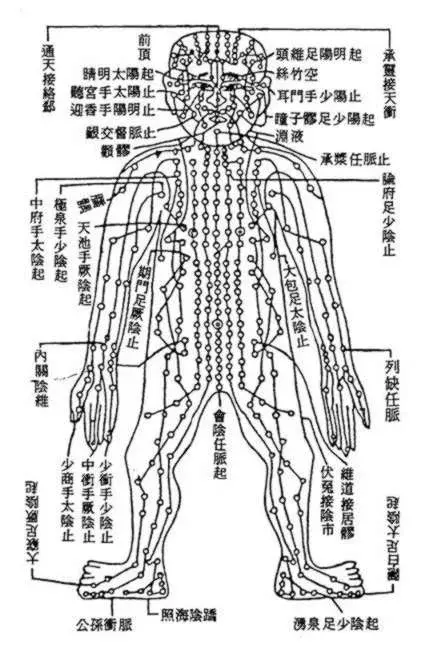
Yang Jizhou's magnum opus, the ten-volume Zhenjiu Dacheng (Great Compendium of Acupuncture and Moxibustion), represents the definitive encyclopedic synthesis of pre-modern Chinese acupuncture. Volume 1 opens with comprehensive bodily charts and historical lineages of needle therapy, accompanied by seventeen critical selections from the Neijing and Nanjing. Volume 2 gathers ten mnemonic rhyme odes, such as the Biaoyou Fu and Baizheng Fu, designed to facilitate clinical memorization. Volume 3 elaborates on the Five Movements and Six Qi cosmological systems alongside channel song sequences and clinical catechisms.
Volume 4 provides anatomical measurements, proportional dimension methods, illustrations of needle instruments, and classical reinforcing-reducing techniques. Volume 5 analyzes Five Shu points, the Midnight-Noon Ebb-Flow method (Ziwu Liuzhu), and the Linggui Eight Techniques. Volumes 6 and 7 thoroughly verify the pathways and symptom indications of the fourteen primary channels, collateral vessels, and divergent channels. Volume 8 details point selections across twenty-three clinical categories, encompassing internal ailments, surgical conditions, pediatrics, and ophthalmology. Volume 9 catalogs specialized historical needle and moxibustion methods alongside over thirty of Yang's own clinical cases, while Volume 10 incorporates Chen's Xiao'er Anmo Jing, preserving early pediatric massage literature.
Addressing the confusing, overly cryptic, and mystical terminology that had accumulated around acupuncture needle manipulation before the Ming dynasty, Yang Jizhou formulated the lucid Twelve-Step Sequential Manipulations (shierzi cidi shoufa). These steps systematically codified the entire physical procedure of puncturing: fingernail pressing, needle grasping, warming the tip, needle insertion, finger along-channel tapping, nail manipulation, needle withdrawal, twirling, twisting, needle retention, shaking, and levering.
To further elevate clinical efficacy, Yang distilled these into the immortal Eight Foundational Techniques (xiashou bafa): Chuai (palpating to locate points), Zhua (pressing firmly with the assisting hand), Cuo (twirling the shaft clockwise or counterclockwise to reinforce or reduce), Tan (flicking the needle handle to arouse channel qi), Yao (gently shaking to enlarge the channel opening for reduction), Men (instantly covering the hole upon withdrawal to preserve qi), Xun (patting along the meridian pathway to disperse pathogenic qi), and Nian (twisting rhythmically according to physiological direction). These techniques remain foundational standards in contemporary international clinical acupuncture.
In the realm of advanced thermal needle manipulation, Yang Jizhou provided the most precise historical documentation for the renowned Shaoshanhuo (Setting the Mountain on Fire) and Toutianliang (Penetrating the Sky with Coolness) techniques. He divided needle insertion depth into three distinct strata representing Heaven, Earth, and Man, systematically explaining how rapid pushing combined with slow lifting and breath-holding generated warming therapeutic sensations to expel stubborn cold, while gentle pushing combined with rapid withdrawal generated cooling sensations to dispel intense internal heat.
Furthermore, Yang demystified numerous esoteric channel-guiding techniques passed down through secretive lineages, such as the Green Dragon Wagging Its Tail and the Red Phoenix Shaking Its Head, replacing occult and superstitious explanations with rational interpretations based upon channel mechanics and somatic circulation.
Throughout his medical practice, Yang Jizhou fiercely resisted sectarian fragmentation between acupuncture and internal herbal prescription. He advocated that internal medication and external needle stimulation were complementary modalities: needles excels at unblocking channel stagnations and harmonizing defensive and nutritive qi, whereas herbal decoctions excel at replenishing underlying visceral depletion and regulating bodily humors.
By integrating rigorous differential diagnosis (bianzheng lunzhi) into point prescription, Yang grounded acupuncture practice solidly upon comprehensive organ and meridian pathology, elevating acupuncture from an empirical trade to a profound academic discipline within Chinese medical science.
FIGURES ASSOCIATED WITH THIS DYNASTY