Birth in Puyin
Born in Puyin, Qizhou; suffered the death of both parents during childhood.
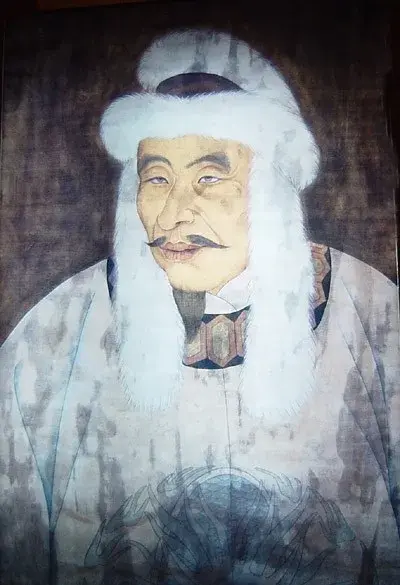
杨果
Yang Guo (杨果) was an eminent scholar, high-ranking statesman, and pioneering sanqu poet of the Jin-Yuan transitional era. Hailing from Puyin in Qizhou (modern Dingzhou, Hebei Province), he lost both parents in childhood and endured over a decade of displacement across Henan, sustaining himself by teaching local students while pursuing rigorous classical studies. In 1224 (the first year of the Zhengda era under Emperor…
Yang Guo (杨果) was an eminent scholar, high-ranking statesman, and pioneering sanqu poet of the Jin-Yuan transitional era. Hailing from Puyin in Qizhou (modern Dingzhou, Hebei Province), he lost both parents in childhood and endured over a decade of displacement across Henan, sustaining himself by teaching local students while pursuing rigorous classical studies. In 1224 (the first year of the Zhengda era under Emperor Aizong of Jin), Yang Guo passed the imperial examination at age thirty. His poetic elegance caught the admiration of Chancellor Li Xi, who recommended him as Magistrate of Yanshi, where he was celebrated for his honesty and efficiency. Following the fall of the Jin Dynasty, Yang Guo lived in peaceful seclusion for decades, engaging in deep literary exchanges with the poetic giant Yuan Haowen. In the 1250s, Prince Kublai summoned him to his princely court, seeking his administrative expertise. Under Kublai Khan's reign, Yang Guo rose to preeminent offices including Pacification Commissioner of Beijing Circuit and Assistant Administrator of the Secretariat (Canzhi Zhengshi). He implemented benevolent civil governance, curtailed bureaucratic abuses, and protected displaced populations. In literature, Yang Guo was a vital figure who helped elevate sanqu songs from street ballads into refined literati poetry. His famous lyric Lotus-Gathering Girl (Cai Lian Nü) to the tune Xiao Tao Hong was acclaimed in Zhu Quan's Taihe Zhengyin Pu as "blossoming flowers and weeping willows." Yang Guo was also renowned for his lifelong fidelity to his wife whom he wed during early destitution, exemplifying supreme personal virtue.
Born in Puyin, Qizhou; suffered the death of both parents during childhood.
Relocated with relatives to Bozhou and Xuchang, earning a meager living through private tutoring.
Earned jinshi degree at age thirty; presented poetry to Chancellor Li Xi and was appointed Magistrate of Yanshi.
Transferred to Pucheng as magistrate, celebrated by local residents for clean and diligent governance.
Following the fall of Jin, retired into rural seclusion, developing an intimate poetic bond with Yuan Haowen.
Recruited by Prince Kublai to advise on civil governance and statecraft.
Appointed Pacification Commissioner of Beijing Circuit, redressing wrongful convictions and stabilizing society.
Promoted to Assistant Administrator of the Secretariat, participating in supreme imperial decision-making.
Granted honorable retirement due to advanced age and physical ailments.
Passed away peacefully at age seventy-five, deeply mourned by the court and common people.
Yang Guo was born in 1195 in Puyin, Qizhou. Orphaned at a young age, he had no family property to rely upon amidst the escalating military conflicts of the late Jurchen Jin period. He relocated with kin to Bozhou and later settled in Xuchang. Throughout a decade of destitution, Yang Guo endured great privation, earning a subsistence livelihood by teaching young children reading and writing. During long nights under the oil lamp, he devoured the Confucian classics and cultivated an exquisite prose and poetic style.
In 1224, at age thirty, Yang participated in the imperial examination and attained the prestigious jinshi degree. Around that time, Vice Chancellor Li Xi was inspecting agricultural affairs in Xuchang. Yang Guo composed a parting poem for him; Li was astonished by Yang's intellectual depth and recommended him to the imperial throne. Yang was promptly appointed Magistrate of Yanshi. Serving with unbending integrity and administrative diligence, he reformed local administration, later being transferred to govern Pucheng with equal acclaim.
In 1234, the Jin Dynasty fell under joint Mongol and Song assaults. Refusing to scramble for advantage, Yang Guo quietly retired into countryside seclusion, shutting his doors to focus on verse and musical composition.
During these years, the foremost northern literary titan Yuan Haowen actively networked among surviving Jin literati. Yang Guo and Yuan Haowen discovered mutual respect and kindred sensibilities, frequently sharing wine, reciting verse, and analyzing musical meters. Quiet and reserved on the surface, Yang possessed deep wisdom and a captivating sense of humor. His lyrics from this period played an instrumental role in guiding popular northern songs toward literati elegance.
During the reign of Mongke Khan, Prince Kublai established his princely council in the north and recruited renowned Chinese scholars. Recognizing Yang Guo's administrative brilliance, Kublai welcomed him into his inner council. Upon Kublai's accession to the throne in 1260, Yang Guo was appointed Pacification Commissioner of Beijing Circuit. In this role, he clamped down on aristocratic lawlessness, cleared judicial backlogs, and provided relief for famine-stricken refugees.
In 1264, Kublai Khan elevated Yang Guo to Assistant Administrator of the Secretariat (Canzhi Zhengshi), making him one of the highest civilian officials in the empire. In the cabinet, Yang consistently advocated for traditional Han bureaucratic models, legal fairness, and tax reductions for ordinary peasants. In 1267, suffering from declining health, Yang repeatedly petitioned to retire, which Kublai Khan graciously approved. Yang passed away in 1269 at age seventy-five.
Yang Guo was an early master of the sanqu genre, playing a seminal role in transitioning song lyrics from street singing into elite poetic discourse.
His sanqu songs are celebrated for their melodious beauty and refined language. His most famous piece, the lyric Lotus-Gathering Girl (Cai Lian Nü) set to the tune Xiao Tao Hong, depicts young maidens plucking water lilies from misty Jiangnan lakes amidst the glowing moon and soft ripples. Ming dramatic connoisseur Zhu Quan described Yang's poetic style in Taihe Zhengyin Pu as "blossoming flowers and weeping willows, possessing natural grace and exquisite balance." His compositions cemented his historical reputation as an early pioneer of Yuan sanqu.
Yang Guo was handsome and gifted, yet his personal virtue won the highest praise from contemporaries. During his impoverished youth in Henan, he married a fellow refugee woman. Even after he achieved the jinshi degree and ultimately ascended to the paramount office of Assistant Administrator of the Secretariat, he never abandoned his companion, remaining devoted to his wife throughout life until old age.
In administration, Yang was incorruptible and impartial. In 1270, the Secretariat proposed as a formal precedent that Yang Guo's surname alone be recorded in state registers as a special tribute to his upright integrity. His collected writings, Xi'an Ji, constitute an essential primary text for analyzing Jin-Yuan intellectual history.
FIGURES ASSOCIATED WITH THIS DYNASTY