Birth in Jiangnan
Born into the aristocratic Langye Yan lineage in Jiankang, mastering the classics in childhood.
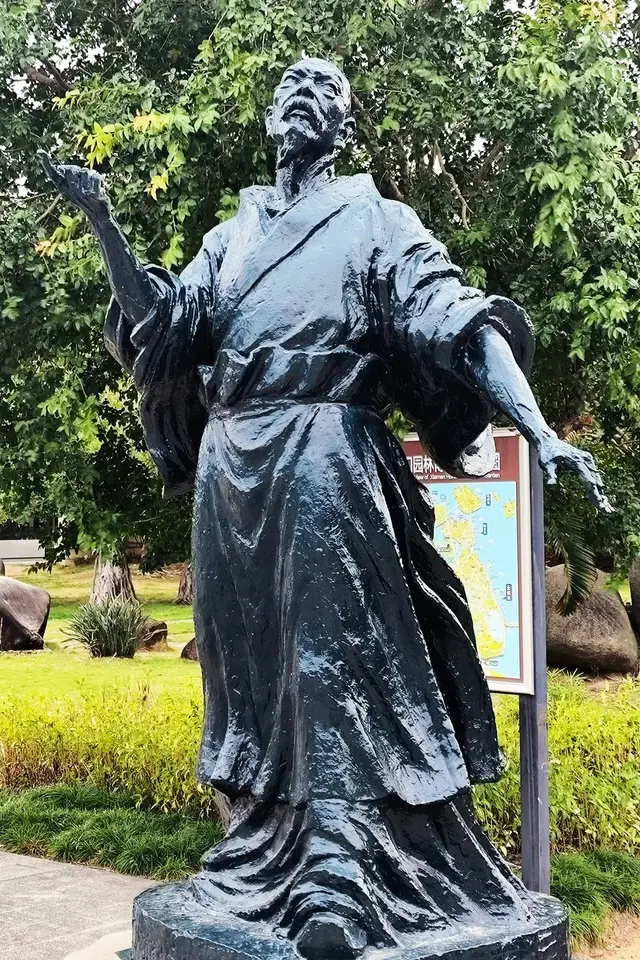
颜之推
Yan Zhitui (颜之推, 531–c. 597), courtesy name Jie, was a native of Linyi, Langye (modern Linyi, Shandong), and one of the most prominent Confucian philosophers, pedagogues, lexicographers, and men of letters during the late Six Dynasties and early Sui dynasty. He is celebrated throughout East Asian history as the founding patriarch of the family instruction genre (jiaxun). Descended from the illustrious Langye Yan…
Yan Zhitui (颜之推, 531–c. 597), courtesy name Jie, was a native of Linyi, Langye (modern Linyi, Shandong), and one of the most prominent Confucian philosophers, pedagogues, lexicographers, and men of letters during the late Six Dynasties and early Sui dynasty. He is celebrated throughout East Asian history as the founding patriarch of the family instruction genre (jiaxun). Descended from the illustrious Langye Yan lineage—tracing ancestry directly back thirty-five generations to Confucius's favorite disciple Yan Hui—his family specialized in the Rites of Zhou, the Zuo Tradition, phonology, and ritual ethics. Orphaned early, Yan pursued rigorous classical learning and was recruited at nineteen by Xiao Yi (Emperor Yuan of Liang) as Left Regular Attendant. During the devastating Hou Jing Rebellion in 548, he was captured and narrowly escaped execution through the intervention of an admirer. Following the fall of Jiangling to Western Wei in 554, he was carried captive to Guanzhong, subsequently executing a perilous river escape across the flooded Yellow River to reach Northern Qi, where he served for twenty years, rising to Junior Minister of the Palace Bureau and Academician in the Wenlin Academy. Following the Northern Qi's fall in 577, Yan was relocated to Chang'an, serving the Northern Zhou and subsequently the Sui dynasty as Academician to Crown Prince Yang Yong. During the early Kaihuang reign, he assisted in standardizing the monumental Qieyun phonological system and reviewing ancient Stone Classics. Passing away around 597 at age sixty-seven, Yan lived through four successive dynasties (Liang, Northern Qi, Northern Zhou, and Sui). Drawing upon his harrowing experiences of civil war, displacement, and dynastic collapse, he authored the seminal twenty-chapter masterwork The Family Instructions of the Yan Clan (Yan Shi Jia Xun), hailed for millennia as the ancestor of all family instructions. His phonetic scholarship laid the foundation for Tang rhyming systems, and his autobiographical rhapsody Guan Wo Sheng Fu stands as a monumental epic of medieval trauma. His descendants included premier Tang philologist Yan Shigu and the immortal calligrapher and martyr Yan Zhenqing.
Born into the aristocratic Langye Yan lineage in Jiankang, mastering the classics in childhood.
Captured in Jiankang by rebel forces under Hou Jing, narrowly escaping execution.
Joined Emperor Yuan of Liang at Jiangling as Cavalier Attendant, cataloging imperial libraries.
Captured by Western Wei invaders after the sack of Jiangling and marched north as a prisoner.
Risked drowning to ferry his mother across the flooded Yellow River, finding refuge in Northern Qi.
Elevated to Junior Minister of the Palace Bureau and Academician of the Wenlin Academy.
Captive in Chang'an after Northern Qi fell; later appointed Crown Prince's Academician under Sui.
Collaborated with Lu Fayan and seven scholars to standardize the Qieyun phonological system.
Finalized The Family Instructions of the Yan Clan before passing away in Chang'an at sixty-seven.
Yan Zhitui was born in 531 into the celebrated Langye Yan clan in Jiankang. His family was renowned across generations for strict adherence to classical Confucian rituals and textual transmission of the Rites of Zhou and Zuo Tradition. His father Yan Xie served as Princely Counselor to Xiao Yi and was revered for his integrity. Losing his father at nine, Yan Zhitui was reared by his elder brother Yan Zhiyi. In a society infatuated with Daoist quietism and decadent court verse, Yan stood apart through his uncompromising commitment to classical history and practical governance. At age nineteen, Xiao Yi, then governing Jingzhou as Prince Xiangdong, recruited Yan as Left Regular Attendant in recognition of his brilliant classical philology and elegant writing.
In 548, Hou Jing's rebellion threw Jiangnan into devastation. After the fall of Jiankang's palace city, rebel soldiers arrested hundreds of Liang aristocrats. Yan Zhitui was imprisoned and faced imminent beheading; fortunately, rebel commander Wang Ze, admiring his noble demeanor, arranged his secret release. Following Hou Jing's defeat, Yan rushed to Jiangling to serve Emperor Yuan of Liang, who appointed him Cavalier Attendant and commissioned him to catalog the imperial library.
In 554, Western Wei commander Yu Jin launched a surprise blitzkrieg against Jiangling. Emperor Yuan burned 140,000 volumes of royal books before being executed, and over one hundred thousand Liang inhabitants were enslaved and marched north. Yan Zhitui was taken captive to Hongnong. Driven by an unyielding desire to preserve his family's continuity, Yan seized the opportunity in the spring of 556 during historic Yellow River floods: navigating an open skiff with his mother and younger siblings across torrential waters, he miraculously escaped into Northern Qi.
Welcomed in Ye by Emperor Wenxuan, Yan was appointed Commandery Administrative Officer. Although Northern Qi was dominated by Xianbei military culture, its rulers held southern scholarship in high esteem. Over twenty years spanning five reigns, Yan rose steadily through his unmatched mastery of court ritual, penal law, and administrative precedents, culminating in his appointment as Junior Minister of the Palace Bureau.
During the Wuping era, Yan was appointed Senior Academician in the Wenlin Academy, directing the compilation of the massive imperial encyclopedia Xiuwen Dian Yulan. Distressed by the vanity, ignorance, and moral decay of northern aristocratic youth, who indulged in cosmetic powders yet proved helpless during political crises, Yan began recording maxims, behavioral protocols, and study methods, laying the groundwork for his family manual.
In 577, Emperor Wu of Northern Zhou conquered Northern Qi. Yan Zhitui was escorted to Chang'an as a captive scholar-official, where Emperor Wu appointed him Senior Censor to conciliate eastern literati. Following the establishment of the Sui dynasty in 581, Emperor Wen appointed Yan Academician to Crown Prince Yang Yong.
Despite his advanced years, Yan actively shaped early Sui culture. In 581, he joined Lu Fayan, Liu Zhen, and five other scholars in Lu's Chang'an residence, debating regional pronunciation and establishing the phonetic principles for the standard rhyming dictionary Qieyun. In his final years, secluded in Chang'an, Yan distilled the survival wisdom of an extraordinary lifetime across four dynasties into The Family Instructions of the Yan Clan (Yan Shi Jia Xun). He passed away peacefully around 597 at age sixty-seven.
Yan Zhitui's crowning legacy was the creation of The Family Instructions of the Yan Clan in twenty chapters. Addressing education, filial piety, sibling harmony, domestic management, practical worldly engagement, and literary composition, the work forcefully rejected aristocratic complacency. Yan championed practical vocational learning, declaring that hereditary status was worthless without personal scholarship, and insisted that parental education balance affection with moral strictness. Honored as the "ancestor of all family instructions," the text fundamentally shaped family pedagogy throughout China, Korea, and Japan.
Yan Zhitui was a premier phonetician of early medieval China. During the Kaihuang era, he played a decisive role in resolving phonetic divides between northern and southern dialects. The consensus achieved during the Chang'an symposia guided Lu Fayan in compiling the five-volume Qieyun, which served as the authoritative phonetic standard for imperial examinations and official rhyme schemes throughout the Tang and Song dynasties.
In literature and intellectual thought, Yan authored Tales of Avenging Spirits (Yuanhun Zhi, also known as Huan Yuan Zhi). Collecting dozens of historical legends from the Warring States to the Northern Qi concerning wrongful deaths and vengeful spirits exacting justice, Yan sought to check the arbitrary cruelty and excessive executions perpetrated by late Six Dynasties rulers. By synthesizing Confucian moral retribution with Buddhist karmic causality, he created an engaging and chilling literary masterwork that profoundly stimulated Tang dynasty tales (chuanqi) and Song miscellanies.
In his family instructions, Yan established a highly forward-looking, pragmatic, and egalitarian educational philosophy. Critiquing the decay of northern and southern aristocrats who relied solely on hereditary privilege while despising manual labor, Yan passionately declared that gentlemen must master practical professions. He exhorted descendants to acquire functional skills—such as agriculture, arithmetic, pharmacology, archery, and civil law—coining the famous maxim: "Amassing ten million in treasure is inferior to mastering a modest craft." This pragmatic worldview illuminated the transition from medieval aristocratic privilege toward early modern meritocratic society.
In literature, Yan authored the magnificent autobiographical rhapsody Guan Wo Sheng Fu (Reflecting on My Life). Composed in tragic, majestic cadences, the poem chronicles his personal survival through the fall of the Liang, the sack of Jiangling, his flight across the Yellow River, and the extinction of Northern Qi. Serving as a factual poetic history of the violent collapse of the Six Dynasties, it stands alongside Yu Xin's Lament for the South as one of the twin literary peaks of the era.
FIGURES ASSOCIATED WITH THIS DYNASTY