Birth in Jiangzhou
Yan Yonghe is born at the foot of Mount Lu in Jiangzhou, displaying intellectual talent from early childhood.
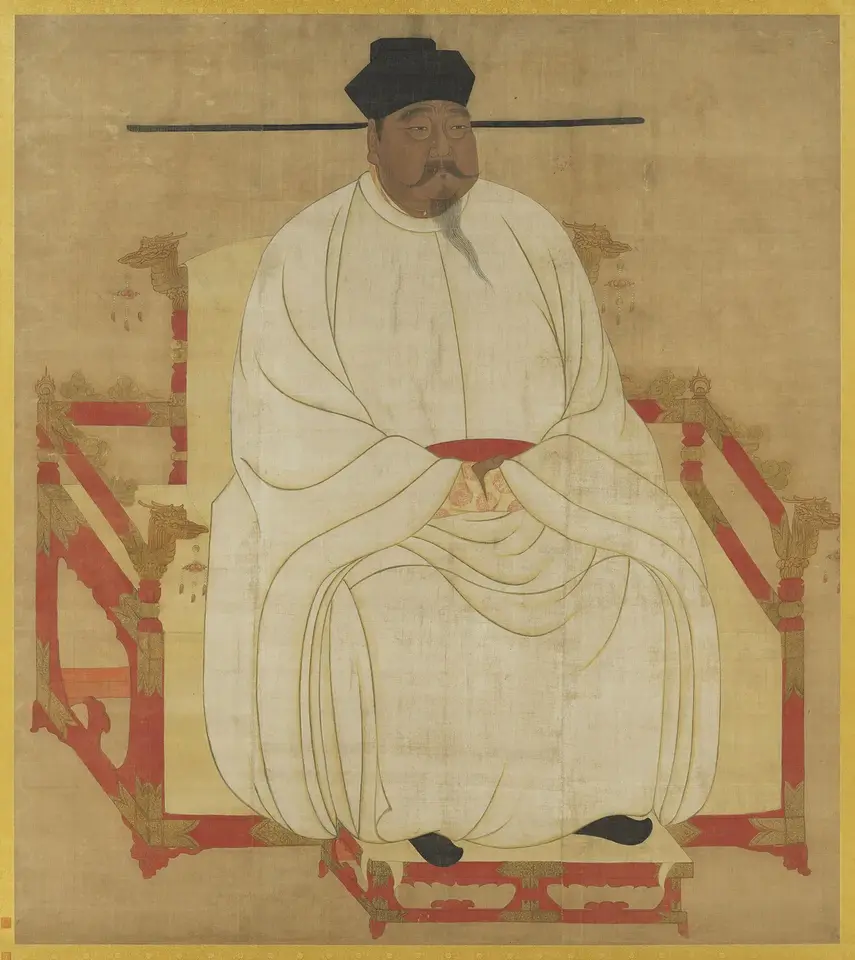
严用和
Yan Yonghe (严用和), courtesy name Zili, was a native of Mount Lu (modern Jiujiang, Jiangxi Province) and an eminent physician of the Southern Song dynasty. Exhibiting quick intelligence in his youth, Yan began studying medicine at the age of twelve under the tutelage of the renowned physician Liu Kai (courtesy name Fuzhen). Having mastered his mentor's clinical methods, Yan began practicing medicine independently at seventeen,…
Yan Yonghe (严用和), courtesy name Zili, was a native of Mount Lu (modern Jiujiang, Jiangxi Province) and an eminent physician of the Southern Song dynasty. Exhibiting quick intelligence in his youth, Yan began studying medicine at the age of twelve under the tutelage of the renowned physician Liu Kai (courtesy name Fuzhen). Having mastered his mentor's clinical methods, Yan began practicing medicine independently at seventeen, sustaining an active clinical career for over five decades and earning immense prestige across the Yangtze and Huai river regions. In his theoretical contributions, Yan lamented the dogmatism pervading contemporary medical circles, where practitioners rigidly applied pungent, heating, and drying remedies from the official Formulary of the Bureau of People's Welfare Pharmacy, frequently injuring internal yin fluids. He vigorously advocated that clinical treatment must account for historical shifts, regional climates, and constitutional differences among patients, championing the empirical principle of conveying true methods to aid human life. He systematically advanced visceral pattern differentiation, insisted that pulse, cause, pattern, and treatment must remain harmoniously aligned, argued that nourishing the kidneys was superior to merely tonifying the spleen, and emphasized smoothing the circulation of vital qi with aromatic herbs. Yan consolidated his lifelong clinical experience into the ten-volume treatise Formulas for Aiding Life (Jisheng Fang) and its eight-volume sequel Continued Formulas for Aiding Life (Jisheng Xufang). Within these works, he formulated enduring classical prescriptions such as the Spleen-Returning Decoction (Guipi Tang) and the Life-Aiding Kidney Qi Pill (Jisheng Shenqi Wan), exerting a profound and lasting influence on traditional Chinese medicine throughout the Song, Yuan, Ming, and Qing periods.
Yan Yonghe is born at the foot of Mount Lu in Jiangzhou, displaying intellectual talent from early childhood.
At age twelve, Yan formally apprentices himself to the celebrated master Liu Kai, studying classical texts and diagnosis.
At age seventeen, having absorbed Liu Kai's teachings, Yan begins practicing medicine independently.
Traveling throughout the Jiangnan and Jianghuai regions, Yan gathers proven folk remedies and treats complex diseases.
Synthesizing over thirty years of clinical observation, Yan compiles and publishes the ten-volume Formulas for Aiding Life.
Drawing upon fifteen additional years of practice, Yan completes the eight-volume sequel Continued Formulas for Aiding Life.
Yan passes away peacefully in his hometown at more than seventy years of age, leaving a lasting medical legacy.
Yan Yonghe's family had resided for generations at the picturesque foothills of Mount Lu in Jiangxi. From childhood, he displayed a calm, scholarly demeanor, immersing himself in Confucian canonical literature while showing an avid curiosity regarding herbal properties. Around 1210, during the Jiading era of Emperor Ningzong, witnessing recurring regional epidemics and the suffering of the common people, twelve-year-old Yan resolved to pursue medicine to relieve human affliction. He formally entered the clinic of Liu Kai (courtesy name Fuzhen), one of the most celebrated physicians along the Yangtze valley.
Liu Kai was renowned for his diagnostic precision and expansive scholarship. Welcoming the diligent youth into his household, Liu instructed him daily in the Inner Canon of the Yellow Emperor, the Classic of Difficult Issues, the Treatise on Cold Damage and Miscellaneous Diseases, and commentaries by past masters. Deeply impressed by Yan's integrity and quick comprehension, Liu imparted not only pulse diagnostic methods and the subtleties of visceral pattern differentiation, but also his personal clinical notebooks and proven proprietary formulas. Under Liu's patient guidance, Yan spent days and nights analyzing classical prescriptions, rapidly attaining clinical maturity.
In 1215, at the age of seventeen, Yan completed his apprenticeship and commenced independent medical practice in Jiangzhou. Thanks to his rigorous training and exceptional diagnostic insight, he could determine pathological roots through pulse palpation alone, frequently curing chronic conditions with minimal intervention. His reputation spread swiftly across Jiangxi. Over the subsequent decades, Yan traveled widely across prefectures such as Jiangzhou, Nankang, and Longxing, treating tens of thousands of patients suffering from both external contractions and internal damage.
Throughout his extended clinical practice, Yan identified serious flaws in contemporary medical culture. Ever since the imperial court promulgated the Formulary of the Bureau of People's Welfare Pharmacy in the Northern Song, physicians had treated it as an unalterable dogma, indiscriminately administering heating, acrid, and purgative drugs. Yan observed that environmental conditions varied across northern and southern provinces, and individual physical constitutions differed markedly. Applying ancient heating prescriptions mechanically to contemporary southern ailments inevitably consumed vital fluids and scorched internal yin. He vigorously advocated breaking with rigid orthodoxy, urging practitioners to tailor their therapies dynamically according to seasonal climates and individual pathology.
Over thirty years of continuous practice, whenever Yan encountered an unusual disease, he meticulously documented its etiology, pathogenesis, and herbal modifications, while actively gathering effective single herbs and empiric formulas from rural communities. In 1253, he systematically organized his clinical findings into the ten-volume masterwork Formulas for Aiding Life (Jisheng Fang). Covering nearly seventy disease categories, the work paired analytical treatises with corresponding herbal formulas, creating a lucid clinical handbook.
Formulas for Aiding Life was enthusiastically embraced across Jiangnan and widely transcribed by practicing physicians. Never content with past laurels, Yan spent the subsequent fifteen years refining his diagnostic systems and gathering additional empirical remedies. In 1267, he completed the eight-volume Continued Formulas for Aiding Life (Jisheng Xufang), further perfecting his therapeutic repertoire. In his final years, Yan resided in Mount Lu, continuing to treat impoverished neighbors and teach disciples until his peaceful death at over seventy years of age.
Yan Yonghe's central contribution to clinical theory lay in his systematic expansion of visceral pattern differentiation. He established the normal and pathological functions of the Five Viscera and Six Bowels as the overarching framework for analyzing disease mechanisms, arguing that internal illness invariably stems from visceral dysfunction and yin-yang disharmony. In Formulas for Aiding Life, he dedicated specific chapters to the treatment of visceral deficiency and excess, analyzing the pathological patterns of the liver, gallbladder, heart, small intestine, spleen, stomach, lung, large intestine, kidney, and bladder.
Yan placed paramount emphasis on the fourfold alignment of pulse, cause, pattern, and therapy. He insisted that a clinician must first ascertain the etiology via pulse examination, determine the pattern through etiology, and formulate treatment strictly according to that pattern. For instance, in treating intestinal bleeding, he noted that a superficial and weak pulse indicating hollow vessel fullness reflects blood loss. The cause typically involves intemperate dining, alcohol abuse, or sexual overindulgence exhausting defensive and nutritive qi. If the blood is bright red, it stems from pathogenic wind; if dark like red bean juice, from cold dampness; and if murky and dark, from accumulated heat. Treatments must adhere strictly to dispelling wind, clearing heat, warming cold, or tonifying deficiency, exemplifying empirical pattern differentiation.
In constitutional nourishment and deficiency management, Yan introduced a pioneering perspective on the relationship between the spleen and kidneys. Contemporary physicians predominantly emphasized the spleen as the foundation of acquired constitution, recommending direct spleen tonification. While Yan agreed that spleen and stomach qi must be safeguarded at all times, warning clinicians never to damage stomach qi with harsh drugs, he delved deeper into the fundamental motive force of digestion, identifying the indispensable role of kidney yang fire.
In his analysis of the True-Supplementing Pill, Yan declared that while ancients argued supplementing the spleen was superior to tonifying the kidneys, he maintained that tonifying the kidneys surpassed tonifying the spleen. When kidney qi is robust and the fire of the lower field of elixir burns warmly, it vaporizes and warms spleen earth from below. With spleen earth warmed, the middle burner regulates itself, opening the diaphragm and reviving appetite. This thesis revealed the physiological interdependence between life gate fire in the lower burner and digestive transformation in the middle burner. This insight directly inspired Ming dynasty masters such as Zhang Jingyue and Zhao Xianke in formulating their life gate fire theories.
Yan was a master of modifying ancient formulas and creating balanced remedies that have stood the test of centuries. Confronted with severe edema caused by spleen-kidney yang deficiency and rampant dampness, Yan ingeniously adapted Zhang Zhongjing's classical Kidney Qi Pill by incorporating achyranthes root and plantain seed. Achyranthes guides herbal action downward to strengthen the kidneys, while plantain seed drains dampness without depleting yin. The resulting formula, the Life-Aiding Kidney Qi Pill (Jisheng Shenqi Wan), achieved an optimal balance of warming kidney yang and draining water, becoming the standard prescription for kidney yang deficiency edema and dysuria.
To address heart-spleen deficiency, dual exhaustion of qi and blood, and failure of spleen qi to contain blood, Yan formulated the celebrated Spleen-Returning Decoction (Guipi Tang), combining white atractylodes, poria, astragalus, longan aril, sour jujube seed, ginseng, saussurea root, and prepared licorice. This prescription nourishes blood, fortifies spleen qi, calms the mind, and regulates qi flow, preventing tonics from stagnating. Later augmented by Ming dynasty physician Xue Ji with Chinese angelica root and polygala root, Spleen-Returning Decoction became a foundational remedy for insomnia, amnesia, palpitations, abnormal uterine bleeding, and chronic hemorrhage.
Yan possessed a refined grasp of internal medical pathology, famously stating that human qi circulation must remain unobstructed, as uninhibited qi ensures smooth fluid movement. He maintained that when qi stagnates or reverses direction, meridian nourishment fails and pathological fluids such as phlegm, dampness, and blood stasis proliferate. Consequently, Yan established qi regulation as the primary clinical principle for treating internal miscellaneous disorders.
In clinical practice, Yan taught that stroke induced by emotional distress should be managed by regulating qi rather than dispelling external wind; phlegm retention required smoothing qi circulation before draining fluids; and diarrhea arising from spleen deficiency demanded concomitant qi-harmonizing herbs. In his pharmacological selections, Yan favored aromatic and descending herbs such as agalloch eaglewood, saussurea root, clove, white cardamom, amomum fruit, and sandalwood. By dispelling stagnation and facilitating harmonious circulation, he replaced the contemporary tendency toward harsh purgatives with gentle, restorative methods.
FIGURES ASSOCIATED WITH THIS DYNASTY