Birth in Wuxing
Born into a military household in Wuxing, developing early mastery in painting.
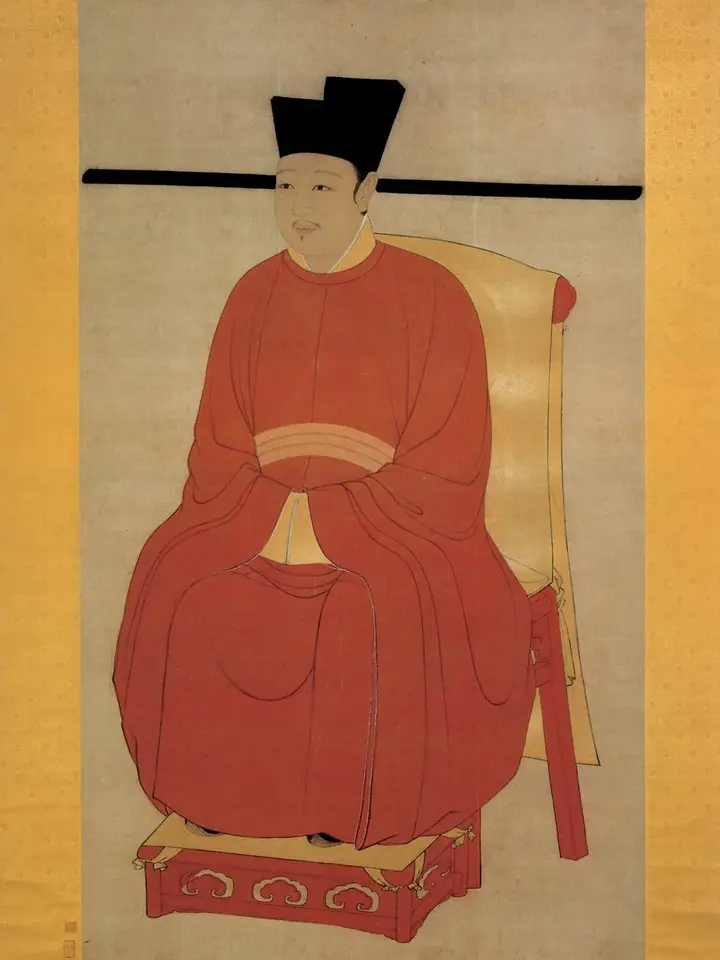
燕文贵
Yan Wengui (c. 967–1044), also known as Yan Gui, was a native of Wuxing, Zhejiang (modern Huzhou, Zhejiang; some sources record Wenzhou). He was one of the founding masters of Song landscape painting, celebrated alongside Dong Yuan, Li Cheng, and Fan Kuan for establishing the classical zenith of Chinese imperial landscape art. Originally belonging to the military rolls, Yan served as a minor county assistant before resigning…
Yan Wengui (c. 967–1044), also known as Yan Gui, was a native of Wuxing, Zhejiang (modern Huzhou, Zhejiang; some sources record Wenzhou). He was one of the founding masters of Song landscape painting, celebrated alongside Dong Yuan, Li Cheng, and Fan Kuan for establishing the classical zenith of Chinese imperial landscape art. Originally belonging to the military rolls, Yan served as a minor county assistant before resigning to seek his fortune in the capital Kaifeng, selling paintings on the roadside along Tianmen Avenue. His extraordinary talent was discovered by Court Painter Gao Yi, who recommended him to collaborate on the grand murals of Xiangguo Temple. Astonished by his brushwork, Emperor Taizong summoned Yan into the Hanlin Academy of Painting, where he served as Painter-in-Attendance. Refusing to slavishly imitate earlier masters, Yan pioneered a unique aesthetic known as "Yan Family Scenery" (Yan Jia Jingzhi), utilizing broken-brush texture strokes (pobi cundian), dry rubbing, and pale washes to depict towering peaks, waterways, and ruled-line painting (jiehua). His extant masterpieces, including Streams and Mountains with Towers and Pavilions (Xishan Louguan Tu), River and Mountains with Towers and Pavilions, and Sea Vessel Crossing the Ocean, established a new benchmark for structural realism in Chinese art history.
Born into a military household in Wuxing, developing early mastery in painting.
Served as a petty administrative official managing official accounts and stores.
Traveled to Kaifeng and sold landscape paintings by the roadside, noticed by Gao Yi.
Recommended by Gao Yi to paint murals at Xiangguo Temple, winning imperial acclaim.
Inducted into the Hanlin Academy of Painting as Painter-in-Attendance.
Formulated the "Yan Family Scenery" style, creating monumental screen paintings for imperial halls.
Passed away in Kaifeng at approximately seventy-seven years of age.
Yan Wengui was born in Wuxing, Zhejiang, into a family registered under imperial military status. During his youth, his literacy and numeracy earned him appointment as a county assistant (zhubu), responsible for managing bureaucratic warehouses and registries. However, Yan was consumed by a passion for painting, spending every spare moment sketching landscapes and architecture.
Longing for a broader creative arena, Yan relinquished his minor post and journeyed to the Northern Song capital of Kaifeng. Lacking patronage and funds, he spread his paintings on the paving stones of Tianmen Avenue near the imperial palace to earn a living. The extraordinary precision of his brushwork, capturing towering mountain crags and mist-shrouded waters, soon drew crowds of admiring onlookers.
During the Zhidao era of Emperor Taizong, Gao Yi, Painter-in-Attendance in the Hanlin Academy of Painting, was commissioned to oversee the grand restoration of murals in Kaifeng's great Buddhist sanctuary, Xiangguo Temple. Passing through Tianmen Avenue, Gao stopped before Yan's street stall and was awestruck by his daring compositions and delicate texture strokes. Recognizing a rare genius, Gao immediately invited Yan into his workshop.
Gao assigned Yan to paint the lower backgrounds of the temple murals, including rocks, waterways, and traveling attendants. Pouring all his creative energy into the work, Yan painted soaring crags and animated figures with such astonishing vitality that the subsidiary landscapes completely outshone the central icons. When Emperor Taizong and high ministers inspected the temple, the emperor praised Yan's extraordinary skill and issued an imperial decree inducting him directly into the Hanlin Academy of Painting.
As Painter-in-Attendance in the Hanlin Academy, Yan was tasked with painting large ceremonial screens and murals for imperial palaces. Exposed to the immense imperial collection of ancient masterpieces, he absorbed the monumental power of Jing Hao and Guan Tong while integrating the misty expanse of Dong Yuan. Yet he refused to be confined by precedents, declaring that true art must follow nature.
During the Dazhong Xiangfu and Tiansheng eras, Yan's art reached its peak. He fused precise architectural drafting (jiehua) with rugged, broken-brush mountain textures, creating the renowned "Yan Family Scenery" (Yan Jia Jingzhi). His murals adorned the newly erected Yuqing Zhaoying Palace, Zichen Hall, and Kaibao Temple.
Yan lived an unpretentious life dedicated to his art, passing away in Kaifeng around 1044 at approximately seventy-seven years of age. His disciples, such as Qu Ding, continued his school, ensuring that "Yan Family Scenery" remained a foundational pillar of mid-Northern Song landscape painting.
Yan Wengui's preeminent achievement in Chinese art history was the creation of the distinct "Yan Family Scenery" (Yan Jia Jingzhi). Early Song landscape art had been divided between the rugged northern monumentality of Guan Tong and Fan Kuan and the tranquil southern marshes of Dong Yuan. Yan transcended this division, blending northern grandeur with southern atmospheric grace.
Song art critic Liu Daochun praised him in Evaluations of Renowned Paintings of the Reign (Shengchao Minghua Ping): "In painting landscapes, Yan Wengui did not slavishly follow old masters, but displayed immense variety, establishing an independent school. Depicting northern rivers, he used broken-brush texture strokes with dry rubbing and light washes, creating fine, elegant, and lush scenes. Along riverbanks and islets, he interspersed towers and pavilions in picturesque beauty, known to all as the 'Yan Family Scenery'." By deploying delicate dotting strokes (diancun) and positioning waterside mills, boats, and pavilions within dramatic gorges, Yan created spaces that invited the viewer to wander and dwell.
Yan's supreme surviving masterpiece is Streams and Mountains with Towers and Pavilions (Xishan Louguan Tu), preserved in the National Palace Museum in Taipei. Rendered in ink on silk, the monumental hanging scroll presents a panoramic vision of nature's majesty.
In the lower foreground, torrential rapids surge around massive boulders, where travelers navigate skiffs toward thatched rustic cottages. In the middle ground, sheer granite cliffs rise dramatically, framing cascading waterfalls and grand Buddhist monasteries with cantilevered pavilions. In the far distance, jagged peaks recede into misty haze. Yan's mastery of architectural drafting is seamlessly integrated into the natural geology, embodying the Song Confucian ideal of moral harmony between human civilization and the cosmos.
In addition to panoramic landscapes, Yan achieved breathtaking realism on an intimate scale. Guo Ruoxu recorded in An Account of Experiences in Painting (Tuhua Jianwenzhi) that in his painting Sea Vessel Crossing the Ocean (Bochuan Duhai Xiang): "Though less than a foot across, it possessed masts, sails, windlasses, oars, and sailors shouting and leaping, with surging winds and waves across distant islands, having the momentum of a thousand leagues within an inch."
This work stood as the earliest representation of deep-sea navigation and maritime storms in Chinese fine art. Furthermore, his lost work Night Market on the Seventh Night (Qixi Ye Shi Tu) captured the bustling night street life of Kaifeng with meticulous detail, anticipating Zhang Zeduan's Along the River During the Qingming Festival by nearly a century.
FIGURES ASSOCIATED WITH THIS DYNASTY