Joining Yuan Shao
Entered Yuan Shao's service, distinguishing himself across the pacification of Ji and You provinces.
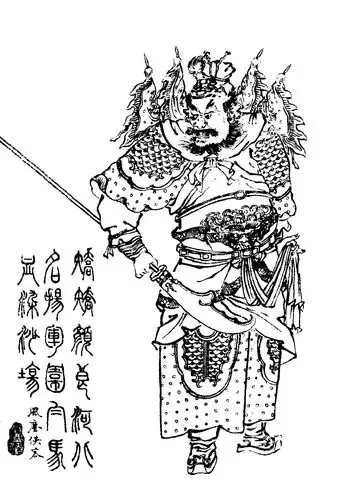
?–200 CE
颜良
Yan Liang (颜良, ?–200 AD) was a preeminent senior general and vanguard commander serving under the northern warlord Yuan Shao during the late Eastern Han dynasty. Alongside his close compatriot Wen Chou, Yan Liang was celebrated as one of the two premier champions of Yuan Shao's armed forces, renowned throughout northern China for his formidable physical strength, aggressive shock cavalry tactics, and fearsome battlefield…
Yan Liang (颜良, ?–200 AD) was a preeminent senior general and vanguard commander serving under the northern warlord Yuan Shao during the late Eastern Han dynasty. Alongside his close compatriot Wen Chou, Yan Liang was celebrated as one of the two premier champions of Yuan Shao's armed forces, renowned throughout northern China for his formidable physical strength, aggressive shock cavalry tactics, and fearsome battlefield reputation. During the escalating confrontation between Cao Cao and Yuan Shao for hegemony over the central plains, prominent scholar Kong Rong warned the imperial court that Yan Liang and Wen Chou possessed valor crowning the three armies, deeming them nearly invincible in direct combat. Conversely, Cao Cao's chief strategist Xun Yu recognized their operational limitations, famously predicting that their bravery was merely the uncalculated recklessness of common brawlers that could be overcome in a single engagement. In the second lunar month of 200 AD, at the onset of the Battle of Guandu, Yuan Shao massed ten thousand cavalry and one hundred thousand infantry at Liyang, dispatching Guo Tu, Chunyu Qiong, and Yan Liang across the Yellow River to besiege Administrator of Dong Commandery Liu Yan at the vital fortress of Boma. Although senior advisor Ju Shou vehemently warned that Yan Liang was too impetuous and narrow-minded to be entrusted with independent command, Yuan Shao ignored the counsel. In the fourth month, Cao Cao executed a brilliant tactical feint toward Yan Ford to divide the northern army, then rushed elite cavalry to relieve Boma. Confronted by surprise, Yan Liang hastily deployed his troops, whereupon Cao Cao dispatched Zhang Liao and Guan Yu to charge the vanguard. Spotting Yan Liang's command canopy, Guan Yu rode straight through the northern lines, impaling Yan Liang amidst thousands of soldiers and severing his head, precipitating the total collapse of the army at Boma.
Entered Yuan Shao's service, distinguishing himself across the pacification of Ji and You provinces.
Rose to paramount vanguard commander of the northern coalition; praised by Kong Rong for invincible valor.
Appointed vanguard commander to cross the Yellow River, investing Liu Yan in the fortress of Boma.
Slain amidst his army by Guan Yu during Cao Cao's relief assault, causing the total rout of his forces.
Yan Liang emerged from northern China during the collapse of the Eastern Han imperial order. During the Chuping era, Yuan Shao established his power base in Bohai, subsequently taking control of Ji Province from Han Fu and waging a decade-long war of attrition against Gongsun Zan of You Province. Throughout these grueling campaigns, Yan Liang distinguished himself through his immense physical strength, equestrian prowess, and aggressive shock charges, rising through the ranks to become Yuan Shao's foremost field commander.
Within the northern coalition, Yan Liang and his comrade Wen Chou were revered as the twin pillars of Yuan Shao's military might, spearheading nearly every major offensive that unified the four northern provinces of Ji, You, Qing, and Bing. As tensions between Yuan Shao and Cao Cao intensified in the central plains, officials in the capital city of Xu viewed the northern champions with deep apprehension. During strategic debates with court ministers, Minister of the Household Kong Rong gravely warned: "Yuan Shao commands vast territories and teeming populations; his leading generals, Yan Liang and Wen Chou, possess valor that crowns the three armed services. They are champions of the realm who cannot be easily resisted."
However, Cao Cao's chief advisor Xun Yu offered an astute counter-assessment of the northern champions. Dissecting the psychological and tactical shortcomings of Yuan Shao's leadership, Xun Yu declared: "Yan Liang and Wen Chou possess merely the unthinking courage of common fighters. They lack strategic foresight and operational adaptability. If we maneuver with calculated deception, they can be captured and eliminated in a single battle." This strategic analysis anticipated the dramatic breakthrough that would occur along the Yellow River.
In the spring of 200 AD, Cao Cao personally led an expedition east to crush Liu Bei in Xu Province, capturing Guan Yu. Although Yuan Shao had an opportunity to launch a surprise strike against the undefended capital, he hesitated due to his son's illness. By the second month, after Cao Cao had returned to Xu County, Yuan Shao resolved to initiate his grand southern offensive, concentrating one hundred thousand infantry and ten thousand cavalry at Liyang on the northern bank of the Yellow River.
To seize southern crossing points and neutralize Cao Cao's forward bastions, Yuan Shao dispatched Guo Tu, Chunyu Qiong, and Yan Liang as vanguard commanders to lead tens of thousands of troops across the river, laying siege to Administrator of Dong Commandery Liu Yan at the fortress of Boma. Yan Liang directed the siege operations, raising earthen ramparts and deploying heavy missile batteries to bombard the city walls, placing the isolated garrison in extreme jeopardy.
Prior to Yan Liang's departure, Yuan Shao's most seasoned advisor, Ju Shou, had strongly protested the appointment. Ju Shou warned: "Yan Liang is temperamentally impetuous, narrow-minded, and hasty. While he possesses remarkable individual ferocity, his strategic judgment is shallow; he must never be entrusted with independent theater command! If he is assigned to direct this operation alone, disaster will ensue if he encounters tactical deception." Overconfident and stubborn, Yuan Shao dismissed Ju Shou's warnings, insisting on placing Yan Liang in sole tactical command of the forward assault, creating a fatal vulnerability in the northern command hierarchy.
In the fourth month of 200 AD, with Boma on the brink of falling, Cao Cao marched north to relieve the siege. Recognizing that a frontal collision against Yan Liang's fortified siege lines would incur heavy casualties, Cao Cao consulted his strategist Xun You, who proposed a deception maneuver: "Our numbers are inferior, so we must divide the enemy's strength. Your Lordship should lead the army toward Yan Ford, feigning an amphibious crossing to strike Yuan Shao's rear depots at Liyang. Alarmed, Yuan Shao will divert his main force westward. Meanwhile, our elite light cavalry can march day and night straight to Boma, taking Yan Liang completely by surprise."
Cao Cao executed the plan, advancing conspicuously toward Yan Ford. Alarmed by the threat to his rear, Yuan Shao diverted substantial troop contingents westward to intercept the feint. As soon as the enemy forces were divided, Cao Cao detached his elite cavalry, accompanied by Zhang Liao and Guan Yu, racing through secondary roads to Boma. When the northern scouts spotted the dust clouds of the approaching cavalry, Cao Cao's vanguard was merely ten li from the city walls. Taken completely unaware, Yan Liang was thrown into confusion, scrambling to organize a battle line before his troops were fully deployed.
From an elevated vantage point, Cao Cao observed the enemy's disarray and ordered Zhang Liao and Guan Yu to charge. Mounted on a swift steed, Guan Yu spotted Yan Liang's gilded umbrella canopy and embroidered command banners amidst the northern formations. Spurring his mount, Guan Yu charged straight into the center of the northern army like a thunderbolt. The northern ranks collapsed before his charge, unable to check his momentum. Reaching the command carriage, Guan Yu impaled Yan Liang on the spot amidst thousands of soldiers, dismounted to sever his head, and rode back to the southern lines unhindered. Witnessing the sudden decapitation of their commander, the northern army broke in total panic. Cao Cao's cavalry surged forward, shattering the siege and lifting the crisis at Boma.
Throughout Yuan Shao's campaigns to subdue the warlords of northern China, Yan Liang established an unassailable reputation as the premier shock combat general of the northern realm. His leadership of cavalry formations was instrumental in defeating rival coalitions across Ji and You provinces.
His physical prowess and ferocity in frontline combat made his name a terrifying force across northern China, generating widespread anxiety within the central plains administration.
Contemporary observers from all factions acknowledged his personal combat abilities, ensuring his enduring historical reputation as one of the most formidable warriors of the late Han dynasty.
During the opening phases of the Boma campaign in 200 AD, Yan Liang demonstrated formidable siege capabilities. Leading vanguard divisions across the natural barrier of the Yellow River, he swiftly isolated the fortress of Boma.
By constructing encircling earthworks and coordinating continuous missile barrages, he pushed the veteran commander Liu Yan to the brink of collapse, completely upsetting Cao Cao's forward defensive lines along the southern shore.
This aggressive opening gambit forced Cao Cao to commit his personal field army and gamble on an operational deception to avert total collapse, proving Yan Liang's competence as a dangerous frontline commander.
Yan Liang's abrupt fall at Boma provided ancient Chinese military theorists with a classic case study on the fatal dangers of emotional instability and intellectual complacency in military command.
Despite his personal bravery, Yan Liang neglected reconnaissance, failed to secure his operational flanks, and proved incapable of organizing effective infantry-cavalry anti-shock formations when surprised by light cavalry.
His demise fully vindicated Xun Yu's tactical prediction and Ju Shou's warnings, demonstrating that uncalculating individual valor without operational prudence inevitably leads to catastrophic ruin on the battlefield.
FIGURES ASSOCIATED WITH THIS DYNASTY