Born in Zhao
Born in the State of Zhao, descended from the ancient Zhonghang lineage (Xun Linfu) of Jin; studied the Confucian Classics from youth.
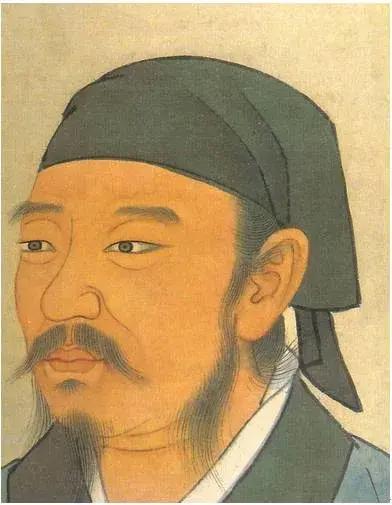
荀子
Xunzi (荀子, c. 313–c. 238 BCE), personal name Xun Kuang, courtesy name Qing, reverently addressed as Xunzi or Xun Qing, and renamed Sun Qing during the Han dynasty to avoid the taboo of Emperor Xuan (Liu Xun), was a native of the State of Zhao during the late Warring States period. He was the paramount synthesizer of the Hundred Schools of Thought, a foundational master of the Confucian school, and a prominent philosophical…
Xunzi (荀子, c. 313–c. 238 BCE), personal name Xun Kuang, courtesy name Qing, reverently addressed as Xunzi or Xun Qing, and renamed Sun Qing during the Han dynasty to avoid the taboo of Emperor Xuan (Liu Xun), was a native of the State of Zhao during the late Warring States period. He was the paramount synthesizer of the Hundred Schools of Thought, a foundational master of the Confucian school, and a prominent philosophical rationalist and educator, posthumously honored as the "Later Sage." Operating in an era of violent military annexation and emergent imperial centralization, Xunzi reformed traditional Confucianism through trenchant realism, constructing a comprehensive philosophy that bridged nature and humankind, while synthesizing moral ritual with penal law. In his early adulthood, Xunzi traveled from Zhao to Qi to enter the famed Jixia Academy in Linzi, the intellectual hub of the Warring States world. Under King Xiang of Qi, he emerged as the foremost preceptor among the assembled scholars, thrice appointed Chancellor (Libationer) of the Jixia Academy. Later, target of political slander, he traveled south to the State of Chu, where Prime Minister Lord Chunshen (Huang Xie) appointed him Magistrate of Lanling. During his public service, Xunzi journeyed to Qin to examine its legalist administration, advising King Zhaoxiang and Chancellor Fan Ju on the Kingly Way; he also returned to Zhao to debate the art of war before King Xiaocheng and Commander Linwujun, articulating the superiority of armies founded upon humaneness. Following the assassination of Lord Chunshen, Xunzi retired from officialdom, remaining in Lanling to teach and write. He systematically summarized the philosophical legacy of the pre-Qin era in the thirty-two treatises of the Xunzi. He articulated a naturalistic worldview centered on the principles that "Heaven operates with constancy," "make clear the division between Heaven and humankind," and "control the mandate of Heaven and utilize it." He founded an ethical system declaring that "human nature is evil; goodness is acquired through conscious activity," and advocated statecraft integrating ritual decorum and penal law. At Lanling, he educated leading statesmen and scholars including Li Si, Han Feizi, Zhang Cang, and Mao Heng. His disciples transmitted the classical canons of Poetry, Documents, Rites, Changes, and Spring and Autumn Annals into the Han dynasty. Xunzi's synthesis directly formed the ideological and institutional bedrock of the Chinese imperial state for over two millennia.
Born in the State of Zhao, descended from the ancient Zhonghang lineage (Xun Linfu) of Jin; studied the Confucian Classics from youth.
Traveled to Linzi in Qi, joining the Jixia Academy to study classical rituals alongside thinkers of various philosophical traditions.
Following Qi's restoration under King Xiang, recognized as senior scholar and chosen three times as Libationer of Jixia Academy.
Departed Qi due to court slander and traveled to Chu, where Lord Chunshen appointed him Magistrate of Lanling.
Traveled west into the Guanzhong basin to investigate Qin institutions, praising its administrative discipline while urging ethical rule.
Returned to Zhao following the Battle of Changping, debating military philosophy against Commander Linwujun before King Xiaocheng.
Re-invited by Lord Chunshen to govern Lanling, promoting agricultural production and moral education across southern Shandong.
Lord Chunshen was assassinated; dismissed from office, Xunzi settled in Lanling to write his philosophical treatises and teach disciples.
Passed away in Lanling, buried outside the ancient city (present-day Lanling County, Shandong), where memorial shrines were later established.
Xunzi's ancestry traced back to the noble Zhonghang clan of the State of Jin during the Spring and Autumn period. During the reign of Duke Wu of Jin, Yuan Shi'an (Xun Xi) was enfeoffed in the ancient territory of Xun for military merit, taking the domain as his surname. Xun Xi's grandson Xun Linfu served as Supreme Commander of the Central Army of Jin, establishing the cadet branch known as the Zhonghang lineage. In the late Spring and Autumn period, factional warfare erupted among the six ministerial houses of Jin; following the defeat of Zhonghang Yin by Zhao Yang, the clan dispersed, and its members resumed the original surname Xun to escape vendettas, establishing the Xun family in Zhao.
Xunzi was born in the State of Zhao during the middle Warring States era, around the accession of King Nan of Zhou. During this period, King Wuling of Zhao initiated the "Hu clothes and horse archery" military reforms, transforming Zhao into an assertive martial power. Growing up in this dynamic frontier environment, the young Xunzi not only mastered the traditional Six Arts of the Confucian curriculum but also absorbed the pragmatism of Zhao political culture, closely following interstate warfare and legal administrative reforms.
Amid the fierce intellectual debates of the era, Xunzi refused to limit himself to the conservative archaism of traditional Lu Confucianism. Instead, he sought practical statecraft capable of ordering society and pacifying war-torn realms. Surrounded by aggressive rival states including Qin, Qi, and Yan, young Xunzi witnessed the devastation of warfare and mass displacement firsthand, inspiring a lifelong commitment to pragmatic political philosophy.
Around 285 BCE, Xunzi departed Zhao and journeyed east to Linzi, the capital of Qi. Since its establishment under Kings Wei and Xuan, the Jixia Academy had served as the preeminent intellectual center of the ancient Chinese world, attracting leading thinkers including Mencius, Chunyu Kun, Zou Yan, Shen Dao, Tian Pian, and Jiezi to debate statecraft with imperial stipends.
Entering the Jixia Academy, Xunzi engaged with the major intellectual currents of Daoism, Legalism, Mohism, the School of Names, and the Yin-Yang School. Unencumbered by sectarian bias, he scrutinized the strengths and shortcomings of each tradition, using Confucian benevolence and righteousness as an anchor to critically synthesize their insights. When General Yue Yi of Yan led a five-state coalition to sack Linzi, the academy temporarily scattered.
Following the restoration of Qi under King Xiang, the court refurbished the Jixia Academy and reassembled scholars from across the realm. With early masters deceased, Xunzi's encyclopedic erudition and dialectical mastery elevated him to the position of senior master. During King Xiang's reign, Xunzi was chosen three times as Libationer (Chancellor), the highest presiding office of the academy, marking the zenith of his intellectual authority.
During his tenure at Jixia, Xunzi presided over monumental academic debates, encouraging rigorous dialectic while measuring arguments against historical precedent and political stability. He firmly opposed sophistry and mystical speculation, guiding the academy into a vibrant era of intellectual synthesis that drew scholars from all across the Chinese world.
As Qi's political strength waned, factional rivals at court leveled malicious slanders against Xunzi. Concluding that the Qi court was no longer hospitable to principled counsel, Xunzi stepped down from his academic post. At the time, following Shang Yang's legalist reforms, the State of Qin had emerged as the preeminent military power in the western highlands. Seeking to examine the administrative machinery of an emergent empire, Xunzi journeyed into the Guanzhong basin.
Upon entering Qin, Xunzi traveled extensively through agricultural districts and administrative seats to observe social customs. Marquis Ying (Fan Ju), Chancellor of Qin, hosted a banquet for Xunzi and inquired about his impressions. Xunzi praised Qin's governance: "Qin's topography is fortified by natural barriers, with rich forests and fertile soil—truly a heavenly realm. Its populace is simple and industrious, free from decadent music, obedient to law, and avoiding private feuds. Its magistrates are grave and diligent, executing duties without bribery. Its court ministers separate public duty from private friendship, while government business proceeds with swift dispatch. This resembles the administration of ancient sage rulers!"
However, Xunzi did not limit his assessment to uncritical praise. In an audience with King Zhaoxiang of Qin, he highlighted the system's structural flaws: "Though Qin is victorious and militarily dominant, its realm lacks Confucian ritual decorum and moral education. Valuing utility over benevolence, it inspires fear rather than genuine allegiance. This is Qin's great defect! If Your Majesty tempers strict penal law with moral virtue and ritual propriety, unification of the world would be easily attained." King Zhaoxiang praised his eloquence but did not adopt his recommendations. Perceiving that Qin was driven exclusively by utilitarian ambition, Xunzi departed eastward.
During his stay in Qin, Xunzi composed incisive essays analyzing administrative efficiency and military rank incentives. He observed that while Qin's military aristocracy catalyzed aggression, it bred a transactional, merciless social ethos. He argued that long-term dynastic endurance required balancing penal codes with moral rituals, offering a prescient institutional critique for subsequent imperial dynasties.
Following the catastrophic Battle of Changping in 260 BCE, where Qin executed 400,000 captured Zhao soldiers, Zhao faced imminent collapse. Deeply concerned for his native land, Xunzi returned to Zhao to assist in national recovery. King Xiaocheng of Zhao, desperate to rebuild military power, convened a grand assembly to debate strategy between Xunzi and Commander Linwujun.
Linwujun advocated tactical deception, arguing: "The essence of military operations lies in assessing topography, employing tactical surprise, and attacking where the enemy is unprepared—this is the supreme principle of Sun Wu and Wu Qi." King Xiaocheng concurred. Xunzi stepped forward to counter: "What Linwujun describes is the petty stratagem of decadent warlords, not the military of a true King! Ancient sage kings deployed the military of benevolence and righteousness. The sword is drawn to suppress violence and eliminate disorder, not to plunder and deceitfully murder."
Xunzi elucidated his doctrine of the "Army of the Humane Ruler": "The troops of a benevolent sovereign act with moral harmony. Soldiers defend their ruler as sons defend fathers and arms protect the head. Deceptive ruses can succeed only against disorganized rabble; attempting to deceive an army united in righteousness is like striking a boulder with an egg! True strength is rooted in popular allegiance, not treacherous subterfuge."
He categorized the armed forces of the era into a hierarchy: the mercenary "Assault Troops" of Qi, the armored "Infantry" of Wei, the fierce "Shock Troops" of Qin, and the supreme "Righteous Army" of the Kingly Way. He concluded that an army commanding popular devotion and guided by ritual discipline would be invincible. King Xiaocheng and Linwujun conceded defeat, and the king appointed Xunzi Superior Minister. In Zhao, Xunzi advised the court on post-war economic reconstruction, urging light taxation and grain storage.
In the late reign of King Qingxiang of Chu, King Kaolie ascended the throne, elevating Lord Chunshen (Huang Xie) as Prime Minister. Seeking eminent talent, Lord Chunshen sent envoys bearing gifts to recruit Xunzi. Recognizing the constraints of Zhao politics, Xunzi journeyed south to Chu, where Lord Chunshen appointed him Magistrate of Lanling, an ancient district steeped in Lu cultural traditions.
Assuming governance at Lanling, Xunzi instituted policies elevating ritual education and clarifying legal administration. He remitted burdensome taxes, established local academies, and instructed the populace in familial ethics, while strictly enforcing laws against powerful gentry clans. Within years, Lanling became renowned as an orderly, prosperous district, serving as a model administration on Chu's northern frontier.
However, factional intrigues plagued the Chu court. Sycophants whispered to Lord Chunshen: "King Tang of Shang founded an empire with seventy leagues, and King Wen of Zhou arose from a hundred leagues. Xunzi is a sage whose disciples span the realm; granting him the fertile district of Lanling may jeopardize Chu's security." Succumbing to suspicion, Lord Chunshen dismissed Xunzi from office.
Xunzi accepted his dismissal without bitterness and returned to Zhao, where King Xiaocheng again welcomed him as Superior Minister. Soon afterward, Lord Chunshen's counselor Zhu Ying pointed out that dismissing the most venerated scholar in China brought widespread ridicule upon Chu. Regretting his mistake, Lord Chunshen dispatched emissaries with formal apologies, and Xunzi returned to serve his second term as Magistrate of Lanling.
During his second administration, Xunzi deepened local economic reforms. He dispatched agricultural officers to inspect fields, introduced advanced iron plows and ox-drawn cultivation, and repaired irrigation canals. The grain reserves of Lanling multiplied, attracting merchants from afar. Grateful residents praised him as a benevolent magistrate, spreading his renown across the Huai River basin.
In 238 BCE, Lord Chunshen was assassinated in a palace coup by Li Yuan, and his family was massacred. Deprived of political support, Xunzi was dismissed from his magistracy by the new Chu regime. Having traversed the realm for decades, Xunzi was now in his eighties, fully aware that the Warring States order was drawing to a close and imperial unification was inevitable.
Renouncing official ambitions, Xunzi settled permanently in the countryside of Lanling. He built an academy, closed his doors to political emissaries, and synthesized the intellectual legacy of pre-Qin thought into the foundational essays of the Xunzi (later compiled into thirty-two chapters by Liu Xiang during the Han dynasty).
Aspiring scholars flocked to Lanling to study under his guidance. Adapting his pedagogy to each student's talents, Xunzi educated the foremost political and intellectual minds of the age: Prince Han Feizi synthesized Legalist statecraft in the Hanfeizi; Li Si mastered administrative imperial strategy, later orchestrating Qin's unification and administrative standardization as Chancellor; Zhang Cang mastered astronomy, arithmetic, and administrative rites, later serving as Chancellor of the Western Han dynasty; Fuqiubo and Mao Heng transmitted the classical Book of Songs, founding the dominant scholarly traditions of Han classical learning.
Xunzi maintained rigorous academic standards, emphasizing textual exegesis and ethical practice. He led disciples in chanting classical canons, analyzing historical developments, and exploring the rise and fall of states, making the Lanling academy the intellectual beacon of eastern China.
Xunzi passed away peacefully in Lanling around 238 BCE at approximately seventy-five years of age. Grateful local residents buried him with solemn honors near the ancient city of Lanling (in present-day Lanling County, Linyi, Shandong). Although he never held supreme ministerial office to govern an empire in his lifetime, his philosophical legacy and brilliant disciples shaped the political architecture and cultural soul of Chinese civilization for two millennia.
Xunzi's most revolutionary philosophical contribution was dismantling the anthropomorphic conception of a conscious Heaven, replacing superstition with a rationalist, naturalistic cosmology. In his treatise On Heaven (Tianlun), he declared: "The operations of Heaven are constant; they do not exist for the sake of Yao, nor do they perish for the sake of Jie. Respond to them with good governance, and good fortune follows; respond to them with chaos, and disaster ensues." He defined Heaven as the objective natural cosmos, whose celestial bodies and seasonal cycles function independently of human wishes.
Building upon this insight, Xunzi advanced the seminal propositions "make clear the division between Heaven and humankind" and "rather than singing hymns to Heaven, is it not better to regulate Heaven's mandate and utilize it?" He asserted that humanity should not passively worship nature or tremble before omens, but should grasp natural laws to master and harness natural resources for human welfare, marking a towering peak of rationalism in ancient world philosophy.
Xunzi provided scientific explanations for eclipses, comets, and unseasonable storms. He stated that celestial anomalies are physical irregularities of natural forces, concluding: "To marvel at them is appropriate, but to dread them is misguided." This rational stance purged ancient Chinese thought of astrological fatalism.
In ethics and philosophical anthropology, Xunzi countered Mencius's doctrine of original goodness by formulating his famous thesis that "human nature is evil; goodness is acquired through conscious activity." In his treatise On the Evil of Human Nature (Xing'e), he argued that humans are born with biological desires—hunger for food, cold for warmth, fatigue for rest, and self-interested jealousy. If left undisciplined, innate desires inevitably lead to violence, competition, and social collapse.
By "conscious activity" (wei), Xunzi meant deliberate artificial cultivation and education. He argued that society requires external rituals, moral teachers, and laws to reshape raw human nature, a process termed "transforming nature through conscious activity" (huaxing qiwei). This doctrine established the absolute necessity of institutional education, ritual codes, and state authority, forming the philosophical basis for Chinese educational and legal theory.
Xunzi asserted that "any person in the street can become a Sage King Yao." He maintained that sages and commoners share the same biological endowment; what distinguishes a noble person is persistent ethical training and study. This egalitarian premise inspired generations of scholars to pursue moral self-cultivation.
In political philosophy, Xunzi adapted Confucianism to the realities of imperial unification, creating a governing model that synthesized ritual propriety with penal law. He asserted that while moral rituals foster social hierarchy and ethical consensus, laws provide the coercive force necessary to punish crime and maintain administrative cohesion.
Xunzi declared that "the guideline of governance lies in ritual and punishment." He combined Confucian moral education with Legalist administrative discipline, advocating the Kingly Way abroad while employing hegemonic realpolitik when necessary, and promoting meritorious talent over hereditary aristocratic privilege. This synthesis was adopted by the Han dynasty, evolving into the enduring imperial governing doctrine of "outwardly Confucian, inwardly Legalist."
Addressing court loyalty, Xunzi formulated the principle of "following the Way rather than the sovereign." In The Way of the Minister (Chendao), he stated: "To follow orders and benefit the ruler is compliance; to follow orders and harm the ruler is flattery; to disobey orders and benefit the ruler is true loyalty." This elevated moral principle above imperial whim, creating a sacred standard for outspoken court remonstrance.
In epistemology, Xunzi authored the classic treatise Dispelling Blindness (Jiebi), diagnosing the cognitive biases that distort human judgment. He noted: "The common affliction of humankind is to be blinded by a single corner and remain ignorant of the overarching principle." Individuals frequently fixate on one partial perspective (such as desire, aversion, beginnings, or endings), losing sight of objective truth.
To overcome cognitive bias, Xunzi proposed the mental discipline of "emptiness, singleness, and stillness" (xu yi er jing). "Emptiness" means not allowing preconceived opinions to block new knowledge; "singleness" means concentrating on one subject without distraction; "stillness" means maintaining rational clarity without emotional delusions. This epistemology provided a rigorous methodological foundation for objective inquiry in classical Chinese philosophy.
In philosophical logic and linguistics, Xunzi composed On the Rectification of Names (Zhengming), synthesizing and transcending the debates of Mohist dialecticians and the School of Names to establish ancient China's most rigorous semantic theory. He formulated the principle of "instituting names to designate realities," asserting that terms must reflect objective entities: "when realities are the same, give them the same name; when realities differ, give them different names."
Xunzi articulated the conventional nature of language, arguing that "names have no intrinsic appropriateness; they are instituted by convention, and when convention is established, they become appropriate." He refuted popular paradoxes of the era, such as "a white horse is not a horse" and "killing a robber is not killing a human," categorizing them as logical fallacies. Xunzi's semantic theory anchored Chinese logic in empirical reality and social utility.
In macroeconomics and state finance, Xunzi formulated a pragmatic philosophy in treatises such as Enriching the State (Fuguo) and The Kingly System (Wangzhi). Opposing Legalist policies that squeezed peasant wealth into state treasuries, he advanced the guiding principle: "The way to enrich the state lies in economizing expenditures, enriching the people, and storing the surplus."
He argued that popular prosperity is the prerequisite for robust public finance, advocating light taxes and minimal commercial tariffs to foster agricultural production. Simultaneously, he urged strict frugality at court. Xunzi stressed environmental stewardship according to seasonal rhythms, formulating the principle that "felling timber and harvesting resources must not miss their proper seasons," establishing an early vision of sustainable ecological balance.
In the realm of intellectual history and philosophical critique, Xunzi authored the groundbreaking essay Fei Shier Zi (Against the Twelve Thinkers), presenting a rigorous and comprehensive critique of twelve prominent intellectual figures of the Warring States period. Grounded in his defense of the Confucian ritual orthodoxy of the Duke of Zhou and Confucius and his quest for universal imperial order, he identified fundamental structural flaws across contemporary rival traditions.
Xunzi criticized Taoxiao and Wei Mou for indulging desires and violating ritual decency; Chen Zhong and Shi Qiu for retreating from practical realities in pursuit of eccentric personal purity; Mozi and Song Xing for their reductionist utilitarianism that abolished ritual music and reduced society to austere destitution; Shen Dao and Tian Pian for blind legalism without moral standards; and Hui Shi and Deng Xi for semantic sophistry disconnected from governance. In contrast, he venerated Confucius and Zixia as true standard-bearers of statecraft and ritual civilization.
In state governance ethics and political philosophy, Xunzi formulated the celebrated doctrine of the boat and water in chapters such as Jun Dao (The Way of the Ruler) and Chen Dao (The Way of the Minister). He solemnly admonished monarchs: "The ruler is the boat, and the common people are the water. The water can carry the boat, and the water can overturn the boat." This luminous maxim placed popular consent and welfare at the heart of dynastic legitimacy, standing as the supreme expression of ancient Chinese populist philosophy.
Simultaneously, Xunzi established sophisticated ethical standards for rulers and ministers. He posited that the supreme duty of the sovereign was "clarifying social divisions to harmonize human collectivities", organizing society through ritual roles and elevating virtuous talent. For ministers, he distinguished four gradations of service: sycophants who flatter, mediocre bureaucrats who comply blindly, loyal ministers who remonstrate, and great ministers who safeguard dynastic continuity even if disobeying flawed royal decrees, thus establishing an exalted ideal of ministerial duty.
In military philosophy and the justice of armed conflict, Xunzi transcended late Warring States theories of tactical deception through the Confucian doctrine of humaneness and righteousness. In his celebrated debate on warfare with Lord Linwu before King Xiaocheng of Zhao, Xunzi systematically compared the foundational nature of armed forces across the warring states.
He observed that Qi relied on monetary bounties to recruit mercenaries, who advanced for plunder but dissolved in adversity; Wei conscripted heavy infantry, who held firm lines initially but could not sustain long campaigns; and Qin mobilized fierce assault troops through severe punishments and lavish promotions, generating formidable aggression that nonetheless lacked deep domestic benevolence. In contrast, Xunzi championed the Kingly Army, arguing that an army bonded by shared moral devotion and popular affection commanded invincible spiritual cohesion against which mere mercenaries could never prevail.
In individual moral cultivation and ethical praxis, Xunzi articulated the systematic progression toward inner sageliness and outward governance in chapters such as Xiu Shen (Self-Cultivation) and Zhi Xue (The Governance of Learning). He insisted that moral cultivation was never abstract contemplation, but concrete discipline manifest in every daily deed and word.
Xunzi proposed: "When encountering good, firmly preserve it in oneself; when encountering evil, mournfully examine oneself. When goodness resides within, cherish it steadfastly; when wickedness emerges within, despise it abhorrently." He emphasized using ritual and music as precise compasses to rectify one's character, reaching through unceasing vigilance the serene state of laboring physically while maintaining peaceful equanimity. This cultivation model became a foundational ethical compass for generations of Chinese scholars.
In educational philosophy, Xunzi opened his collected works with An Exhortation to Learning (Quanxue), establishing the foundational text of Chinese educational thought. He explained education's transformative power, observing: "Indigo is extracted from the indigo plant, yet it is bluer than indigo; ice is formed from water, yet it is colder than water," demonstrating that learning enables individuals to transcend innate limitations.
Xunzi summarized timeless pedagogical maxims: "Without accumulating single steps, one cannot reach a thousand leagues; without gathering small streams, one cannot form rivers and seas"; "If you carve and give up, rotten wood will not break; if you carve without stopping, metal and stone can be engraved"; "When hemp grows among grain, it grows upright without support." These maxims have inspired Chinese students for millennia.
In literary history, Xunzi was not only a philosopher but also the founding pioneer of rhapsody literature. He was the first writer in Chinese history to use the genre name "Fu," composing The Fu Chapter (Fupian), which utilized riddle-like dialogues to expound on themes such as ritual, wisdom, clouds, and silkworms, establishing the descriptive parallelism of the Han rhapsody (Hanfu).
Concurrently, Xunzi authored The Song of the Pestle (Chengxiangpian), adapting popular folk rhythms sung to the beat of pestles to communicate serious Confucian political and moral teachings in accessible metrics. This work became the ancestor of Chinese popular vernacular verse, shining alongside Qu Yuan's southern poetry as a cornerstone of ancient Chinese literature.
In the history of classical scholarship, Xunzi's contribution is peerless. Following the Qin burning of books and execution of scholars, ancient Confucian manuscripts were devastated. Yet the Five Classics restored during the early Han dynasty were preserved and transmitted primarily through the disciples of Xunzi.
Han classical lineages record that all four schools of the Book of Songs (Qi, Lu, Han, and Mao) traced back to Xunzi's disciples Fuqiubo and Mao Heng. Commentators on the Zuo Zhuan such as Zhang Cang and Jia Yi, and scholars of the Book of Documents and Etiquette and Ceremonial such as Gao Tangsheng and the Dai cousins, inherited Xunzi's scholarly lineage. Qing scholar Wang Zhong observed: "All classical traditions recorded by Liu Xiang derive from Xunzi. Without Master Xun, the classical scholarship of the Twenty-Four Dynastic Histories could never have emerged!"
FIGURES ASSOCIATED WITH THIS DYNASTY