Birth in Suzhou
Born into an esteemed scholarly family in Wu County, Suzhou, displaying remarkable poetic talent from childhood.
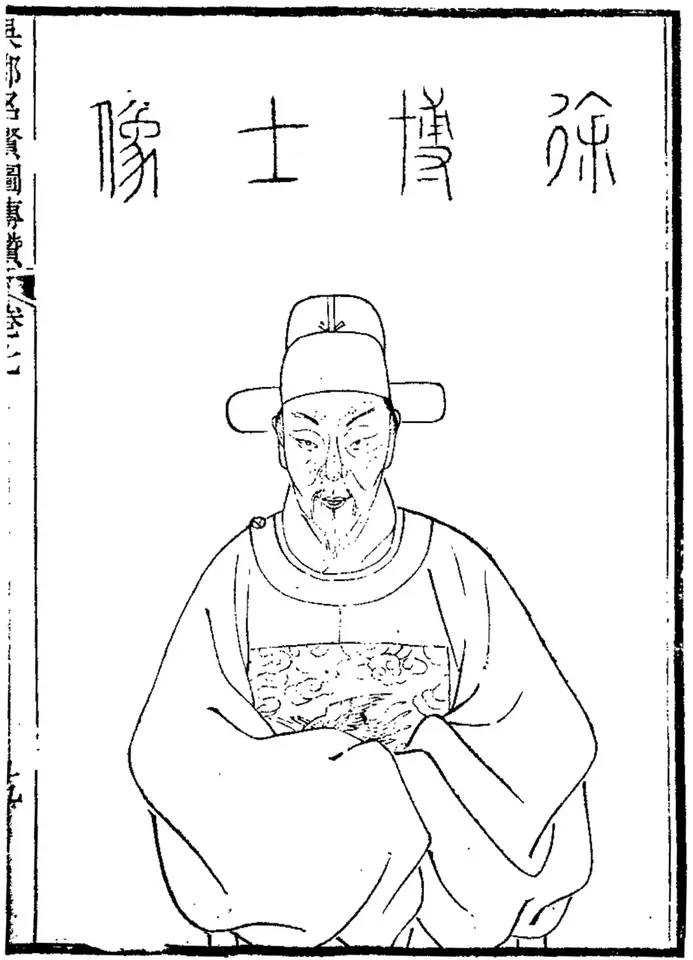
徐祯卿
Xu Zhenqing (徐祯卿, 1479–1511), courtesy names Changgu and Changguo, was a native of Wu County, Suzhou Prefecture (modern Suzhou, Jiangsu Province). He was a celebrated literary master and preeminent poet of the Ming dynasty, a core figure of the "Former Seven Masters" (Qian Qizi), and celebrated alongside Zhu Yunming, Tang Yin, and Wen Zhengming as one of the legendary "Four Literary Talents of Wu" (Wuzhong Si Caizi).…
Xu Zhenqing (徐祯卿, 1479–1511), courtesy names Changgu and Changguo, was a native of Wu County, Suzhou Prefecture (modern Suzhou, Jiangsu Province). He was a celebrated literary master and preeminent poet of the Ming dynasty, a core figure of the "Former Seven Masters" (Qian Qizi), and celebrated alongside Zhu Yunming, Tang Yin, and Wen Zhengming as one of the legendary "Four Literary Talents of Wu" (Wuzhong Si Caizi). Endowed with transcendent literary gifts, Xu mastered ancient scriptures from youth and achieved poetic eminence in Jiangnan while still a licentiate. Graduating as a jinshi in 1505, his slight physical stature and frail countenance caused him to be passed over for the prestigious Hanlin Academy, receiving instead appointment as Left Vice Director in the Court of Judicial Review, before being demoted to Instructor in the Directorate of Education following an escaped prisoner incident. He passed away prematurely in 1511 at the age of thirty-three. Among the Four Talents of Wu, Xu was singular in devoting himself entirely to the craft of poetry, celebrated under the adage: "To possess Xu Changgu in a household is to possess the wellspring of literary culture." Leading the archaist literary revival alongside Li Mengyang and He Jingming under the banner "prose must emulate Qin and Han, poetry must emulate the High Tang," his regulated verse shook the capital with its purity and noble cadence. His critical treatise Tan Yi Lu inaugurated systematic poetic criticism in the Ming dynasty, and his poetic oeuvre was compiled in the Digong Ji.
Born into an esteemed scholarly family in Wu County, Suzhou, displaying remarkable poetic talent from childhood.
Joined poetry societies with Tang Yin, Wen Zhengming, and Zhu Yunming, winning high acclaim from Shen Zhou and Yang Xunji.
Following examination setbacks, composed the introspective lyric anthology Tantan Ji inspired by the Elegies of Chu.
Passed the palace examination; passed over for the Hanlin Academy due to appearance, appointed to the Court of Judicial Review.
Demoted to Instructor in the Directorate of Education following a jailbreak incident, lecturing on classical literature.
Withdrew into private scholarship to author the seminal treatise on classical poetic theory, Tan Yi Lu.
Passed away in his Beijing quarters at the age of thirty-three, mourned and buried by Li Mengyang and He Jingming.
Xu Zhenqing was born in 1479 in Wu County, Suzhou Prefecture. Endowed with extraordinary memory and intellectual sharpness, he lacked a large private library at home but mastered canonical works through voracious borrowing. In his youth, Xu specialized in classical poetic forms, demonstrating remarkable syntactic precision and emotional elevation, winning fame across the lower Yangtze delta while still a licentiate.
In Suzhou, Xu formed an intimate bond with the celebrated talent Tang Yin. Astonished by Xu's poetic genius, Tang introduced him to Shen Zhou, the founder of the Wu School of painting, and the prominent scholar Yang Xunji. Shen Zhou marveled at his verse, and Xu's reputation spread rapidly across southeastern literati circles. During this period, he exchanged poetry and paintings with Zhu Yunming, Tang Yin, and Wen Zhengming, collectively earning renown as the "Four Literary Talents of Wu." However, while Zhu excelled in cursive calligraphy, Tang in figure and landscape painting, and Wen in regular script and landscapes, Xu focused his creative energy entirely upon poetry, being acclaimed by contemporaries as the "Crown of Poetry in Wu."
Xu's early civil examination career met with repeated setbacks. Facing academic disappointment, he immersed himself in Qu Yuan's Li Sao, composing his early lyric collection Tantan Ji to reflect on personal struggle and dynastic history. In 1505, Xu traveled north to Beijing, successfully passing the imperial palace examination to earn the jinshi degree.
Emperor Xiaozong personally reviewed the roster of new graduates, inquiring after Xu Zhenqing and Lu Shen with the intention of appointing them Hanlin Bachelors. However, on account of Xu's short stature and frail countenance, the emperor passed him over for the palace academy, appointing Lu Shen while assigning Xu as Left Vice Director in the Court of Judicial Review. Possessing intense intellectual pride, Xu composed the satirical Chounü Fu (Rhapsody on the Ugly Maiden) to express his frustration with superficial court judgments. In the Court of Judicial Review, he maintained judicial rigor, clearing backlogged cases and refusing all sycophancy toward powerful courtiers.
In 1508, an inmate escaped from the detention cells of the Court of Judicial Review, and senior officials seized upon the incident to demote Xu to Instructor in the Directorate of Education. Xu accepted the setback with philosophical equanimity, immersing himself in ancient literature and instructing imperial students in classical literary forms.
During his years in Beijing, Xu allied himself with Li Mengyang, He Jingming, Bian Gong, Kang Hai, Wang Jiusi, and Wang Tingxiang, becoming a driving force in the "Former Seven Masters" literary revival. The leaders of the movement deeply admired Xu's philological erudition and classical style, with Li Mengyang openly conceding that Xu's poetic talent surpassed his own. The group convened regularly to compose verse and debate ancient prosody, defining the literary golden age of the mid-Ming.
In March 1511, Xu contracted a mortal illness at his residence in Beijing. In the biting cold of early spring, his frail constitution failed to respond to medication, and he passed away on the bingyin day of the third month at the premature age of thirty-three.
Upon learning of his death, his close companions Li Mengyang and He Jingming rushed to his lodgings, weeping bitterly beside his casket. Li and He personally financed his funeral arrangements, escorting his remains south for burial in his native Suzhou, while gathering and editing his unpublished manuscripts into the posthumous collection Digong Ji. Literati across the realm mourned the premature loss of the greatest poet of his generation.
In the face of the bland, decorative court style (Taige Ti) prevailing in the mid-Ming, Xu Zhenqing united with Li Mengyang and He Jingming to initiate the monumental archaist literary revival. Xu championed the core aesthetic doctrine that "prose must emulate the Qin and Han, and poetry must emulate the High Tang." However, rather than mechanically copying archaic vocabulary, he placed paramount emphasis on spiritual resonance and natural poetic vitality.
Xu's verse was distinguished by ethereal transcendence and musical elegance, excelling particularly in five-character regulated verse and seven-character quatrains. His celebrated lines, such as "From Han pastures divine steeds emerge into autumn grasses beneath the setting sun" and "Where will native letters bring peaceful tidings, as river spring winds scatter willow leaves," exhibited sweeping solemnity and refined beauty. Within the Former Seven Masters, his style was recognized as the most harmonious and balanced, synthesizing northern High Tang vigor with southern lyrical grace.
Xu's crowning achievement in literary criticism was his one-volume treatise Tan Yi Lu. This work represents the very first systematic monograph in Ming literary history dedicated to analyzing poetic tone, tonal metrical harmony, and formal composition, exerting a transformative influence on subsequent poetics.
In Tan Yi Lu, Xu analyzed poetic tonal flaws, metric modulation, and stylistic hierarchies, arguing that poetic creation must generate musical meter from genuine emotion and unify vital spirit through rigorous structure. He asserted that while poets must emulate High Tang metrics, they must preserve authentic subjective feeling. The treatise not only provided the foundational theoretical blueprint for the Former Seven Masters, but also served as a required textbook for classical prosodic studies across subsequent centuries.
While the Four Literary Talents of Wu enjoyed immense prestige in southern China, each excelled in a distinct artistic sphere: Zhu Yunming in wild cursive script, Tang Yin in figure and landscape painting, and Wen Zhengming in small regular script and landscapes. It was Xu Zhenqing alone who led the poetic realm, standing on equal footing with the northern literary giants.
Xu mastered five- and seven-character ancient and modern verse forms, alongside classical yuefu folk ballads. His yuefu poetry was somber, majestic, and emotionally profound. Ming literary critic Wang Shizhen observed that Xu utilized his refined southern talent to invigorate the spirit of northern statecraft literature, freeing Wu literature from delicate effeminacy and securing an irreplaceable position within the Four Talents of Wu.
FIGURES ASSOCIATED WITH THIS DYNASTY