Birth in Shaoxing
Born into a prosperous merchant-gentry family in Dongpu Town, Shanyin County, Shaoxing Prefecture, Zhejiang Province.
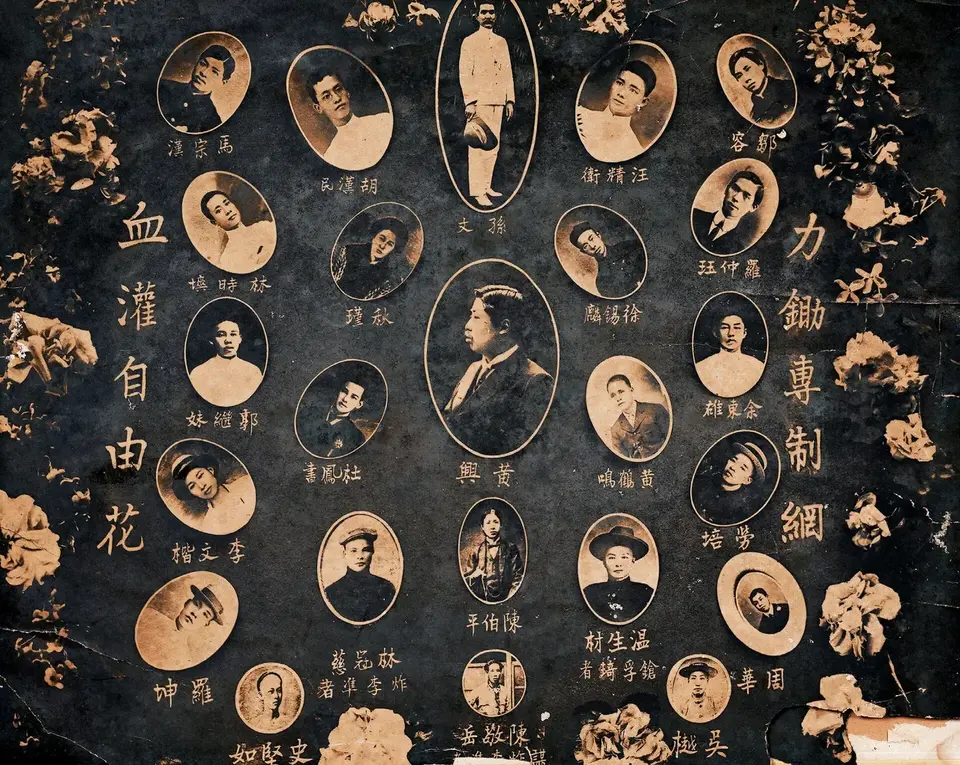
徐锡麟
Xu Xilin (徐锡麟, 1873–1907), courtesy name Bosun and art name Guanghanzi, was a native of Dongpu Town, Shanyin County, Shaoxing Prefecture, Zhejiang Province. He was an eminent democratic revolutionary and anti-Qing patriot during the late Qing dynasty and a founding leader of the Restoration Society (Guangfuhui). Born into a prosperous merchant family, Xu passed the civil examinations as a Licentiate before serving as…
Xu Xilin (徐锡麟, 1873–1907), courtesy name Bosun and art name Guanghanzi, was a native of Dongpu Town, Shanyin County, Shaoxing Prefecture, Zhejiang Province. He was an eminent democratic revolutionary and anti-Qing patriot during the late Qing dynasty and a founding leader of the Restoration Society (Guangfuhui). Born into a prosperous merchant family, Xu passed the civil examinations as a Licentiate before serving as mathematics instructor and Vice Director of the Shaoxing Prefectural Academy. Alarmed by the national crises following the Boxer Protocol, he abandoned bureaucratic prospects to establish a bookstore circulating anti-imperial literature. In 1904, he joined the Restoration Society in Shanghai under Tao Chengzhang. The following year, he co-founded the Datong Normal School in Shaoxing, training secret society members as military cadres and introducing Qiu Jin into the revolutionary organization. To infiltrate the Qing administrative apparatus, Xu purchased an official rank as an expectant intendant and was posted to Anhui in 1906. Gaining the trust of Anhui Governor Enming, he was appointed Director of the Anhui Police Academy and Inspector of the Military Preparatory School. On July 6, 1907, with revolutionary networks compromised, Xu launched the Anqing Uprising during a police academy graduation ceremony, assassinating Governor Enming and leading cadets to storm the provincial armory. Captured after hours of intense fighting, Xu was executed the following morning outside the eastern gate of the provincial government offices, suffering disembowelment with extraordinary fortitude at thirty-three. His martyrdom galvanized revolutionary uprisings across China, prompting Sun Yat-sen to honor him as an epochal national hero whose sacrifice resonated across history.
Born into a prosperous merchant-gentry family in Dongpu Town, Shanyin County, Shaoxing Prefecture, Zhejiang Province.
Attained the status of Xiucai in Shanyin County examinations, subsequently studying modern mathematics, surveying, and military strategy.
Appointed mathematics instructor at the Shaoxing Prefectural Academy, later rising to Vice Director and operating an underground bookstore.
Visited the Osaka Exhibition in Japan, meeting Tao Chengzhang and Gong Baoquan, and embraced anti-Qing revolutionary nationalism.
Formally entered the Restoration Society in Shanghai through Tao Chengzhang, meeting Cai Yuanpei and networking with secret societies.
Co-founded the Datong Normal School in Shaoxing to train armed military cadres, recruiting secret societies and inducting Qiu Jin.
Purchased an official post as circuit intendant and secured the patronage of Anhui Governor Enming, becoming Police Academy Director.
Shot and assassinated Governor Enming during the police graduation ceremony, captured after leading a four-hour siege of the armory.
Executed by disembowelment outside the eastern gate of the Anhui governorate, dying courageously at the age of thirty-three.
Xu Xilin was born on December 17, 1873 (the twenty-eighth day of the tenth month in the twelfth year of the Tongzhi reign) in Sunjialou, Dongpu Town, Shanyin County, Zhejiang Province. His grandfather Xu Tongxuan was a wealthy local merchant, and his father Xu Fengming managed expanding commercial estates. Possessing an adventurous spirit, Xu admired historical heroes and bristled against rigid family discipline, running away to a Buddhist temple at twelve before being brought home by relatives.
In 1893 (the nineteenth year of the Guangxu reign), under paternal insistence, the twenty-one-year-old Xu passed the prefectural examinations as a licentiate. However, China's defeat in the First Sino-Japanese War and the Boxer turmoil destroyed his belief in the Qing court. In 1901, Xu accepted an appointment as mathematics instructor at the Shaoxing Prefectural Academy, rising to Vice Director two years later. Over four years, he taught mathematics, surveying, and physical drill, while operating a clandestine bookstore distributing revolutionary texts like The Revolutionary Army and Ten Days in Yangzhou.
In 1903, Xu traveled to Japan to tour the Osaka Industrial Exhibition. While in Tokyo, Chinese students launched the Anti-Russia Volunteer Corps to protest Tsarist occupation of Manchuria. Deeply moved by their patriotism, Xu became convinced that only violent revolution could overthrow the Qing dynasty. He befriended Tao Chengzhang and Gong Baoquan, taking an oath to dedicate his life to the anti-Qing struggle.
In late 1904, Xu traveled to the Patriotic Girls' School in Shanghai to meet Cai Yuanpei, formally joining the Restoration Society through Tao Chengzhang's introduction. Convinced that armed revolution required popular forces, Xu traveled extensively through Zhuji, Shengxian, Dongyang, and Yiwu to recruit secret society leaders, remarking enthusiastically that having found dozens of exceptional patriots across four counties, China's rebirth was attainable.
In 1905, Xu organized an athletic society in Shaoxing to train youth in rifle marksmanship. To warehouse modern weapons and systematically train secret society members, Xu collaborated with Tao Chengzhang and Gong Baoquan to found the Datong Normal School. Operating under the cover of training physical education teachers, Datong functioned as the clandestine military academy of the Restoration Society. All enrolled students took oaths of membership and remained subject to revolutionary orders upon graduation.
In the spring of 1905, Xu met the female poet and revolutionary Qiu Jin in Shaoxing. Deeply impressed by her courage, Xu sponsored her admission into the Restoration Society. The establishment of Datong consolidated anti-Qing forces across eastern Zhejiang into a formidable network.
To obtain military command, Tao Chengzhang proposed that members purchase imperial titles to infiltrate the Qing military apparatus. Xu embraced the plan, liquidating family properties and securing an expectant circuit intendant rank through the recommendation of his relative, former Hunan Governor Yu Liansan.
In late 1906, Xu was assigned to Anhui Province. Before departing, he entrusted the administration of the Datong School to Qiu Jin. The two leaders pledged a joint strategy: Xu would launch an insurrection in Anhui, while Qiu Jin would mobilize Zhejiang forces in coordination, advancing toward Nanjing to topple imperial authority in the lower Yangtze.
Arriving in Anqing, Xu won the confidence of Anhui Governor Enming through administrative diligence. Enming appointed him Deputy Director of the Anqing Military Academy, Co-Director of the Police Office, and Inspector of the Police Academy and Military Preparatory School. Utilizing his official status, Xu recruited loyal officers, including Chen Boping and Ma Zonghan, laying the groundwork for a provincial rebellion.
In the summer of 1907, preparations approached their climax. Xu and Qiu Jin planned to strike during the police academy's graduation ceremony on July 8, when provincial dignitaries would gather in the assembly hall. However, revolutionary courier Ye Yanggao was arrested in Shanghai, compromising underground communications. Governor Enming received telegraphic warnings and summoned Xu to discuss security, unaware that Xu himself was the target.
Recognizing that the conspiracy was exposed, Xu moved the uprising forward to July 6. At eight o'clock in the morning, as Governor Enming and civil officials assembled in the academy auditorium, Xu stepped forward as if to present reports, shouting: "Governor, revolutionaries have arisen today!" As Chen Boping threw a grenade that failed to detonate, Xu drew two revolvers from his boots and fired seven shots into Enming, mortally wounding him and sending officials fleeing in panic.
Xu led his students to seize the provincial armory. However, artillery munitions proved mismatched, and two thousand imperial reinforcements surrounded the building. Following four hours of combat, Chen Boping was killed, and Xu was overwhelmed and captured.
Brought before provincial inquisitors Feng Xu and Yu Lang, Xu refused to plead for mercy, declaring boldly: "I have intended to overthrow the Manchus for more than ten years; today my purpose is achieved. You may dismember me, but do not harm innocent students!" At dawn on July 7, 1907, Xu was executed outside the eastern gate of the governorate, disemboweled by imperial executioners. He was martyred at thirty-three.
Xu Xilin's earliest contribution was dispelling imperial indoctrination through modern education and underground publications. Recognizing that civil examinations dulled public consciousness, he utilized his post at the Shaoxing Prefectural Academy to introduce scientific inquiry.
He financed an underground bookstore in Shaoxing, risking execution to import banned democratic newspapers and pamphlets from Shanghai. His lectures on international relations transformed the conservative town of Shaoxing into an intellectual fortress for revolutionary agitation.
In founding the Datong Normal School, Xu created the earliest dual-purpose military academy and insurgent base of the late Qing revolution.
Rejecting conventional social prejudices, Xu admitted rural secret society members alongside students, training them in rifle marksmanship and field discipline. The institution produced hundreds of disciplined military officers who formed the backbone of anti-Qing armed insurrections.
Xu understood that political parties required armed mass support. Within the Restoration Society, he coordinated regional militias across Zhejiang and Anhui.
Venturing into mountainous regions, Xu took oaths with Triad and Gelaohui leaders, reconciling factional rivalries and unifying them under anti-Qing banners. His organizational work established a coordinated paramilitary network capable of mobilizing thousands of fighters across both provinces.
Xu's undercover infiltration of the Anhui provincial administration demonstrated extraordinary courage and tactical patience. In late imperial governance, expectant intendants were high-ranking officials with access to senior viceroys.
Over nearly two years in Anqing, Xu maintained his cover as an imperial official while converting the police academy into a revolutionary command center. He drilled cadets in covert revolutionary tactics, setting a precedent for using the state's military resources to destroy imperial rule.
Although the Anqing Uprising was crushed, Xu's assassination of Governor Enming delivered an electrifying shock to the Qing dynasty. Enming was an elite Manchu aristocrat, and his assassination within his provincial capital dismantled the aura of imperial invulnerability.
Xu's fearless demeanor during interrogation was published nationwide, inspiring thousands of youths to join revolutionary organizations. The Anqing revolt inaugurated the phase of armed uprisings that culminated four years later in the Wuchang Uprising, bringing an end to two millennia of imperial autocracy.
Sun Yat-sen visited Hangzhou following the triumph of the 1911 Revolution to pay homage at Xu's tomb, stating: "The Restoration Society's assassination of Enming by Xu Xilin revealed its merit to all under heaven!" Sun penned the famous memorial couplet: "A drop of loyal red blood honors his sacred flesh; after three years, his white bones still diffuse righteous fragrance."
Zhang Taiyan wrote in Chronicles of the Restoration Army: "Bosun possessed peerless bravery and vowed to slay the imperial oppressors. In striking at Anqing, though his body was broken, the courage of the court was shattered. The rapid triumph of 1911 drew vital momentum from Bosun's sacrifice."
Historian Bai Shouyi wrote in General History of China: "Infiltrating the Qing bureaucracy as an intendant and assassinating the governor in Anqing, Xu Xilin demonstrated the uncompromising heroism of early bourgeois revolutionaries. Although the uprising failed, it dealt a heavy blow to Qing authority in the Yangtze basin, injecting immense resolve into the nationwide democratic movement."
FIGURES ASSOCIATED WITH THIS DYNASTY