Birth in Beijing
Born into an elite banner official family in Beijing, the son of Minister of Revenue Xu Zechun.
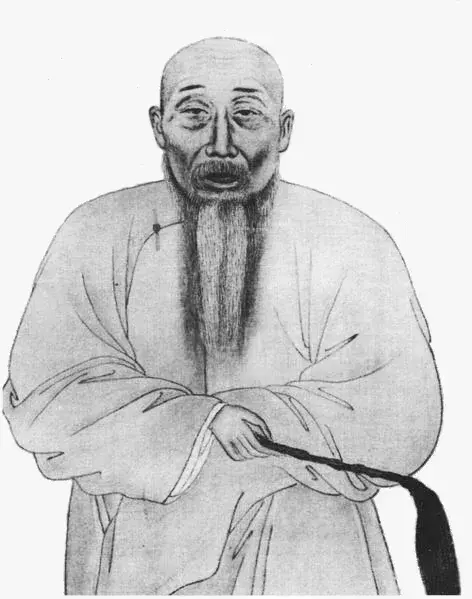
徐桐
Xu Tong (徐桐, 1820–1900), courtesy name Yuru and art name Yinxuan, was a member of the Han Military Plain Blue Banner. He was a prominent senior minister of the Qing dynasty spanning the Daoguang, Tongzhi, and Guangxu reigns, rising to Grand Secretary of the Tiren Pavilion and serving as the primary leader of ultra-conservative resistance to modernization in late imperial China. Born into an eminent official lineage as the…
Xu Tong (徐桐, 1820–1900), courtesy name Yuru and art name Yinxuan, was a member of the Han Military Plain Blue Banner. He was a prominent senior minister of the Qing dynasty spanning the Daoguang, Tongzhi, and Guangxu reigns, rising to Grand Secretary of the Tiren Pavilion and serving as the primary leader of ultra-conservative resistance to modernization in late imperial China. Born into an eminent official lineage as the son of Minister of Revenue Xu Zechun, Xu passed the metropolitan examinations in 1850 (the thirtieth year of the Daoguang reign). Beginning his career as a compiler in the Hanlin Academy, he served for decades in the Upper Imperial Study and the Hongde Hall, tutoring the young Tongzhi Emperor in Neo-Confucian governance. Across the Guangxu era, he held high offices including Minister of Rites, Minister of Personnel, and Senior Tutor to the Imperial Household, ultimately being inducted into the Grand Secretariat in 1896 with the honorary rank of Grand Guardian of the Crown Prince. Confronting the unprecedented crises of late imperial China, Xu obstinately clung to Song-Ming Neo-Confucian orthodoxy, detesting Western civilization and modern sciences with extreme fanaticism. He forbade any students who mentioned institutional reform from entering his household. During the Hundred Days' Reform of 1898, he served as the intellectual spearhead of the Empress Dowager Cixi's reactionary faction; following the coup, he allied with Prince Duan Zaiyi to orchestrate the "Jihai Heir Succession," plotting to dethrone the Guangxu Emperor. In 1900, Xu enthusiastically backed the Boxer Rebellion, urging the imperial court to lay siege to foreign legations and wage war against Western powers. When the Eight-Nation Alliance breached Beijing in August 1900, Xu committed suicide by hanging in his Dongjiaominxiang mansion at the age of eighty. In the postwar settlement, the court retroactively revoked his posthumous honors under foreign diplomatic pressure.
Born into an elite banner official family in Beijing, the son of Minister of Revenue Xu Zechun.
Passed the imperial examinations as a Jinshi, entering the Hanlin Academy as a bachelor before being briefly demoted over exam auditing issues.
Granted the post of reviser and assigned to the Veritable Records Bureau to compile the Veritable Records of Emperor Wenzong.
Appointed by Empress Dowager Cixi to the Upper Imperial Study and Hongde Hall to instruct the Tongzhi Emperor on classical governance.
Promoted to Vice Minister of Rites, rebutting Wu Kedu's succession petition, and soon elevated to Minister of Rites with the title of Junior Guardian of the Crown Prince.
Impeached Chonghou over the unauthorized Treaty of Livadia, vehemently arguing against diplomatic compromise with Russia.
Appointed Grand Secretary of the Tiren Pavilion and Grand Guardian of the Crown Prince after serving as Minister of Personnel.
Staunchly opposed the Hundred Days' Reform, gaining supreme favor from Empress Dowager Cixi after the coup.
Supported Prince Duan Zaiyi in installing Pujun as the Heir Apparent, becoming the youth's senior tutor in an effort to depose Emperor Guangxu.
Championed the Boxers in attacking the foreign legations; committed suicide by hanging in Beijing after allied troops captured the capital.
Xu Tong was born in 1820 (the twenty-fifth year of the Jiaqing reign) into an illustrious Han Military banner household in Beijing. His father, Xu Zechun, rose to the prominent position of Minister of Revenue during the Daoguang era. Immersed in orthodox Confucian education from childhood, Xu Tong was deeply indoctrinated in Cheng-Zhu Neo-Confucianism, focusing his studies on rigid textual adherence and moral rectitude.
In 1850 (the thirtieth year of the Daoguang reign), the thirty-year-old Xu attained the Jinshi degree and was appointed a compiler in the prestigious Hanlin Academy. However, his early administrative career suffered an immediate reverse. During an audit of civil examination papers, Xu was implicated in modifying examination records, drawing severe administrative censure from the Ministry of Personnel and leading to his temporary dismissal from office.
During his decade of enforced retirement, Xu resided in Beijing, devoting himself to Neo-Confucian canons and moral tracts. When the Anglo-French expedition threatened the capital in 1860 and the Xianfeng Emperor fled to Rehe, the throne recalled conservative scholars. Xu was granted the rank of Hanlin reviser and assigned to assist in compiling the Veritable Records of Emperor Wenzong, returning to imperial favor.
In 1862 (the first year of the Tongzhi reign), the young Tongzhi Emperor ascended the throne under the coregency of the Empresses Dowager. Recognized for strict ceremonial decorum, Xu was appointed to the Upper Imperial Study and Hongde Hall as an imperial tutor. He lectured on the historical anthology Zhiping Baojian, instructing the youthful sovereign on ancestral virtue, classical piety, and Neo-Confucian statecraft, gaining steady promotions to Reader and Lecturer in the Hanlin Academy.
During his years in the imperial presence, Xu submitted the treatise Essentials of the Extended Meaning of the Great Learning, urging the sovereign to prioritize moral reflection. Although he styled himself a great master of Song philosophy, his scholarly depth was frequently questioned by contemporary peers. He relied heavily on popular morality books like the Treatise on the Response of the Tao and made occasional errors in classical examinations. Nevertheless, his austere moral stance won the lasting confidence of Empress Dowager Cixi.
In early Guangxu, Xu rose to Vice Minister of Rites. In 1879, when Censor Wu Kedu committed suicide to protest the irregular succession of Emperor Guangxu, Xu sided with conservative ministers to defend ancestral precedents. He argued that any future imperial heir born to Guangxu would retrospectively inherit the Tongzhi Emperor's line, providing ideological justification for Cixi's succession arrangements and earning promotion to Minister of Rites.
In 1880 (the sixth year of the Guangxu reign), special envoy Chonghou concluded the disastrous Treaty of Livadia with Tsarist Russia, ceding extensive territories in the Ili region. The treaty provoked uproar across the capital. Xu submitted pointed memorials enumerating four fatal flaws concerning border demarcations, trade privileges, and river navigation, urging the throne to repudiate the agreement and punish Chonghou.
However, Xu's anti-foreignism was rooted in blind xenophobic isolation rather than informed geopolitical calculation. He detested modern technology, international law, and industrialization, dismissing them as grotesque Western trickery. He publicly asserted that Spain and Portugal were fabrications, claiming that a nation named with the character for teeth (ya) had never been recorded in classical history.
In 1889, Xu was appointed Minister of Personnel and Assistant Grand Secretary. In 1896 (the twenty-second year of the Guangxu reign), he was elevated to Grand Secretary of the Tiren Pavilion, ascending to the zenith of the imperial bureaucracy. Displaying contempt for Western legations situated near his residence in Dongjiaominxiang, he hung a provocative banner above his gate reading: "Gazing at the foreign ocean with despair; residing as neighbors with demons."
During the Hundred Days' Reform of 1898, when Emperor Guangxu sponsored Kang Youwei and Liang Qichao to modernize education, commerce, and government administration, Xu reacted with incandescent fury. He branded all reformers as traitors to the ancestors, expelling any of his own students who dared mention Western learning. He frequently visited Empress Dowager Cixi to plead against reform, providing the primary bureaucratic support for the September 1898 coup.
Following the execution of the Six Gentlemen, the elderly Xu enjoyed imperial adulation. Cixi granted him the rare honor of being supported by palace eunuchs during audience ceremonies. Xu forged a close alliance with ultra-conservative Manchu nobles, particularly Prince Duan Zaiyi, urging Cixi to remove Emperor Guangxu from the throne permanently.
In January 1900, Cixi formally appointed Zaiyi's son Pujun as the Heir Apparent, naming Xu as his primary tutor. However, the plan to force Guangxu's abdication on Lunar New Year collapsed when southern Viceroys Liu Kunyi and Zhang Zhidong registered stern protests, and foreign diplomats refused imperial audiences, further stoking Xu's murderous hatred of Western powers.
In the spring of 1900, the Boxer movement swept into Zhili under the banner of supporting the Qing and exterminating foreigners. While responsible statesmen recognized the disaster of relying on irregular bands, Prince Duan and Xu Tong embraced them fanatically. Xu proclaimed to the court that "China will finally become powerful" and personally welcomed Boxer fighters into his residence.
During palace councils, Xu joined Prince Duan in urging Cixi to deploy regular imperial forces alongside the Boxers to besiege the foreign legations and declare war on foreign nations. When enlightened ministers Yuan Chang and Xu Jingcheng warned that attacking foreign envoys violated international law, Xu Tong demanded their immediate execution for treason. His son, Xu Chengyu, personally supervised their beheadings at Caishikou.
Blind fanaticism proved powerless against modern artillery. In August 1900, the Eight-Nation Alliance stormed Beijing, and Cixi fled west with the emperor. Left behind in the fallen capital, the eighty-year-old Xu knew he would be executed as a principal instigator of the Boxer atrocities. He hanged himself in the central hall of his Dongjiaominxiang mansion. His son Xu Chengyu fled but was captured by Japanese forces and executed at Caishikou the following year. Following the signing of the Boxer Protocol, the imperial court stripped Xu Tong of all posthumous ranks and honors.
Xu Tong served for decades as imperial tutor in the Upper Imperial Study, shaping the ideological education of the late Qing monarchy. He considered the propagation of Cheng-Zhu Neo-Confucianism his paramount duty, indoctrinating the Tongzhi Emperor and later the Heir Apparent Pujun with doctrines of absolute monarchical power and the moral divide between civilized Chinese and foreign barbarians.
His lectures and commentaries, collected in Essentials of the Extended Meaning of the Great Learning and Zhiping Baojian, insisted that moral rectitude surpassed practical skill, viewing institutional adaptability as insidious deceit. Through his immense seniority, Xu tied the survival of the Qing dynasty to rigid moral orthodoxy, erecting an intellectual barrier against modernizing reforms within the forbidden city.
During the 1880 diplomatic crisis over the Ili region, Xu displayed resolve in opposing foreign territorial encroachment. When envoy Chonghou capitulated to Russian demands, Xu submitted memorials detailing how the treaty abandoned strategic passes and threatened northwestern defenses.
When timid ministers proposed pardoning Chonghou to placate Tsarist diplomats, Xu insisted that sovereign statutes were the pillar of statehood and that capitulating to foreign intimidation would invite ruin. While his stance was colored by traditional imperial arrogance, his uncompromising opposition stiffened court resolve, enabling Zeng Jize to negotiate a revised treaty that restored Chinese jurisdiction over the Tekes River valley.
Following China's defeat in the First Sino-Japanese War, Xu emerged as the primary bureaucratic adversary of Kang Youwei's constitutional reform movement. As head of the official bureaucracy, he systematically marginalized reform-minded scholars in the Hanlin Academy and the Six Ministries, condemning railway construction, civil assemblies, and administrative streamlining as violations of ancestral laws.
During the summer of 1898, Xu obstructed imperial reform edicts, encouraging conservative ministers to stall implementation. His persistent appeals to Empress Dowager Cixi provided the political cover for the military coup of September 1898, extinguishing China's first modern attempt at institutional reform.
Following the 1898 coup, Xu allied with Prince Duan Zaiyi to orchestrate the removal of the Guangxu Emperor. In late 1899, he drafted imperial decrees establishing Pujun as the Heir Apparent.
As Senior Tutor to the Heir Apparent, Xu organized preparations for Guangxu's forced abdication. This reactionary maneuver violated dynasty succession norms, uniting southern viceroys and foreign legations in opposition and driving conservative factions into reckless collusion with the Boxers.
Following the failure of the succession plot, Xu's resentment of Western powers culminated in irrational fanaticism. In 1900, he championed the Boxers as divinely inspired patriots, assuring Cixi that Boxer incantations would repel modern firearms.
Xu's vehement advocacy persuaded the imperial court to declare war on the powers and attack the foreign legations. When moderate officials Yuan Chang and Xu Jingcheng warned of the catastrophic consequences, Xu orchestrated their executions. His ideological obstinacy precipitated the devastating invasion of Beijing by the Eight-Nation Alliance, bringing unprecedented humiliation upon the empire.
The Draft History of Qing (Qing Shi Gao, Volume 465) recorded: "Xu Tong revered Song Confucian doctrines, obstinately adhered to antiquated ways, and hated Western learning as a mortal enemy. Whenever students spoke of new administration, he barred them from his threshold... In the Boxer turmoil, as Senior Grand Secretary, he harbored violent rebels. When foreign armies entered the capital, he hanged himself in panic. After peace was established, his honors were stripped, and the world mocked his stubborn folly."
Historian Fan Wenlan observed in Modern Chinese History: "Xu Tong was the foremost archetype of the decadent, ultra-reactionary feudal landlord class in the late Qing. Cloaking himself in Neo-Confucian morality while utterly ignorant of modern world realities, he spent his life obstructing reform and inciting xenophobic violence, becoming a tragic architect of the catastrophe of 1900."
FIGURES ASSOCIATED WITH THIS DYNASTY