Born in Wuxi
Born on February 26 in Shegang Village, Qianqiao, Wuxi; experienced early poverty and committed himself to practical self-study.
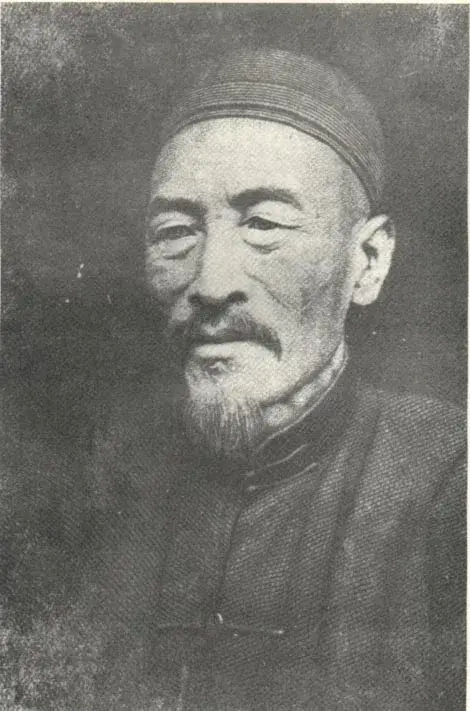
徐寿
Xu Shou (徐寿, February 26, 1818 – September 24, 1884), courtesy name Xuecun, pseudonym Shengyuan, was a native of Wuxi County, Changzhou Prefecture, Jiangsu Province. He was an eminent pioneer of modern Chinese natural science, scientific translation, and technical education. Revered as the founding father of modern Chinese chemistry and the architect who designed and constructed China's first indigenous steam-powered vessel,…
Xu Shou (徐寿, February 26, 1818 – September 24, 1884), courtesy name Xuecun, pseudonym Shengyuan, was a native of Wuxi County, Changzhou Prefecture, Jiangsu Province. He was an eminent pioneer of modern Chinese natural science, scientific translation, and technical education. Revered as the founding father of modern Chinese chemistry and the architect who designed and constructed China's first indigenous steam-powered vessel, he is celebrated in world historiography as the foremost trail-blazer of modern Chinese science and engineering. In his early years, Xu Shou studied the civil service examination curriculum, but quickly realized that archaic eight-legged essays offered no practical benefit to statecraft and livelihood. He renounced the examinations to immerse himself in applied mathematics, studying the imperial mathematical compendium Essential Principles of Mathematics (Shuli Jingyun) alongside imported Western scientific translations. Possessing extraordinary mechanical talent, he formed a close intellectual partnership with fellow mathematician Hua Hengfang, fabricating compasses, quadrants, and physical laboratory instruments. In 1861, when Viceroy Zeng Guofan established the Anqing Armory to develop modern armaments, Xu Shou and Hua Hengfang were recruited as chief technical advisors. In 1862, Xu Shou and Hua Hengfang successfully manufactured China's first indigenous marine steam engine. In 1865, under Xu's engineering direction, China's first domestic steam-powered wooden paddle-wheel steamship, the Huanghu, was launched on the Yangtze River, inaugurating modern Chinese shipbuilding. Subsequently, Xu transferred to the Jiangnan Machine Works in Shanghai, where he submitted four strategic proposals to Zeng Guofan: extracting coal and iron, manufacturing smokeless gunpowder, establishing a translation department, and founding engineering schools. As chief director of the Translation Department for over seventeen years, Xu collaborated with British scholar John Fryer and American physician D. J. Macgowan to translate 17 Western scientific works comprising over 160 volumes, introducing inorganic chemistry, organic chemistry, and metallurgy into China. He created the enduring Chinese system for naming chemical elements, using Chinese characters that represent the first syllable of the Western Latin root combined with radical semantic determinatives (such as Qing for Hydrogen, Yang for Oxygen, and Dan for Nitrogen). In 1875, Xu co-founded the Shanghai Polytechnic Institution (Gezhi Shuyuan), China's first modern science and technical college, and launched China's earliest popular scientific journal, The Chinese Scientific Magazine (Gezhi Huibian). In 1881, his experimental acoustics research refuting contemporary European physics dogmas was published in the prestigious British journal Nature, making him the first modern Chinese scholar to publish in a premier international scientific journal. Xu Shou passed away at the Shanghai Polytechnic Institution in 1884 at the age of sixty-six.
Born on February 26 in Shegang Village, Qianqiao, Wuxi; experienced early poverty and committed himself to practical self-study.
Failed the local civil service examination; disgusted with rote memorization, vowed never to seek office through examinations.
Formed a lifelong intellectual partnership with mathematician Hua Hengfang, traveling to Shanghai to acquire Western science books.
Recruited by Viceroy Zeng Guofan to join the newly created Anqing Armory, directing arms development and machinery design.
Successfully designed and built China's first operational marine steam engine; inspected and praised by Zeng Guofan.
Constructed China's first indigenous wooden steamship, the Huanghu, successfully completing trials on the Yangtze River.
Transferred to the Jiangnan Machine Works in Shanghai, submitting four strategic proposals for national industrialization.
Appointed chief manager of the Translation Department of Jiangnan Machine Works, beginning a seventeen-year partnership with John Fryer.
Translated and published Principles of Chemistry (Huaxue Jianyuan), inventing the standard Chinese nomenclature for chemical elements.
Established the Shanghai Polytechnic Institution (Gezhi Shuyuan) and launched China's first general scientific journal, Gezhi Huibian.
Published an experimental paper on acoustics in the British journal Nature, becoming the first Chinese scientist to publish in modern Western journals.
Passed away on September 24 at his residence inside the Shanghai Polytechnic Institution at age sixty-six.
Xu Shou was born into a farming and weaving household in Shegang Village, Qianqiao, in northern Wuxi County. His father Xu Xuewen died when Xu Shou was five years old, leaving his mother Madame Bao to manage the impoverished household and raise Xu and his sisters. The poverty of his early life fostered a resilient, silent, and practical personality. As a youth, Xu attended local private academies to study the Confucian classics, but unlike fellow pupils who focused on literary style, he was drawn to practical treatises on astronomy, hydraulic engineering, and artisanal handicrafts.
In 1840, at age twenty-two, Xu went to Changzhou to participate in the local licentiate examination. Appalled by the rigid eight-legged essays and corrupt examiners, Xu declared to his family upon returning home: "These frivolous literary exercises neither illuminate moral truth nor enrich the people; they are unworthy of a man's life!" He burned his examination preparatory texts and swore never to sit for the civil examinations again, dedicating his life to empirical, practical learning.
Living as a farmer and village craftsman, Xu taught himself mathematics and applied mechanics. Aware that Chinese traditional science had stagnated since the late Song and Yuan eras, he searched for mathematical compendia, studying the Essential Principles of Mathematics (Shuli Jingyun) and works on astronomical calculations. He constructed sundials, compasses, quadrants, and mechanical tools with his own hands, achieving exceptional craftsmanship.
In 1853, Xu Shou became acquainted with Hua Hengfang, a mathematical prodigy from neighboring Dangkou Town. From an affluent gentry family, Hua possessed an extensive collection of mathematical texts. The two formed an intimate friendship, combining mathematical theory with mechanical practice: Hua excelled in calculations, while Xu excelled in structural analysis and fabrication.
Seeking contemporary Western scientific treatises, Xu Shou and Hua Hengfang traveled to Shanghai. At the Mohai Shuguan (London Missionary Society Press), Xu acquired pioneering translations including Benjamin Hobson's Treatise on Natural Philosophy (Bowu Xinbian), Alexander Wylie's Herschel's Outlines of Astronomy (Tiantian), and medical works. In Bowu Xinbian, Xu encountered for the first time modern European explanations of the steam engine, atmospheric pressure laws, and elementary chemistry (hydrogen and oxygen).
Fascinated by these revelations, Xu verified Western experiments. To test optical refraction, he polished a crystal ink-dropper into a triangular prism, dispersing sunlight into a rainbow spectrum in a darkened room. To explore acoustics, he built small pipe organs and metallic tuning forks; to master mechanical gears, he dismantled and replicated European striking clocks. Through independent experimentation, Xu achieved an extraordinary self-directed education in modern experimental science.
In the autumn of 1861, following the capture of Anqing by the Xiang Army, Viceroy Zeng Guofan established the Anqing Armory, China's first modern defense industrial enterprise. Seeking technical talent to manufacture modern firearms and steam vessels, Zeng sent invitations and stipends to recruit Xu Shou and Hua Hengfang.
In March 1862, Xu Shou arrived at Anqing accompanied by his son Xu Jianyin and Hua Hengfang. Zeng Guofan entrusted Xu with the primary technological challenge: constructing an operational marine steam engine. The armory possessed neither foreign technical advisors nor engineering blueprints, possessing only a rough diagram in Bowu Xinbian and Xu's visual observations of foreign steamships on the Yangtze.
Confronted with an extreme technical vacuum, Xu displayed brilliant practical engineering genius. Directing local blacksmiths, he operated measuring calipers, files, and lathes, methodically overcoming dozens of engineering bottlenecks including cylinder pressure seals, reciprocating pistons, flywheel linkage rods, and boiler pressure resistance. After three months of round-the-clock labor, China's first operational marine steam engine was completed on July 30, 1862. Inspecting the machine in motion, Zeng Guofan recorded in his diary that the engineering ingenuity was miraculous.
Following the engine's success, Zeng Guofan authorized the construction of a steamship. In 1863, with Xiang Army forces advancing toward Nanjing, Xu and his colleagues moved their operations to the Xiaguan shipyards in Nanjing. Following the capture of the Taiping capital in 1864, construction proceeded at full scale. Xu was appointed chief engineering superintendent, managing hull lofting, timber seasoning, drive shafts, and paddle-wheel propulsion, while Hua calculated buoyancy displacement and engine power.
In late 1865, China's first domestic steam-powered wooden paddle-wheel vessel was completed. The ship measured sixty-one Chinese feet (approximately twenty meters) in length, twelve feet in beam, with a displacement of twenty-five tons, propelled by a two-cylinder high-pressure steam engine operating side paddle wheels. Zeng Guofan named the vessel Huanghu (Yellow Falcon).
In April 1866, the Huanghu completed its trial voyage from Nanjing up the Yangtze River to Anqing. Steaming against strong river currents, the ship covered hundreds of li with its steam whistle echoing across the shores, cheered by thousands of spectators. The vessel demonstrated that Chinese craftsmen and intellectuals could master Western mechanical power, marking the birth of modern Chinese shipbuilding.
Following the trials of the Huanghu, Zeng Guofan and Li Hongzhang expanded manufacturing facilities in Shanghai into the Jiangnan Machine Works. In 1867, Xu Shou and Hua Hengfang joined the management in Shanghai. Inspecting the shipyards, gun factories, and smelting furnaces, Xu recognized that mere imitation of foreign arms could never achieve genuine national self-reliance.
In the autumn of 1867, Xu submitted four strategic proposals to Zeng Guofan: mining coal and smelting iron to supply domestic industrial raw materials; manufacturing modern smokeless gunpowder; creating a dedicated translation bureau to translate Western scientific literature; and establishing engineering schools to train Chinese technicians. Zeng Guofan endorsed the plan and commissioned Xu to organize the Translation Department of the Jiangnan Machine Works.
In May 1868, the Translation Department officially opened, with Xu Shou serving as chief manager. The department hired prominent Sinologists including British missionary John Fryer, American scholar D. J. Macgowan, and Alexander Wylie, inaugurating an era of scientific and technical translation under imperial patronage.
During his seventeen years directing the Translation Department, Xu Shou dedicated himself to translation. Because foreign scholars possessed limited classical Chinese writing ability while traditional Chinese scholars were unfamiliar with modern science, Xu instituted a collaborative methodology: the Western scholar translated the English text orally into spoken Chinese, while Xu recorded the concepts in classical Chinese, verifying experimental facts and polishing the prose into lucid, authoritative prose.
Under Xu's direction, the department translated 17 major scientific works in over 160 volumes, encompassing chemistry, physics, metallurgy, engineering, and military technology. His translated works—such as Principles of Chemistry (Huaxue Jianyuan), Qualitative Chemical Analysis (Huaxue Kaozhi), Quantitative Chemical Analysis (Huaxue Qiushu), and Mineralogy (Baozang Xingyan)—constituted the first systematic introduction of modern chemistry into China, covering atomic theory, stoichiometry, qualitative testing, and organic chemistry.
In translating chemistry, Xu encountered the absence of Chinese terminology for the chemical elements. He formulated three principles for Chinese chemical nomenclature: preserving traditional Chinese names for ancient metals (gold, silver, copper, iron, tin, lead, and mercury); creating semantic characters for gases based on physical properties, translating Hydrogen as Qing (light gas), Oxygen as Yang (nourishing gas), and Nitrogen as Dan (diluting gas); and coining new phonetic characters for newly discovered elements by taking the first syllable of their Western Latin root and combining it with a radical indicating physical state (such as the metal radical for Sodium, Potassium, Calcium, Magnesium, and Zinc, or the stone radical for Arsenic and Phosphorus). This elegant system remains the universal standard for chemical terminology across the Chinese-speaking world.
In 1875, observing that translated books were inaccessible to common scholars, Xu co-founded the Shanghai Polytechnic Institution (Gezhi Shuyuan) in the Shanghai International Settlement alongside John Fryer and Tang Tingshu. Opening in 1876, the institution featured chemical laboratories, mineral displays, and astronomical observatories, exhibiting machine models and performing public chemistry and electromagnetic demonstrations.
To disseminate scientific knowledge nationwide, Xu and Fryer established The Chinese Scientific Magazine (Gezhi Huibian), China's first comprehensive quarterly science periodical. In its pages, Xu personally answered inquiries from readers across the empire on electricity, mechanics, astronomy, and chemical fertilizers, popularizing modern scientific principles.
In 1881, Xu achieved international recognition in acoustics. British physicist John Tyndall had asserted in his standard textbook On Sound that when open organ pipes are halved in length, their vibrational frequency doubles to raise the pitch an exact octave, identical to closed pipes. Investigating ancient Chinese musical pitch pipes and Western organs, Xu conducted precise experiments with bronze and bamboo pipes, discovering that halving the length of an open pipe did not double the frequency.
Xu wrote his experimental findings in an essay titled Acoustics in China (Kaozheng Lülü Shuo). Translated by John Fryer, the paper was published in London in the journal Nature in March 1881 (Volume 23), accompanied by an editorial praising Xu's rigorous empirical method. Xu Shou became the first Chinese scientist to publish in a premier Western scientific journal.
Decades of intense laboratory experimentation, intellectual translation, and institutional administration undermined Xu Shou's health. In early 1884, he fell critically ill at his residence within the Shanghai Polytechnic Institution, continuing to review military translation drafts on his sickbed and instructing his son Xu Jianyin to persist in scientific development.
On September 24, 1884, Xu Shou passed away at the Shanghai Polytechnic Institution at the age of sixty-six. The Qing imperial court conferred upon him the posthumous title of Grand Secretariat Academician. Statesmen including Li Hongzhang, Zuo Zongtang, and Zeng Guoquan sent elegiac tributes, while Chinese and foreign scholars in Shanghai mourned his passing. As a self-taught commoner scientist, Xu Shou broke through feudal intellectual isolation, and his foundational achievements in shipbuilding, chemistry, and science education stand as eternal monuments in Chinese scientific history.
Xu Shou's foremost industrial contribution was founding modern Chinese steam shipbuilding. Lacking engineering blueprints and foreign technical assistance, Xu applied mechanical insight to construct China's first operating marine steam engine in Anqing in 1862.
In 1865, he designed and launched the Huanghu, China's first domestic steam vessel. The success of the ship proved that Chinese technicians could master modern industrial manufacturing, establishing the technological foundation for the Jiangnan Shipyard and modern Chinese maritime engineering.
Xu Shou was the founding father of modern Chinese chemistry. Directing the Translation Department of Jiangnan Machine Works, he translated seminal textbooks including Huaxue Jianyuan, introducing atomic theory, elemental periodicity, and organic chemistry into the Chinese language.
His invention of the radical-phonetic system for naming chemical elements resolved the linguistic barrier between European Latin roots and Chinese ideographs. His coining of terms for hydrogen, oxygen, nitrogen, and dozens of metallic elements established a standardized chemical language that has served Chinese science for over a century.
Confronting the classical civil service system, Xu pioneered modern institutional science education by founding the Shanghai Polytechnic Institution (Gezhi Shuyuan) in 1875.
He established public chemical and physical laboratories, staged experimental demonstrations, and launched Gezhi Huibian, China's first scientific journal. His educational initiatives trained the first generation of indigenous Chinese chemists, engineers, and scientific translators.
In physical acoustics, Xu demonstrated unbending empirical rigor by challenging established Western authority. Experimenting with organ pipes and pitch tubes, he proved that John Tyndall's acoustic formula regarding open-pipe frequencies contained empirical inaccuracies.
His paper Acoustics in China was published in the British journal Nature in March 1881, earning international acclaim and establishing him as the first Chinese scientist to publish in a top-tier international scientific journal.
FIGURES ASSOCIATED WITH THIS DYNASTY