Birth in Donghai Lineage
Born into a distinguished aristocratic family in Tan County; praised in childhood by monk Baozhi as a celestial stone qilin.
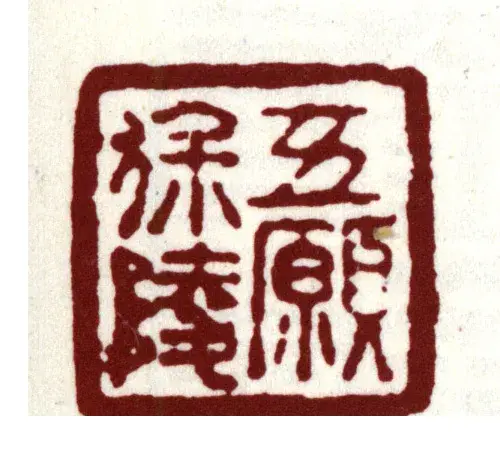
徐陵
Xu Ling (徐陵; 507–583), courtesy name Xiaomu, was a native of Tan County, Donghai Commandery (present-day Tancheng County, Linyi, Shandong Province). He was the preeminent literary giant, master of parallel prose, statesman, and grand chancellor of the Southern Dynasties period during the Liang and Chen dynasties, and son of the distinguished Liang minister Xu Chi. He rose to the highest administrative offices of Left Vice…
Xu Ling (徐陵; 507–583), courtesy name Xiaomu, was a native of Tan County, Donghai Commandery (present-day Tancheng County, Linyi, Shandong Province). He was the preeminent literary giant, master of parallel prose, statesman, and grand chancellor of the Southern Dynasties period during the Liang and Chen dynasties, and son of the distinguished Liang minister Xu Chi. He rose to the highest administrative offices of Left Vice President of the Department of State Affairs, Director of the Secretariat, Left Senior domesticier, and Junior Tutor to the Crown Prince, was enfeoffed as Marquis of Jianchang County, and was posthumously honored as General Guarding the Right and Specially Advanced, receiving the posthumous title Zhang. Celebrated alongside Yu Xin as the co-creator of the influential "Xu-Yu Style," he was venerated across the southern realm as the "Literary Paragon of an Era" and was the compiler of the immortal poetry anthology New Songs from a Jade Terrace. Displaying genius from childhood, Xu Ling composed essays at age eight, earning praise from the renowned Buddhist master Baozhi as a "Stone Qilin from Heaven." Mastering the Confucian classics, Daoist philosophy, and Buddhist doctrines, he was recruited as an Academician of the Eastern Palace by Crown Prince Xiao Gang, pioneering the flourishing "palace-style poetry" alongside his father Xu Chi and the Yu family. In 548, he was dispatched as an ambassador to Eastern Wei; following the outbreak of the Hou Jing Rebellion, he was detained in the northern capital of Ye for seven years, captivating northern literati with his erudition and wit. Returning south in 555, he served the Chen dynasty across three reigns under Emperor Wu (Chen Baxian), Emperor Wen, and Emperor Xuan, holding key posts including Palace Censor-in-Chief, Minister of Personnel, and Left Vice President of the Department of State Affairs. The dynastic abdication edicts, imperial patents, and diplomatic treaties of the Chen dynasty were largely composed by his hand. His parallel prose was renowned for its intricate elegance and structural vitality, with his Preface to New Songs from a Jade Terrace revered as a masterpiece of Six Dynasties prose, while his later verse deepened into poignant historical reflections on dynastic ruin. He passed away in 583 at seventy-seven.
Born into a distinguished aristocratic family in Tan County; praised in childhood by monk Baozhi as a celestial stone qilin.
At age twelve, mastered the Laozi and Zhuangzi, displaying eloquence in philosophical assemblies.
Appointed Academician of the Eastern Palace under Crown Prince Xiao Gang, leading the vogue of palace-style poetry.
Dispatched as ambassador to Eastern Wei; detained in Ye for seven years following the outbreak of the Hou Jing Rebellion.
Returned south with Xiao Yuanming; composed a persuasive letter to commander Wang Sengbian that peacefully resolved border tensions.
Recruited by Chen founder Emperor Wu; drafted dynastic accession edicts and served as Minister of the Five Armies.
Appointed Palace Censor-in-Chief; boldly impeached Prince of Ancheng Chen Xu and corrupt magnates for illegal conduct.
Appointed Minister of Personnel; reformed bureaucratic examinations, enforcing merit-based promotion and curbing aristocratic nepotism.
Elevated to Left Vice President of the Department of State Affairs and Director of the Secretariat, directing the administration.
Died in Jiankang at seventy-seven; Emperor Houzhu suspended court for three days, granting posthumous honors as General Guarding the Right.
Xu Ling was born into an established literary house in Tan County, Donghai Commandery. His father, Xu Chi, served the Liang dynasty as General of Martial Brilliance and Left Leader of the Crown Prince's Guard, enjoying the trust of Emperor Wu and Emperor Jianwen. Xu Ling displayed exceptional precocity from infancy, reading classical texts at four and mastering dynastic histories at six. Historical records note that he possessed clear blue pupils, which contemporaries interpreted as a physical mark of extraordinary wisdom.
At age eight, Xu Ling composed poems and treatises with effortless clarity. When the Buddhist master Baozhi traveled through Jiankang and met the boy, he patted his head and exclaimed: "This child is a stone qilin descended from Heaven, destined to become the literary pillar of the realm!" Master Huiyun of Guanghai Temple similarly lauded his virtue, comparing him to Confucius's disciple Yan Hui. At twelve, Xu Ling completed profound studies of the Laozi and Zhuangzi, while studying Mahayana Buddhist sutras, engaging in philosophical debates with seasoned courtiers.
In 531, Emperor Wu designated Prince of Jin'an Xiao Gang as Crown Prince. An avid patron of letters, Xiao Gang established academies within the Eastern Palace, recruiting Xu Ling as an Academician. Collaborating with his father Xu Chi, alongside Yu Jianwu and Yu Xin, Xu Ling composed poetry distinguished by sensory elegance and metrical cadence, known to history as "palace-style poetry," which captivated the literati of the southern realm.
In the autumn of 548, seeking to preserve peaceful relations between the southern and northern empires, the Liang court dispatched Xu Ling as chief ambassador to the Eastern Wei capital at Ye. Aware of Xu Ling's literary reputation, the Eastern Wei administration appointed prominent northern scholar Wei Shou to host the embassy.
During the welcoming banquet, summer heat was oppressive. Wei Shou attempted to mock the southern diplomat, remarking: "This oppressive heat today must surely have been brought by Cavalier Attendant Xu from the south!" Xu Ling replied: "In former times, when our grand scholar Wang Su fled north from Southern Qi, he first taught your country court ritual and ceremonial codes; today I come on embassy to ensure that you understand the hot and cold seasons of the world!" By turning the remark into an incisive commentary on northern cultural backwardness, Xu Ling left Wei Shou ashamed, establishing his intellectual authority in the northern court.
However, as Xu Ling prepared to return south, the Hou Jing Rebellion erupted in Liang. Rebel armies besieged Jiankang, and Emperor Wu died of starvation in the palace, leaving the southern provinces devastated. Cut off by civil war, Xu Ling was detained in Ye. When Eastern Wei was replaced by Northern Qi, he remained in confinement for seven years. Living in ascetic seclusion, he mourned his father's death and studied imperial archives. This period of adversity purged his poetry of courtly superficiality, infusing his writings with profound historical melancholy.
In 554, Western Wei forces captured Jiangling and executed Emperor Yuan of Liang, seizing hundreds of thousands of civilians and the imperial library. The following year, generals Wang Sengbian and Chen Baxian proclaimed Xiao Fangzhi as Emperor Jing in Jiankang. Seeking to dominate southern affairs, Emperor Wenxuan of Northern Qi dispatched an army to escort Liang prince Xiao Yuanming south to claim the throne, permitting Xu Ling to accompany the expedition.
When Xiao Yuanming reached the northern banks of the Yangtze, Wang Sengbian mobilized river defenses to prevent his crossing. Confronting an armed standoff, Xiao Yuanming commanded Xu Ling to draft a formal letter to Wang Sengbian to avert bloodshed.
Xu Ling produced the Letter in Response to Wang Sengbian, a masterpiece of diplomatic eloquence. In the letter, he lamented the destruction of the imperial house, analyzed the military balance between north and south, and urged unity to preserve the dynastic altars. Moved by Xu Ling's rhetorical brilliance, Wang Sengbian withdrew his defenses and welcomed Xiao Yuanming. After seven years of northern exile, Xu Ling returned to his native south, where Wang Sengbian appointed him Gentleman of the Ministry of Personnel in charge of imperial edicts.
Shortly after Xu Ling's return, Chen Baxian eliminated Wang Sengbian, founding the Chen dynasty in 557. Confronting the task of state reconstruction, Emperor Wu relied heavily on Xu Ling's prestige, commissioning him to draft the imperial abdication patents, accession edicts, and foreign treaties. Xu Ling's monumental prose conferred undeniable classical legitimacy upon the new regime.
Over the ensuing decades, Xu Ling served three successive Chen emperors, rising through high offices including Chamberlain for the National Treasury, Minister of the Five Armies, Cavalier Attendant-in-Ordinary, Palace Censor-in-Chief, Minister of Personnel, and Left Vice President of the Department of State Affairs. As Palace Censor-in-Chief, he demonstrated uncompromising judicial courage. When the emperor's younger brother, Prince of Ancheng Chen Xu, returned from the north, his retainers flouted civilian laws.
While the court remained silent out of fear, Xu Ling submitted a formal indictment before Emperor Wen and the court, denouncing the prince's corrupt retainers. Xu Ling's eloquence moved Emperor Wen to adjust his robes in formal deference; Prince Chen Xu broke into cold sweats, and Xu Ling ordered judicial officers to arrest the corrupt subordinates while escorting the trembling prince from the hall. Following this trial, aristocratic families restrained their conduct, and statutory discipline was restored.
In 569, following the death of Emperor Wen, political instability led Xu Ling to collaborate with senior ministers in deposing the young ruler Chen Bozong and enthroning Prince Chen Xu as Emperor Xuan. In recognition of his service, the emperor enfeoffed him as Marquis of Jianchang County and made him Minister of Personnel. In the Ministry of Personnel, Xu Ling reformed the civil service, replacing aristocratic nepotism with examinations of administrative competence, which won the gratitude of unheralded scholars across the realm.
In 573, Emperor Xuan resolved to launch a northern campaign to recover the Huai River basin from Northern Qi. In court deliberations over the supreme commander, ministers favored veteran general Chunyu Liang. Xu Ling alone dissented, arguing: "Chunyu Liang is experienced, but he is aged and overly cautious; only Wu Mingche possesses the disciplined vigor and strategic daring to ensure victory!" Emperor Xuan accepted his advice, appointing Wu Mingche as commander-in-chief.
The campaign verified Xu Ling's assessment. Wu Mingche's armies advanced rapidly, crushing Northern Qi forces at Lyuliang and recapturing dozens of commanderies throughout the Huai basin. At the victory banquet, Emperor Xuan toasted Xu Ling: "The recovery of the Huai River territory today is entirely due to Vice President Xu's discernment in identifying talent!"
In 576, Xu Ling was elevated to Left Vice President of the Department of State Affairs, subsequently advancing to Director of the Secretariat, Left Senior domesticier, and Junior Tutor to the Crown Prince. Despite holding supreme executive authority, he lived in modesty, distributing his official stipends to relatives and impoverished villagers. When hundreds of sacks of rice arrived from his Jianchang appanage, Xu Ling opened the granary to destitute neighbors; within days, the grain was exhausted, leaving his own family without food. When subordinates expressed concern, Xu Ling smiled: "I still have my carriage and official robes to sell; what do those impoverished people have to sell?"
In his later years, Xu Ling devoted himself to Mahayana Buddhist scholarship. When Crown Prince Chen Shubao established a theological assembly in the palace, he invited Xu Ling to lecture on the Pancavimsatisahasrika Prajnaparamita Sutra. Hundreds of monks attended, yet none could rival Xu Ling's analytical depth in doctrinal debate. When the prince ascended the throne as Emperor Houzhu and presented erotic palace poetry for review, Xu Ling rebuked him: "These verses fail to comprehend the principles of dynastic governance."
In 583, Xu Ling passed away peacefully in Jiankang at seventy-seven. Emperor Houzhu suspended court for three days and attended his funeral in person, conferring posthumous honors as General Guarding the Right and Specially Advanced with the title Zhang. His passing concluded the golden age of Six Dynasties literature.
Xu Ling's most enduring monument in world literature was his compilation of New Songs from a Jade Terrace, the second grand poetry anthology in Chinese literary history. Commissioned by Crown Prince Xiao Gang during the Liang dynasty, Xu Ling selected seven hundred and sixty-nine poems spanning from the Han dynasty to the Liang.
Departing from the moralistic constraints of the Classic of Poetry and the Selections of Refined Literature, New Songs from a Jade Terrace affirmed romantic emotion, feminine beauty, and private emotional experience as legitimate literary themes. Crucially, China's greatest narrative ballad, The Peacocks Fly Southeast, was preserved for posterity exclusively through Xu Ling's inclusion of the text in Volume One. His Preface to New Songs from a Jade Terrace remains celebrated as a pinnacle of Chinese parallel prose.
In literary history, Xu Ling and his colleague Yu Xin stand as the twin peaks of late medieval parallel prose, celebrated collectively as the "Xu-Yu Style."
Xu Ling transformed the structure of Chinese parallel prose. Integrating classical allusions with metric discipline, his compositions alternated between four- and six-character cadences, producing acoustic resonance. In state papers such as Letter in Response to Wang Sengbian and Accession Edicts of Emperor Wu of Chen, as well as in personal letters, his writing combined structural elegance with intellectual vitality. Qing critic Liu Xizai observed that "Xu Xiaomu's prose exhausted the beauty of acoustic elegance while preserving dignified structural bone." His writings directly shaped the evolution of Tang prose and masterpieces such as Wang Bo's Preface to the Prince of Teng's Pavilion.
Spanning the Liang and Chen dynasties, Xu Ling's poetry progressed from sensory elegance to historical melancholy. In the Liang palace academy, he composed verses celebrating courtly leisure, helping define the aesthetics of palace-style verse.
However, after enduring seven years of northern detention and witnessing the destruction of the Liang empire, his poetry achieved mature depth. Masterpieces such as Farewell to Mao Yongjia, Responding to a Guest, and The Moon over the Border Mountain incorporated poignant nostalgia, personal displacement, and prayers for southern peace. His work transcended ornamental technique to achieve profound philosophical resonance, bridging the gap between Six Dynasties lyricism and Tang poetic realism.
Xu Ling was an insightful statesman who contributed to the institutional stability of the Chen dynasty. During its precarious founding era, internal discipline was undermined by aristocratic lawlessness and external invasions.
Serving as Palace Censor-in-Chief and Minister of Personnel, he enforced statutory law, impeaching Prince Chen Xu and reforming bureaucratic examinations to recruit unheralded talents. During the 573 northern campaign, his insistence on appointing Wu Mingche secured the recovery of the Huai River basin. In foreign affairs, his diplomatic correspondence defended Chen sovereignty against northern regimes, earning him renown as a chancellor whose administrative guidance was consistently measured and effective.
Beyond his poetry and parallel prose, Xu Ling achieved distinction in calligraphy and bibliographic preservation. He was an accomplished master of standard, running, and cursive scripts, noted for muscular brushwork and balanced vitality, earning praise in Tang critic Dou Ji's Rhapsody on Calligraphy.
As a compiler, he assembled literary collections including the seven-volume Treasury of Letters and the six-volume Anthology of Six Dynasties Poetry, collecting lost rhapsodies and verse from the Han, Wei, and Six Dynasties, thereby ensuring the preservation of early medieval Chinese literature.
FIGURES ASSOCIATED WITH THIS DYNASTY