Birth in Shexian
Born in She County, Huizhou, absorbing woodblock print traditions and early painting techniques.
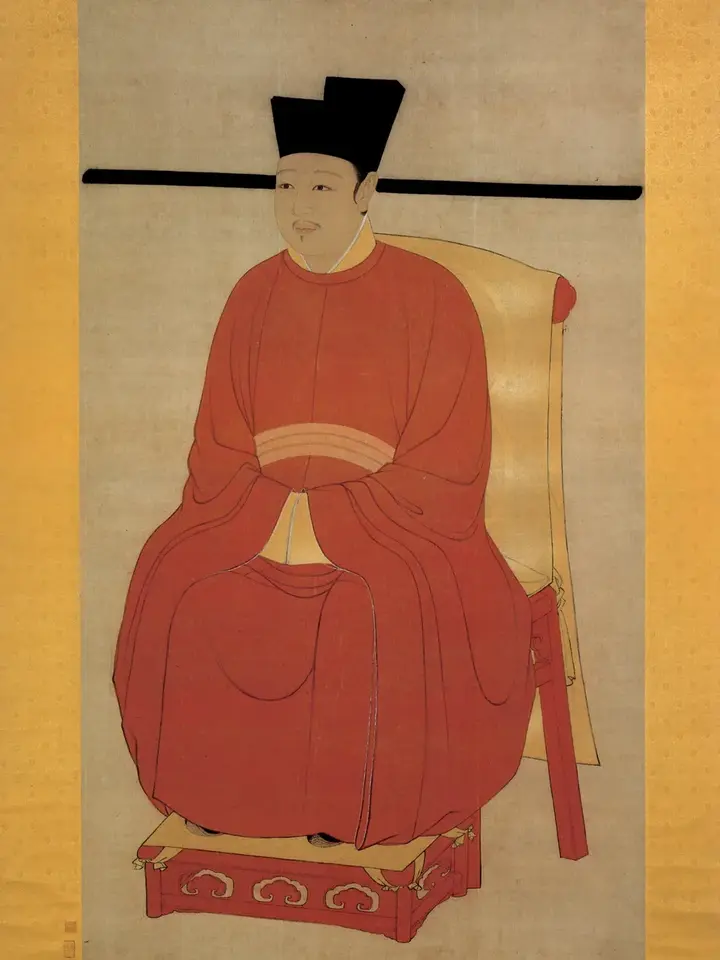
虚谷
Xu Gu (1823–1896), secular name Zhu Hairen, monastic name Xu Gu, art names Baiyang Shanqiao and Juanhe, native of She County, Anhui, who resided extensively in Yangzhou and Shanghai, was an eminent painter-monk and calligrapher of the late Qing dynasty. Alongside Ren Bonian, Pu Hua, and Wu Changshuo, he was revered as one of the "Four Masters of the Shanghai School" (Haipai), celebrated as the most radically inventive master…
Xu Gu (1823–1896), secular name Zhu Hairen, monastic name Xu Gu, art names Baiyang Shanqiao and Juanhe, native of She County, Anhui, who resided extensively in Yangzhou and Shanghai, was an eminent painter-monk and calligrapher of the late Qing dynasty. Alongside Ren Bonian, Pu Hua, and Wu Changshuo, he was revered as one of the "Four Masters of the Shanghai School" (Haipai), celebrated as the most radically inventive master of the Xin'an artistic tradition since the early Qing monk Jianjiang (Hongren). In his youth, Xu Gu served as an army officer in the Green Standard Army, rising through merit to the rank of Major. During the Taiping Rebellion, unwilling to take up arms against fellow Chinese countrymen, he resigned his commission and took Buddhist monastic vows. However, as an ordained monk, he strictly adhered to an iconoclastic lifestyle: "he observed neither vegetarian fasts nor ritual worship, nor did he reside permanently in monastic temples." Carrying sandals and walking stick, he wandered between Yangzhou, Suzhou, and Shanghai, selling paintings for sustenance, famously declaring: "In leisure I brush out three thousand scrolls, begging among mortals to buy my daily rice." Xu Gu's pictorial language was boldly original; versed initially in architectural boundary painting (jiehua) and portraiture, he subsequently focused upon flowers, vegetables, goldfish, squirrels, and landscapes, gaining renown for his portrayals of goldfish and wisteria. His brushwork favored parched ink, angular broken lines, and oblique-brush strokes, combined with sparse, elegant coloring and daring geometric abstraction, breaking through centuries of conservative center-brush orthodoxy. Wu Changshuo eulogized his brushwork as having "shattered the past, present, and future with a single strike." In 1896, Xu Gu passed away peacefully at the Guandi Temple in Shanghai at seventy-three. His artistic breakthroughs exerted a profound impact upon modern Chinese expressive bird-and-flower painting.
Born in She County, Huizhou, absorbing woodblock print traditions and early painting techniques.
Joined the Green Standard forces; promoted through valor to the rank of Major.
Disillusioned by civil bloodshed during the Taiping wars, resigned his rank and entered the Buddhist sangha.
Settled in Yangzhou after the wars, wandering the lower Yangtze selling paintings to survive.
Took up residence at the Guandi Temple in Shanghai, forging close bonds with Ren Bonian and Wu Changshuo.
Achieved widespread fame throughout Jiangnan for his unique geometric compositions of wisteria and goldfish.
Painted Plum Blossoms and Goldfish from his sickbed, expressing deep devotion to the mortal world.
Passed away peacefully beside his painting desk in Shanghai at seventy-three; interred in Yangzhou.
Xu Gu was born in 1823 (the third year of the Daoguang reign) in She County, Huizhou Prefecture, Anhui. Originally named Zhu Hairen, he hailed from an established military family. Growing up immersed in Huizhou's thriving culture of delicate woodblock printing, ink-stone craftsmanship, and the austere heritage of the Xin'an painting school, he demonstrated an innate gift for linear draughtsmanship in early boyhood. He initially mastered the intricate disciplines of architectural ruler-painting (jiehua) and veristic portraiture, rendering forms with mathematical precision.
As a young man, Xu Gu enlisted in the imperial Green Standard Army. Possessing martial prowess and tactical competence, he received steady promotions, attaining the third-rank post of Major. In the early 1850s, the Taiping Rebellion erupted in southern China and advanced rapidly down the Yangtze River, capturing major cities across Jiangnan. The imperial court issued urgent edicts commanding imperial units to exterminate the insurrection. Witnessing bureaucratic depravity and the horrific slaughter of innocent civilians during the campaigns, Major Zhu felt intense moral revulsion. Unwilling to slaughter his own countrymen, he laid aside his officer's robes, surrendered his command, and took the tonsure on the northern bank of the Yangtze, adopting the monastic name Xu Gu and styling himself Baiyang Shanqiao.
Following his monastic ordination, Xu Gu refused to withdraw into quietist cloistered retreat. Fiercely independent, he embraced an unconventional spiritual life. Late-Qing historical sources recorded that Xu Gu "did not keep a vegetarian diet, did not worship Buddha, nor did he linger within temples." Viewing the monastic cassock merely as a traveler's robe, he wore in turn scholar's robes, military armor, imperial court dress, and Buddhist vestments, dedicating his remaining spirit entirely to artistic creation.
Following the suppression of the rebellion in 1864, Xu Gu settled in Guangling (Yangzhou). Although scarred by warfare, Yangzhou retained a lingering commercial patronage for painting and calligraphy. Xu Gu rented a humble lodging, living simply and traveling ceaselessly between Yangzhou, Suzhou, Changzhou, and Shanghai with paintbox and scroll cases in hand. To earn basic livelihood and aid impoverished neighbors, he sold his art on the open market, composing a famous satirical verse: "Paper filled with plum blossoms arose by chance; natural winter eyebrows move as they please. In leisure I brush out three thousand scrolls, begging among mortals to buy my daily rice." This poem revealed his detached humility and visceral love for living nature.
During the early Guangxu period, treaty-port Shanghai evolved into the financial and commercial capital of China. Expanding mercantile wealth stimulated an unprecedented modern art market, drawing literati painters from across Jiangnan to form the legendary Shanghai School (Haipai). Recognizing Shanghai's progressive atmosphere, Xu Gu established his studio inside the Guandi Temple and the Bailong Mountain Temple near the Old West Gate of Shanghai.
In Shanghai, Xu Gu formed intimate associations with artistic leaders including Ren Bonian, Hu Gongshou, Gao Yongzhi, Wu Changshuo, Pu Hua, and Ni Mogeng. Ren Bonian admired Xu Gu profoundly, painting an iconic portrait of him at sixty-five that captured his ascetic, transcendent presence. The younger master Wu Changshuo marveled at Xu Gu's angular brushwork, declaring that his brush had "shattered the past, present, and future with a single strike." Despite rising fame and eager collectors, Xu Gu remained unbendingly aloof: "unless one was an intimate friend, obtaining a single scrap of his paper was difficult." He steadfastly refused to pander to wealthy merchants or high officials, maintaining uncompromising literati purity.
In his twilight years, prolonged wandering undermined his health. In the winter of 1895 (the twenty-first year of the Guangxu reign), falling ill in his studio at the Guandi Temple, he continued to paint from his sickbed. On New Year's Eve of 1896, hearing festive firecrackers from neighboring lanes, Xu Gu composed his final poem, New Year's Eve: "Children's firecrackers echo from neighboring homes; household after household cheers the turning year. Tomorrow at this hour begins the new cycle; spring breezes will cross the plum blossoms as before." The verse contained no Buddhist world-weariness, but rather an affectionate farewell to mortal life.
Several days later, in the spring of 1896, Xu Gu passed away peacefully in the Guandi Temple, resting his head quietly beside his cherished painting desk at the age of seventy-three. Friends and disciples conveyed his casket back to Yangzhou for interment. Disciples gathered his surviving verses into the Poetry Collection of Monk Xu Gu. Through his singular brushwork, Xu Gu secured an enduring monument in modern Chinese art history.
Within traditional Chinese literati painting, master painters from the Jin and Tang dynasties onward prioritized rounded, centered brushwork (zhongfeng), dismissing dry ink and oblique strokes (cefeng) as crude departures from orthodoxy. Xu Gu dismantled these centuries-old dogmas with astonishing creative audacity.
Xu Gu practiced an aesthetic philosophy of "preferring the square to the round, the rustic to the delicate, and the contrary to the compliant." He favored parched brushes, scorched ink, and split-bristle side-strokes, executing forms with chiseled, crystalline geometry. In depicting wisteria vines, pine needles, goldfish, and cranes, he outlined contours with broken, faceted lines, sustaining continuous rhythmic energy through deliberate pauses. His goldfish departed completely from traditional rounded plumpness: their heads, eyes, and bodies were composed of severe rectangular facets, frequently swimming upstream against rushing waters, embodying an unyielding vitality. His wisteria leaves were brushed with broad, flat side-strokes that prefigured modern planar design. Wu Changshuo praised his mastery of capturing softness through apparent dryness, venerating him as an unexcelled pioneer of late-Qing art.
Xu Gu's artistic lineage drew deep sustenance from both the Xin'an and Yangzhou schools. In his youth, he absorbed the desolate, crystalline minimalism of Ming-Qing Anhui masters Hongren and Cheng Sui; later in life, he assimilated the animated, vibrant colors and rustic humor of Yangzhou eccentric Hua Yan, synthesizing these streams into an original visual syntax.
Xu Gu excelled in innovative spatial compositions. Across elongated hanging scrolls, he orchestrated voids, density, weight, and reserve with consummate balance, creating vast pictorial space and dynamic tension. His color palette was restrained yet potent, relying primarily on pale umber, indigo, and mineral green, occasionally enlivened by pure vermilion. He masterfully applied white mineral pigment on dark antique gold paper to render lotus blossoms, crane plumage, and wild orchids with ethereal purity. Modern art historians compare his structural simplifications and expressive color choices to European Post-Impressionist masters such as Paul Cezanne and Vincent van Gogh, acknowledging him as an avant-garde vanguard transitioning traditional Chinese art into modernity.
Beyond his expressive bird-and-flower paintings, Xu Gu was an acknowledged master of architectural boundary painting (jiehua) and topographical landscapes. Leveraging his early military training in cartography and engineering, he integrated mechanical straight-edge ruling with atmospheric wash techniques.
His twelve-leaf album depicting Mount Putuo's Puji Temple, alongside masterworks such as Auspicious Lotus and Panoramic View of Guangfu Temple, combined structural architectural rigor with misty mountain scenery, recognized as divine masterworks fusing classical boundary art with literati landscape sensibilities. Furthermore, Xu Gu's calligraphy mirrored his painting: stark, angular, and imbued with archaic stele vigor. His poetic anthology, Poetry Collection of Monk Xu Gu, contained concise, poignant verses that illustrated his comprehensive mastery of poetry, calligraphy, and painting.
FIGURES ASSOCIATED WITH THIS DYNASTY