Birth
Born into a prominent bureaucratic lineage in Fanyang, son of Grand Chancellor Xu Chiguo.
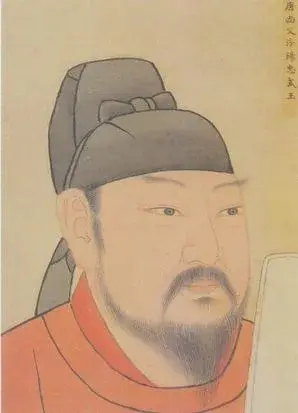
胥鼎
Xu Ding (1162–1226), courtesy name Hezhi, posthumous title Zhongwu, was a native of Fanyang in Zhuozhou (modern Zhuozhou, Hebei). He was the paramount grand chancellor, strategic commander, and institutional reformer of the late Jin dynasty, enfeoffed as Duke of Ren and posthumously created Prince of Lanling. Born into an eminent ministerial family as the son of Right Vice Director Xu Chiguo, Xu passed the imperial jinshi…
Xu Ding (1162–1226), courtesy name Hezhi, posthumous title Zhongwu, was a native of Fanyang in Zhuozhou (modern Zhuozhou, Hebei). He was the paramount grand chancellor, strategic commander, and institutional reformer of the late Jin dynasty, enfeoffed as Duke of Ren and posthumously created Prince of Lanling. Born into an eminent ministerial family as the son of Right Vice Director Xu Chiguo, Xu passed the imperial jinshi examination in 1188. Under Emperor Zhangzong, he served in key offices, pioneering the nationwide rapid courier relay system (jidi pu), which revolutionized administrative communications. In 1213, as Mongol armies laid siege to the capital Zhongdu (modern Beijing), Xu was elevated to Assistant Manager of Governmental Affairs. In 1214, as Prefect of Daxing, Xu resolved acute urban famine by instituting the emergency merit-purchase system (quanyi yuen li'ge), mobilizing private grain reserves to preserve tens of thousands of lives, and subsequently organized the sovereign relocation to Bianjing (Kaifeng). Dispatched to command Hedong, he executed scorched-earth defenses (jianbi qingye), halting Mongol advances and preserving the strategic Shanxi riverlands. Rising to Manager of Governmental Affairs (Pingzhang Zhengshi) and Vice Commissioner of Military Affairs, he commanded the northern and western defense perimeters. Reappointed in 1225 to head the Weizhou Branch Secretariat, he pacified the northern frontier until his death in military camp. The Jin Shi praised him as the singular scholar-general who governed entire strategic fronts during the southern relocation.
Born into a prominent bureaucratic lineage in Fanyang, son of Grand Chancellor Xu Chiguo.
Passed the imperial examination, earning early acclaim for administrative brilliance in the Court of Judicial Review.
Recalled from paternal mourning by Emperor Zhangzong, appointed Editorial Director and Vice Minister of Works.
Memorialized the establishment of the nationwide rapid courier relay system (jidi pu), adopted empire-wide.
Appointed Assistant Manager of Governmental Affairs amidst the Mongol siege of Zhongdu.
As Prefect of Daxing, instituted grain-merit quotas saving urban poor; managed logistics for the court's move to Bianjing.
Dispatched to Pingyang as Military Commissioner of South Hedong, implementing scorched-earth defenses.
Submitted thirteen vital defense memorials on grain storage, yellow river dykes, and legal reforms.
Promoted to Right Vice Director and Vice Commissioner of Military Affairs, fortifying Taiyuan and the Taihang passes.
Promoted to Manager of Governmental Affairs and Left Vice Marshal, governing Shaanxi and averting conflict with Western Xia.
Deployed troops into Hanzhong; captured Dashan Pass before strategically withdrawing to consolidate northern defenses.
Appointed Manager of Governmental Affairs, created Duke of Wen and later Duke of Ren.
Recalled by Emperor Aizong as Manager of Governmental Affairs, establishing the Weizhou Branch Secretariat.
Died in office at Weizhou at the age of sixty-five; granted posthumous title Zhongwu and Prince of Lanling.
Xu Ding was born in 1162 during the reign of Emperor Shizong into a celebrated ministerial family in Fanyang. His father, Xu Chiguo, served as Right Vice Director of the Department of State Affairs during the Dading and Mingchang eras. Xu Ding demonstrated exceptional administrative aptitude and mastery of statutory law from his youth. In 1188, he earned the jinshi degree, beginning his official career in the Court of Judicial Review (Dali Si), where he earned widespread respect for equitable adjudications.
Following his father's death in 1197, Xu observed mourning until 1199, when the Department of State Affairs recommended his reappointment. Emperor Zhangzong consulted his ministers: "Xu Ding is the son of an elder grand councilor; what is his true capability?" The ministers replied: "He possesses extraordinary competence and energy in governance." Zhangzong appointed him Editorial Director, soon promoting him to Right Bureau Director and Vice Minister of Works.
In 1206, recognizing that slow postal deliveries compromised frontier defense, Xu proposed the nationwide jidi pu (rapid courier station) system. Under this reform, stations were positioned at measured intervals along national highways with fresh mounts and couriers operating continuously day and night. The system drastically accelerated the delivery of military commands and remained a model for subsequent dynasties. In 1213, as Mongol armies surrounded Zhongdu, Xu was promoted to Assistant Manager of Governmental Affairs.
In November 1213, Xu was appointed Prefect of Daxing and Military Commander of the Zhongdu Circuit. In early 1214, Mongol forces cut off supply routes into Zhongdu, causing devastating famine throughout the capital. Xu investigated urban conditions and petitioned the throne: "The capital populace is starving. Those officials and citizens possessing excess grain must be encouraged to sustain the destitute, and the state should reward them with promotions and honorary titles."
The court promulgated Xu's emergency merit-purchase regulations (quanyi yuen li'ge), allowing individuals to obtain official titles and civil status through grain contributions. This initiative yielded tens of thousands of bushels of grain, preserving the lives of countless citizens. In May 1214, when Emperor Xuanzong resolved to move the capital south to Bianjing (Kaifeng), Xu was tasked with organizing transit routes and refurbishing the Bianjing palaces, executing the complex transfer of the central government with consummate skill.
In November 1214, Xu was dispatched as Prefect of Pingyang and Military Commissioner of South Hedong. Facing acute troop shortages and empty granaries, Xu instituted localized grain-purchase ranks and collected military supply funds. Collaborating with North Hedong commanders, he instituted scorched-earth strategies (jianbi qingye), harvesting all crops into fortified cities and demolishing outer suburbs. Deprived of forage, Mongol cavalry was repeatedly forced to withdraw.
In April 1215, Xu submitted thirteen crucial policy memorials addressing grain reserves, Yellow River defenses, judicial vetting, troop training, and currency regulation. When Pingyang faced severe shortages, he secured one thousand blank commission scrolls and three thousand purple-robe ordination certificates, trading them for essential army provisions.
When the court ordered regional volunteer militias (yijun) partitioned into three classes, commander Bilan Arudai argued that separating family members and veteran comrades would undermine morale. Xu inspected frontline units and strongly supported Arudai's petition, persuading the throne to rescind the division.
In early 1216, when sixty thousand Mongol horsemen besieged Pingyang, Xu directed the garrison with steadfast courage. Learning that enemy forces had penetrated into Henan and threatened the imperial capital, Xu dispatched Bilan Arudai with fifteen thousand troops across the Yellow River and personally led elite forces on a forced march of 1,500 li to reinforce Kaifeng, repelling the invaders and recovering Tongguan.
In 1216, Xu was promoted to Right Vice Director and Vice Commissioner of Military Affairs, stationed in Taiyuan to coordinate northern defenses. In 1217, he was elevated to Manager of Governmental Affairs and Left Vice Marshal, establishing the Shaanxi Branch Secretariat at Jingzhao (Xi'an).
When Emperor Xuanzong planned to deploy 35,000 veteran troops against Western Xia, Xu vigorously objected, demonstrating that engaging a western adversary while facing existential northern threats would ruin the empire; Xuanzong canceled the campaign. Furthermore, when Chancellor Shuhu Gaoqi urged attacking the Southern Song to seize southern territory, Xu submitted an eleven-point memorial vehemently condemning the southern war as national suicide. Although overruled by the court, Xu conducted the Hanzhong campaign with strict restraint, swiftly withdrawing his forces to avoid entrapment and censuring commanders who committed atrocities against civilians.
In 1218 (Xingding 2), Xu Ding was promoted to Left Vice Director of the Department of State Affairs, stationed in Shanzhou to command the critical river defenses between Shaanxi and Luoyang. In 1220 (Xingding 4), he was elevated to Manager of Governmental Affairs and Vice Commissioner of the Bureau of Military Affairs, enfeoffed as Duke of Wen and later Duke of Ren, reaching the pinnacle of state administration to oversee supreme civil and military policies.
During his tenure overseeing defenses, Xu placed paramount importance on the livelihoods of displaced populations. Observing that vast waves of dispersed soldiers, refugees, and civilian families from Hebei and Hedong were pouring into Henan without shelter or food, Xu sternly memorialized the throne, instructing local authorities not to forcibly expel refugees. He petitioned the court to issue compassionate relief across Henan prefectures, distributing abandoned fallow lands for refugee cultivation and waiving labor levies and land taxes, thereby enabling tens of thousands of displaced commoners to find peaceful livelihood. In high court governance, Xu was broad-minded, composed, and upright. Whenever debating imperial state policy, he steadfastly advocated leniency toward civilian burdens and low taxation, repeatedly rejecting extortionate schemes by opportunistic courtiers; his promotion of military officers prioritized genuine talent, earning universal respect from soldiers and commoners alike.
In personnel recommendations, Xu was magnanimous and steadfastly avoided factional alignment. In his late years, as he repeatedly petitioned for retirement, he strongly recommended military commander Ba Halu, judging him brave and resourceful enough to succeed him in leading troops. Emperor Xuanzong remarked to his councilors with deep feeling: "Ba Halu is indeed a valiant general, but when it comes to commanding multiple fronts and making supreme strategic decisions, he is far behind Xu Ding!" Consequently, Xuanzong continued to place absolute trust in Xu.
In the second half of 1220, citing old age and physical exhaustion from long service, Xu repeatedly petitioned to retire. Emperor Xuanzong warmly comforted him, ordering him to reside in Bianjing to recuperate so that the court could consult him on major state affairs at any time. In the spring of 1221, severe winter and spring droughts struck the Central Plains, destabilizing public morale and exhausting military funds; Xuanzong dispatched close ministers to Xu's private residence to seek comprehensive counsel on famine relief and army provisions. In May 1222, Xuanzong summoned retired elder statesmen including Xu Ding, Jia Yiqian, Zhaliji, and Boidie to the Department of State Affairs to deliberate crucial national policies, relying upon Xu as steadfastly as before.
In 1220, Xu was created Duke of Ren. In his late fifties, he repeatedly requested retirement, but Xuanzong insisted on retaining his counsel in Kaifeng. Following Emperor Aizong's accession, the northern crisis worsened. In 1225, Aizong recalled Xu, creating him Duke of English State (Yingguo Gong) and sending him to establish the Weizhou Branch Secretariat to rally resistance north of the Yellow River.
Despite failing health, Xu arrived at Weizhou and restored order, rallying scattered militias across the Hebei plains. In early 1226, when Xu petitioned to retire due to mortal illness, Aizong issued an impassioned imperial rescript urging him to remain as the cornerstone of the state. Moved by the sovereign's plea, Xu persevered at his post until his death in military camp in July 1226 at the age of sixty-five. He was posthumously honored as Zhongwu and Prince of Lanling.
During the 1214 siege of Zhongdu, Xu Ding demonstrated exceptional crisis governance. His emergency merit regulations (quanyi yuen li'ge) broke bureaucratic rigidities to mobilize private food reserves, mitigating urban starvation. His logistical management of the southern relocation enabled the Jin dynasty to reestablish its capital at Bianjing and sustain imperial governance for another two decades.
Xu formulated and executed the grand defensive strategy for the Shanxi-Henan theater:
As Vice Minister of Works, Xu instituted the jidi pu system, establishing standardized way-stations, dedicated mounts, and strict transmission schedules across all major imperial highways. This innovation transformed military communications in medieval China and was inherited by the Yuan and Ming dynasties.
During his leadership of the Shaanxi Branch Secretariat, Xu Ding prioritized the broader imperial interest by resolutely blocking rash military expeditions against Western Xia, conserving vital national forces. In the southern offensive against the Song, he decisively withdrew isolated columns deep in Hanzhong, avoiding annihilation.
In his final years commanding the Weizhou Branch Secretariat, Xu stemmed the tide amidst the collapse of the Hebei frontier. Winning the devotion of northern soldiers and civilians, he enforced rigorous discipline and pacified loyalist militias, uniting resistance north of the Yellow River. Continuing to govern despite mortal illness, he dedicated his final breath to the dynasty, universally acclaimed by the Jin court as the singular scholar who commanded entire strategic fronts and commanded the awe of formidable adversaries.
Throughout his prolonged administration of Hedong and Shaanxi, Xu Ding exhibited extraordinary economic governance. Confronting the hyperinflation and monetary collapse that afflicted the late Jin dynasty, he took decisive measures in Pingyang and Shanzhou to regulate the circulation of paper currencies (jiaochao and baoquan), strictly aligning tax extraction with civilian capacity and redeeming inflated scrip to stabilize regional military finances. Concurrently, he implemented a rotation system combining agricultural cultivation with military readiness, sustaining grain and military provisions for tens of thousands of imperial troops across southern Shanxi and Shaanxi for more than a decade amidst dynastic peril.
FIGURES ASSOCIATED WITH THIS DYNASTY
Bibliographic information is not yet available for this entry.