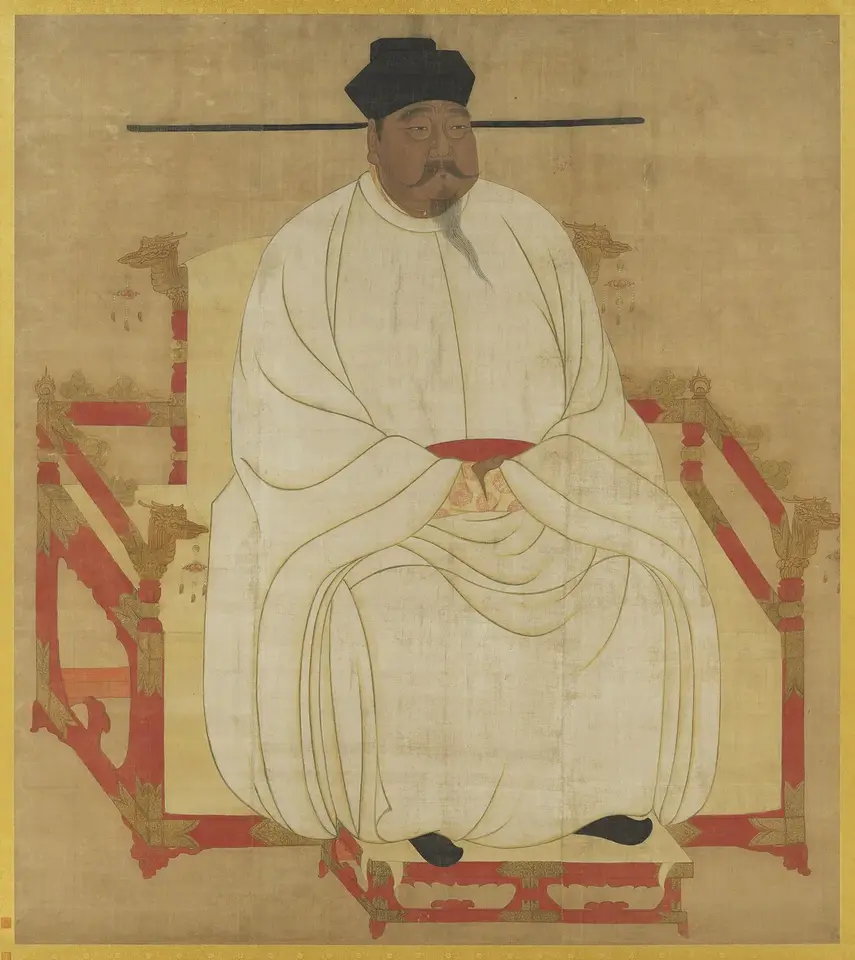
Biography
Dynastic Lineage and Early Bureaucratic Career
Zhao Zicheng traced his direct patrilineal descent to Emperor Taizu of Song through the founding emperor's fourth son, Prince Kanghui of Qin (Zhao Defang). Zhao Defang begot Zhao Weixian, Duke of Ying; Zhao Weixian begot Zhao Congyu, Marquis of Xinxing; Zhao Congyu begot Zhao Shijiang, Marquis of Huayin; Zhao Shijiang begot Zhao Linghua, Duke of Qing; and Zhao Linghua begot Zhao Zicheng. Ever since the succession of Emperor Taizong, the imperial throne had remained within Taizong's branch, while the descendants of Emperor Taizu dispersed into local prefectures, living modest lives as minor officials.
Gifted with an innate love for classical learning and administrative discipline, Zhao Zicheng applied himself to the Confucian canons. In 1119, he successfully passed the rigorous imperial academy examinations and was commissioned as Vice Magistrate of Jiaxing County. In this grassroots post, he demonstrated unimpeachable integrity, settling civil disputes with equity and earning the sincere respect of the local population. In 1120, following an exemplary official evaluation at the Ministry of Personnel, he was elevated to Court Gentleman for Ceremonial and appointed Auxiliary in the Secret Library, wearing the prestigious fifth-rank imperial purple robe.
The Dynastic Succession Crisis and Court Audience
Following the fall of Northern Song in 1127, Emperor Gaozong established the Southern Song regime in Lin'an. Tragically, Gaozong's only infant son died prematurely in 1129, and the emperor lost the physiological capability of fathering further heirs. Considering that the majority of Emperor Taizong's descendants had been carried into captivity by the Jurchens, Emperor Gaozong was persuaded by courtiers and symbolic dynastic portents to return the dynastic succession to the lineage of Emperor Taizu.
In the autumn of 1135, Zhao Zicheng's nine-year-old second son, Zhao Bocong, renowned for his refined deportment and intelligence, was selected from among dozens of Taizu descendants to be raised inside the imperial palace, receiving the peerage of Duke of Jianguo. When summoned to an imperial audience by Emperor Gaozong, Zhao Zicheng completely eschewed self-promotion. Instead, he presented a comprehensive memorial addressing systemic defects in the imperial clan administration. He advocated that clan youths scattered across provinces be relocated to centralized official compounds, supervised by esteemed clan elders, and placed in formal local colleges or the Imperial Academy according to age. Under his proposed system, clan members were required to compete in imperial examinations alongside commoner scholars to attain substantive bureaucratic postings. Emperor Gaozong was profoundly impressed by this visionary statecraft and immediately mandated the Court of the Imperial Clan and Ministry of Rites to implement his recommendations.
Provincial Administration and Prudent Retirement
In late 1135, Zhao Zicheng was promoted to Drafter in the Secret Library and appointed Prefect of Chuzhou (modern Lishui, Zhejiang). Taking charge of a region severely disrupted by warfare, Zhao Zicheng reorganized community defense networks, rehabilitated agricultural terraces, and granted generous tax remissions to displaced war refugees, effectively revitalizing the regional economy.
Despite his second son's rising standing within the palace under the maternal care of Empress Wu, Zhao Zicheng remained keenly aware of the perils of imperial favoritism. To avoid generating political factionalism or court suspicions, he consciously declined substantive central appointments. In 1138, citing failing health, he petitioned to retire from active administrative duties. Emperor Gaozong granted his request, appointing him superintendent of the Chongdao Daoist Abbey in Taizhou. Retiring as Left Grand Master of Court Service, Zhao Zicheng spent his remaining years in quiet scholarly contemplation, teaching his elder son and living a modest life detached from political intrigue.
Demise, Dynastic Restoration, and Posthumous Veneration
In 1143, Zhao Zicheng passed away peacefully at his private residence. The imperial court expressed deep mourning, posthumously bestowing upon him the rank of Junior Preceptor of the Crown Prince. Seventeen years later, in 1160, after enduring decades of imperial observation, his second son was officially designated imperial son and renamed Zhao Wei; in 1162, he was formally created Crown Prince and named Zhao Shen.
In accordance with ancestral succession rituals, the court posthumously granted Zhao Zicheng the preeminent ranks of Grand Preceptor and Director of the Secretariat, conferring the peerage of Prince of Xiu with the posthumous title Anxi. In the sixth month of 1162, Emperor Gaozong abdicated the throne, and Crown Prince Zhao Shen ascended the imperial dais as Emperor Xiaozong. This historic accession marked the return of the imperial throne to Emperor Taizu's lineage after a hiatus of 186 years. In strict compliance with Confucian adoption rituals, Emperor Xiaozong revered Emperor Gaozong as Retired Emperor and honored his biological father Zhao Zicheng as 'Imperial Senior Uncle,' while elevating his elder brother Zhao Bogui to Prince of Chong.
Major Achievements
Academic Distinction and Conscientious Local Administration
Although born of founding imperial ancestry, Zhao Zicheng distinguished himself through genuine scholarly attainment rather than aristocratic privilege. Passing the rigorous imperial examinations, he served conscientiously as a local magistrate in Jiaxing and prefect in Chuzhou, embodying the quintessential virtues of civil integrity and diligent governance.
Architect of Southern Song Clan Educational Institutions
During his imperial audience in 1135, Zhao Zicheng pioneered the foundational framework for the Southern Song imperial clan educational system. By establishing centralized academies, age-delineated curricula, and merit-based examination standards, his institutional initiatives eradicated the idle parasitic habits of the clan nobility and transformed hundreds of clan youths into educated civil servants.
Exemplary Prudence and Prevention of Court Suspicion
Recognizing the sensitive political position created by his son's imperial adoption, Zhao Zicheng exhibited unmatched moral discipline and political prudence. By declining high office and requesting retirement to a modest local sinecure, he shielded his family and his son from court factionalism, securing the peaceful consolidation of Emperor Xiaozong's status.
Patriarchal Exemplar of the Restored Imperial Lineage
Zhao Zicheng's profound commitment to family instruction yielded magnificent historical results. His elder son Zhao Bogui became a respected pillar of the realm, while his younger son Emperor Xiaozong achieved legendary acclaim for initiating the prosperous 'Qian-Chun Era of Good Governance.' His modest demeanor established an enduring moral foundation for the Southern Song imperial house.