Birth in Western Hunan
Born into a hereditary military family on Wenxing Street, Fenghuang County, demonstrating remarkable precocity.
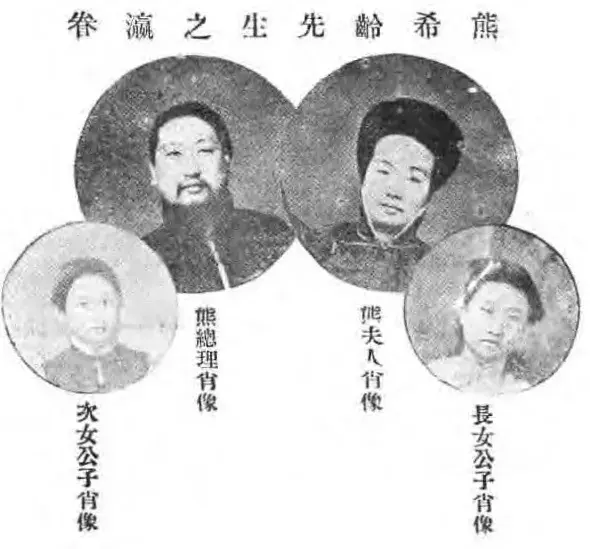
熊希龄
Xiong Xiling (熊希龄, July 23, 1870 – December 25, 1937), courtesy name Bingsan, pseudonyms Mingzhige Zhuren and Shuangqing Jushi, was a native of Fenghuang County, Hunan Province. He was a distinguished statesman, educator, industrial pioneer, and preeminent philanthropist in modern Chinese history. Gifted with extraordinary precocity, Xiong attained the rank of Licentiate at fourteen, Provincial Graduate at twenty-one,…
Xiong Xiling (熊希龄, July 23, 1870 – December 25, 1937), courtesy name Bingsan, pseudonyms Mingzhige Zhuren and Shuangqing Jushi, was a native of Fenghuang County, Hunan Province. He was a distinguished statesman, educator, industrial pioneer, and preeminent philanthropist in modern Chinese history. Gifted with extraordinary precocity, Xiong attained the rank of Licentiate at fourteen, Provincial Graduate at twenty-one, Metropolitan Graduate at twenty-four, and was appointed a Bachelor of the Imperial Hanlin Academy. During the late Guangxu era, he actively engaged in the Hunan Reform Movement, co-founding the famous Current Affairs Academy (Shiwu Xuetang) alongside Tan Sitong and serving as its chancellor. He also inaugurated the progressive daily Xiangbao to awaken popular enlightenment. Dismissed and placed under local surveillance following the failure of the Hundred Days' Reform of 1898, he was subsequently rehabilitated by visionary governors Duanfang and Zhao Erxun, serving as counselor on the five ministers' mission to Europe and America to inspect constitutional models, and establishing the Hunan Ceramic College and Liling Porcelain Manufacturing Company. Following the 1911 Xinhai Revolution, Xiong championed the republican constitution, serving as the first Minister of Finance in the Provisional Government under Tang Shaoyi. In July 1913, he was appointed Premier of the State Council, forming the acclaimed "Cabinet of First-Rate Talents" with prominent intellectual luminaries including Liang Qichao and Zhang Jian. Resisting Yuan Shikai's autocratic consolidation of power, Xiong resigned in early 1914, withdrawing permanently from partisan politics to dedicate his life to humanitarian relief and popular education. In his later decades, Xiong directed extensive relief efforts across the capital environs and five northern drought-stricken provinces, founded the renowned Xiangshan Children's Home to rescue, educate, and equip thousands of impoverished orphans, and served as President of the World Red Swastika Society to dispatch front-line emergency medical corps during warlord conflicts. Following the outbreak of the Second Sino-Japanese War in 1937, he mobilized emergency casualty hospitals in Shanghai before passing away from exhaustion in Hong Kong in late December 1937. The National Government issued an official mandate commemorating his philanthropic life and accorded him state funeral honors.
Born into a hereditary military family on Wenxing Street, Fenghuang County, demonstrating remarkable precocity.
Passed the Metropolitan Civil Examinations as a second-class Jinshi and was inducted into the imperial Hanlin Academy.
Co-founded the Current Affairs Academy in Changsha with Tan Sitong, serving as chancellor, and launched the reformist Xiangbao.
Stripped of official rank and placed under hometown magistracy surveillance following the collapse of the Hundred Days' Reform.
Recommended by Viceroy Duanfang to join the imperial constitutional study mission to Japan, America, and Western Europe.
Founded the Hunan Ceramic College and Liling Porcelain Manufacturing Company, pioneering modern underglaze colored porcelain.
Appointed the first Minister of Finance in Tang Shaoyi's inaugural republican cabinet, organizing national revenue structures.
Appointed Premier of the State Council and Minister of Finance, assembling the celebrated "Cabinet of First-Rate Talents."
Refused to endorse Yuan Shikai's unconstitutional dissolution of parliament and resigned the premiership, withdrawing from politics.
Appointed Commissioner for Capital Environs Water Control and Disaster Relief, directing major emergency flood aid.
Converted the former Qing imperial hunting grounds at Xiangshan into the Xiangshan Children's Home for destitute orphans.
Co-founded and elected President of the World Red Swastika Society, organizing humanitarian medical teams during the Zhili-Fengtian Wars.
Formally deeded his entire personal fortune to endow the Xiong-Zhu Orphan Assistance Foundation to sustain perpetual child welfare.
Established wartime casualty hospitals following the Battle of Shanghai; died of exhaustion in Hong Kong at 67.
Xiong Xiling was born on July 23, 1870 (the twenty-fifth day of the sixth lunar month in the ninth year of the Tongzhi reign) into a military household in Fenghuang County, Hunan Province. His father, Xiong Zhaoxiang, was an officer in the provincial forces. In 1884, at the age of fourteen, Xiong passed the local examinations to become a Licentiate (Xiucai), an extraordinary achievement in the mountainous frontier of western Hunan. He subsequently advanced his classical studies at the Xiushui Academy in Zhijiang.
In 1888, Xiong met Zhu Qiyi, the Prefect of Yuanzhou, who deeply appreciated Xiong's intellect and sponsored his enrollment at the prestigious Xiangshui Academy in Changsha. Under rigorous academic instruction, Xiong broadened his horizons. In 1891, he placed nineteenth in the Hunan Provincial Examinations, earning the Juren degree. The chief examiner commended him as an unprecedented talent rising from the frontier to enlighten the realm.
In 1892, Xiong traveled to Beijing and passed the Metropolitan Examination. However, dissatisfied with his standard administrative calligraphy required for the palace examination, he deferred his final sitting to master the script. In 1894, he successfully sat for the Palace Examination, attaining the second-class Jinshi degree and receiving imperial appointment as a Bachelor of the Hanlin Academy.
In autumn 1894, the First Sino-Japanese War broke out. Hunan Governor Wu Dacheng memorialized the court to lead troops into Korea. Eager to serve his country, Xiong volunteered for active military service, but his petition was declined by Liangjiang Viceroy Liu Kunyi, compelling him to return home on leave. In spring 1896, Xiong married Zhu Qihui, sister of Prefect Zhu Qiyi, in Yongzhou. That same year, he petitioned Hubei-Hunan Viceroy Zhang Zhidong demanding comprehensive institutional reform and was assigned to assist in ordnance procurement and gun foundry administration.
In 1897, Xiong joined Tan Sitong, Tang Caichang, and other young intellectuals in Changsha to found the Current Affairs Academy (Shiwu Xuetang), where Governor Chen Baozhen appointed him chancellor. In the same year, Xiong drafted regulations and founded the daily newspaper Xiangbao, serving as its chief publisher and financier. In February 1898, he helped establish the Southern Learning Society (Nanxuehui) to propagate constitutional concepts. However, after the Hundred Days' Reform collapsed in September 1898, Xiong was dismissed from all government offices and remanded to his native county under strict surveillance.
In 1902, Zhu Qiyi was appointed acting Prefect of Changde and resolved to open the Western Hunan Normal Training Institute, inviting Xiong to oversee its pedagogical administration. In early 1903, Zhao Erxun became Governor of Hunan and enthusiastically supported teacher training programs across all prefectures, retaining Xiong to design normal school curricula.
In 1905, when Zhao Erxun was transferred to Shengyang as Military Governor of Fengtian, he successfully memorialized the throne to pardon and employ Xiong. Before assuming northern duties, Xiong obtained permission to conduct an industrial study tour of Japan. Later that year, Viceroy Duanfang recommended Xiong as counselor to the five high imperial commissioners sent to study constitutional government across Japan, the United States, and Western Europe. During this transcontinental mission, Xiong meticulously researched Western parliamentary models, fiscal taxation systems, and social infrastructure.
In autumn 1907, Zhao Erxun was reassigned to Sichuan, while Xiong chose to remain in Shanghai to engage in economic policy writing. In August 1908, he accepted the invitation of Jiangsu Governor Chen Qitai to serve as provincial legal and fiscal adviser, simultaneously winning the high regard of Liangjiang Viceroy Duanfang and Finance Minister Zaize.
When the Wuchang Uprising broke out on October 10, 1911, Xiong traveled from Fengtian to Shanghai, openly endorsing the republican revolution and joining the United Association of the Republic of China. In January 1912, as President of the Hunan Republican Association, Xiong sent a historic telegram to Yuan Shikai urging the Qing court's prompt abdication.
Upon the founding of the Republic of China, Xiong initially advised the Nanjing Provisional Government. In April 1912, he was appointed the inaugural Minister of Finance in Premier Tang Shaoyi's cabinet. Tasked with managing an empty national treasury and securing crucial funds, Xiong organized domestic tax bureaus, negotiated short-term municipal credits, and conducted arduous negotiations with the international banking consortium for the Reorganization Loan. When Tang Shaoyi resigned over disagreements with Yuan Shikai in June 1912, Xiong also stepped down, accepting appointment as Military Governor of Rehe.
In July 1913, following political instability and the Second Revolution, President Yuan Shikai invited Xiong to assume the office of Premier of the State Council and Minister of Finance. Xiong accepted on the condition of constructing a non-partisan, intellectually eminent government. His administration, confirmed by parliament in September 1913, included prominent scholars and reformers: Liang Qichao as Minister of Justice, Zhang Jian as Minister of Agriculture and Commerce, and Wang Daxie as Minister of Education, earning widespread renown as the "Cabinet of First-Rate Talents."
Xiong's cabinet promulgated progressive programs for fiscal centralization, currency reform, judicial independence, and modern industrial development. However, Yuan Shikai harbored monarchical ambitions and resented parliamentary oversight. On January 10, 1914, Yuan issued an unconstitutional mandate dissolving the National Assembly. Compelled by overwhelming political pressure, the cabinet counter-signed the order under protest. Recognizing that constitutional governance had been subverted, Xiong tendered his resignation on February 12, 1914, withdrawing permanently from high political office.
In August 1917, torrential floods devastated over a hundred counties across Zhili and the capital region, leaving millions homeless. President Feng Guozhang appointed Xiong as High Commissioner for Disaster Relief and River Rehabilitation in the Capital Environs. Xiong secured government allocations, mobilized nationwide commercial donations, organized emergency grain distributions, and established temporary childcare shelters for displaced youth.
By 1918, as the waters receded, over two hundred orphans remained unclaimed. Xiong resolved to create a permanent educational institution for destitute youth. He petitioned President Xu Shichang and obtained imperial hunting estates at Xiangshan, Beijing. In October 1920, the Xiangshan Children's Home was formally inaugurated, providing residential care, primary and middle schooling, and comprehensive vocational training.
In autumn 1920, when a catastrophic drought afflicted five northern provinces impacting over thirty million people, Xiong convened Beijing charitable societies to establish the United North China Drought Relief Association. He organized emergency, winter, and spring relief campaigns, saving tens of thousands of lives.
In April 1922, the First Zhili-Fengtian War broke out in northern China. Xiong organized mobile humanitarian rescue teams to enter battlefield zones, retrieving wounded combatants and providing sustenance for displaced villagers. In October 1922, Xiong joined Chinese and international civic leaders in Beijing to establish the World Red Swastika Society, serving as its national president.
Under Xiong's leadership, the World Red Swastika Society established branches across dozens of Chinese provinces, running hospitals, orphanages, disability centers, and free public kitchens. Whenever regional civil conflicts erupted, the society dispatched uniformed medical detachments to deliver neutral humanitarian aid regardless of partisan affiliation.
In 1928, the National Government appointed Xiong to the National Relief Commission. Drawing upon decades of practical relief experience, Xiong authored the comprehensive Treatise on Flood Relief in Sixteen Provinces in 1931, formulating systematic methodologies for hydrology prevention, grain storage, emergency transit, and post-disaster vocational rehab.
Following the September 18 Incident in 1931, Xiong actively engaged in civilian defense preparation. In October 1932, he donated his entire private estate to create the permanent Xiong-Zhu Orphan Assistance Foundation. In 1935, following the death of his wife Zhu Qihui, Xiong married the renowned female educator Mao Yanwen in Shanghai. In January 1937, Xiong attended the Far Eastern Conference on the Suppression of Traffic in Women and Children in Java. Following the Marco Polo Bridge Incident in July 1937, Xiong organized emergency field hospitals in Shanghai to care for wounded soldiers. When Shanghai fell in November, he relocated to Hong Kong to orchestrate international humanitarian aid. Exhausted by continuous relief campaigns, he suffered a cerebral hemorrhage and died in Hong Kong on December 25, 1937, at the age of 67.
As Minister of Finance in 1912, Xiong established modern accounting standards and budget frameworks for the young Republic. Confronting demanding terms from the six-nation banking syndicate, he defended national railway and salt tax sovereignty while securing the crucial Reorganization Loan that kept the state solvent during its fragile transition.
During his 1905 overseas mission, Xiong studied Austrian and French state fiscal monopolies. In 1907, he submitted formal proposals to the Qing Ministry of Revenue recommending a government tobacco and wine monopoly, which later became a major source of fiscal revenue for the Republic. In 1914, as Director-General of Petroleum, he engaged American geologists to conduct the first modern scientific surveys of petroleum deposits in Shaanxi and Gansu.
In 1904, to resist foreign porcelain imports, Xiong initiated the modern ceramic movement in Hunan. In 1906, he founded the Hunan Ceramic College and the Liling Porcelain Manufacturing Company, hiring Japanese ceramicists and introducing chemical pigment research. This led directly to the invention of Chinese underglaze five-color porcelain, which won the gold prize at the 1915 Panama-Pacific International Exposition.
Xiong played an instrumental role in the Hunan enlightenment. As chancellor of the Current Affairs Academy, he recruited Liang Qichao to instruct pioneering students such as Cai E. As publisher of Xiangbao and organizer of the Global News Agency, he pioneered modern journalism in central China, emphasizing that transparent press communication was vital for national sovereignty and popular sovereignty.
Xiong revolutionized Chinese disaster relief from passive almsgiving into modern systematic social welfare. Directing relief during the 1917 flood and 1920 drought, he categorized aid into immediate relief, winter sustenance, and spring rehabilitation, integrating public works projects into emergency relief to achieve sustainable reconstruction.
Xiong's founding of the Xiangshan Children's Home in 1920 created a landmark model in modern Chinese progressive education. Rejecting traditional institutional confinement, he established family-style cottages, self-governing student councils, and specialized workshops spanning printing, agriculture, mechanics, and textile crafts, nurturing thousands of self-reliant citizens.
FIGURES ASSOCIATED WITH THIS DYNASTY