Birth in Lecce
Born into the noble Sabatini family in Lecce, Kingdom of Naples, receiving a humanist education.
熊三拔
Sabbathino de Ursis (熊三拔, 1575–1620), known in Chinese as Xiong Sanba, was a native of Lecce in the Kingdom of Naples, Italy. He was a distinguished Roman Catholic Jesuit missionary, scientist, hydraulic engineer, and astronomer during the late Ming dynasty, celebrated as a foundational pioneer of the transmission of Western science to China (Xixue Dongjian). In his youth, de Ursis entered the Roman College of the Society…
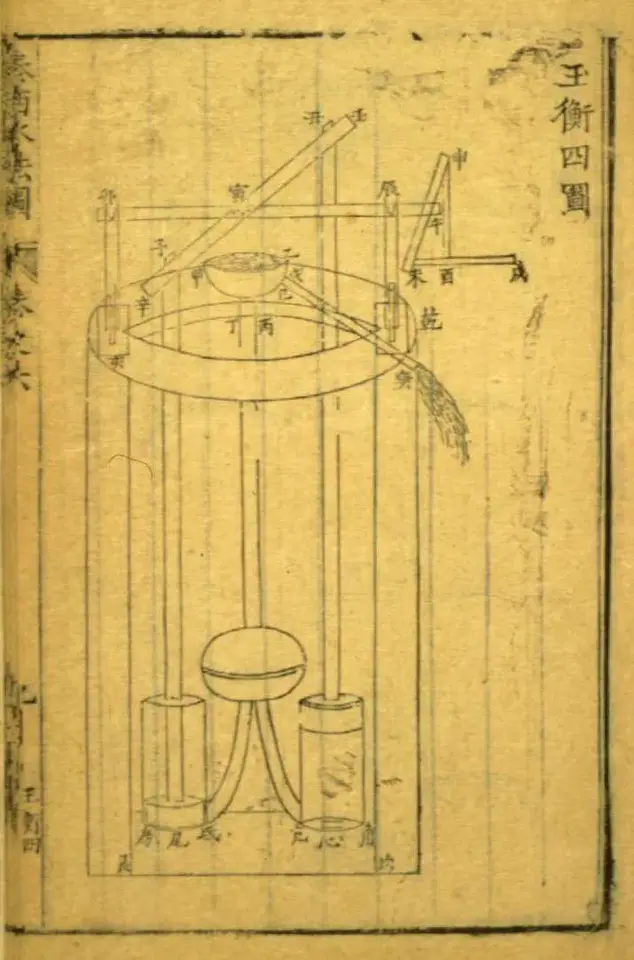
Sabbathino de Ursis (熊三拔, 1575–1620), known in Chinese as Xiong Sanba, was a native of Lecce in the Kingdom of Naples, Italy. He was a distinguished Roman Catholic Jesuit missionary, scientist, hydraulic engineer, and astronomer during the late Ming dynasty, celebrated as a foundational pioneer of the transmission of Western science to China (Xixue Dongjian). In his youth, de Ursis entered the Roman College of the Society of Jesus, mastering mathematics, astronomy, and hydraulic engineering under the disciples of Christopher Clavius. In 1606 (34th year of Wanli), he arrived in China, proceeding to Beijing to become the primary scientific assistant to Jesuit mission founder Matteo Ricci, systematically studying classical Chinese texts. Before Ricci's death in 1610, the senior missionary entrusted his scientific manuscripts and mission administration to de Ursis. In 1611, when the Ministry of Rites received imperial authorization to reform the calendar, de Ursis was tasked alongside Vice Minister Xu Guangqi, Li Zhizao, and Diego de Pantoja to compute solar eclipses and translate astronomical treatises, publishing Exposition of the Astrolabe (Jianpingyi Shuo) in collaboration with Xu Guangqi. In 1612, de Ursis and Xu collaborated again to publish the landmark six-volume technical treatise Hydromethods of the Great West (Taixi Shuifa), the first Chinese work to introduce early modern Western hydraulic machinery and hydrogeology, including the Archimedean screw pump (longwei che) and piston force pumps (yuheng che and hengsheng che), subsequently incorporated into Xu's Complete Treatise on Agricultural Administration (Nongzheng Quanshu) and the Complete Imperial Library (Siku Quanshu). Following the Nanjing Anti-Christian Incident of 1616, de Ursis was expelled to Macau in 1617, where he died of illness in 1620 at the age of forty-six.
Born into the noble Sabatini family in Lecce, Kingdom of Naples, receiving a humanist education.
Entered the Roman College of the Jesuits, specializing in mathematics, mechanics, and astronomy.
Arrived in China by sea, proceeding to Beijing to assist Matteo Ricci in scientific translation and research.
Succeeded to mission directorship in Beijing upon Ricci's death, inheriting unfinished astronomical manuscripts.
Collaborated with Xu Guangqi and Li Zhizao to calculate eclipses, co-authoring Jianpingyi Shuo.
Translated and published the monumental six-volume Taixi Shuifa with Xu Guangqi, revolutionizing Ming hydraulics.
Dictated European methods of gnomonic projection, recorded by Zhou Yuyu as Biaodu Shuo.
Following the Nanjing Anti-Christian Incident, expelled from Beijing by the Ministry of Rites to Macau.
Passed away from illness at St. Paul's College in Macau at the age of forty-six.
Sabbathino de Ursis was born in 1575 into the noble Sabatini family in the historic southern Italian city of Lecce, Kingdom of Naples. He received rigorous humanist training in grammar, rhetoric, and logic, displaying exceptional talent in geometry and mathematical deduction.
In 1597, twenty-two-year-old de Ursis joined the Society of Jesus and entered the Roman College (Collegio Romano), the scientific and theological center of the Catholic Reformation. There he studied Euclidean geometry, Ptolemaic astronomy, surveying, and classical Archimedean mechanics under astronomers trained by the mathematician Christopher Clavius.
Responding to calls for East Asian missionary service, de Ursis departed Rome in 1601. Following a lengthy maritime voyage via Goa in Portuguese India, he reached Macau in 1606 (34th year of Wanli) and journeyed north to Beijing that autumn.
In Beijing, de Ursis took up residence at the South Church (Nantang) near Xuanwumen, becoming the foremost scientific collaborator to Matteo Ricci, the founding architect of the Jesuit China mission.
Recognizing de Ursis's mastery of mechanics and instrumentation, Ricci instructed him in Chinese spoken dialects, classical written grammar, and Confucian philosophical concepts. De Ursis made swift progress, becoming capable of conversing and corresponding in classical Chinese with Ming scholar-officials. Ricci introduced him to Grand Secretary Xu Guangqi, praising his profound command of European hydraulic machinery and natural philosophy.
In May 1610, Matteo Ricci fell gravely ill from overwork. On his deathbed, Ricci entrusted his unfinished astronomical manuscripts, scientific apparatus, and the administration of the Beijing Jesuit mission to de Ursis, making him a central figure in continuing the transmission of Western science to China.
On the new moon of the eleventh lunar month in 1610, a solar eclipse occurred. While the Imperial Astronomical Directorate's calculations using traditional Datong methods proved inaccurate, predictions calculated by Xu Guangqi and Li Zhizao using European geometric methods proved flawless. In 1611, Right Vice Minister of Rites Weng Zhengchun memorialized requesting imperial authorization to reform the calendar. The Wanli Emperor approved the memorial, commanding Xu Guangqi and Li Zhizao to coordinate with de Ursis and Diego de Pantoja to translate Western astronomical tables. De Ursis and Xu Guangqi developed an intimate intellectual partnership, co-authoring the one-volume astronomical treatise Exposition of the Astrolabe (Jianpingyi Shuo), which explicated the stereographic projection of the celestial sphere onto a plane surface.
Beyond astronomy, Xu Guangqi was deeply concerned with recurring droughts in northern China and showed great interest in European waterworks. In 1612, responding to Xu's repeated requests, de Ursis orally translated sixteenth-century European hydraulic engineering texts, which Xu recorded and polished over several months, completing the six-volume masterpiece Hydromethods of the Great West (Taixi Shuifa). The treatise introduced Archimedean screw pumps (longwei che) and force pumps (yuheng che and hengsheng che), along with hydrological assays and well-drilling methods, creating a sensation among Ming literati.
In 1616, alarmed by Jesuit missionary activities in Jiangnan, Vice Minister of Rites in Nanjing Shen Que submitted memorials accusing Western missionaries of treasonous conspiracies under the cover of astronomical reform, initiating arrests in the Nanjing Incident.
In February 1617, the Wanli Emperor issued an edict banishing de Ursis and Diego de Pantoja from Beijing, ordering them escorted under guard to Portuguese Macau. Despite this political setback, de Ursis maintained Ricci's accommodationist strategy of respecting Confucian rites and bridging science with scholarship. Residing at St. Paul's College in Macau, he continued collating scientific manuscripts despite failing health in the subtropical climate.
In 1620, de Ursis passed away at St. Paul's College in Macau at the age of forty-six, entombed in the local Catholic cemetery.
De Ursis's most brilliant scientific contribution was co-authoring Hydromethods of the Great West (Taixi Shuifa, six volumes) with Xu Guangqi, the first treatise in Chinese history to systematically present Western hydraulic engineering and applied mechanics.
The compendium is organized into three major sections: Volumes 1 through 3 detail water-lifting machines, introducing the Archimedean screw pump (longwei che), the levered piston pump (yuheng che), and the high-lift bucket elevator (hengsheng che), accompanied by detailed woodblock diagrams; Volume 4 treats water-storage engineering, detailing reservoir construction, lime-mortar compounding, and hydraulic sealing; Volumes 5 and 6 present methods for locating underground aquifers (xunquan fa) and testing water purity. Xu Guangqi incorporated the entire text into his monumental agricultural treatise Nongzheng Quanshu, and it was subsequently preserved in Tianxue Chuhan and the Complete Imperial Library (Siku Quanshu), serving as an indispensable technical manual for irrigation and hydraulic construction across the Ming and Qing dynasties.
De Ursis made pioneering contributions to Chinese observational astronomy and mathematical instrumentation.
In 1611, he translated Jianpingyi Shuo (Exposition of the Astrolabe) in collaboration with Xu Guangqi. The jianpingyi (planispheric astrolabe) projected the three-dimensional celestial sphere onto a two-dimensional plate, enabling observers to determine the twenty-four solar terms, celestial coordinates, and time without cumbersome spherical trigonometric calculations. In 1614, he dictated Biaodu Shuo (Treatise on Gnomonics), introducing advanced trigonometry for calculating solar altitude and obliquity of the ecliptic via gnomon shadow lengths, propelling Chinese astronomy toward geometric modeling.
De Ursis was a pivotal architect of the late-Wanli calendar reform initiatives at the Imperial Astronomical Directorate.
He introduced geometric calculation into Chinese calendrical science and assisted Xu Guangqi in translating classical European mathematical and astronomical works. This established the textual and theoretical foundation for Xu Guangqi's compilation of the Chongzhen Calendrical Compendium (Chongzhen Lishu) in 1629. His scientific integrity and dedication to practical statecraft earned him deep reverence among reformist Ming scholar-officials.
Grand Secretary Xu Guangqi wrote in his preface to Taixi Shuifa: "Gentlemen of the Great West, endowed with exalted virtue and preeminent talent, serve as honored guests of our nation... Their sincere minds, practical conduct, and solid learning command true trust from scholar-officials... I have long observed that their learning aids Confucianism and displaces Buddhism, while its surplus yields profound investigations into the nature of things."
Qing compilers observed in Annotated Catalog of the Complete Imperial Library (Siku Quanshu Zongmu Tiyao, Volume 102, Agricultural Category): "Composed by Sabbathino de Ursis of the West, transcribed by Xu Guangqi. Its methods employ mechanical devices to assist nature with marvelous ingenuity, perfectly matching the subtle intents of ancient hydraulics. Its discourse on spring sources and subterranean veins is physically sound, far beyond conjectural theories."
Modern historians of science unanimously recognize Sabbathino de Ursis as a towering pioneer of Sino-Western technical exchange whose Taixi Shuifa opened the first chapter in the modernization of Chinese hydraulic engineering.
FIGURES ASSOCIATED WITH THIS DYNASTY