Birth in Hejian
Born into a scholarly gentry family in Mo County; showed early intellect and imposing physical presence
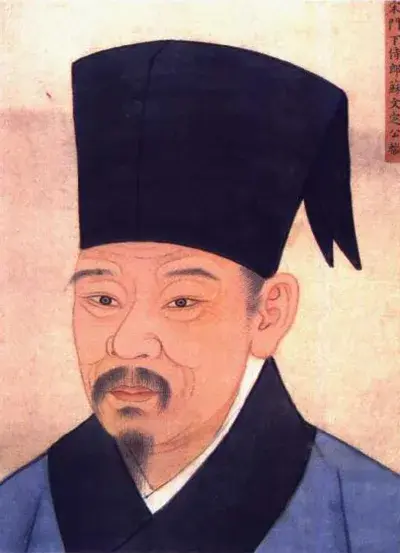
463 CE–514 CE
邢峦
Xing Luan (邢峦, 464–October 15, 514), courtesy name Hongbin (epitaph gives Shanbin), was a native of Mo County, Hejian Commandery, Yingzhou (present-day Renqiu, Hebei). He was a celebrated statesman and military commander of the Northern Wei dynasty. Born into the illustrious Hejian Xing clan, he endured early poverty with moral fortitude, immersing himself in the Confucian classics and developing both refined literary talent…
Xing Luan (邢峦, 464–October 15, 514), courtesy name Hongbin (epitaph gives Shanbin), was a native of Mo County, Hejian Commandery, Yingzhou (present-day Renqiu, Hebei). He was a celebrated statesman and military commander of the Northern Wei dynasty. Born into the illustrious Hejian Xing clan, he endured early poverty with moral fortitude, immersing himself in the Confucian classics and developing both refined literary talent and strategic acumen. Possessing an imposing stature and a magnificent beard, he began his career as an Erudite of the Palace Secretariat. Following an imperial diplomatic mission to the Southern Qi court, he won the deep appreciation of Emperor Xiaowen (Yuan Hong), rising through promotions to Attendant Gentleman of the Palace Secretariat and Imperial Palace Censor while accompanying the imperial progress during southern campaigns. Following Emperor Xuanwu's ascension, Xing Luan was made Minister of Revenue and submitted memorials urging the throne to prioritize agriculture and curb commercial extravagance. In 504, when southern defector Xiaohou Daocian surrendered Hanzhong, Xing Luan was commissioned as Commander-in-Chief of Expeditionary Affairs in Liangzhou and Hanzhong, pacifying the western marches, annexing fourteen commanderies across Baxi and Zhitong, and pushing northern borders one thousand li south to the Fu River. In 506, when Southern Liang forces invaded the Huai and Xu corridors, Xing Luan took command as General of Eastern Pacification. He shattered multiple southern armies, decapitated Liang general Lan Huaigong, recaptured the key fortress of Suyu, and demonstrated strategic foresight by resolutely advising against investing the formidable fortress of Zhongli. In 508, he led elite cavalry on a forced march to crush the rebellion of Bai Zaosheng at Xuanhu, for which he was created Founding Count of Pingshu County. Renowned for combining civil scholarship with frontline generalship, he governed with integrity in his later years and passed away in 514 at the age of fifty-one, being posthumously honored as Chariots and Cavalry Grand General and Regional Inspector of Yingzhou with the posthumous name Wending.
Born into a scholarly gentry family in Mo County; showed early intellect and imposing physical presence
Endured poverty to pursue learning; traveled with book satchels and mastered classical canons
Recommended by provincial administrators; appointed Erudite of the Palace Secretariat
Commissioned as Cavalier Attendant to lead an imperial embassy to the Southern Qi dynasty
Commended by Emperor Xiaowen upon return; appointed Gentleman of Commuting and Palace Attendant
Accompanied Emperor Xiaowen's southern expedition to Wan and Luo as Attendant Gentleman
Appointed Imperial Palace Censor and Grand Rectifier of Yingzhou, rectifying court conduct
Submitted memorials urging agrarian development over luxury commerce; appointed Minister of Revenue
Appointed Commander-in-Chief to lead northern armies into Hanzhong following Xiaohou Daocian's defection
Defeated Liang armies under Pang Jingmin and Kong Ling, annexing fourteen southern commanderies
Commanded eastern armies to crush Lan Huaigong and recover Suyu; opposed the siege of Zhongli
Led eight hundred cavalry on a forced march to recapture Xuanhu; created Count of Pingshu County
Elevated to Minister of the Palace Department; maintained personal austerity and administrative rectitude
Passed away from illness in Luoyang at fifty-one; posthumously honored as Chariots and Cavalry Grand General
Xing Luan belonged to the prominent Hejian Xing clan of northern China, a lineage that traced its ancestry to Xing Zhen, Minister of Ceremonies of the state of Cao Wei during the Three Kingdoms era. His fifth-generation ancestor Xing Gu repeatedly declined summons from Shi Le during the Later Zhao era, choosing a life of scholarly seclusion; because Xing Gu had no male heir, Xing Luan's great-great-grandfather Xing Gai was adopted from a collateral branch to continue the ancestral sacrifices. Xing Gai's grandson, Xing Ying, served Emperor Taiwu (Tuoba Tao) as Attendant Gentleman of the Palace Secretariat and was created Viscount of Pingcheng, having previously served on a diplomatic embassy to Emperor Wen of Liu Song. Xing Luan's father, Xing Xiunian, began his career as Administrative Assistant of Yingzhou and rose to Garrison Commander of Nanhe. His mother was Lady Li of Zhaojun, daughter of General of Pacifying Zeal and Regional Inspector of Dingzhou Li Xiang. His brothers Xing Ru, Xing Wei, and Xing Yan all attained high administrative ranks in the Northern Wei bureaucracy.
Although born into a prominent family, Xing Luan lost his father early and grew up in modest circumstances. He harbored lofty ambitions from his youth, carrying his book satchels across northern provinces to study under renowned scholars. He developed an encyclopedic knowledge of the Confucian classics and historical treatises, combining scholarly literary style with practical administrative aptitude. Standing tall with a magnificent flowing beard, he possessed a stately and dignified presence. Recognizing his potential, the regional inspector of Yingzhou recommended him to the imperial court. After passing his civil examinations with distinction, he was appointed Erudite of the Palace Secretariat and subsequently promoted to Supernumerary Cavalier Attendant Gentleman. Emperor Xiaowen valued his talent, frequently inviting him to attend imperial banquets and scholarly discussions.
In January 493, Emperor Xiaowen sought to establish diplomatic relations with southern dynasties while preparing for future reunification campaigns. He commissioned Xing Luan as Envoy Holding the Tally and Concurrent Cavalier Regular Attendant to lead an official embassy to the Southern Qi dynasty. Arriving in Jiankang, Xing Luan conducted himself with flawless diplomatic decorum, articulating imperial policy with eloquence and poise. Court ministers of Southern Qi deeply admired his bearing. Upon his return to Luoyang, Emperor Xiaowen commended his performance, promoting him to Gentleman of Commuting and soon elevating him to Attendant Gentleman of the Palace Secretariat.
When Emperor Xiaowen relocated the capital to Luoyang, he inspected the new metropolitan wards. Passing south of the Minister of Works headquarters, the emperor observed that Xing Luan was constructing an expansive and sturdy residential mansion, asking him with a smile why he was building on such a grand scale. Xing Luan replied respectfully that the relocation of the capital opened an imperial enterprise meant to endure for ten thousand generations; as an official bound to the fortunes of the state, he could not build an ephemeral dwelling. Emperor Xiaowen was delighted, remarking to Chancellor Mu Liang and Vice Director Li Chong that Xing Luan harbored grand aspirations. When the court debated examination methods for imperial candidates, the emperor designated Xing Luan to supervise the testing of budding talents, soon appointing him Concurrent Attendant Gentleman of the Yellow Gate.
During Emperor Xiaowen's southern campaign against Wan and Luo in the late Taihe era, commanders gathered at the front while Xing Luan arrived later at the Xinye camp due to clerical duties. Summoning him into the command tent, the emperor asked for his operational evaluation. Xing Luan presented a lucid appraisal of enemy defenses, predicting that the southern bastions were on the verge of collapse. Delighted by his strategic grasp, Emperor Xiaowen remarked that the army had delayed its final assault precisely so that the palace attendant could draft the victory proclamations. Shortly afterward, he was appointed Imperial Palace Censor, Grand Rectifier of Yingzhou, and Minister of Revenue.
Following the ascension of Emperor Xuanwu in the early Jingming era, Xing Luan was confirmed as Minister of Revenue. At that time, northern frontier peace had stimulated metropolitan commerce, drawing domestic and foreign merchants to Luoyang. However, the expansion of trade brought extravagant consumption, leading the elite to abandon farming for trade. Troubled by this trend, Xing Luan submitted a comprehensive memorial arguing that ancient sage kings had always prioritized agrarian production over merchant trade, valuing grain and textiles above gold and jade. He pointed out that Emperor Xiaowen had practiced strict personal frugality, using plain textiles for bed hangings and iron for carriage harnesses. In contrast, current court expenditures on foreign luxuries were depleting provincial reserves. He petitioned the emperor to restrict the purchase of non-essential foreign imports. Emperor Xuanwu approved his memorial and enacted measures to curb commercial excess.
In December 504, Xiaohou Daocian, who administered Liangzhou and Qinzhou for Southern Liang, executed his regional inspector and surrendered the Hanzhong basin to Northern Wei. Hanzhong was a vital strategic crossroads linking Guanzhong with Sichuan. Emperor Xuanwu commissioned Xing Luan as Envoy Holding the Tally, Commander-in-Chief of Military Affairs in Liangzhou and Hanzhong, and Acting General of Western Pacification, granting him full authority to secure the region. Crossing the rugged Qinling mountains, Xing Luan found that local garrisons west of Baimaguan remained hesitant to submit. He dispatched vanguard detachments under Yang Ju and Yang Zhong'ai to launch coordinated assaults. The northern forces overran hostile bastions, capturing the key citadel of Guancheng when Southern Liang commander Li Shishu surrendered.
Southern Liang commanders Ren Sengyou and others from thirty frontier garrisons surrendered with over seven thousand households. When Liang generals Li Tianci and Wang Jingyin mobilized seven thousand troops to block the Shiting defile, Xing Luan dispatched Han Duobao to shatter their vanguard, followed by Li Yizhen, who captured Jinshou. The emperor granted Xing Luan the authority to bestow regional offices to soothe the populace, appointing him Regional Inspector of Liangzhou and Qinzhou.
When Southern Liang Grand Administrator of Baxi Pang Jingmin resisted from mountain redoubts, Xing Luan sent Yan Xuansi to defeat and execute him. Liang Emperor Wu dispatched Kong Ling with twenty thousand troops to entrench at Shenkeng, while Zeng Fangda held Nan'an. Xing Luan directed Wang Zu to mount a deep strike, routing the southern armies, capturing Zitong, and slaying southern commanders Fu Bodu and Yue Baoming. Through this offensive, Xing Luan annexed territory stretching seven hundred li east to west and one thousand li north to south, securing fourteen commanderies and driving northern forces to the Fu River near Chengdu.
Recognizing that Sichuan's defenses were broken, Xing Luan memorialized the throne urging an immediate advance to annex the entire province. However, Emperor Xuanwu favored defensive consolidation and ordered the troops to halt. Later, northern garrison commander Li Zhongqian provoked local unrest in Baxi through corruption, resulting in the temporary loss of the commandery until Xing Luan dispatched Fu Shuyan to suppress Di tribal uprisings and stabilize the border.
During his first year governing Hanzhong, Xing Luan administered with benevolence, winning the respect of local gentry. However, facing repeated frontier skirmishes and shifting tribal allegiances, he increasingly resorted to harsh penalties, executing disloyal leaders, confiscating over two hundred private servants, and amassing private wealth through regional trade, which attracted criticism from court moralists. Palace Attendant Lu Chang, who harbored an old grudge against Xing Luan, allied with the emperor's favorite Yuan Hui and Imperial Palace Censor Cui Liang to impeach Xing Luan for seizing free commoners into servitude.
Recognizing the political danger, Xing Luan sent twenty captured southern maidens from the household of Pang Jingmin as gifts to Yuan Hui. Delighted by the gifts, Yuan Hui abandoned his alliance with Lu Chang and advised Emperor Xuanwu that Xing Luan had rendered peerless service in annexing vast southern territories, arguing that reopening treason trials would demoralize frontier commanders. General Gao Zhao also intervened on Xing Luan's behalf. Emperor Xuanwu dismissed the charges, pardoned Xing Luan, and recalled him to court as Minister of Revenue.
In 506, Southern Liang armies launched a multi-pronged offensive against the southeastern borders of Northern Wei, capturing multiple frontier outposts in Xuzhou and Yanzhou. Liang commander Xiao Jixian seized Gucheng with twenty thousand troops, while Lu Xianwen occupied Gushan and Jiao Nian raided Guimeng. Emperor Xuanwu urgently appointed Xing Luan as Envoy Holding the Tally, Commander-in-Chief of Eastern Expeditionary Affairs, and General of Eastern Pacification. Arriving at the front, Xing Luan deployed his divisions effectively: Fan Lu crushed the southern troops at Gushan, pursuing them for eighty li and decapitating four thousand enemy soldiers; Yuan Heng recovered Gucheng; and Bi Zuxiu routed Jiao Nian at Guimeng, pacifying Yanzhou within weeks.
Advancing to the mouth of the Sui River, Xing Luan defeated southern general Lan Huaigong and besieged the key bastion of Suyu. Lan Huaigong retreated to the southern bank of the Huai River, constructing an isolated fortress surrounded by water barriers to sever supply routes. Xing Luan personally led his infantry and cavalry across the southern river course, coordinating with Yang Dayan advancing from the north while Liu Sizhu launched burning rafts against the southern flotilla. Under cover of fire and smoke, northern troops filled the moats and scaled the ramparts, killing Lan Huaigong in combat, capturing thirty southern officers and tens of thousands of troops, and recovering Suyu along with four hundred thousand dan of stored grain. Emperor Xuanwu issued an imperial commendation praising Xing Luan's tactical mastery and ordering him to cross the Huai River to support the main army.
Following the recovery of Suyu, Prince of Zhongshan Yuan Ying crushed the southern army of Xiao Hong and prepared to lay siege to the fortified city of Zhongli. Emperor Xuanwu issued strict orders directing Xing Luan to march south from Suyu to reinforce Yuan Ying's siege operations. Having inspected the geography of the Huai and Si rivers and evaluated regional hydrology, Xing Luan concluded that besieging Zhongli was a fatal mistake. He submitted urgent memorials arguing that Zhongli was surrounded by deep watercourses, making sudden storming impossible; furthermore, northern troops were exhausted and susceptible to summer epidemics, while southern forces excelled in naval combat. He warned that once spring and summer floodwaters rose, southern fleets would sever northern logistics, trapping the siege army on flooded riverbanks. Even if the citadel fell, maintaining an isolated garrison in the southern marshes would prove unsustainable.
Emperor Xuanwu dismissed his warnings, repeatedly dispatching couriers demanding that Xing Luan submit to Yuan Ying's operational orders. Risking the sovereign's wrath, Xing Luan submitted repeated petitions begging to withdraw his army, eventually moving the emperor to grant his recall to Luoyang. The following year, events unfolded precisely as Xing Luan had predicted: the Huai River flooded, and Southern Liang commander Wei Rui launched a fire attack that annihilated Yuan Ying's army, inflicting tens of thousands of casualties and leaving Yuan Ying to escape almost alone. The entire court marveled at Xing Luan's strategic prescience.
In October 508, Bai Zaosheng led a local uprising in Yuzhou, murdering Regional Inspector Sima Yue and surrendering the city of Xuanhu to Southern Liang. Liang Emperor Wu dispatched Qi Gouren with elite troops to garrison the town. The loss of Xuanhu threatened the heart of Henan. Emperor Xuanwu commissioned Xing Luan as Envoy Holding the Tally and placed him in command of eight hundred elite imperial guard cavalry, simultaneously creating him Founding Count of Pingshu County with a fief of five hundred households to reward his previous service at Suyu. Riding day and night through torrential storms, Xing Luan led his eight hundred horsemen across hundreds of li, reaching Baokou within five days. Rebel commander Hu Xiaozhi met him with seven thousand troops, but Xing Luan charged at the head of his cavalry, routing the enemy, pursuing them to the walls of Xuanhu, and crossing the Ru River to surround the fortress.
When northern heavy infantry and Yuan Ying's columns arrived to complete the encirclement, Qi Gouren surrendered the citadel. Xing Luan entered Xuanhu and executed Bai Zaosheng and other rebel leaders, restoring imperial order. Upon his return to Luoyang, Emperor Xuanwu hosted a banquet in the Eastern Hall to celebrate his rapid victory, praising his ability to achieve multiple victories within a single month while commending his humble refusal to claim personal credit.
Following the campaigns at Suyu and Xuanhu, Xing Luan exercised strict personal discipline, shedding the moral blemishes of his earlier service in Hanzhong. While commanding major frontier armies, he never misappropriated public grain or war booty, living with simple frugality. He was subsequently appointed Minister of the Palace Department and General of Soothing the Army, residing quietly in the Yonghe ward north of the Xiufan Monastery in Luoyang. On October 15, 514, Xing Luan passed away suddenly from illness at his residence at the age of fifty-one. Emperor Xuanwu expressed deep sorrow, presenting four hundred bolts of silk and ceremonial court garments. Although the emperor initially intended to grant the posthumous governorship of Jizhou, court official Zhen Chen, who bore an old grudge against Xing Luan, suggested Yingzhou instead under the guise of honoring his ancestral home. The court posthumously conferred the titles Chariots and Cavalry Grand General and Regional Inspector of Yingzhou, granting the posthumous name Wending. On March 21, 515, he was interred in the ancestral cemetery of the Hejian Xing clan.
In 504, Xing Luan commanded the expeditionary forces that secured the Hanzhong basin following Xiaohou Daocian's defection. Advancing into the rugged borderlands, his armies shattered Southern Liang forces under Pang Jingmin and Kong Ling, annexing fourteen frontier commanderies stretching seven hundred li east to west and one thousand li north to south, securing the southwestern approaches to Guanzhong.
During the 506 southern invasion of Xuzhou and Yanzhou, Xing Luan swiftly pacified the province before marching to Suyu. Confronting Lan Huaigong's fortified island positions along the Huai River, he orchestrated a combined amphibious assault using fire rafts that destroyed the southern fleet, killed Lan Huaigong in combat, and captured extensive grain reserves.
Xing Luan demonstrated rare operational wisdom by vehemently opposing the imperial siege of Zhongli. Accurately assessing southern riverine advantages, seasonal flood hazards, and logistical vulnerability, he persistently petitioned for recall, saving his army from the catastrophic destruction that befell Yuan Ying's forces the following year.
Following Bai Zaosheng's treason in 508, Xing Luan executed an eight-hundred-man cavalry forced march across hundreds of li in five days. Charging through rebel armies at Baokou and crossing the Ru River, he encircled Xuanhu before southern relief forces could consolidate, swiftly extinguishing a dangerous revolt in Henan.
As Minister of Revenue, Xing Luan authored persuasive memorials urging the throne to curb commercial luxury and foster grain production. Following his military service, he adopted strict personal frugality, renouncing private enrichment and winning the universal respect of the court as an exemplary civil-military statesman.
FIGURES ASSOCIATED WITH THIS DYNASTY