Classical Birth
Born in Jiyin, Caozhou, displaying acute intellect and early commitment to the Pre-Qin classics.
邢昺
Xing Bing (邢昺, 932–1010), courtesy name Shuming, was an ancestral native of Jiyin, Caozhou (modern northwest of Cao County, Shandong Province), a celebrated Confucian classical exegete, textual scholar, and high minister of the Northern Song dynasty. Studying the Confucian canon under renowned teachers from youth, he attained profound mastery over the Three Ritual Treatises, the Spring and Autumn Annals, and the Analects,…
Xing Bing (邢昺, 932–1010), courtesy name Shuming, was an ancestral native of Jiyin, Caozhou (modern northwest of Cao County, Shandong Province), a celebrated Confucian classical exegete, textual scholar, and high minister of the Northern Song dynasty. Studying the Confucian canon under renowned teachers from youth, he attained profound mastery over the Three Ritual Treatises, the Spring and Autumn Annals, and the Analects, earning wide renown among northern literati for his comprehensive learning and rigorous philological precision. In the early Taiping Xingguo era under Emperor Taizong, Xing Bing passed the Nine Classics examination with high honors, serving as Evaluator at the Court of Judicial Review, Magistrate of Zanhuang, and Assistant Gentleman for Editing. In 988, Taizong summoned him to the capital as Assistant Magistrate and Lecturer in the Directorate of Education to collate the classics alongside senior academicians. Taizong, admiring his scholarly depth, frequently invited him to the imperial palace to lecture on the Spring and Autumn Annals, elevating him to Professor of the Directorate of Education. Following Emperor Zhenzong's accession, Xing Bing received even greater royal regard, advancing successively to Vice Minister of Works, Academician Lecturer in the Hanlin Academy, and Palace Remonstrance Official, serving as the sovereign's daily classical expositor. In the Jingde era, he was appointed Minister of Rites concurrently Minister of Works and Intendant of the Directorate of Education, overseeing the realm's highest academic institutions. Xing Bing's most enduring scholarly achievement lay in leading the imperial commission to compile and collate the official sub-commentaries for the Analects (Lunyu Zhengyi), the Classic of Filial Piety (Xiaojing Zhengyi), and the Erya (Erya Zhushu). Synthesizing classical traditions spanning Han, Wei, Jin, and Tang scholars while eliminating spurious and apocryphal traditions, his rigorous and clear expositions became the standard official texts for state academies and civil examinations throughout the Song, Ming, and Qing dynasties. These three works were subsequently integrated into the monumental Thirteen Classics with Commentaries and Sub-commentaries (Shisanjing Zhushu), marking an epochal milestone in Chinese classical philology. In 1010, Xing Bing died at the age of seventy-nine; the court posthumously bestowed the office of Left Vice Director of the Department of State Affairs and the posthumous name Wensu.
Born in Jiyin, Caozhou, displaying acute intellect and early commitment to the Pre-Qin classics.
Passed the imperial examination in the Nine Classics, appointed Evaluator and Magistrate of Zanhuang, governing through moral instruction.
Appointed Lecturer in the Directorate of Education; Taizong summoned him to explain the Spring and Autumn Annals, promoting him to Professor.
Elevated to Academician Lecturer in the Hanlin Academy and Palace Remonstrance Official, serving as imperial tutor.
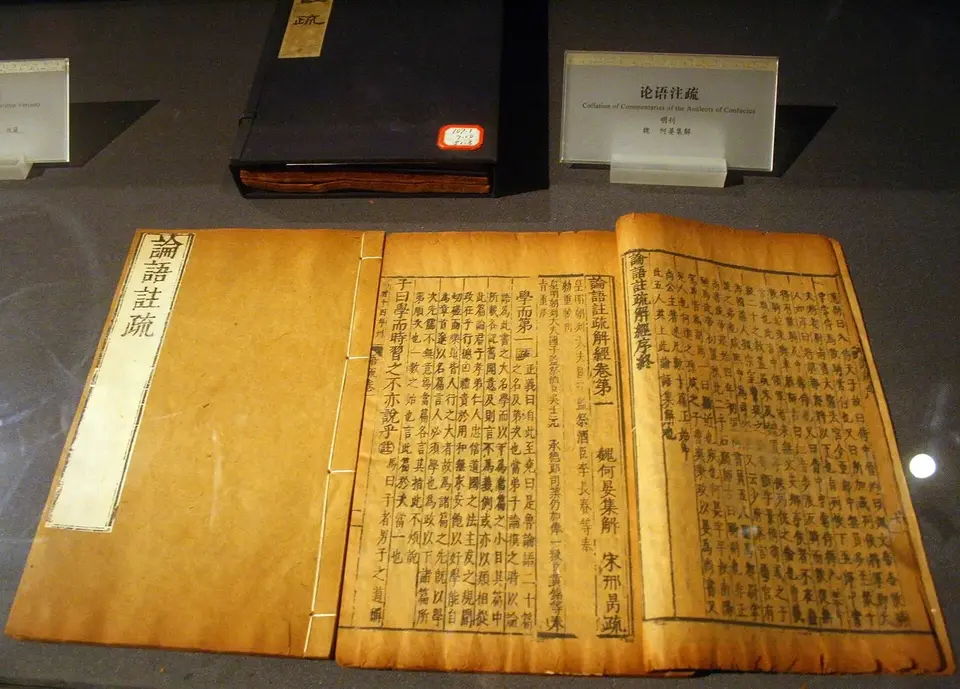
Commissioned to lead the compilation and collation of official sub-commentaries for the Analects, Classic of Filial Piety, and Erya.
Promoted to Minister of Works and Minister of Rites while managing the Directorate of Education.
Passed away in Kaifeng in the eighth month at seventy-nine; Zhenzong mourned in court, conferring Left Vice Director and posthumous name Wensu.
Xing Bing was born in 932 during the Later Tang dynasty of the Five Dynasties period. Caozhou had long served as an intellectual center for Confucian studies since the Han and Tang dynasties. From early youth, Xing Bing was earnest, thoughtful, and unyielding in his pursuit of canonical learning despite family poverty. Traveling across regional academies, he studied under leading scholars, developing unparalleled command of the Rites of Zhou, the Etiquette and Rites, the Book of Rites, the Zuo Commentary on the Spring and Autumn Annals, and the Analects.
During the prolonged turmoil of the Five Dynasties, Confucian classical texts had suffered extensive fragmentation, corruption, and typographical errors. Xing Bing immersed himself in textual collation, thoroughly analyzing phonological and etymological rules. Following the consolidation of the Northern Song, the court revived academic civil examinations, establishing specialized degrees such as the Five Classics and Nine Classics to recruit eminent classicists. In the early Taiping Xingguo era, Xing Bing journeyed to Kaifeng to sit for the Nine Classics examination, expounding complex passages with effortless fluency to graduate near the top of the roster.
Following his graduation, Xing Bing was commissioned Evaluator at the Court of Judicial Review and dispatched to serve as Magistrate of Zanhuang in Changshan. In this post, he applied Confucian moral instruction to local administration, reducing corporal punishments, lowering unnecessary tax assessments, and encouraging sericulture, achieving commendable governing records. He was soon recalled to the central government as Assistant Gentleman for Editing, entering the prestigious ranks of court literati.
In 988, during the first year of the Duanhong era, the court ordered a comprehensive overhaul of state academy statutes. Aware of Xing Bing's exceptional classical mastery, Emperor Taizong summoned him to serve as Assistant Magistrate and Lecturer in the Directorate of Education, tasking him with collating orthodox versions of the Five Classics alongside veteran imperial scholars. Emperor Taizong, who cherished Confucian learning, repeatedly invited Xing Bing to lecture in palace chambers on the profound principles of the Spring and Autumn Annals. Xing Bing explicated the text with lucidity and gravity, aligning classical philosophy with the practical imperatives of imperial self-cultivation and statecraft. Delighted by his lectures, Emperor Taizong personally bestowed imperial purple robes upon him and promoted him to Professor of the Directorate of Education.
In 997, Emperor Zhenzong ascended the throne. When Zhenzong had served as Crown Prince in the Eastern Palace, he had admired Xing Bing's erudition. After taking power, Zhenzong appointed him Vice Minister of Works, Palace Remonstrance Official, and Director of the Remonstrance Bureau, awarding him the title of Academician Lecturer in the Hanlin Academy and appointing him Intendant of the Directorate of Education. At the conclusion of court audiences on the first and fifteenth of each month, the sovereign regularly retained Xing Bing in the private apartments to read canonical treatises. Whenever doubts arose concerning imperial rites, state sacrifices, court ceremonies, or classical textual interpretations, Zhenzong consistently consulted Xing Bing for authoritative resolution.
In 1004, Emperor Zhenzong promoted Xing Bing to Minister of Works, subsequently transferring him to Minister of Rites while confirming his academician rank and directorship of the Directorate of Education. In charge of the national academy, Xing Bing enforced rigorous examination criteria, supported impoverished scholars from across the realm, and drew aspiring students from all quarters to Kaifeng, inaugurating a flourishing golden age for Northern Song state education.
During the initial decades of the Northern Song, state scholarship had continued to rely on the Correct Meaning of the Five Classics (Wujing Zhengyi) compiled by Tang scholar Kong Yingda. However, the sub-commentaries for crucial canonical texts such as the Analects, the Classic of Filial Piety, and the ancient lexicographical thesaurus Erya had grown archaic, fragmented, and infiltrated with apocryphal superstitions, creating an urgent need for systematic modernization.
In 999, Emperor Zhenzong issued an imperial edict placing Xing Bing in charge of an elite scholarly commission including Professor Sun Shi, Directorial Lecturer Du Gao, and Shu Ya to collate and standardize these three foundational texts. Adopting a rigorous philological methodology, Xing Bing and his associates labored for years, collating classical commentaries by Han, Wei, and Six Dynasties masters like Zheng Xuan, He Yan, and Huang Kan. Pruning superfluous verbiage, harmonizing divergent traditions, and rectifying scribal errors, the commission completed the ten-volume Analects with Correct Meaning (Lunyu Zhengyi), the five-volume Classic of Filial Piety with Correct Meaning (Xiaojing Zhengyi), and the ten-volume Erya with Commentaries and Sub-commentaries (Erya Zhushu).
The three authorized sub-commentaries produced under Xing Bing's leadership were celebrated for precise glosses, exhaustive evidence, and freedom from superstitious apocrypha. They established a definitive national standard for civil service examinations and state education throughout subsequent dynasties. These texts were later adopted as official models by the Directorate of Education and ultimately incorporated into the standard Thirteen Classics with Commentaries and Sub-commentaries (Shisanjing Zhushu), serving as foundational texts of the Chinese intellectual tradition.
In the eighth month of 1010, Xing Bing passed away peacefully in his Kaifeng residence at the age of seventy-nine. Emperor Zhenzong mourned his death with great sorrow, suspending audience sessions, dispatching palace chamberlains to oversee the funeral, and posthumously conferring the high office of Left Vice Director of the Department of State Affairs and the posthumous name Wensu.
Attaining mastery over the Pre-Qin classics and ritual traditions, he passed the Nine Classics examination under Taizong and entered court scholarship after exemplary local governance in Zanhuang.
Serving as Academician Lecturer in the Hanlin Academy and head of the Directorate of Education, he tutored Emperors Taizong and Zhenzong on the classics, revitalizing Song state education.
Presiding over the imperial collation of the Analects, Classic of Filial Piety, and Erya, he produced authoritative commentaries that established standardized civil examination curricula.
His three canonical editions were permanently integrated into the Thirteen Classics with Commentaries and Sub-commentaries, earning him posthumous appointment as Left Vice Director and the posthumous title Wensu.
FIGURES ASSOCIATED WITH THIS DYNASTY