Imperial Birth
Born into the Yuzhang Princely Mansion in Jiankang, studious and devoted to classical antiquities.
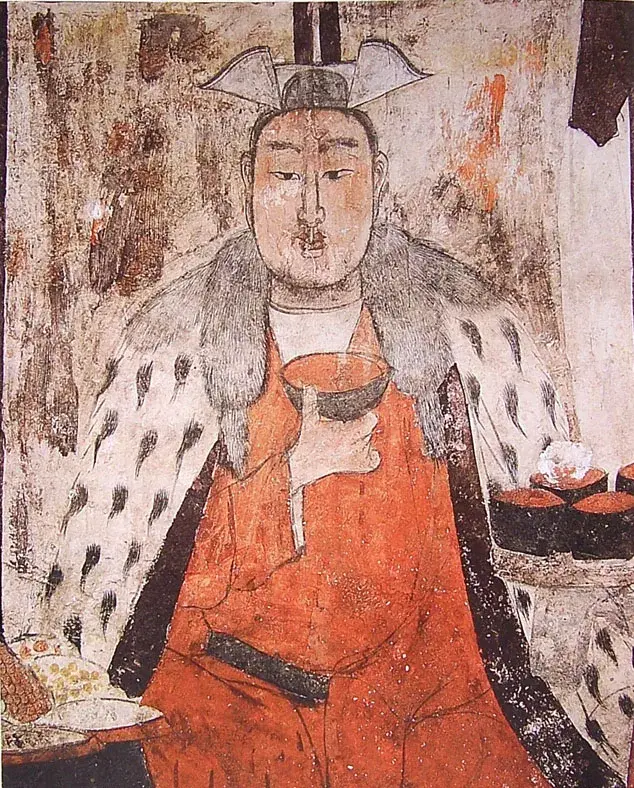
萧子云
Xiao Ziyun (萧子云), courtesy name Jingrong (景容), a native of Lanling in Donghai (modern Lanling County, Shandong Province), was an eminent historian, literatus, and calligraphic master of Southern Qi and Liang dynasties, the nephew of founding Emperor Gao of Southern Qi (Xiao Daocheng) and the ninth son of Prince Wenxian of Yuzhang (Xiao Yi). Born into imperial royalty, Xiao Ziyun was serene, dignified, and passionately…
Xiao Ziyun (萧子云), courtesy name Jingrong (景容), a native of Lanling in Donghai (modern Lanling County, Shandong Province), was an eminent historian, literatus, and calligraphic master of Southern Qi and Liang dynasties, the nephew of founding Emperor Gao of Southern Qi (Xiao Daocheng) and the ninth son of Prince Wenxian of Yuzhang (Xiao Yi). Born into imperial royalty, Xiao Ziyun was serene, dignified, and passionately devoted to classical antiquities, perusing historical archives day and night. Under the Liang Dynasty, he served as Palace Gentleman, Director of the Imperial Library (Mishu Jian), Chancellor of the National University (Guozi Jijiu), and Senior Clerk in the Prince of Xiangdong's princely staff. In historiography, he spent decades compiling the monumental 110-volume Book of Jin (Jin Shu), acclaimed by Emperor Wu of Liang for its rigorous factual collation and elegant prose, archived permanently within the imperial palace. In calligraphy, he was a peerless master of running-cursive, clerical, and flying-white scripts (feibai), celebrated by Emperor Wu as possessing transcendent bone structure. His fame extended across the sea to Baekje, Goguryeo, and Silla, whose royal embassies arrived in Jiankang bearing gold to purchase authentic scrolls of his calligraphy. Following the outbreak of the Hou Jing Rebellion and the catastrophic siege of Taicheng in 548, Xiao fled to the mountains of Jinling, ultimately dying of starvation and illness in Xianle Temple in 549 at sixty-three.
Born into the Yuzhang Princely Mansion in Jiankang, studious and devoted to classical antiquities.
Retained as imperial kin, serving as Palace Gentleman and cataloguing palace holdings.
Completed the monumental 110-volume Book of Jin, praised warmly by Emperor Wu.
Envoys from Baekje traveled to Jiankang seeking his calligraphy, appointed Cavalier Regular Attendant.
Appointed Chancellor of the National University, overseeing Confucian scholarship and state libraries.
Trapped during Hou Jing's siege of Jiankang, fled on foot toward eastern temples.
Passed away from starvation in Xianle Temple at sixty-three amid wartime famine.
Xiao Ziyun belonged to the imperial Xiao clan of Lanling. His uncle was Xiao Daocheng, the founding monarch of Southern Qi, and his father was Xiao Yi, Prince of Yuzhang, the Grand Marshal of Southern Qi. Born into extreme aristocratic privilege, Xiao Ziyun despised superficial dissipation, dedicating himself entirely to classical and historical research.
Following the rise of the Liang Dynasty under Xiao Yan (Emperor Wu), imperial kin from the preceding house were treated with high honor. In the early Tianjian era, Xiao Ziyun was appointed to civil posts, serving in the Imperial Library. Immersed in imperial archives containing thousands of silk scrolls, Xiao Ziyun excelled in textual criticism, his prose praised by Emperor Wu for stately composure.
Xiao Ziyun's primary historiographical monument was his independent authorship of the comprehensive 110-volume Book of Jin (Jin Shu).
Following the fall of Western Jin, numerous scholars like Wang Yin, Yu Yu, and Zang Rongxu had authored private chronicles, yet their accounts suffered from conflicting chronologies and uneven prose. Spending over two decades scouring official archives, family registers, and epigraphic tombstones, Xiao Ziyun compiled 110 volumes comprising Imperial Annals, Hereditary Houses, Biographies, and Treatises. The work was praised for balanced historical judgment and terse eloquence. When presented to the throne, Emperor Wu inspected the texts repeatedly, issuing imperial edicts commending Xiao and depositing the compilation in the imperial library as standard historical reference.
Beyond historical research, Xiao Ziyun was celebrated throughout medieval East Asia for consummate calligraphic genius. He mastered standard, cursive, clerical, and flying-white scripts, synthesizing ancient Han-Wei methods into dynamic southern grace.
Emperor Wu of Liang, an exacting judge of calligraphy, admired Xiao Ziyun's brushwork, commissioning him to inscribe monumental flying-white characters across silk screens in imperial halls. His fame radiated far beyond the southern borders. During the Datong era, royal envoys from the kingdom of Baekje on the Korean Peninsula arrived in Jiankang, requesting: "Where is Master Xiao Ziyun? Our sovereign specifically commanded us to offer tribute gold to purchase authentic scrolls of his hand!" Xiao Ziyun penned several sheets of cursive and clerical epistles for the envoys, who bowed in veneration before taking them across the sea.
In the late Taiqing era, Xiao Ziyun was appointed Chancellor of the National University (Guozi Jijiu), revered as the senior patriarch of state education. However, in 548, renegade commander Hou Jing staged a catastrophic rebellion, besieging Taicheng with barbarian cavalry.
In 549, Taicheng fell amid widespread looting and massacres. Refusing to submit to Hou Jing, elderly Xiao Ziyun fled on foot toward the mountains of Jinling, finding shelter in Xianle Temple. As devastating famine gripped the Yangtze delta, Xiao ran out of provisions. Weakened by fever and hunger, he passed away in the monastic guest room at sixty-three, his demise mourned by scholars across Jiangnan.
Xiao Ziyun authored the monumental 110-volume Book of Jin, systematizing two centuries of Western and Eastern Jin historical records and serving as an indispensable foundation for the later Tang dynasty official compilation.
Xiao Ziyun synthesized the brushwork of Zhong Yao and the Two Wangs into flying-white and cursive styles, celebrated by Emperor Wu and actively collected by diplomatic missions from Baekje and Goguryeo.
Presiding over the National University as Chancellor, Xiao Ziyun enforced academic standards and transmitted classical Confucian commentaries, maintaining the cultural continuity of southern scholarship on the eve of the Liang collapse.
FIGURES ASSOCIATED WITH THIS DYNASTY