Royal Birth
Born into the Southern Lanling Xiao clan, great-grandson of Emperor Xuan of Western Liang.
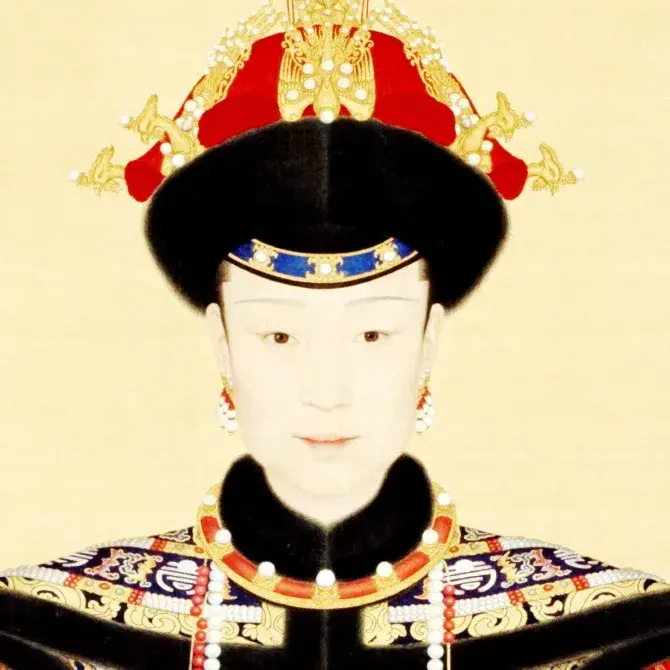
583 CE–621 CE
萧铣
Xiao Xian (萧铣, 583–621) was a regional warlord sovereign in southern China during the transition from Sui to Tang, hailing from Lanling County in Nanlanling Commandery. Descended from the imperial Xiao Liang lineage, he was the great-grandson of Emperor Xuan (Xiao Cha) of Western Liang and the grandson of King of Anping Xiao Yan. Following the decline of his household, he supported his mother in poverty through scribal…
Xiao Xian (萧铣, 583–621) was a regional warlord sovereign in southern China during the transition from Sui to Tang, hailing from Lanling County in Nanlanling Commandery. Descended from the imperial Xiao Liang lineage, he was the great-grandson of Emperor Xuan (Xiao Cha) of Western Liang and the grandson of King of Anping Xiao Yan. Following the decline of his household, he supported his mother in poverty through scribal copying, gaining renown for his filial devotion before being appointed Magistrate of Luochuan during the Daye era through clan ties with Empress Xiao. In 617, when local military officers led by Dong Jingzhen revolted against the Sui dynasty in Yuezhou, they elevated Xiao Xian as their leader. Xiao proclaimed himself Duke of Liang at Luochuan, establishing the era name Mingfeng; in 618, he ascended the imperial throne at Baling and relocated the capital to Jiangling, restoring Liang ancestral temples and establishing a full civil administration. At its zenith, Xiao Xian's regime pacified Lingnan and expanded across Hunan and Jiangxi, controlling an empire that stretched from Jiujiang in the east to the Three Gorges in the west, and from the Han River in the north to Jiaozhi in the south, commanding four hundred thousand troops and constituting the largest independent realm in the south. However, suspicious of his meritorious commanders, Xiao executed generals Shen Liusheng and Zhang Xiu, driving Dong Jingzhen into defection, while disbanding his frontline troops under the pretext of agricultural furloughs, which crippled regional defense. In 621, Emperor Gaozu of Tang dispatched Li Xiaogong and Li Jing with combined naval and land forces to besiege Jiangling. Cut off from relief, Xiao surrendered to spare his people from slaughter. Escorted to Chang'an, he answered Emperor Gaozu with dignified composure before being executed in the marketplace at the age of thirty-nine.
Born into the Southern Lanling Xiao clan, great-grandson of Emperor Xuan of Western Liang.
Father and grandfather executed or displaced following the Sui conquest of Chen; worked as a copyist to support his mother.
Appointed Magistrate of Luochuan through maternal kin ties with Sui Empress Xiao.
Elevated as leader by Yuezhou officers, proclaiming himself Duke of Liang under the era name Mingfeng.
Moved to Baling, executed unruly general Shen Liusheng, and assumed the title King of Liang at an outdoor altar.
Proclaimed Emperor of Liang, restored ancestral shrines, relocated to Jiangling, and made Cen Wenben Vice Director of the Secretariat.
Accepted the submission of Lingnan commanders Zhang Zhenzhou and Ning Changzhen, controlling forty thousand troops across southern provinces.
Curtailed military authority under the pretext of agrarian cultivation; Dong Jingzhen and Zhang Xiu died amidst mutual purges.
Besieged by Li Xiaogong and Li Jing following the naval rout at Jingmen; surrendered in mourning garb to save the civilian populace.
Escorted to Chang'an, defended his legitimacy before Emperor Gaozu, and was executed in the capital marketplace.
Xiao Xian was born into the imperial clan of the Southern Liang dynasty. His great-grandfather was Xiao Cha (Emperor Xuan), the third son of Crown Prince Zhaoming Xiao Tong and founder of the Western Liang dynasty. His grandfather, Xiao Yan, was the King of Anping. Following the annexation of Western Liang by the Sui dynasty, Xiao Yan defected to the Southern Chen dynasty in 581. In 589, when the Sui dynasty extinguished Chen, Emperor Wen executed Xiao Yan, and Xiao Xian's father Xiao Xuan suffered political disgrace, causing the family fortunes to collapse.
Left an impoverished orphan in his youth, Xiao Xian made a living by copying books for others, gaining a reputation for exceptional filial piety toward his mother. During the Daye era of Emperor Yang of Sui, Xiao Xian was granted official appointment as Magistrate of Luochuan (present-day Miluo, Hunan) due to his status as a kinsman of Empress Xiao, daughter of Emperor Ming of Western Liang. Situated along the southern shores of Dongting Lake within Baling Commandery, this posting enabled him to forge connections with local military leaders and elite gentry in Yuezhou.
In 617, amidst widespread rebellions across the empire, Yuezhou garrison officers Dong Jingzhen and Lei Shimeng, along with company commanders Zheng Wenxiu, Xu Xuanche, Wan Zan, Xu Deji, and Zhang Xiu, conspired to raise an insurrection against Sui authority. While the officers originally sought to name Dong Jingzhen as their leader, Dong declined on account of his humble background, proposing instead that they elevate Xiao Xian. He argued that Xiao was an imperial descendant of the Liang dynasty who possessed the benevolent virtue of Emperor Wu, and noted widespread popular lore predicting the revival of the Xiao house. Xiao Xian responded favorably, assembling several thousand recruits under the pretext of suppressing bandits while preparing for revolt.
When the rebel chief Shen Liusheng invaded Luochuan, Xiao Xian initially suffered a tactical reverse. Addressing his subordinates, he declared: The commanders of Yuezhou wish to elevate me as their lord. With the empire in revolt, how can I remain bound by ordinary duty? My ancestors founded a dynasty in this land, and if I restore the Liang mandate, a single proclamation will summon the warrior bands to our cause. His men acclaimed him, and in the tenth month, Xiao proclaimed himself Duke of Liang, adopting the ceremonial dress and banners of the Liang dynasty. Shen Liusheng surrendered his forces, and within five days, tens of thousands of recruits joined the cause. Xiao then advanced toward Baling.
En route, Dong Jingzhen dispatched Xu Deji with several hundred troops to welcome him. Shen Liusheng, boasting of his early submission and fearing that the Yuezhou commanders would eclipse him, murdered Xu Deji in an attempt to escort Xiao alone into the fortress. Incensed, Xiao rebuked Shen, who prostrated himself in apology. Upon reaching Baling, Dong Jingzhen urged that order could not be established without punishing the murder, and Xiao ordered Shen Liusheng's execution. Xiao then erected an altar south of the city, performed sacrifices to heaven, and assumed the title King of Liang, adopting the era name Mingfeng (also recorded as Fengming).
In 618, Xiao Xian formally declared himself Emperor of Liang, establishing a comprehensive civil and military bureaucracy in accordance with ancient Liang statutes. He posthumously honored his grand-uncle Xiao Cong as Emperor Xiaojing, his grandfather Xiao Yan as King Zhonglie of Hejian, and his father Xiao Xuan as King Wenxian. He created Dong Jingzhen Prince of Jin, Lei Shimeng Prince of Qin, Zheng Wenxiu Prince of Chu, Xu Xuanche Prince of Yan, Wan Zan Prince of Lu, Zhang Xiu Prince of Qi, and Yang Daosheng Prince of Song. Later that year, he relocated his capital to Jiangling, the ancestral seat of Western Liang, restoring imperial mausoleums and appointing scholar Cen Wenben as Vice Director of the Secretariat to oversee state affairs.
Sui commanders Zhang Zhenzhou and Wang Renshou mounted counteroffensives against Xiao Xian but failed to dislodge him; following the demise of the Sui dynasty, both officers joined his court alongside regional tribal leader Ning Changzhen of Lingnan. Xiao dispatched general Su Hu'er to seize Yuzhang, dislodging rebel leader Lin Shihong, while Yang Daosheng secured Nanjun and Zhang Xiu pacified Lingnan. By the early Wude era, Xiao Xian's domain extended eastward to Jiujiang, westward to the Three Gorges, southward to Jiaozhi (present-day Hanoi, Vietnam), and northward to the Han River, commanding four hundred thousand troops and standing as the most formidable power in southern China.
Despite commanding vast territories, Xiao Xian failed to consolidate internal stability. In 618, his army under Yang Daosheng attacked Xiazhou but was severely defeated by Tang regional commander Xu Shao, suffering heavy casualties. In 620, Emperor Gaozu of Tang ordered Li Xiaogong, Area Commander of Kuizhou, to launch an offensive, capturing Tongzhou and Kaizhou.
Xiao Xian possessed an outwardly genial but inwardly suspicious temperament, harboring deep anxieties regarding the growing autonomy of his generals. Fearing their independence, he proclaimed a policy of agricultural furloughs, using the pretext of agrarian cultivation to strip his commanders of their military retinues. A younger brother of Grand Marshall Dong Jingzhen plotted rebellion out of resentment and was executed. At that time, Dong Jingzhen was stationed at Changsha; terrified of execution, he defected to the Tang commander Li Xiaogong. Xiao sent Zhang Xiu to crush Dong, who was slain by his own troops during a breakout. Xiao promoted Zhang Xiu to Director of the Department of State Affairs, but soon grew suspicious of Zhang's arrogance and executed him as well. Disillusioned by these purges, provincial governors and commanders grew alienated, severely eroding the defensive cohesion of the realm.
In 621, Emperor Gaozu decreed a multi-pronged assault on Liang: Li Xiaogong and tactical director Li Jing advanced down the Yangtze River with naval forces from Sichuan, Prince of Lujiang Li Yuan marched via Xiangyang, and Tian Shikang advanced from Chenzhou. Provincial commander Zhou Faming surrendered four commanderies to Tang and advanced toward Xiakou, taking Anzhou. Xiao dispatched Wen Shihong with tens of thousands of troops to hold the Qingjiang estuary, but Li Xiaogong and Li Jing routed them, capturing one thousand vessels. With fortress after fortress falling along the river, Tang armies advanced directly upon Jiangling.
Because Xiao had previously disbanded his regional standing armies, only several thousand guards remained in the capital. As the Tang vanguard encircled the walls, emergency levies from southern and Lingnan garrisons could not arrive in time over vast distances. Li Xiaogong breached the water fortifications, capturing thousands of large transport craft. Tang commanders cast the captured vessels adrift downstream; relief armies ascending the river concluded that Jiangling had already fallen, halting their advance. Seeing that relief was hopeless, Xiao addressed his counselors: Heaven has withheld its favor from Liang. If we fight to exhaustion, only the common people will suffer. It is better to surrender while our walls stand whole to spare them disaster. Weeping along the battlements, he performed solemn rites at the ancestral temple, dressed in coarse mourning garb, and surrendered before the Tang lines, declaring: I alone deserve death; spare the innocent populace from slaughter.
Escorted to Chang'an, Xiao was interrogated before the imperial court by Emperor Gaozu, who condemned his rebellion. Xiao answered with unyielding dignity: The Sui house lost its deer, and the brave competed to seize it. Lacking heavenly fortune, I was captured by Your Majesty. Just as Tian Heng reigned as king in the south, how can I be called a traitor to your house? Incensed by his defiance, Emperor Gaozu ordered him beheaded in the marketplace of Chang'an at the age of thirty-nine.
As a royal descendant of Emperor Xuan of Western Liang, Xiao Xian successfully leveraged regional nostalgia for the Liang dynasty across the middle and lower Yangtze River. Elevating the imperial banner at Luochuan and establishing his capital at Jiangling, he revived ancient court ceremonies, established imperial shrines, and restored civil administration. His realm expanded from the Three Gorges to the sea and from the Han River to northern Vietnam, commanding four hundred thousand troops and representing the final indigenous attempt to sustain a southern imperial state during the transition to Tang rule.
Recognizing that regional commanders wielded excessive military autonomy, Xiao sought to curb feudal warlordism through centralizing reforms. Disbanding provincial armies under the banner of agricultural furloughs, he attempted to restore agricultural productivity and ease tax burdens on the civilian population. However, executing this policy precipitously without establishing an effective standing force undermined his defensive capability, rendering his regime vulnerable when Tang forces launched their coordinated amphibious invasion.
When Tang forces under Li Xiaogong and Li Jing breached the outer river defenses of Jiangling, Xiao found his capital isolated with only several thousand guards. While southern armies totaling over one hundred thousand troops were marching to his aid, Xiao prioritized the lives of the civilian population over dynastic survival, choosing to surrender unconditionally to prevent the sack of the city. His declaration that he alone should bear execution to protect his subjects stood as a rare instance of humanitarian statesmanship among late Sui warlords.
Following his capture, Xiao preserved his dignity before the Tang sovereign, declining to offer servile apologies and articulating the political reality that during times of dynastic collapse, regional leaders competed for the mandate in good faith. His invoking of Tian Heng highlighted his conviction that his kingship was an independent historical enterprise rather than an act of rebellion against the Tang house, winning the lasting respect of later Confucian historians.
FIGURES ASSOCIATED WITH THIS DYNASTY