刘氏(明思宗生母)
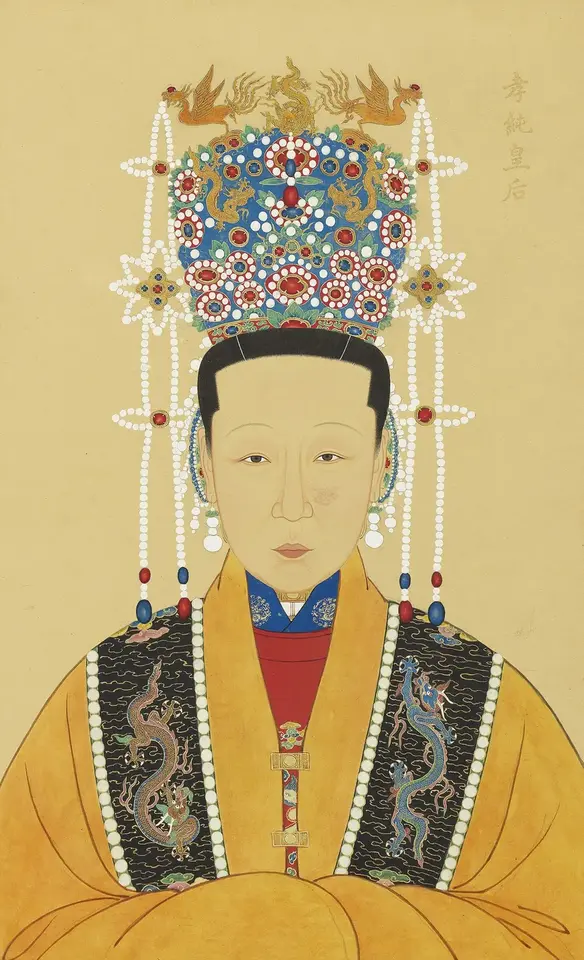
Historical portrait of Empress Dowager Xiaochun
Image creditsAnonymous · Public domainImage source

Historical figure

Lady Liu (刘氏)

刘氏(明思宗生母)

Lady Liu (刘氏, 1588–1615), posthumously honored as Empress Dowager Xiaochun (孝纯温肃端慎慈懿皇太后), was a native of Haizhou in Nan Zhili (modern Lianyungang, Jiangsu) whose family relocated to Wanping County in Shuntian Prefecture. She entered the Eastern Palace during the Wanli era as a lady-in-waiting to Crown Prince Zhu Changluo (the future Taichang Emperor, Ming Guangzong) and gave birth to his fifth son, Zhu Youjian (the future…

Ming Dynasty

PROFILE

Lady Liu (刘氏, 1588–1615), posthumously honored as Empress Dowager Xiaochun (孝纯温肃端慎慈懿皇太后), was a native of Haizhou in Nan Zhili (modern Lianyungang, Jiangsu) whose family relocated to Wanping County in Shuntian Prefecture. She entered the Eastern Palace during the Wanli era as a lady-in-waiting to Crown Prince Zhu Changluo (the future Taichang Emperor, Ming Guangzong) and gave birth to his fifth son, Zhu Youjian (the future Chongzhen Emperor), in January 1611. In 1615, she died suddenly in the Eastern Palace at the age of twenty-eight and was hurriedly interred in the Western Hills. Following Zhu Youjian's ascension to the throne in 1627, she was posthumously elevated to Empress Dowager, reburied in the Qingling Mausoleum, and remembered by Chongzhen with profound lifelong filial devotion.

Posthumous Title
Empress Dowager Xiaochun (孝纯温肃端慎慈懿皇太后)
Native Place
Haizhou, Nan Zhili (Modern Lianyungang, Jiangsu)
Dynasty
Ming Dynasty
Birth Date
1588 (Wanli 16 of Ming)
Death Date
1615 (Wanli 43 of Ming)
Age at Death
28
Major Roles
Lady-in-Waiting to Ming Guangzong, Birth Mother of Chongzhen Emperor
Accurate Identity Positioning
Ming Imperial Consort, Biological Mother of Emperor Sizong (Chongzhen)
LIFE TIMELINE

Relationship graph

BIOGRAPHY

Chronology

  • 1588 (Wanli 16 of Ming) | Birth | Born into a commoner family in Haizhou, later moving with her family to Wanping near Beijing.
  • 1605 (Wanli 33 of Ming) | Eastern Palace | Selected into the Eastern Palace household of Crown Prince Zhu Changluo as a lady-in-waiting.
  • 1610 (Wanli 38, 12th Month of Ming) | Birth of Chongzhen | Gave birth to Zhu Changluo's fifth son, Zhu Youjian (the future Chongzhen Emperor).
  • 1615 (Wanli 43 of Ming) | Premature Death | Passed away suddenly in the Eastern Palace at age twenty-eight and was secretly buried in the Western Hills.
  • 1627 (Tianqi 7 of Ming) | Posthumous Honors | Zhu Youjian ascended the throne and posthumously honored his biological mother as Empress Dowager Xiaochun.

Life and Career

Eastern Palace Selection and Giving Birth to Zhu Youjian

Lady Liu originated from Haizhou in Nan Zhili. Her father, Liu Yingyuan, later moved the household to Wanping County adjacent to the capital. During the late Wanli reign, Crown Prince Zhu Changluo occupied an intensely precarious position amid protracted succession rivalries. Lady Liu entered his palace as a selected attendant. Gentle and modest in demeanour, she found favor with Zhu Changluo. On January 27, 1611 (the 24th day of the 12th month of the 38th year of Wanli), she gave birth to his fifth son, Zhu Youjian.

Palace Tragedy and Premature Demise

The Eastern Palace was embroiled in constant factional intrigue and domestic friction among imperial consorts. In 1615, Lady Liu incurred the displeasure of the Crown Prince during an altercation, fell abruptly ill, and died shortly thereafter at the young age of twenty-eight. Fearing that Emperor Wanli would censure him for the incident, Crown Prince Zhu Changluo concealed the matter and had Lady Liu buried hastily in the western suburbs without formal ceremony. The young prince Zhu Youjian, under five years old, was placed in the care of other palace consorts, and the mysterious premature death of his mother left an indelible wound throughout his youth.

Posthumous Elevation and Royal Filial Piety

In 1627, after Emperor Tianqi died without heirs, Zhu Youjian ascended the imperial throne as the Chongzhen Emperor. Determined to vindicate his biological mother, Chongzhen issued an imperial edict posthumously elevating Lady Liu as Empress Dowager Xiaochun. Her remains were exhumed from the Western Hills and reinterred alongside Ming Guangzong in the Qingling Mausoleum. Chongzhen made extensive efforts to locate elders who remembered her likeness to paint her posthumous portrait, and bestowed noble titles on maternal relatives, granting her father Liu Yingyuan the posthumous title Duke of Ying and her younger brother Liu Wenbing the title Marquis of Xinle. Chongzhen frequently wept in private worship before her portrait.

Major Achievements

Giving Birth to the Chongzhen Emperor

Lady Liu gave birth to Zhu Youjian, the final reigning monarch of the unified Ming dynasty, preserving the direct imperial lineage during the turbulent late Ming era.

Posthumous Elevation and Qingling Mausoleum Reburial

Her posthumous elevation to Empress Dowager Xiaochun and reburial at Qingling represented one of the most prominent instances of imperial filial vindication and commemorative ritual in late Ming dynastic history.

Character Relations

  • Husband: Zhu Changluo (Emperor Guangzong of Ming, Taichang Emperor)
  • Son: Zhu Youjian (Emperor Sizong of Ming, Chongzhen Emperor)
  • Father: Liu Yingyuan (Posthumously enfeoffed as Duke of Ying)
  • Brother: Liu Wenbing (Marquis of Xinle)

Historical Evaluation

  • History of Ming (Ming Shi): "When the Zhuanglie Emperor ascended the throne, he conferred upon her the posthumous title Empress Dowager Xiaochun Wensu Duanshen Ciyi, and reinterred her in the Qingling Mausoleum."
  • Wen Bing, Records of Early Omens (Xianbo Zhi): "The Zhuanglie Emperor cherished his birth mother most dearly; whenever he beheld anyone bearing her resemblance, he wept uncontrollably."

Related Entries

  • Zhu Changluo
  • Zhu Youjian
  • Qingling Mausoleum
  • Liu Wenbing

FIGURES ASSOCIATED WITH THIS DYNASTY

Bibliography

  • Zhang Tingyu et al., History of Ming (Ming Shi), Volume 114, Biographies of Empresses and Consorts II
  • Gu Yingtai, Major Events of Ming History (Mingshi Jishi Benmo)