Chu Rebellion
Joined his brother Xiang Liang in open revolt against Qin, enthroning King Huai II of Chu and assuming the post of Left Director of Affairs (Zuoyin).
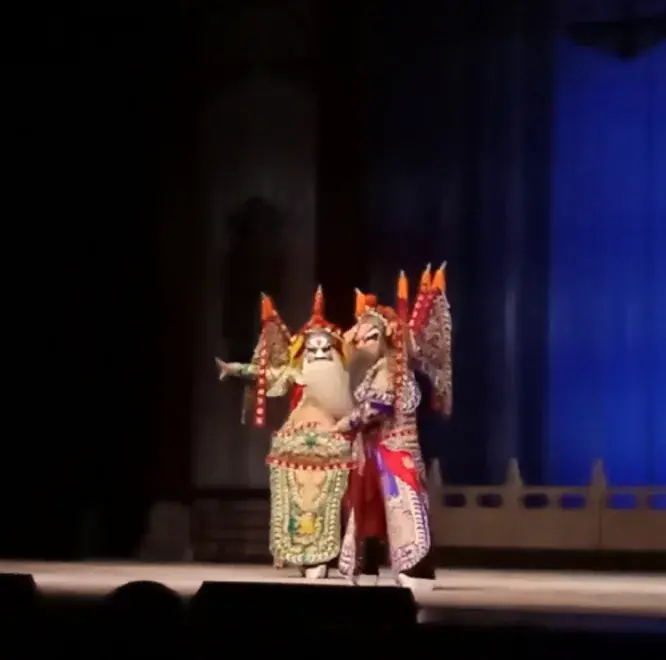
项伯
Xiang Bo (项伯, ?–192 BC), personal name Xiang Chan, courtesy name Bo, was a prominent general of Chu during the late Qin Dynasty and a founding imperial marquis of the Western Han Dynasty. Hailing from Xiaxiang (present-day Suqian, Jiangsu Province), he was a son of the famed Warring States general Xiang Yan and the paternal uncle (jifu) of Xiang Yu, the Hegemon-King of Western Chu. During the anti-Qin rebellions, Xiang Bo…
Xiang Bo (项伯, ?–192 BC), personal name Xiang Chan, courtesy name Bo, was a prominent general of Chu during the late Qin Dynasty and a founding imperial marquis of the Western Han Dynasty. Hailing from Xiaxiang (present-day Suqian, Jiangsu Province), he was a son of the famed Warring States general Xiang Yan and the paternal uncle (jifu) of Xiang Yu, the Hegemon-King of Western Chu. During the anti-Qin rebellions, Xiang Bo served as Left Director of Affairs (Zuoyin) under King Huai II of Chu (Xiong Xin), directing key military and state operations. Bound by a code of chivalry, Xiang Bo had been sheltered by Zhang Liang during early Qin rule after committing a killing. On the eve of the historic Feast at Hong Gate (206 BC), he rode through the night to warn Zhang Liang, subsequently performing a sword dance at the banquet to shield Liu Bang from assassination. Later, he persuaded Xiang Yu to grant Liu Bang the fertile territory of Hanzhong and intervened at Guangwu to save Liu Bang's father, the Grand Senior Lord (Liu Taigong), from being boiled alive. Following Western Chu's collapse, Xiang Bo surrendered to the Han Dynasty, was enfeoffed as the Marquis of Sheyang, and received the imperial surname Liu.
Joined his brother Xiang Liang in open revolt against Qin, enthroning King Huai II of Chu and assuming the post of Left Director of Affairs (Zuoyin).
Accompanied Xiang Yu on the northern expedition to relieve Julu, breaking the main Qin military formations and advancing west to the passes.
Rode through the night to alert Zhang Liang; drew his sword during the Hong Gate Banquet to personally shield Liu Bang from assassination.
Interceded with Xiang Yu on behalf of Liu Bang, successfully expanding Han territory to include thirty thousand households in Hanzhong.
Dispatched by Xiang Yu into Jiujiang after Ying Bu defected to Han, capturing the territory and executing Ying Bu's dependents.
Dissuaded Xiang Yu from executing Liu Bang's father during the standoff at Guangwu, preserving the captive's life.
Submitted to the Han Dynasty after Xiang Yu's suicide; granted the Marquisate of Sheyang and bestowed the imperial surname Liu.
Passed away peacefully in the Sheyang Marquisate; succeeded by his son Xiang Ju before the domain was abolished.
Xiang Bo was born into the hereditary aristocratic lineage of Xiaxiang. The family traced its descent from the Ji-surnamed State of Xiang founded in the Western Zhou, which adopted the state's name as their lineage surname following its annexation by Lu in the Spring and Autumn period. For generations, the family produced distinguished military leaders for the State of Chu, culminating in his father Xiang Yan, who died resisting the Qin conquest.
Following Qin's unification of the Chinese realm, members of eastern aristocratic houses were placed under close surveillance. During his youth in Xiapi, Xiang Bo engaged in chivalric vendettas and killed an adversary, incurring the death penalty under Qin statutes and triggering an imperial warrant for his arrest.
During this crisis, Zhang Liang, a noble descendant of the chancellor lineage of Han then living in hiding, extended assistance and concealed Xiang Bo in safe refuge until the danger passed. Xiang Bo remained profoundly indebted to Zhang Liang for saving his life, establishing an enduring personal bond that would decisively alter the course of Chinese history.
In 209 BC, Chen Sheng and Wu Guang ignited the anti-Qin uprisings at Dazexiang. In Wu County, Xiang Liang and Xiang Yu executed Yin Tong, the Governor of Kuaiji, raising eight thousand soldiers in open revolt. Xiang Bo joined the ranks of the family military command.
In 208 BC, following the advice of Fan Zeng, Xiang Liang sought out and enthroned Xiong Xin, grandson of King Huai of Chu, as King Huai II to rally southern popular support. Within the newly established Chu administration, Xiang Bo was appointed Left Director of Affairs (Zuoyin). Equivalent to a left chancellor, this high office oversaw military operations, administrative coordination, and strategic council.
Following Xiang Liang's defeat and death at Dingtao, Xiang Yu took direct command of the Chu forces. Xiang Bo accompanied the expedition northward, participating in the decisive victory at the Battle of Julu and the subsequent advance through Hangu Pass into the Guanzhong heartland.
In the tenth month of 206 BC, Liu Bang captured Xianyang and received the surrender of Ziying, the last ruler of Qin, subsequently posting troops to guard Hangu Pass. Enraged by this challenge, Xiang Yu breached the pass with four hundred thousand allied soldiers and encamped at Hong Gate, mere miles from Liu Bang's encampment at Bashang.
When Cao Wushang, a general under Liu Bang, sent secret messengers alleging that Liu Bang planned to declare himself King of Guanzhong, Xiang Yu prepared an overwhelming dawn assault. Deeply alarmed that his benefactor Zhang Liang would perish in the impending slaughter, Xiang Bo defied military protocol and rode alone through the night into the Han encampment to urge Zhang Liang to flee.
Zhang Liang refused to abandon his lord dishonorably and promptly brought Liu Bang to confer with Xiang Bo. Treating Xiang Bo with highest filial deference, Liu Bang offered wine, proposed a marital alliance between their children, and swore an oath that he had merely secured the public storehouses in anticipation of Xiang Yu's arrival. Persuaded by these assurances, Xiang Bo instructed Liu Bang to present himself at Hong Gate at dawn to apologize in person, before riding back into the Chu camp.
Returning before dawn, Xiang Bo persuaded Xiang Yu that attacking an ally who had cleared the capital path would be dishonorable. At the subsequent banquet, when Fan Zeng ordered Xiang Zhuang to perform a sword dance to assassinate Liu Bang, Xiang Bo drew his own sword to dance alongside, continuously blocking the assassin's strikes with his own body. Xiang Bo's physical intervention, coupled with Fan Kuai's dramatic entrance, allowed Liu Bang to escape safely to Bashang.
Following the pacification of Xianyang, Xiang Yu partitioned the realm among eighteen vassal kings, intending to isolate Liu Bang in the remote regions of Ba and Shu.
Recognizing the strategic necessity of a staging ground, Zhang Liang sent heavy gifts of gold and jade to Xiang Bo, entreating him to intercede with Xiang Yu. Xiang Bo successfully petitioned the Hegemon-King to grant Liu Bang the adjacent commandery of Hanzhong with its thirty thousand households. This crucial territorial concession provided the logistical foundation that enabled Liu Bang to march out and conquer the Three Qins months later.
In 205 BC, when Ying Bu, King of Jiujiang, defected to Liu Bang, Xiang Yu dispatched Xiang Bo at the head of elite troops into Jiujiang, seizing the capital and executing Ying Bu's dependents in retribution.
During the prolonged standoff between Chu and Han along the Guangwu ridges in 203 BC, Xiang Yu faced severe logistical shortages due to Han guerrilla raids. In desperation, Xiang Yu had Liu Bang's father, the Grand Senior Lord, placed on a high butcher's block before the lines, threatening to boil him alive if Liu Bang refused to surrender.
When Liu Bang responded nonchalantly that they were sworn brothers and asked for "a cup of soup" should his father be cooked, Xiang Yu ordered the executioners to carry out the sentence. Xiang Bo intervened decisively, warning Xiang Yu that those contending for the realm could not be swayed by domestic hostages, and that killing the captive would only deepen public enmity without achieving victory. Xiang Yu relented, preserving the old lord's life.
In 202 BC, Xiang Yu was decisively encircled at the Battle of Gaixia and took his own life on the banks of the Wu River, concluding the Chu-Han Contention.
Upon consolidating imperial authority, Liu Bang issued decrees pardoning the Chu loyalists and extended special benevolence to the Xiang lineage, remembering Xiang Bo's pivotal interventions at Hong Gate and Guangwu.
Xiang Bo submitted to Han authority and was enfeoffed as the Marquis of Sheyang with an estate of one thousand households, receiving the imperial surname Liu. In 192 BC, Xiang Bo passed away in his marquisate. His son Xiang Ju succeeded to the title, but the domain was subsequently abolished by the imperial court after legal infractions.
Xiang Bo's foremost historical legacy lies in his decisive interventions during the Feast at Hong Gate. Motivated by personal chivalric loyalty to Zhang Liang, his midnight ride provided the Han leadership with essential tactical intelligence to avert immediate destruction.
At the banquet itself, Xiang Bo's courageous physical intervention—drawing his sword to parry Xiang Zhuang's blade—directly neutralized Fan Zeng's assassination scheme, preserving Liu Bang's life and fundamentally altering the trajectory of Chinese dynastic history.
Xiang Bo's diplomatic influence continually shaped the Chu-Han balance of power. By persuading Xiang Yu to grant Hanzhong to Liu Bang, he provided the Han forces with the geographical corridor necessary for their subsequent conquest of the northern plains.
Furthermore, during the hostage crisis at Guangwu, his principled dissuasion averted the public execution of Liu Bang's father, preserving basic moral norms during an era of brutal political warfare and ensuring the survival of the imperial progenitor.
In the official Records of the Grand Historian (Shi Ji), Sima Qian chronicled Xiang Bo's dramatic actions at Hong Gate with acute detail, portraying him as a figure of chivalric devotion who prioritized personal honor over factional interest.
Later historians have offered contrasting evaluations of his legacy. The Song dynasty scholar Su Zhe noted that as Left Director of Affairs and an elder of the Xiang lineage, Xiang Bo's midnight visit directly undermined Chu's strategic victory, rendering him culpable for Western Chu's eventual downfall.
Conversely, the Ming dynasty thinker Li Zhi observed that Xiang Bo acted out of genuine chivalric gratitude toward Zhang Liang, yet his individual act of mercy inadvertently catalyzed the founding of the great Han Empire. In his Reading the Comprehensive Mirror for Aid in Governance, Wang Fuzhi analyzed Xiang Bo as an honest and guileless figure whose preference for personal ethics over realpolitik granted him nobility, while exposing him to the inevitable moral censure of subsequent genealogists.
FIGURES ASSOCIATED WITH THIS DYNASTY