Uprising in Pei
Joined Liu Bang's uprising in Pei County, serving as Minister Coachman directing chariots.
夏侯婴
Xiahou Ying (夏侯婴, ?–172 BCE), a native of Pei County who was historically venerated as "Lord Teng" (Teng Gong) owing to his early post as an official of Teng County, was an eminent founding father, general, and statesman of the Western Han dynasty. In his early years, Xiahou Ying served in Pei County as a stable supervisor and mail courier, displaying loyalty and charioteering skill while forming a close bond with Liu Bang,…
Xiahou Ying (夏侯婴, ?–172 BCE), a native of Pei County who was historically venerated as "Lord Teng" (Teng Gong) owing to his early post as an official of Teng County, was an eminent founding father, general, and statesman of the Western Han dynasty. In his early years, Xiahou Ying served in Pei County as a stable supervisor and mail courier, displaying loyalty and charioteering skill while forming a close bond with Liu Bang, then serving as Station Master of Sishui. When Liu Bang accidentally wounded Xiahou Ying in an altercation, Xiahou endured hundreds of days of beatings and incarceration under Qin interrogation without implicating Liu, establishing a lifelong bond of trust between the two men. Following the outbreak of rebellions against the Qin dynasty, Xiahou Ying joined Liu Bang's uprising in Pei County, serving as Minister Coachman (Taipu) and directing royal chariots and bodyguard units throughout his career. During the Chu-Han Contention, he performed monumental historical services: at the Feast at Hong Gate, he maintained the getaway carriage outside the banquet to secure Liu Bang's escape; following the rout at Pengcheng, when the panicked Liu Bang repeatedly kicked his young children—the future Emperor Hui and Princess Yuan of Lu—from the fleeing chariot, Xiahou Ying repeatedly leaped to the ground to retrieve them, shielding the royal heirs and rebuking Liu Bang; and on the execution ground, he intervened to save Han Xin from the blade, introducing him to Xiao He and recommending him for supreme military command. Following the founding of the Han empire, Xiahou was appointed Minister Coachman and enfeoffed as Marquis of Ruyin, participating in campaigns against rebellions by Zang Tu, Han Xin (King of Han), Chen Xi, and Ying Bu, and maneuvering Liu Bang's chariot out of the encirclement at Baideng. Serving across the reigns of Emperor Gaozu, Emperor Hui, Empress Dowager Lü, and Emperor Wen, he joined Zhou Bo and Chen Ping in crushing the Lü clan rebellion and welcoming Emperor Wen to the throne, anchoring the early Han imperial house until his death in 172 BCE, when he was posthumously honored as Marquis Zhao.
Joined Liu Bang's uprising in Pei County, serving as Minister Coachman directing chariots.
Breached the Wuguan Pass and Lantian, escorting Liu Bang to Xianyang where Ziying surrendered.
Maintained the getaway chariot outside the camp, ensuring Liu Bang's safe return to Ba-shang.
Intervened on the execution ground to spare Han Xin, recommending him to Xiao He for high command.
Protected young Liu Ying and Princess Yuan after they were kicked from the fleeing chariot during the rout.
Following the victory at Gaixia, Xiahou was appointed Minister Coachman and enfeoffed as Marquis of Ruyin.
Maneuvered the imperial chariot at a steady pace out of the Xiongnu trap at Mount Baideng.
Charged rebel lines in the campaign against Huainan King Ying Bu, securing major battlefield honors.
Collaborated with Zhou Bo and Chen Ping to purge the Lü clan and welcome King of Dai Liu Heng as Emperor Wen.
Passed away in Chang'an while serving as Minister Coachman, posthumously honored as Marquis Zhao.
Xiahou Ying was born during the late Warring States period in Pei County, situated in the ancient state of Chu (modern Pei County, Jiangsu). In his early adulthood, he served in the local government of Pei County as a stable supervisor and courier in charge of official horses and carriages, later transferring to serve as a clerk in Teng County, which led contemporaries and historians to refer to him respectfully as "Lord Teng" (Teng Gong). Honest, unpretentious, and skilled in evaluating steeds and maneuvering chariots, Xiahou Ying frequently passed the Sishui postal station while transporting official guests. On these occasions, he visited Station Master Liu Bang. The two men shared discussions on state affairs, forming an enduring friendship.
In his youth, Liu Bang possessed an exuberant temperament and accidentally wounded Xiahou Ying during a bout of horseplay. Under the Legalist statutes of the Qin dynasty, an official who wounded another faced severe corporal punishment and hard labor. When local magistrates arrested Xiahou Ying for interrogation, Xiahou insisted that he had injured himself during farm labor, absolving Liu Bang of responsibility. Skeptical of his testimony, the magistrates subjected Xiahou to harsh interrogation, keeping him imprisoned for hundreds of days and administering over a thousand lashes. Xiahou Ying endured the torture without implicating Liu Bang, enabling him to escape criminal prosecution. This steadfast loyalty forged an unbreakable bond of trust between them.
In autumn of the first year of the Second Emperor of Qin (209 BCE), Chen Sheng and Wu Guang launched the Dazexiang Uprising. Supported by Xiao He, Cao Shen, and local townspeople, Liu Bang executed the magistrate of Pei County and mobilized three thousand men, assuming the title of Duke of Pei. Xiahou Ying joined the rebellion with his family, appointed by Liu Bang as Minister Coachman (Taipu), responsible for commanding the army's chariot corps and personally driving Liu Bang's battle carriage.
Throughout the westward campaign against the Qin, Xiahou Ying remained at Liu Bang's side. He was both an expert driver and a courageous field commander. In battles at Huling, Xuexian, and Jiyang, Xiahou repeatedly drove his chariot into enemy formations, capturing commanders and infantry. In 207 BCE, Liu Bang's army broke through the passes at Wuguan and Lantian, advancing directly to Xianyang. Confronted with total defeat, the last Qin ruler, Ziying, draped himself in white silk, tied a cord around his neck, held the imperial jade seal, and knelt by the roadside to surrender before Xiahou Ying's chariot.
In 206 BCE, Xiang Yu divided the empire among eighteen feudal kings, enfeoffing Liu Bang as King of Han in remote Hanzhong. Disheartened by exile, many officers and soldiers deserted. During this journey, Han Xin, an aspiring military strategist who had previously deserted Xiang Yu's camp, arrived in Hanzhong, where he received an appointment as a low-level reception officer (Lian'ao). Soon afterward, Han Xin was implicated in a criminal case that resulted in capital sentences for thirteen fellow officers, who were beheaded one by one.
As the executioners prepared to behead the final prisoner, Han Xin, Xiahou Ying happened to ride past the execution ground. Gazing upward at Xiahou Ying, Han Xin cried out: "Does the King of Han not wish to conquer the realm? Why then execute brave men!" Struck by his bold demeanor, dignified bearing, and fearlessness in the face of death, Xiahou Ying shouted: "Stay your blade!" Taking Han Xin to his tent, Xiahou discussed grand strategy and battlefield logistics with him, discovering that Han possessed extraordinary military genius. Xiahou released Han Xin, recommended him to Liu Bang as Director of Agricultural Supplies, and introduced him to Chancellor Xiao He. Following their conversations, Xiao He pursued Han Xin when he briefly fled, convincing Liu Bang to appoint him supreme commander. Xiahou Ying's intervention on the execution ground preserved the strategist who would conquer the kingdoms and defeat Xiang Yu at Gaixia.
In the fourth lunar month of 205 BCE, Liu Bang led an army of 560,000 allied troops to seize the Western Chu capital of Pengcheng while Xiang Yu was campaigning in Qi. Xiang Yu rushed south with thirty thousand elite cavalry, routing the allied host along the Sui River, where over one hundred thousand soldiers drowned. Liu Bang fled westward in his chariot with Chu heavy cavalry in close pursuit.
During this retreat, Liu Bang was separated from his wife, Lady Lü, and his parents, but encountered his young son, Liu Ying (the future Emperor Hui), and his daughter, Princess Yuan of Lu. He took the children aboard the chariot. However, the horses grew exhausted from the long sprint, and the pursuit drew dangerously near. Overwhelmed by panic, Liu Bang concluded that the carriage was overloaded and repeatedly kicked both young children out of the moving chariot to lighten the weight and flee faster.
Driving the chariot, Xiahou Ying was horrified. Each time Liu Bang pushed the weeping children into the dirt, Xiahou stopped the horses, leaped down, scooped up the children, and placed them back inside the cabin. Enraged, Liu Bang drew his sword and threatened to decapitate Xiahou more than ten times. Shielding the children with his body, Xiahou rebuked Liu Bang: "Though we flee for our lives in extreme peril, how can you abandon your own flesh and blood! These children are your offspring; how can you cast them away to be butchered by Chu riders!" Holding both children with one arm while controlling the reins with the other, Xiahou urged the horses forward. Through his charioteering skill and composure, Xiahou outpaced the Chu pursuit, delivering Liu Bang, young Liu Ying, and Princess Yuan safely to the Han camp. This act of devotion saved the imperial heirs, ensuring the dynastic succession. Emperor Hui remained grateful to Xiahou Ying throughout his life, honoring him as a surrogate father.
In 202 BCE, following the decisive victory at Gaixia and the founding of the Han dynasty, Emperor Gaozu appointed Xiahou Ying as Minister Coachman (Taipu), enfeoffing him as Marquis of Ruyin with a tax estate of 6,900 households. Throughout Gaozu's reign, as regional kings Zang Tu, Han Xin (King of Han), Chen Xi, and Ying Bu revolted, Xiahou Ying accompanied the emperor on every campaign, directing the chariot divisions. In 200 BCE, when Emperor Gaozu was encircled for seven days on Mount Baideng by four hundred thousand Xiongnu cavalry under Modu Chanyu, Chen Ping devised a diplomatic solution. As the emperor prepared to gallop out in panic, Xiahou insisted on advancing at a steady, disciplined pace, deploying defensive bows to prevent ambushes and ensuring Gaozu's safe withdrawal.
Following Gaozu's death, Xiahou continued to serve as Minister Coachman under Emperor Hui and Empress Dowager Lü. Grateful for his conduct at Pengcheng, Emperor Hui granted Xiahou a residence directly opposite the Weiyang Palace gates, designated as "True Kin" (Zhenqin), to honor his status. In 180 BCE, following Empress Dowager Lü's death, the Lü clan conspired to seize the throne. Grand Commandant Zhou Bo and Chancellor Chen Ping launched a counter-coup to eliminate the usurpers. Xiahou Ying played a decisive role, personally leading troops to secure the palace gates, disarming the guards, removing Emperor Shao (Liu Hong) from the palace, and escorting King of Dai Liu Heng to Chang'an to ascend the throne as Emperor Wen.
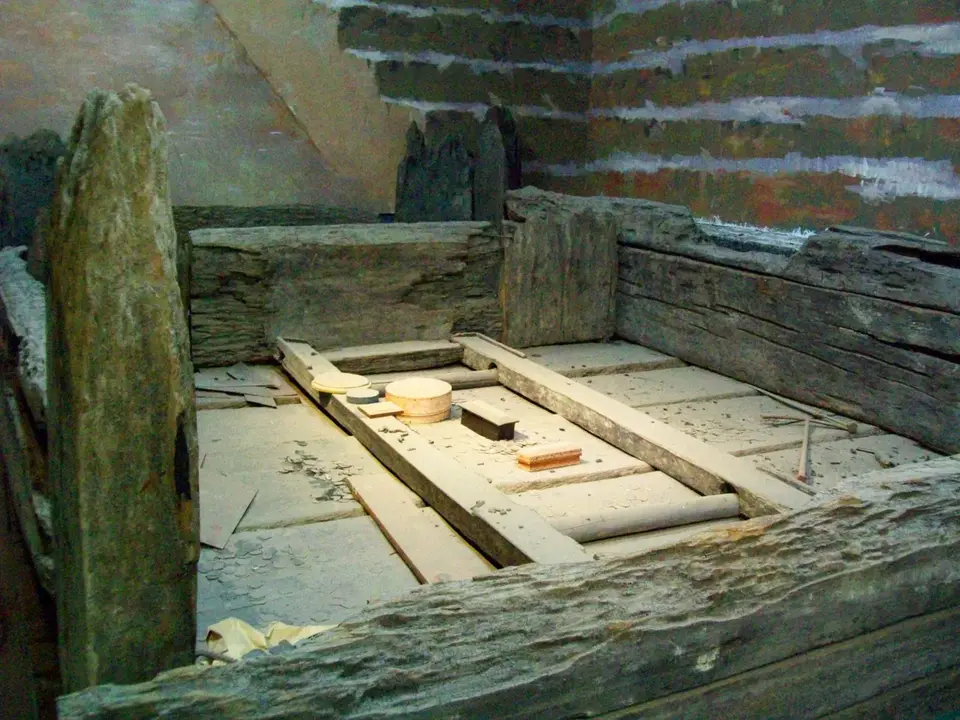
Emperor Wen revered this veteran statesman, retaining him as Minister Coachman. In 172 BCE, Xiahou Ying passed away peacefully in Chang'an, mourned by the emperor and court. He was posthumously honored as Marquis Zhao (also recorded as Marquis Wen) and interred in Pei County. Through his integrity and loyalty, Xiahou was one of the few founding fathers who lived out his years in honor while securing the stability of the realm.
Xiahou Ying stands as an enduring exemplar of fidelity in Chinese political history. Serving as a low-ranking postal official in Pei County, he demonstrated the principle that true friendship demands steadfast courage in the face of peril. Subjected to months of imprisonment and severe torture under Legalist officials, he refused to implicate Liu Bang.
This integrity formed the foundation of internal cohesion within Liu Bang's early circle. The knowledge that companions like Xiahou Ying would endure torture rather than betray their fellows gave the founding leadership resilience amidst the chaos of the late Qin collapse. Sima Qian praised Xiahou Ying's loyalty in the Shiji, identifying his moral character as an essential element of the Han founding.
At two critical junctures during the Chu-Han Contention, Xiahou Ying rendered decisive service to the dynasty. At the Feast at Hong Gate, he maintained the getaway carriage outside Xiang Yu's camp, coordinating with Fan Kuai and Zhang Liang to extract Liu Bang and foil the assassination plot of Fan Zeng.
Following the rout at Pengcheng, confronted with Chu cavalry, Xiahou displayed extraordinary composure and moral clarity. While Liu Bang kicked his own children from the fleeing chariot, Xiahou Ying repeatedly leaped to the ground to retrieve the terrified heirs, defying Liu Bang's threats of execution. This conduct preserved the life of the future Emperor Hui and maintained the legitimacy of the dynastic succession, shaping the course of the Wen-Jing Governance. In recognition of this rescue, Emperor Hui later bestowed the "True Kin" estate upon him, marking Xiahou's conduct as a celebrated act of devotion.
Xiahou Ying's most significant institutional contribution to the founding of the Han empire was his intervention on the execution ground to save and promote Han Xin. In Chinese military annals, Han Xin is recognized as a tactical genius, yet prior to his rise, he was bound for public execution.
Observing the execution, Xiahou Ying recognized Han Xin's military acumen from his bold demeanor and words, ordering the executioner to stay his blade. Xiahou interviewed Han Xin in his tent, released him, and recommended him to Liu Bang and Chancellor Xiao He. This intervention led directly to Xiao He's pursuit of Han Xin and his appointment as supreme general. Without Xiahou Ying's discernment on the execution ground, Han Xin would have perished in obscurity, and the campaigns that defeated Chu at Gaixia would never have materialized.
Xiahou Ying served as Minister Coachman throughout his career, occupying a vital military position in the founding administration. During the Han dynasty, when war chariots and cavalry remained central to combat logistics, the Minister Coachman directed imperial transport and commanded the royal cavalry guard, maintaining responsibility for the emperor's security.
From the march to Xianyang to the battles at Pengcheng and Gaixia, through the suppression of regional rebellions and the encirclement at Baideng, Liu Bang's chariot was consistently guided by Xiahou Ying. His skill at the reins and steady nerves provided security for the supreme command during moments of tactical retreat. Following Gaozu's death, Xiahou served four successive sovereigns—Emperor Gaozu, Emperor Hui, Empress Dowager Lü, and Emperor Wen—without engaging in factional intrigue. In the crisis following Empress Lü's death, his decisive intervention disarmed the palace guards and facilitated Emperor Wen's accession, anchoring the transition to the classical golden age of Han governance.
FIGURES ASSOCIATED WITH THIS DYNASTY