Biography
Imperial Kinsman and Vow of Vengeance
Xiahou Ba was born into the prominent Xiahou clan of Qiao County, Pei Commandery. His father, Xiahou Yuan, was Cao Cao's trusted commander who secured the Guanzhong and Longxi frontiers. Growing up in military camps, Xiahou Ba excelled in archery and tactical maneuvers, developing a bold and generous character.
In 219 CE, Liu Bei launched the Hanzhong Campaign, ambushing the Wei camp at Mount Dingjun, where veteran general Huang Zhong killed Xiahou Yuan. Devastated by his father's death, Xiahou Ba wept bitterly and gnashed his teeth whenever Shu Han was mentioned, vowing to dedicate his life to destroying the southern state and avenging his father.
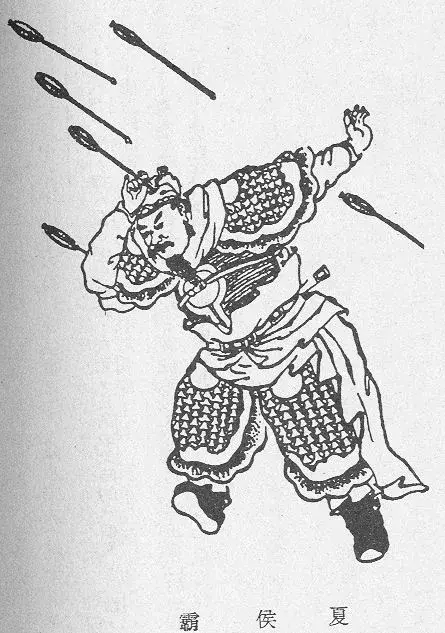
During the Huangchu era under Cao Pi, Xiahou Ba was appointed Major General (pian jiangjun). In 230 CE (the 4th Year of the Taihe Era), Grand Minister of War Cao Zhen launched a major invasion of Shu, and Xiahou Ba volunteered to lead the vanguard into Ziwu Valley. At the entrance to Mount Xingshi, local guides misled his unit into a narrow ravine, where Shu forces surrounded them from the heights. Mounting a damaged supply carriage, Xiahou Ba shot several enemy commanders with his bow, holding the perimeter for a day and night until relief forces arrived. Impressed by his bravery, Emperor Ming promoted him to Right General (you jiangjun) and Marquis of Bochang Pavilion.
Defense of Longxi and Mounting Enmity with Guo Huai
During the Zhengshi era under the co-regency of Cao Shuang, Xiahou Ba's cousin, Xiahou Xuan, was appointed General Who Conquers the West to command all forces in Yongzhou and Liangzhou, while Xiahou Ba served as Protector of the Army of Quelling Shu (taoshu hujun), commanding elite frontline troops across Guanlong. For over a decade, Xiahou Ba guarded the Longxi passes, taking care of his men and keeping vigilant scouts, repeatedly frustrating Jiang Wei's probing raids and winning the devotion of border garrisons.
However, friction grew between Xiahou Ba and Regional Inspector Guo Huai. While Guo Huai was cautious and conservative, Xiahou Ba favored aggressive mobility. The two clashed repeatedly during staff conferences, creating deep personal animosity.
The Coup at Gaoping Tombs and the Dangerous Flight
In early 249 CE (the 1st Month of the 10th Year of the Zhengshi Era), while Emperor Cao Fang and Cao Shuang were visiting the Gaoping Tombs, Grand Tutor Sima Yi launched a bloody coup in Luoyang, executing Cao Shuang's family and seizing absolute control of the state.
Following the coup, Sima Yi recalled Xiahou Xuan to the capital to serve as Grand Master of Ceremonies, replacing him with Xiahou Ba's bitter rival, Guo Huai. Xiahou Ba recognized that Sima Yi would show no mercy to the Cao-Xiahou clan, and that Guo Huai would use military law to eliminate him. Terrified of execution, Xiahou Ba took horse with a handful of retainers under cover of darkness, fleeing into the rugged Qinling mountains to seek asylum in Shu Han.
The ancient Yinping trail was overgrown with ravines and rotted plank bridges. Xiahou Ba lost his way in the mountains, his supplies ran out, and his horses plummeted into gorges. The sixty-year-old warrior wandered on foot with lacerated and bleeding feet until he collapsed in an isolated ravine. Informed of his flight, Chancellor Fei Yi and General Jiang Wei dispatched frontier patrols into the wilderness, locating the exhausted general and escorting him safely to Chengdu.
Imperial Favor and Service in Shu Han
Upon Xiahou Ba's arrival in Chengdu, Emperor Liu Shan came out of the palace to welcome him with honors reserved for imperial kinsmen. In 200 CE, Zhang Fei had married Xiahou Ba's cousin in Qiao County, and their daughter was now Empress Zhang. Smiling, Liu Shan pointed to his imperial heirs and said to Xiahou Ba: "These children are your nephews!"
Liu Shan appointed Xiahou Ba Senior General of Chariots and Cavalry (cheji jiangjun), placing him among the highest dignitaries of Shu Han, and granted him lavish estates. Moved by this generous reception, Xiahou Ba set aside his former vendetta and dedicated his strategic knowledge to the Shu Han state.
Familiar with the terrain and personalities of Cao Wei, Xiahou Ba was regularly consulted by Jiang Wei in planning northern expeditions. In 250 CE (the 13th Year of the Yanxi Era), Xiahou Ba accompanied Jiang Wei into Xiping. In 255 CE (the 18th Year of the Yanxi Era), Xiahou Ba joined Jiang Wei in a major expedition to the Tao River. Leading the vanguard cavalry, Xiahou Ba cut off the retreat of Wei Regional Inspector Wang Jing, inflicting a crushing defeat that cost the Wei army tens of thousands of casualties and trapping Wang Jing inside Didao.
Xiahou Ba lived out his remaining years in Chengdu, admired for his modesty and dedication, passing away of illness during the early Jingyao era. Historians of the Three Kingdoms have often marveled at Xiahou Ba's extraordinary life, transitioning from an imperial kinsman of Cao Wei into a celebrated Senior General of Chariots and Cavalry in Shu Han.
Narrow Escape at Xingshi and Penetrating Foresight
During Cao Zhen's expedition into Ziwu Valley in 230 CE, Xiahou Ba charged into the opening of the Xingshi gorge as vanguard cavalry. Shu Han forces barricaded the heights, mobilizing mountain dwellers to feign vast hosts and lure the Wei advance into an ambush. Xiahou Ba led several hundred infantry and cavalry into the narrow muddy valley, where Shu troops hurled arrows and boulders from above, killing most of the Han horses.
Facing mortal peril, Xiahou Ba displayed unflinching composure, personally stacking abatis and barricades around his perimeter. Climbing atop a shattered baggage wagon, he drew his bow and killed several advancing Shu officers. He rallied his troops: "Life and death are determined by destiny! A single step back means slaughter by the enemy; only by fighting to the last and awaiting reinforcements can we survive!" His men fought with reckless devotion, holding out for a full day and night until Cao Zhen's main reinforcements arrived to break the ambush.
In addition to his martial mastery, Xiahou Ba possessed sharp foresight regarding the political and military talent of Cao Wei. After arriving in Shu, when Grand General Jiang Wei asked him which Cao Wei commanders posed the greatest danger, Xiahou Ba calmly replied: "Sima Yi is skilled in warfare but aged, and his sons Sima Shi and Sima Zhao can do no more than preserve their family estate. Among the rising figures in Wei, only Zhong Hui is young, resolute, and profoundly strategic; if he ever commands the armies of Guanlong, he will be a grave threat to Shu Han!" Decades later, Zhong Hui's subjugation of Shu proved Xiahou Ba's judgment entirely prophetic, demonstrating his penetrating insight into human character.