Birth in Wucheng
Born into a scholar lineage in Shandong, mastering arithmetic, architecture, and logistics in his youth.
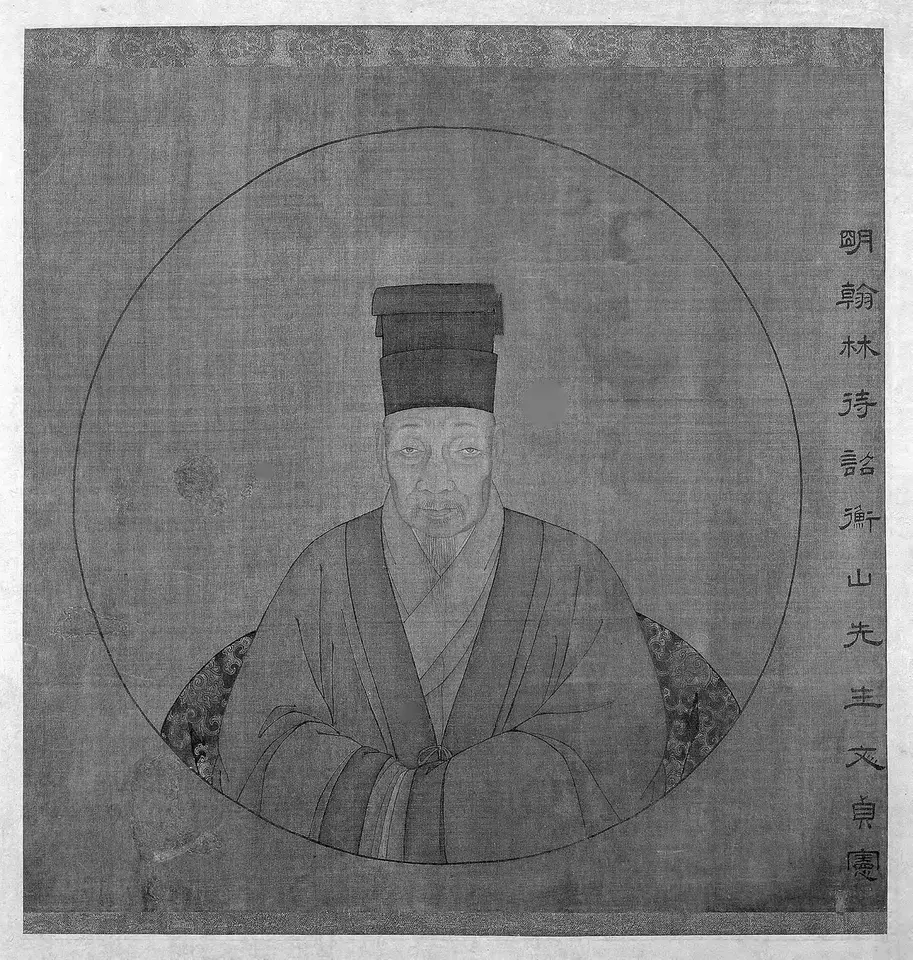
吴中
Wu Zhong (吴中, 1373–1442), courtesy name Sizheng (思正), posthumously titled Rongxiang (荣襄) and enfeoffed as Earl of Chiping, was a towering early Ming statesman, long-serving Minister of Works, and Junior Preceptor of the Heir Apparent, hailing from Wucheng, Dongchang Prefecture, Shandong. Renowned for mathematical calculation, structural logistics, and administrative agility, Wu served as Registrar in the Yingzhou frontier…
Wu Zhong (吴中, 1373–1442), courtesy name Sizheng (思正), posthumously titled Rongxiang (荣襄) and enfeoffed as Earl of Chiping, was a towering early Ming statesman, long-serving Minister of Works, and Junior Preceptor of the Heir Apparent, hailing from Wucheng, Dongchang Prefecture, Shandong. Renowned for mathematical calculation, structural logistics, and administrative agility, Wu served as Registrar in the Yingzhou frontier guard during the late Hongwu reign. When Zhu Di launched the Jingnan rebellion and captured Daning, Wu surrendered and was entrusted with field logistics and granary transport, earning imperial favor and rapid elevation to Right Censor-in-Chief following the Yongle Emperor's coronation. In 1407, Emperor Yongle initiated the construction of Beijing as the new imperial capital and appointed Wu Zhong as Minister of Works. Wu presided over the Ministry of Works for over twenty years, directing the design and construction of the Forbidden City, the Beijing city walls and gate complexes, as well as the imperial mausoleums: Changling for Yongle, Xianling for Hongxi, and Jingling for Xuande. He established nationwide supply chains to extract massive cedar timbers from Huguang and Sichuan, manufactured fine imperial bricks in Linqing, and coordinated hundreds of thousands of corvée laborers and military craftsmen. Imprisoned late in the Yongle reign for remonstrating against wasteful northern military expeditions, he was rehabilitated by the Hongxi Emperor and continued serving through the Xuande and Zhengtong eras, concluding the grand reconstruction of the Three Great Halls in 1441. Dying in office in 1442 at age seventy, Wu holds a foundational legacy in Chinese urban design and palace architecture.
Born into a scholar lineage in Shandong, mastering arithmetic, architecture, and logistics in his youth.
Served as Registrar in the Rear Tun Guard of Yingzhou; surrendered to Zhu Di at Daning, directing rear logistical transport.
Elevated to Director in the Court of Judicial Review, soon leapfrogging to Right Censor-in-Chief.
Appointed Minister of Works to lead the monumental construction of the Forbidden City and Changling.
Following the fire of the Three Great Halls, imprisoned alongside Xia Yuanji for opposing northern military expeditions.
Pardoned by Emperor Hongxi and restored to office; completed the construction of Xianling within one year.
Supervised the construction of Jingling for Emperor Xuande and reinforced Beijing's defensive barbicans.
Presided over the finished reconstruction of the Three Great Halls, elevated to Junior Preceptor of the Heir Apparent.
Passed away in his Beijing ministry quarters at age seventy; posthumously enfeoffed as Earl of Chiping and titled Rongxiang.
Wu Zhong was born in 1373 in Wucheng, Shandong. From his youth, he demonstrated exceptional intellectual agility, displaying extraordinary talent in mathematical reckoning, structural drafts, and material logistics. In the late Hongwu reign, he was appointed Registrar in the Rear Tun Guard of Yingzhou, stationed in the frontier command of Daning.
When Zhu Di launched the Jingnan rebellion in 1399, his forces executed a daring strike against Daning. Recognizing the political tide, Wu surrendered without resistance. Zhu Di interviewed Wu, recognized his logistical acumen, and appointed him to supervise rear grain procurement and military supplies. Over the three years of civil war, Wu ensured consistent frontline provisions, protected transport passes, and displayed outstanding administrative efficiency. Following Zhu Di's victory and ascension as the Yongle Emperor in 1402, Wu was appointed Director in the Court of Judicial Review and was promptly elevated to Right Censor-in-Chief, standing at the summit of the imperial surveillance apparatus.
In 1406, the Yongle Emperor decreed the transfer of the dynastic capital to Beijing, initiating the construction of an entirely new imperial palace city. In 1407, the emperor transferred Wu Zhong to head the Ministry of Works. Facing an engineering project unprecedented in scale, Wu established a unified nationwide system of material extraction, architectural drafting, and workforce deployment.
Wu spent more than two decades directing imperial construction. He sent procurement missions into the primeval mountain forests of Huguang, Sichuan, Guizhou, and Jiangxi to fell massive Phoebe zhennan trees, pioneering long-distance river rafting transport to float gigantic logs along the Yangtze and Grand Canal. He supervised specialized kilns in Linqing and Suzhou to fire high-grade floor bricks and golden glazed tiles. Furthermore, he directed over three hundred thousand skilled artisans and several hundred thousand military corvée workers. Under his meticulous supervision, the Three Great Halls of the outer court (Fengtian, Huagai, Jinshen), the inner palaces (Qianqing, Kunning), the nine perimeter gatehouses and defensive towers of Beijing, as well as the Yongle Emperor's monumental Changling mausoleum in Changping, were completed with architectural precision.
In 1409, Wu accompanied the Yongle Emperor during his northern inspection tour. In subsequent years, as the emperor launched successive northern expeditions against the Mongols, Wu repeatedly coordinated military provisioning.
On New Year's Day of 1421, the new Beijing palaces were officially dedicated, and the capital was formally moved. However, in April of that same year, lightning struck the Three Great Halls, causing a catastrophic fire that leveled the principal structures within hours. The emperor, deeply shaken, solicited frank memorials. With the imperial treasury depleted by construction costs and continuous warfare, the emperor proposed yet another massive northern expedition. Minister of Revenue Xia Yuanji, Minister of War Fang Bin, and Wu Zhong remonstrated jointly, warning that the state was exhausted and urging an end to military excursions. Infuriated, the emperor forced Fang Bin to suicide and threw Xia Yuanji and Wu Zhong into the death cells of the imperial prison, confiscating their estates.
In 1424, the Yongle Emperor died during his fifth campaign. Upon ascending the throne, the Hongxi Emperor immediately ordered the release of Xia Yuanji and Wu Zhong, restoring them to full ministerial rank. The emperor granted Wu the concurrent title of Junior Guardian of the Heir Apparent. Ten months later, the Hongxi Emperor passed away, and Wu was tasked with building the imperial Xianling tomb. Faithfully adhering to the late ruler's testament mandating frugality, Wu simplified decorative masonry, completing the complex in less than one year.
During the Xuande reign, Wu accompanied the Xuande Emperor to suppress the rebellion of Zhu Gaoxu in Le'an. Although impeached in 1428 for gifting surplus palace lumber and bricks to Eunuch Yang Qing and temporarily placed in detention, his irreplaceable technical skill ensured his prompt return to the Ministry of Works. In 1435, upon the death of the Xuande Emperor, Wu supervised the construction of Jingling, while concurrently adding stone-faced barbicans, arrow towers, and corner watchtowers to the Beijing city walls.
Under the young Emperor Zhengtong and the regency of Empress Dowager Zhang, Wu continued to direct public works. In 1441, the massive reconstruction of the fire-damaged Three Great Halls was triumphantly completed. Emperor Zhengtong rewarded Wu with the title of Junior Preceptor of the Heir Apparent. In May 1442, worn down by decades of immense physical and mental exertion, Wu Zhong passed away in his ministerial chambers at the age of seventy. The emperor suspended court audience for a day, conferring upon him the posthumous title of Earl of Chiping and the posthumous name "Rongxiang."
Throughout the Yongle reign, Wu Zhong directed the Ministry of Works for over two decades, wielding supreme executive responsibility for the construction of Beijing and the Forbidden City palace complex. He mobilized hundreds of thousands of artisans and laborers, organized nationwide timber and stone logistical networks spanning the Yangtze and northern waterways, and established the foundational scale of the Three Great Halls, inner palaces, and city fortifications that defined Beijing's architectural blueprint for over six centuries.
Serving across four imperial reigns, Wu Zhong utilized unmatched structural engineering mastery to oversee the design and construction of three major Ming imperial tombs: Changling (for the Yongle Emperor), Xianling (for the Hongxi Emperor), and Jingling (for the Xuande Emperor). From the monumental nanmu pillars of Changling's Hall of Eminent Favor to the frugal elegance of Xianling, Wu consistently met rigorous imperial deadlines while establishing standard institutional models for Ming imperial funerary architecture.
In 1421, following the disastrous fire that destroyed the newly completed Three Great Halls, Wu Zhong demonstrated rare ministerial integrity. Convinced that repeated northern military campaigns and ceaseless construction had pushed the civilian economy to catastrophic exhaustion, he united with Revenue Minister Xia Yuanji to present blunt memorials urging an immediate halt to northern expeditions to preserve agrarian livelihoods, maintaining his steadfast dedication even when imprisoned and having his estate confiscated.
Wu Zhong managed the Ministry of Works for over twenty years, establishing the palace and mausoleum architecture of early Beijing. While celebrated for extraordinary engineering intellect, he was criticized by contemporaries for harsh labor impositions and luxurious lifestyle.
"Wu Zhong was diligent, clever, and exceedingly skilled in calculations. Serving in the Ministry of Works for over twenty years, the palaces of Beijing and the Chang, Xian, and Jing mausoleums were all built under his direction. His responsibilities were staggering, yet his planning was impeccably ordered. However, he showed little compassion for laboring artisans and indulged in sensual luxuries, earning the disdain of moralists." — History of Ming (Ming Shi), Scroll 151, "Biographies"
"Minister Wu measured the heavens and charted the earth, crafting with his own hands the majestic palaces of Beijing and the imperial tombs of successive emperors. Though contemporary critics censured his personal indulgences, in technical vision and monumental organization, the Ming Dynasty produced no equal among its engineers." — Tan Qian, Guoque
FIGURES ASSOCIATED WITH THIS DYNASTY