Birth in Hubei
Born in Wujiatai, Yunmeng County, De'an Prefecture, Hubei Province, into a modest scholarly family.
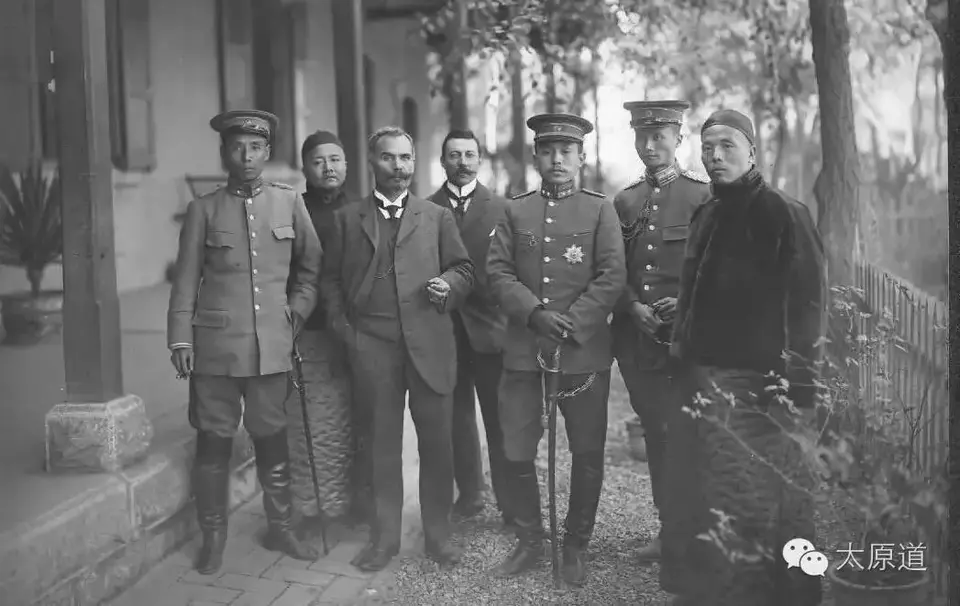
吴禄贞
Wu Luzhen (吴禄贞, 1880–1911), courtesy name Shouqing, was a native of Yunmeng County in De'an Prefecture, Hubei Province (present-day Xiaogan City). He was a celebrated patriotic military strategist, early pioneer of the 1911 Revolution, and national martyr. Alongside Lan Tianwei and Zhang Shaoceng, he was celebrated in military circles as one of the preeminent "Three Talents of the Officers Academy." Wu enrolled in the Hubei…
Wu Luzhen (吴禄贞, 1880–1911), courtesy name Shouqing, was a native of Yunmeng County in De'an Prefecture, Hubei Province (present-day Xiaogan City). He was a celebrated patriotic military strategist, early pioneer of the 1911 Revolution, and national martyr. Alongside Lan Tianwei and Zhang Shaoceng, he was celebrated in military circles as one of the preeminent "Three Talents of the Officers Academy." Wu enrolled in the Hubei Martial Academy in his youth before being dispatched on imperial scholarship to the Imperial Japanese Army Academy, graduating in the first class of the cavalry section. In Japan, he embraced Sun Yat-sen's democratic revolutionary doctrines, joining the Xingzhonghui and co-founding the patriotic Lizhihui. In 1900 (the twenty-sixth year of the Guangxu reign), he secretly returned to China to take part in Tang Caichang's Independence Army Uprising as commander of the Datong vanguard. Following the uprising's collapse, he returned to Tokyo to complete his studies with honors, returning to China in 1902 to teach at military academies in Wuhan, where he organized revolutionary study cells and coordinated the Huaxinghui uprising in Changsha. In 1907 (the thirty-third year of the Guangxu reign), Wu accompanied Viceroy Xu Shichang to Manchuria as Military Commissioner for Yanji Border Affairs. In the diplomatic crisis over the disputed "Gando / Jiandao" region, Wu conducted rigorous field surveys, authored the authoritative Survey Report on Yanji Border Affairs, and successfully thwarted Japanese expansionist plots, preserving China's sovereign territory. In 1910 (the second year of the Xuantong reign), Wu was elevated to Commander of the Sixth Division of the New Army. When the Wuchang Uprising erupted in October 1911, Wu was appointed Imperial Pacification Commissioner. He seized the opportunity to launch the dramatic "Luanzhou Military Parley" alongside Zhang Shaoceng, halting northern Qing troops, and intercepted arms shipments bound for Wuhan at Shijiazhuang. Meeting with Shanxi Military Governor Yan Xishan, he forged the "Yan-Jin Allied Army" and prepared a lightning march on Beijing to overthrow the Qing throne. On November 7, 1911, Wu was assassinated at Shijiazhuang railway station by conspirators hired by Yuan Shikai and Qing reactionaries, martyred at thirty-one. Following the founding of the Republic of China, Sun Yat-sen issued the premier official condolence order, praising Wu as the "Hero of the Epoch" and posthumously awarding him the rank of Full General of the Army.
Born in Wujiatai, Yunmeng County, De'an Prefecture, Hubei Province, into a modest scholarly family.
Admitted with top honors into the first class of the Hubei Martial Academy founded by Zhang Zhidong.
Selected for government-funded study at the Imperial Japanese Army Academy, studying cavalry and joining the Xingzhonghui.
Secretly returned to China to lead vanguard troops in Tang Caichang's Independence Army uprising, escaping back to Japan after its defeat.
Graduated at the head of his class and returned to Wuhan, serving as military instructor and secretly organizing revolutionary cells in the New Army.
Traveled to Changsha to help Huang Xing and Song Jiaoren found the Huaxinghui, returning to Hubei after the planned uprising was uncovered.
Accompanied Viceroy Xu Shichang to Manchuria as border commissioner, rigorously resisting Japanese encroachment in Yanji.
Published comprehensive survey records and negotiated the Gando Boundary Convention, forcing Japan to recognize Chinese sovereignty.
Inspected military developments in France and Germany before being promoted to Commander of the New Army Sixth Division based in Baoding.
Dispatched as Pacification Commissioner following the Wuchang Uprising; organized the Luanzhou Military Parley to paralyze Qing imperial mobilization.
Met with Shanxi Governor Yan Xishan at Niangziguan Pass, forming the Yan-Jin Allied Army to lead a direct assault on Beijing.
Assassinated in his military command train at Shijiazhuang by conspirators hired by Yuan Shikai and imperial reactionaries.
Wu Luzhen was born on March 6, 1880 (the twenty-sixth day of the first month in the sixth year of the Guangxu reign) in Wujiatai, Yunmeng County, Hubei Province, into a modest scholar-gentry household. His father, Wu Jintang, was a learned scholar who educated Wu in the classical canons and traditional military texts. Following China's humiliating defeat in the First Sino-Japanese War and the threat of partition, the fifteen-year-old Wu abandoned classical civil examinations, resolved to master modern military science to defend the fatherland.
In 1897 (the twenty-third year of the Guangxu reign), Huguang Viceroy Zhang Zhidong established the Hubei Martial Academy in Wuchang to train an elite officer corps in modern Western warfare. Wu passed the entrance examinations with premier marks. In academy halls, he studied surveying, fortification, field tactics, and applied military sciences, earning the admiration of Viceroy Zhang and Academy Director Qian Xun.
In 1898 (the twenty-fourth year of the Guangxu reign), his academic performance won him a government scholarship to study at the Imperial Japanese Army Academy in Tokyo as a member of its first class in the cavalry branch. Alongside Chinese classmates Zhang Shaoceng and Lan Tianwei, Wu excelled in equestrian maneuvers and field strategy, and the three were acclaimed in both Chinese and Japanese circles as the "Three Talents of the Officers Academy." In Tokyo, Wu engaged with democratic political theory, realizing that imperial absolutism was the primary root of Chinese vulnerability. He visited Sun Yat-sen's residence in Yokohama, secretly joined the Xingzhonghui, and co-founded the student organization Lizhihui, emerging as a leading revolutionary voice among Chinese cadets.
In 1900 (the twenty-sixth year of the Guangxu reign), the Eight-Nation Alliance invaded Beijing, sending Empress Dowager Cixi and the Guangxu Emperor fleeing into western exile. Reformer Tang Caichang rallied members of the Gelaohui secret societies and overseas Chinese to organize the clandestine Independence Army in Hankou. Fired by patriotic indignation, Wu slipped away from Tokyo, risking execution to take command of the Datong vanguard forces in Anhui.
The Independence Army uprising collapsed prematurely due to delayed financial transfers and betrayed intelligence in Hunan. While Tang Caichang and over twenty leaders were captured and martyred in Hankou, Wu fought through heavy engagements at Datong before his ammunition was exhausted. Aided by loyal comrades, he evaded Qing patrols and escaped back across the sea to Japan. Demonstrating steadfast resilience, he completed his curriculum and graduated with honors from the military academy in 1902.
Upon returning to Wuchang, Wu was appointed by Zhang Zhidong as head instructor at the Hubei Martial Academy and Military Preparatory Academy. Utilizing his legitimate pedagogical post, he identified promising young cadets and established the Wuchang Scientific Study Institute, ostensibly an educational society for modern science but secretly a node for revolutionary agitation. In 1904, when Huang Xing and Song Jiaoren prepared the Huaxinghui uprising in Changsha, Wu traveled to Hunan to participate in founding deliberations. When the plot was exposed, Wu skillfully averted suspicion, preserving crucial underground cadres within the Hubei New Army.
In 1907 (the thirty-third year of the Guangxu reign), the Qing court reorganized Manchuria into three provinces, appointing Xu Shichang as the first Viceroy of the Three Northeast Provinces. Cognizant of Wu's strategic intellect and fluency in Japanese, Xu requested Wu's transfer to Fengtian as Chief Military Advisor. At that time, imperial Japan utilized the pretext of protecting Korean migrants to dispatch armed police into Yanji, establishing illegal administrative outposts in a bid to annex expansive territories north of the Changbai Mountains under the manufactured designation of "Gando."
Confronting Japanese expansionism, Wu was appointed Imperial Border Commissioner for Yanji. Arriving at the frozen frontier, Wu braved subzero blizzards to lead surveying teams across hundreds of miles along the Tumen River and rugged mountain ranges. He meticulously examined ancient boundary steles and historical archives, compiling the voluminous Survey Report on Yanji Border Affairs accompanied by precise military cartography. This masterwork demonstrated through unassailable documentation that Yanji had been Chinese territory since ancient times.
Alongside cartographic scholarship, Wu reinforced the frontier with modern defense works. He established military garrisons at Ruzijie, erected the Frontier Watch Tower, laid telephone lines, and unified regional civil administration under military discipline. In face-to-face negotiations with Japanese commander Saito Sujiro, Wu stood firm on every inch of sovereign ground. Based on Wu's evidence, the Qing court negotiated the 1909 Gando Convention, forcing Japan to acknowledge full Chinese sovereignty over Yanji. Grateful local residents erected a monumental memorial stele honoring Wu's border stewardship.
In 1910 (the second year of the Xuantong reign), Wu was sent by the Ministry of War to observe autumnal army maneuvers in France and Germany, studying Western artillery and mobile staff operations. Following his return in late winter, the imperial court promoted Wu to Commander of the Sixth Division of the New Army based in Baoding, Zhili.
The Sixth Division was an elite strike force of the northern Beiyang army, originally organized by Yuan Shikai and staffed predominantly by Beiyang loyalists. Wu understood that Zhili guarded the southern threshold of the capital and that whoever commanded the Sixth Division controlled the gateway to the throne. He introduced thorough training reforms, enforced discipline, and promoted capable, patriotic officers while sidelining corrupt reactionaries.
Concurrently, Wu gathered fellow returned Japanese cadets and revolutionary sympathizers into his headquarters staff, including He Sui, Zhou Weizhen, and Zhang Shiying. He educated junior officers in democratic principles, transforming an imperial guard division into a covert revolutionary force poised at the heart of the empire.
On October 10, 1911 (the nineteenth day of the eighth month in the third year of the Xuantong reign), the Wuchang Uprising shook the empire. Terrified by the revolt, the Qing court ordered Army Minister Yinchang to lead northern divisions south. Because of his known reformist sympathies, Wu was distrusted by Manchu princes and initially detained in the capital area. However, when mutinous stirrings broke out among the Twentieth Division at Luanzhou, the court hurriedly dispatched Wu as Imperial Pacification Commissioner to quell the unrest.
Wu seized the opportunity. Upon arriving at Luanzhou, he conferred with his fellow "Three Talents" comrades, Division Commander Zhang Shaoceng and Brigade Commander Lan Tianwei. Rather than suppressing the troops, Wu orchestrated the famed "Luanzhou Military Parley," issuing an ultimatum of twelve constitutional demands that demanded an immediate parliament, imperial pardon for revolutionaries, and the abolition of aristocratic cabinet privileges. The parley threw the imperial court into panic, causing noble families to seek shelter in the foreign legations.
To divide the northern commanders, the court appointed Wu as acting Governor of Shanxi, ordering him to march his troops westward to suppress the newly declared revolutionary government in Taiyuan. Wu established his headquarters at Shijiazhuang, the strategic rail junction connecting the Beijing-Hankou and Zhengtai lines, where he impounded southward-bound imperial munitions. On November 4, Wu traveled to Niangziguan Pass to meet Shanxi Military Governor Yan Xishan. The two leaders established the "Yan-Jin Allied Army," naming Wu as Commander-in-Chief to launch a direct assault on Beijing.
The formation of the Yan-Jin Allied Army struck terror into Yuan Shikai and the imperial court. By controlling Shijiazhuang, Wu severed communications between Beijing and Wuhan; a northern march would extinguish the Qing dynasty and dismantle Yuan Shikai's ambitions of leveraging the crisis to seize supreme power. Yuan Shikai, working in collusion with Manchu hardliners like Yinchang and Liangbi, orchestrated Wu's assassination.
Conspirators bribed Wu's personal guard commander, Zhou Fulin, with twenty thousand silver taels and arranged for an assassin, Ma Huanzhang, to infiltrate headquarters. In the early morning hours of November 7, 1911, while Wu was drafting operational orders in his train car at Shijiazhuang railway station, assassins burst into the compartment and opened fire with automatic pistols. Struck by multiple rounds, Wu died heroically alongside staff officers Zhou Weizhen and Zhang Shiying. The assassins severed his head to claim their reward in Beijing, ending his life at thirty-one.
News of Wu's assassination sent shockwaves of grief across revolutionary China. Staff officer He Sui risked his life to recover Wu's body, escorting it to Niangziguan for burial. Following the establishment of the provisional government in Nanjing, President Sun Yat-sen issued the nation's premier condolence order, praising Wu as the "Hero of the Epoch" and posthumously conferring the rank of Full General. Memorial services were held in Shanghai, Taiyuan, Wuhan, and Yanji, and in 1913, his remains were formally reinterred at Shijiazhuang.
Wu Luzhen's most profound strategic contribution to the 1911 Revolution was pioneering the infiltration and conversion of imperial standing armies into revolutionary instruments. Recognizing the futility of poorly armed secret society assaults against fortified positions, Wu insisted that revolution could only triumph by taking control of modern regular forces from within.
Upon his return from Japan in 1902, Wu utilized his pedagogical post at the Hubei Martial Academy to recruit and educate talented cadets in republican ideals. Many prominent leaders of the Wuchang Uprising, including Wu Zhaolin, Xiong Bingkun, and Cai Jimin, were either his direct students or inspired by his teachings.
To institutionalize revolutionary recruitment, Wu sponsored the creation of the Wuchang Scientific Study Institute, the first underground revolutionary society in late imperial China comprised primarily of rank-and-file soldiers. Through this network, republican ideology spread across the Hubei New Army, making it the cradle of the 1911 Revolution.
Wu Luzhen's resolution of the "Gando Crisis" in Manchuria represents a landmark victory in early modern Chinese diplomatic history. In 1907, Japanese authorities sent military detachments across the Tumen River into Yanji, establishing administrative posts and asserting that the region was historical Korean territory.
Appointed Border Commissioner, Wu undertook an arduous winter survey across hundreds of miles of frozen terrain along the Tumen River. He examined boundary markers dating back to the Ming and Qing dynasties and compiled the definitive Survey Report on Yanji Border Affairs, presenting incontrovertible historical documentation that Yanji had been integral Chinese territory since the Tang dynasty.
At the negotiating table, Wu rebutted Japanese envoys with uncompromising legal clarity. On the frontier, he organized regional defenses, constructed watchtowers, and posted artillery units, warning Japanese commanders that any cross-border firing would be met with armed retaliation. Thwarted militarily and diplomatically, Japan signed the 1909 Gando Convention, acknowledging complete Chinese jurisdiction. Local residents honored Wu's legacy with an enduring commemorative stele.
Following the outbreak of the Wuchang Uprising in October 1911, the Qing court mobilized northern Beiyang divisions to crush the southern revolution. Sent to inspect troops in eastern Zhili, Wu collaborated with his academy comrades Zhang Shaoceng and Lan Tianwei to launch the historic "Luanzhou Military Parley."
Recognizing that northern forces were the primary shield of the imperial court, Wu and his allies issued a twelve-point constitutional ultimatum, demanding an immediate elected assembly, a constitutional monarchy, the removal of Manchu nobility from cabinet posts, and an imperial amnesty for revolutionaries, refusing to march south until these conditions were met.
The Luanzhou ultimatum paralyzed imperial strategy, forcing Empress Dowager Longyu and Regent Zaifeng to abolish the aristocratic cabinet. By neutralizing the Qing army's northern offensive, Wu provided the nascent revolutionary government in Wuchang with essential strategic breathing room.
When the court appointed Wu acting Governor of Shanxi to separate him from northern comrades, Wu established his headquarters at Shijiazhuang, the critical railway junction connecting Beijing with central China.
Controlling the junction, Wu placed all southward rail traffic under strict martial inspection. Over several days, his Sixth Division detachments impounded trainloads of military hardware dispatched to Beiyang forces at Hankou, capturing Krupp artillery pieces, Maxim machine guns, and hundreds of thousands of rounds of ammunition.
By severing the railway pipeline, Wu deprived imperial forces in Hubei of vital logistical support and immobilized northern troop deployments, shifting the strategic military initiative toward the republican cause.
Wu's boldest operational vision was the creation of the Yan-Jin Allied Army to execute a rapid march on Beijing and topple the Qing dynasty. Refusing imperial honors, Wu met with Shanxi Military Governor Yan Xishan at Niangziguan Pass on November 4, 1911.
During their conference, Wu articulated a plan for joint northern forces to utilize railway lines to bypass fortifications, assault Baoding, and capture Beijing before imperial defenses could consolidate. The two commanders took a solemn oath of brotherhood, establishing the Yan-Jin Allied Army with Wu as Commander-in-Chief and Yan as Deputy Commander.
The allied army prepared to launch its general offensive on November 8. Had this operation proceeded, republican forces would have captured the imperial capital in late 1911, forestalling the prolonged warlord fragmentation and autocratic usurpation that followed.
Wu's imminent advance on Beijing made him the primary target of reactionary forces. Historical records confirm that his assassination was orchestrated jointly by Yuan Shikai, who sought to dominate the post-imperial settlement, and Manchu hardliners like Yinchang, Zaitao, and Liangbi.
Yuan recognized that if Wu overthrew the Qing dynasty, supreme national authority would fall to the republican revolutionaries, destroying his scheme to broker power between north and south. Imperial hardliners feared complete extermination if Wu's army entered Beijing. Conspirators bribed Wu's bodyguard, Zhou Fulin, to carry out the murder.
Wu's assassination was the most tragic setback of the 1911 Revolution in northern China. His death fractured the northern revolutionary command, dissolved the Yan-Jin Allied Army, and paved the way for Yuan Shikai's rise to autocratic power. Nevertheless, Wu's martyrdom at thirty-one consecrated his legacy as an enduring symbol of patriotic devotion in modern Chinese history.
Sun Yat-sen recorded in the Provisional Presidential Condolence Order: "When righteous armies arose, General Wu, alongside Zhou and Zhang, secretly planned decisive actions, cutting off northern reinforcements to open the way for the northern expedition. Just as the enterprise ripened, he was struck down by assassin blades, suffering tragic dismemberment. An epochal hero has fallen, leaving an eternal sorrow for all generations!"
Zhang Taiyan wrote in the Epitaph for Wu Luzhen: "Shouqing was magnanimous, deeply versed in military science, and possessed an expansive strategic vision. In defending Yanji, his merit preserved the realm; in raising troops at Shijiazhuang, his righteousness reached the heavens. A peerless patriot whose name is carved into national annals!"
Historian Jin Chongji observed in Draft History of the 1911 Revolution: "At the pivotal hour of the 1911 Revolution, Wu Luzhen commanded the vital transportation hub of Shijiazhuang, severed imperial supply routes, and formed the Yan-Jin Allied Army with Yan Xishan. His strategic foresight and courage surpassed his contemporaries. His untimely assassination was not only a grave setback for northern revolution, but an irreparable loss for modern Chinese constitutional democracy."
FIGURES ASSOCIATED WITH THIS DYNASTY