Birth in the Capital
Born on May 29 at his grandfather's official residence outside Xuanwumen, Beijing, soon returning with his parents to the family estate in Foshan, Guangdong.
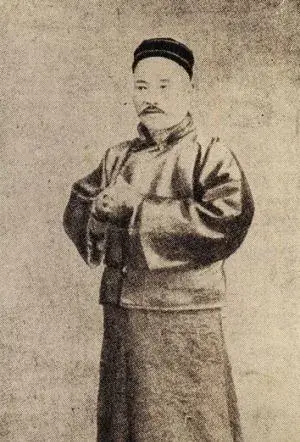
吴趼人
Wu Jianren (1866–1910), originally named Baozhen and also known as Woyao, was an eminent late Qing dynasty novelist, editor, and professional journalist. Widely recognized by his pen name Wofoshanren (The Buddha-Mountaineer) and alternate sobriquets including Yeshishi (Unofficial Historian), he was born in Beijing to a prominent family native to Foshan Town, Nanhai County, Guangdong Province. He stands as one of the four…
Wu Jianren (1866–1910), originally named Baozhen and also known as Woyao, was an eminent late Qing dynasty novelist, editor, and professional journalist. Widely recognized by his pen name Wofoshanren (The Buddha-Mountaineer) and alternate sobriquets including Yeshishi (Unofficial Historian), he was born in Beijing to a prominent family native to Foshan Town, Nanhai County, Guangdong Province. He stands as one of the four foremost representative authors of late Qing castigatory fiction. Having lost his father in his youth, Wu faced family impoverishment and traveled alone to Shanghai at age eighteen to make a living. He initially worked as a copyist and mechanical draftsman at the Jiangnan Arsenal. Following the First Sino-Japanese War, he resigned from official service to dedicate himself to modern journalism, serving as chief editor of Xiaoxian Bao (Leisure Journal), founding Caifeng Bao, and acting as chief contributor for Yueyue Xiaoshuo (All-Story Monthly). An advocate of political reform and social enlightenment, he believed popular vernacular literature was a potent instrument to awaken the populace, critique institutional corruption, and promote national salvation through industry. Producing over thirty novels and novellas, he became the most prolific fiction writer of the late Qing, celebrated across literary circles as the "Giant of Chinese Fiction." His magnum opus, Bizarre Happenings Eyewitnessed over Two Decades (Ershi Nian Mudu Zhi Guai Xianzhuang), pioneered first-person narrative technique in full-length Chinese novels, earning acclaim alongside The Bureaucrats, The Travels of Lao Can, and A Flower in a Sinful Sea. His detective courtroom novel The Strange Case of Nine Murders was lauded by modern scholar Hu Shi as a masterpiece of structural precision. His political science-fiction novel The New Story of the Stone sent Jia Baoyu into a futuristic society, portraying visionary technological salvation, while Painful History championed national integrity during regime transition. Renowned for his uncompromising candor, Wu refused Qing civil service nominations and lived solely by his pen, passing away in poverty in Shanghai in 1910 with only four silver dimes remaining in his pocket.
Born on May 29 at his grandfather's official residence outside Xuanwumen, Beijing, soon returning with his parents to the family estate in Foshan, Guangdong.
Entered Foshan Academy, studying classical literature and philosophy while developing a profound aversion to eight-legged civil service examination essays.
His father died in office as a junior magistrate in Ningbo; clan members usurped the inheritance, plunging his household into poverty.
Traveled alone to Shanghai at age eighteen, initially working in a teahouse before securing employment as a copyist and draftsman at the Jiangnan Arsenal.
Applied mechanical drawing skills to build a functional two-foot miniature steam-powered boat that successfully navigated the Huangpu River.
Resigned from the Jiangnan Arsenal to become chief editor of Xiaoxian Bao, inaugurating his professional career in modern journalism.
Established Caifeng Bao, pioneering the commercial practice of inserting lithographic art supplements to critique urban vice and administrative decay.
Began serializing Bizarre Happenings Eyewitnessed over Two Decades in Liang Qichao's journal New Fiction, gaining nationwide renown while declining imperial appointment.
Penned the full-length novel The New Story of the Stone, envisioning modern technological advancement and an enlightened social order.
Partnered with translator Zhou Guisheng to oversee Yueyue Xiaoshuo, actively promoting the artistic form of modern vernacular short stories.
Co-founded the Liangguang Native-Place Association in Shanghai and established Guangzhi Primary School, drafting the curriculum to educate poor immigrant children.
Relocated to Hong'an Lane on October 21 and suffered a fatal respiratory attack that night, dying at age forty-four with his casket placed in Zhabei.
Wu Jianren hailed from an esteemed lineage of scholars and officials native to Foshan Town, Nanhai County, Guangdong Province. His great-grandfather Wu Rongguang was an imperial jinshi scholar of the Jiaqing reign who served as Provincial Governor and Viceroy of Huguang, earning distinction as a Neo-Confucian scholar and prominent epigrapher. However, by the generation of Wu's grandfather and father, the family fortune had dwindled, and his father held only junior administrative posts. On May 29, 1866, Wu Jianren was born in his maternal grandfather's residence outside Xuanwumen in Beijing. Because of modest official stipends, his father soon relocated the entire family back to their ancestral residence, the Dashutang compound in Foshan.
Possessing remarkable precocity, Wu entered the prominent Foshan Academy at age thirteen. Although the institution was academically distinguished, Wu witnessed firsthand the hypocritical flattery among local gentry and the rigid artificiality of the examination curriculum, developing a lifelong distaste for the imperial examination system. In 1882, when Wu was only seventeen, his father died of exhaustion while serving as an assistant magistrate in Ningbo, Zhejiang. Upon news of his death, predatory relatives unscrupulously seized the family property to finance bureaucratic purchases, leaving the widowed mother and son destitute and vulnerable to local ostracism.
In 1883, at age eighteen, Wu parted from his mother and embarked alone on a northward journey to seek his fortune in Shanghai. Arriving without acquaintances or resources, he first endured menial labor in local teahouses. Eventually, relying on his refined standard calligraphy and mathematical aptitude, he gained admission to the translation bureau of the Jiangnan Arsenal, China's premier military-industrial facility, as a copyist. Despite earning a modest monthly stipend of eight taels, he maintained high spirits. Within the workshops, he diligently taught himself mechanical drafting and machinery construction, even designing and building a two-foot-long miniature steam-powered model boat that navigated the waters of the Huangpu River, displaying exceptional applied engineering acumen.
During his more than a decade of employment at the Jiangnan Arsenal, Wu transcribed Western translations by day and immersed himself in Chinese and world literature by night. Upon purchasing a damaged copy of the works of Ming essayist Gui Youguang at a second-hand stall, he resolved to utilize accessible vernacular prose to enlighten common citizens and satirize social abuses. Following China's humiliating defeat in the First Sino-Japanese War and the upsurge of political reform movements, Wu became acutely disillusioned with the inertia of the imperial bureaucracy. In the winter of 1897, he severed ties with the Jiangnan Arsenal to immerse himself in the booming commercial press of Shanghai.
Wu was initially hired as chief editor for Xiaoxian Bao, the popular supplement of Zilin Hubao, where his sharp, sardonic commentaries electrified Shanghai readers. In 1898, he pooled funds to establish Caifeng Bao, serving as its principal essayist. He innovatively utilized colored printing paper and pioneered the distribution of daily lithographic illustration supplements featuring serialized urban fiction, setting a trend across modern periodicals. In the aftermath of the Hundred Days' Reform, when Empress Dowager Cixi issued decrees ordering the arrest of Kang Youwei and Liang Qichao, Wu published a satirical public solicitation in Caifeng Bao inviting readers to submit ingenious methods for capturing the reformers, covertly lampooning conservative hypocrisy. He subsequently edited periodicals such as Qixin Bao and Yuyan Bao, establishing himself as a foremost professional journalist in the treaty port.
In 1903, the exiled reformer Liang Qichao founded the influential literary magazine New Fiction in Yokohama and solicited contributions across the Chinese-speaking world. Adopting the pen name Wofoshanren, Wu began serializing his magnum opus, Bizarre Happenings Eyewitnessed over Two Decades, in its pages. The serialization achieved instant sensational success, with copies eagerly snapped up across major cities, elevating Wu's literary reputation to its pinnacle.
Throughout this period of intense creative output, Wu wrote unceasingly day and night. He produced Painful History, a historical novel honoring martyrs who resisted Mongol conquests and condemning dynastic betrayal; The Strange Case of Nine Murders, an intricate courtroom novel based on an actual Guangdong feud that laid bare gentry-official collusion; Blind Deceptions, a biting satire targeting charlatans and popular superstition; and The New Story of the Stone, a groundbreaking science-fiction novel transporting Dream of the Red Chamber characters into an electrified industrial civilization.
In 1906, Xiuning publisher Wang Weifu established the prominent literary monthly Yueyue Xiaoshuo and invited Wu to serve as its chief writer, collaborating with noted translator Zhou Guisheng. Under Wu's editorial leadership, the journal published masterworks such as Romance of the Two Jins, Sea of Regret, and Ashes of Tribulation, while heavily nurturing modern short stories and publishing literary treatises that helped shape Chinese vernacular fiction into a mature modern medium.
Endowed with a quick wit and nonconformist temperament, Wu left behind numerous celebrated anecdotes among Shanghai literary circles. Having originally used the courtesy name Jianren written with the silkworm cocoon radical, he grew tired of friends mistakenly writing it as silkworm pupa, prompting him to adopt the homophonous character meaning calloused feet. He humorously penned a doggerel verse: "Stealthily glancing into the vanity mirror, I confess I am no delicate beauty."
While residing in Duoshou Lane on Chapoo Road, he inscribed a wooden sign above his study reading Jianchan (Callous Hermitage). Perplexed passersby misread the archaic character as grinding ink, prompting street gossip that a shop had opened dedicated solely to grinding ink for patrons, a rumor that sent Wu into bouts of hearty laughter. An avid drinker with a penchant for sparkling banter, he frequently held gatherings spellbound, and in cups would chant the Biographies of Assassins and Wandering Knights from the Shiji with passionate theatricality. During a harsh winter when his funds ran dry, he snipped off the tattered toe of his wool sock, sealed it in an envelope to a wealthy acquaintance, and scrawled inside: "If even my socks are in this state, how can their master endure!" Touched and amused, the friend immediately dispatched financial relief.
In his later years, Wu accepted a lucrative commission from Huang Chujiu, founder of the Sino-French Dispensary, to write a promotional narrative entitled Restoring My Soul for the health tonic Ailuo Brain Elixir. Wu crafted an enthralling narrative praising the elixir's revitalizing powers, earning three hundred silver dollars. This piece marked an early milestone in modern commercial advertising literature penned by eminent men of letters in China.
Despite enduring financial precariousness, Wu abhorred currying favor with the powerful. In 1903, the Qing court instituted a special civil service examination in modern political economy to co-opt prominent non-official intellectuals. Vice Minister Zeng Guangquan, grandson of Zeng Guofan, deeply admired Wu's talents and submitted a formal memorial recommending him for imperial appointment. However, Wu regarded bureaucratic titles with disdain, declining the recommendation on the grounds that he was naturally undisciplined and indifferent to official status, preferring to scrape together a living through independent writing.
Within Shanghai literary circles, Wu was renowned for unwavering loyalty and generosity. When his close friend and fellow author Li Boyuan fell terminally ill amidst newspaper debts, Wu took charge of funeral arrangements, covered medical costs, and publicly cast all of Li's promissory notes into a brazier before relatives, harboring no resentment. Yet Wu's own household relied entirely on meager and irregular manuscript fees, frequently hovering on the brink of insolvency.
In 1909, moved by solidarity for fellow southern emigrants, Wu mobilized Cantonese merchants to form the Liangguang Native-Place Association and founded the Guangzhi Primary School, personally designing modern curricula in mathematics, geography, and physical education for underprivileged children. On October 21, 1910, weakened by chronic overwork, Wu moved his family into Hong'an Lane on Haining Road. That very evening, shortly after retiring from greeting visiting friends, his chronic asthma suddenly worsened into severe respiratory failure, and he passed away abruptly at the age of forty-four. At the time of his death, he possessed only four small silver dimes. Unable to afford a coffin, his family relied on funeral contributions raised by friends Bao Tianxiao and Zhou Guisheng to lay him to rest in the Guangzhao Cemetery in Zhabei.
Wu Jianren's most monumental contribution to Chinese literature was the creation of Bizarre Happenings Eyewitnessed over Two Decades, one of the four defining castigatory novels of the late Qing. Spanning one hundred and eight chapters, the novel boldly departed from the traditional omniscient third-person storytelling conventions of classical vernacular fiction by adopting a first-person narrator, Jiusiyisheng (Nine Deaths and One Life), as the unifying perspective.
Through this structural device, the protagonist's twenty-year journey—traveling to arrange his father's funeral, navigating foreign concessions, and attempting commercial enterprise—weaves together nearly two hundred distinct episodes into an organic social panorama. The work lays bare the systemic decay of late Qing society from the Sino-French War to the early twentieth century. It mercilessly portrays corrupt officials such as Intendant Gou, who, in desperate pursuit of bureaucratic advancement, grovels before his widowed daughter-in-law to compel her to become a concubine for a lustful governor-general. Wu crystallized the shameless degradation of the ruling elite, establishing his novel as a supreme landmark of late Qing realism.
Beyond full-length works, Wu was a pioneering architect of the modern Chinese short story with conscious artistic intentionality. Late Qing literature had traditionally prioritized sprawling episodic sagas, viewing short tales as trivial miscellanies. While directing Yueyue Xiaoshuo, Wu established dedicated columns to champion concise narrative fiction.
He argued that short stories, through razor-sharp conception and tightly woven plots, possessed the unique ability to reflect the entirety of social reality through a single illuminating fragment, making them ideally suited for mass enlightenment. Practicing his own theories, he composed numerous tightly structured short stories emphasizing realistic character psychology and concise prose, discarding archaic supernatural conventions and accelerating the modern evolutionary transition of Chinese narrative prose.
In his 1905 novel The New Story of the Stone, Wu demonstrated visionary scientific imagination and industrial reformist thought far ahead of his contemporaries. Refusing to replicate the prevailing trend of sentimental pastiches imitating Dream of the Red Chamber, Wu depicted Jia Baoyu reincarnating into the twentieth century, traveling on steamships and trains across Shanghai, Beijing, and Wuhan to witness dynastic humiliation. In the second half, the narrative shifts into an utopian realm established by an enlightened Asian civilization.
Drawing upon mechanical knowledge acquired during his years at the Jiangnan Arsenal, Wu vividly imagined deep-sea submarines circumnavigating the globe, flying cars traversing the sky, electric coastal artillery batteries, and widespread electrified communications networks. Through this speculative fiction, he conveyed a clear ideological message: China could only withstand imperialist subjugation and reclaim its dignity by shedding feudal superstition and embracing modern science, applied technology, and domestic industry.
Wu transformed traditional Chinese courtroom fiction into modern detective realism through his celebrated novel The Strange Case of Nine Murders. The story was adapted from an authentic murder case from the Yongzheng reign in Nanhai, Guangdong, where land dispute litigations culminated in the arson murder of nine members of the Liang family.
Wu thoroughly dismantled the conventional tropes of traditional judicial novels, which routinely relied on ghostly apparitions, supernatural dreams, and divine retribution to solve crimes. Instead, he constructed an intricate plot grounded strictly in realistic investigative deduction and forensic details. The narrative methodically exposes bureaucratic bribery, hired assassins, forged evidence, and confessions extracted under torture. Literary historian Hu Shi praised the work in his Literature of the Past Fifty Years, ranking it as a first-rate Chinese novel that satisfied modern literary criteria of structural unity.
Ideologically rooted in Confucian humanism, Wu harbored deep patriotic and reformist commitments. In response to national crisis and moral erosion, he advocated synthesizing foundational moral ethics with modern Western science and technology, rejecting both blind westernization and rigid xenophobia.
Throughout his writing, he championed integrity, charity, and practical industry as the twin pillars of national rejuvenation. In Bizarre Happenings, his satirical gaze extended beyond venal magistrates to capture treacherous compradors, avaricious clan elders, cunning urban swindlers, and corrupt examination examinees. His works served as a comprehensive diagnosis of contemporary social pathology, prompting agonizing soul-searching among late Qing reform-minded intellectuals.
In addition to sprawling castigatory and historical novels, Wu broke fresh ground in the genre of sentimental social fiction. Deeply affected by the national devastation and personal displacement caused by the Boxer Rebellion, he penned acclaimed romances including Sea of Regret, Ashes of Tribulation, and Transformations of Passion. Wu rejected conventional erotic tropes of scholar-beauty romances, asserting that true love was inseparable from moral rectitude and national duty, weaving poignant tales of fidelity amidst war.
In social satire, he authored Blind Deceptions to expose how fraudulent occultists, spirit-writing mediums, and Daoist charlatans preyed on the gullible. Meanwhile, his Romance of the Two Jins exemplified rigorous historical fiction, fusing entertaining popular narrative with careful historiographical verification, further expanding the expressive boundaries of late Qing literature.
Wu was not merely a literary master but an innovative trailblazer in modern commercial journalism. In editing periodicals such as Xiaoxian Bao, Caifeng Bao, and Qixin Bao, he pioneered accessible, satirical editorial columns that targeted social ills and challenged feudal practices in clear, colloquial language.
With Caifeng Bao, he revolutionized newspaper marketing by introducing colored paper editions and providing daily lithographic illustrated supplements. His editorial inclusion of humorous competitions, reader correspondence columns, and interactive quizzes converted daily broadsheets into effective instruments for disseminating reformist ideas and engaging urban readers.
Wu translated his reformist ideals into practical educational philanthropy. During the late nineteenth century, numerous Cantonese artisans, merchants, and laborers migrated to Shanghai, yet many could not afford schooling for their children.
Recognizing this social divide, Wu partnered with fellow Cantonese residents in 1909 to establish the Liangguang Native-Place Association and personally founded the Guangzhi Primary School. He contributed personal funds and drafted a modern syllabus that replaced rote recitation of the Four Books with arithmetic, national literature, geography, natural sciences, and physical culture. By recruiting dedicated instructors, he provided vital modern elementary education for underprivileged migrant youth, earning lasting veneration among the Cantonese diaspora.
FIGURES ASSOCIATED WITH THIS DYNASTY