Birth into Historians' Clan
Born into a prominent hereditary historiographer family in Lingwu; passed the child prodigy exam at age eight.
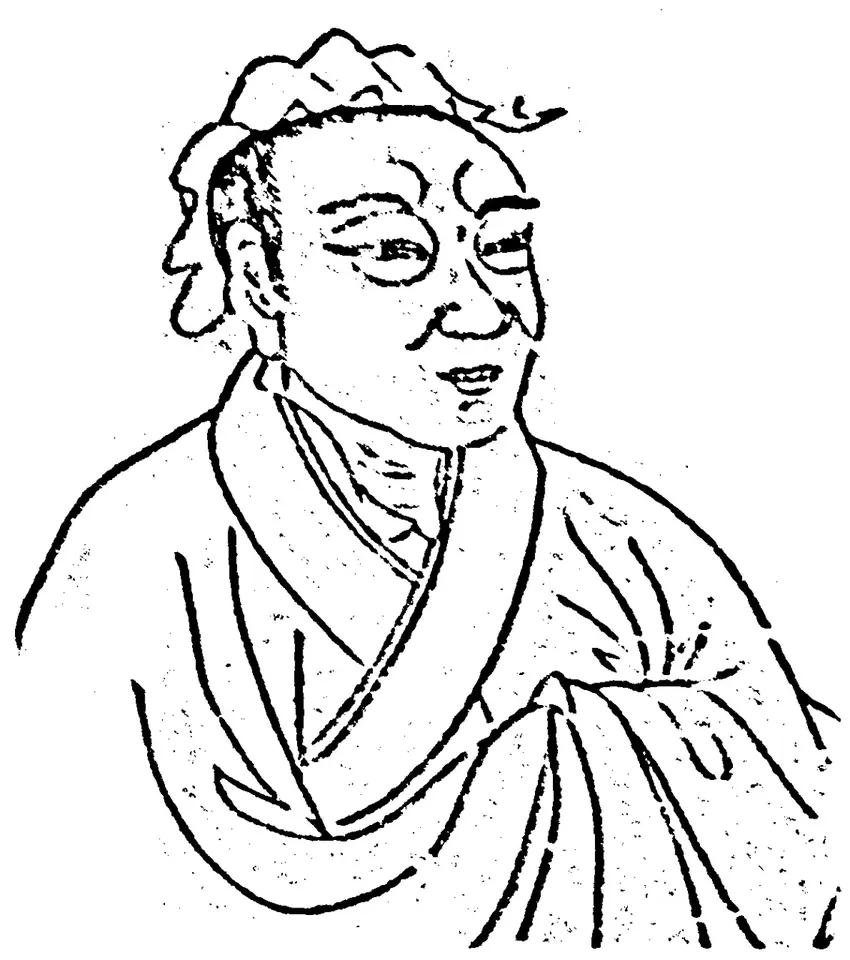
斡道冲
Wo Daochong (斡道冲, ?–1183), courtesy name Zongsheng, ancestral native of Lingwu (present-day Lingwu, Ningxia) who later relocated to the dynastic capital Xingqing Prefecture (present-day Yinchuan, Ningxia), was an eminent court statesman, prime minister (Director of the Secretariat), Confucian master, translator, and bibliophile of Western Xia during the reign of Emperor Renzong (Li Renxiao). His clan was a distinguished…
Wo Daochong (斡道冲, ?–1183), courtesy name Zongsheng, ancestral native of Lingwu (present-day Lingwu, Ningxia) who later relocated to the dynastic capital Xingqing Prefecture (present-day Yinchuan, Ningxia), was an eminent court statesman, prime minister (Director of the Secretariat), Confucian master, translator, and bibliophile of Western Xia during the reign of Emperor Renzong (Li Renxiao). His clan was a distinguished hereditary historiographical lineage in Western Xia, responsible for recording imperial annals for generations. At the tender age of eight, Wo passed the child prodigy examination by flawlessly reciting and elucidating the Classic of History. In 1151, as Emperor Renzong championed classical Confucian learning, Wo was appointed Instructor of Tangut and Chinese Learning to instruct imperial students in the Confucian canon. In court affairs, Wo was fiercely upright and incorruptible, standing alongside Censor-in-Chief Relaguanji and Hanlin Academician Jiao Jingyan as a stalwart bulwark against the tyrannical usurpation and territorial partitioning schemes of regent consort Ren Dejing, thereby preserving the unity and sovereignty of the Western Xia realm. Following the execution of Ren Dejing and his faction in 1170, Emperor Renzong elevated Wo Daochong in 1171 to Director of the Secretariat, heading the civil government. Leading the administration for over a decade, Wo vigorously promoted Confucian statecraft. He elevated Confucius to the posthumous rank of Emperor of Literary Propagation (Wenxuan Di), established Confucian temples and official academies throughout all prefectures and counties, revitalized the Imperial University, and instituted regular civil service examinations to recruit talented scholars from humble backgrounds. Fluent in classical Chinese and the Tangut script, Wo translated the Annotated Analects into Tangut and authored the twenty-volume Tangut treatise Minor Principles of the Analects and Divinations of the Book of Changes, spreading Confucian ethics across the realm. Living with austere frugality, he possessed no private fortune aside from his vast book collections. Following his death in 1183, Emperor Renzong mourned him profoundly, decreeing that his portrait be enshrined in prefectural schools to share sacrifices alongside Confucius. In the Yuan Dynasty, prominent scholar Yu Ji composed the Portrait Eulogy for Chancellor Wo of Western Xia, venerating him as a model sage-minister.
Born into a prominent hereditary historiographer family in Lingwu; passed the child prodigy exam at age eight.
Appointed Instructor of Tangut and Chinese Learning to lecture on the Five Classics in imperial academies.
Translated the Annotated Analects into Tangut and authored Minor Principles of the Analects in twenty volumes.
Stood firm alongside loyalist ministers against the treasonous territorial partition plot of consort Ren Dejing.
Emperor Renzong crushed the conspiracy of Ren Dejing, restoring central imperial authority.
Appointed Director of the Secretariat in the fifth month, leading the central bureaucracy and civil governance.
Promoted the erection of Confucian temples and imperial examinations throughout the commanderies.
Passed away in Xingqing Prefecture; Emperor Renzong ordered his portrait enshrined in state academies alongside Confucius.
Wo Daochong belonged to an eminent family of court historians in Western Xia that had compiled state annals across successive reigns. Reared in this rigorous intellectual atmosphere, Wo displayed precocious intellectual brilliance, immersing himself in classical historical texts. During the reign of Emperor Chongzong, at the age of eight, Wo sat for the imperial child prodigy examination. Before the throne, he recited the dense prose of the Classic of History without error and interpreted its administrative principles with extraordinary clarity, earning widespread acclaim and immediate entry into the scholarly elite.
Upon ascending the throne, Emperor Renzong (Li Renxiao) realized that sustaining a durable civil administration required moving beyond nomadic militarism toward Confucian governance. In 1151, the emperor established new official academies in the capital and created the post of Instructor of Tangut and Chinese Learning, selecting premier scholars fluent in both classical Chinese and the Tangut language. Renowned for his command of the Five Classics, Wo Daochong was appointed to the post. As instructor, he taught the Classic of Poetry, Classic of History, Book of Rites, Book of Changes, and Spring and Autumn Annals, cultivating a generation of bilingual administrators and classical literati.
During the mid-twelfth century, Western Xia confronted the gravest succession crisis in its history. The imperial maternal uncle, Ren Dejing, leveraged his military accomplishments to monopolize court authority as grand chancellor, purging political rivals. Ambitious and insatiable, Ren Dejing coerced the court to partition the realm, demanding the southwestern half of Western Xia territory to establish an independent kingdom as King of Chu, menacing the dynastic line with dismemberment. Intimidated by Ren's private armies, most civil and military officials fell silent.
At this critical juncture, Wo Daochong demonstrated unyielding loyalty. Joining forces with Censor-in-Chief Relaguanji and Hanlin Academician Jiao Jingyan, Wo mounted courageous remonstrances in court audiences, denouncing Ren Dejing's treasonous partitioning schemes and maintaining constitutional legitimacy. In 1170, backed diplomatically by Emperor Shizong of Jin, Emperor Renzong launched a palace counter-strike, arresting and executing Ren Dejing and over one hundred conspirators. Wo Daochong's steadfast refusal to compromise provided the moral bulwark that preserved Western Xia's territorial integrity.
With the elimination of the treasonous faction, Emperor Renzong initiated sweeping civil reforms. In May of 1171, the emperor appointed Wo Daochong as Director of the Secretariat, entrusting him with the supreme leadership of the empire's civil administration. Wo transformed Confucian philosophy into state policy. He petitioned Emperor Renzong to honor Confucius as Emperor of Literary Propagation, elevating the ancient sage to equal ceremonial dignity with imperial sovereigns. He directed the construction of grand Confucian shrines in Xingqing Prefecture and local academies across all administrative districts, mandating seasonal state sacrifices. Furthermore, he reformed civil service examinations, dismantling hereditary aristocratic monopolies to promote meritorious scholars from modest backgrounds.
Beyond his executive governance, Wo Daochong translated foundational Confucian texts into the Tangut script. He translated the entire Annotated Analects and authored the twenty-volume original Tangut exposition Minor Principles of the Analects, alongside Divinations of the Book of Changes. These works were printed and widely circulated, allowing commoners and gentry throughout Western Xia to access classical moral philosophy in their native tongue.
Throughout his twelve years as prime minister, Wo Daochong maintained unblemished personal integrity, donating his official salary to support destitute scholars and fund the printing of books. He died in office in 1183, leaving behind an impoverished household possessing nothing save multiple cabinets of ancient manuscripts. Devastated by the loss of his chief councilor, Emperor Renzong decreed that Wo's portrait be painted in every prefectural school throughout Western Xia, granting him the rare honor of being venerated in ancestral sacrifices alongside Confucius.
Wo Daochong's most lasting historical contribution was the systematic introduction and translation of classical Confucian texts into the Tangut language. He produced a definitive Tangut rendering of the Annotated Analects and composed the monumental twenty-volume original treatise Minor Principles of the Analects, providing the first comprehensive native-language commentary on Confucian ethics produced by an ethnic minority regime. His translations breached linguistic barriers, integrating Confucian governance into Tangut society and providing the intellectual engine for the cultural golden age under Emperor Renzong.
During the grave political crisis when regent Ren Dejing attempted to divide the kingdom and establish an independent breakaway state in the southwest, Wo Daochong showed fearless fortitude. Leading loyalist ministers in resisting royal concessions, he bought crucial strategic time for Emperor Renzong to organize imperial forces and strike down the treasonous clique, defending the territorial integrity and unified sovereignty of Western Xia.
As Director of the Secretariat, Wo Daochong established the Confucian educational and ritual system of Western Xia. He instituted state sacrifices honoring Confucius, expanded civil examinations, and established local commandery academies. His extraordinary contributions earned him the unprecedented honor of having his portrait enshrined in state schools across the empire to share in Confucian sacrifices. Yuan Dynasty scholar Yu Ji celebrated him in his Portrait Eulogy for Chancellor Wo of Western Xia, immortalizing his role as an architect of classical civilization in the northwestern borderlands.
FIGURES ASSOCIATED WITH THIS DYNASTY