Birth into Renowned Lineage
Born into the illustrious Wen clan in Changzhou, Suzhou, absorbing family traditions in painting, music, and architecture.
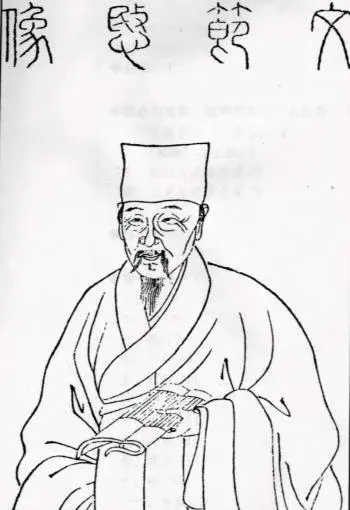
文震亨
Wen Zhenheng (1585–1645), courtesy name Qimei, was a native of Changzhou, Suzhou Prefecture, South Zhili (modern Suzhou, Jiangsu). He was the great-grandson of the celebrated painter Wen Zhengming and the younger brother of Donglin Grand Secretary Wen Zhenmeng. Wen Zhenheng was a preeminent late-Ming lifestyle aesthetician, landscape garden theorist, connoisseur, and anti-Qing dynastic martyr. Endowed with profound family…
Wen Zhenheng (1585–1645), courtesy name Qimei, was a native of Changzhou, Suzhou Prefecture, South Zhili (modern Suzhou, Jiangsu). He was the great-grandson of the celebrated painter Wen Zhengming and the younger brother of Donglin Grand Secretary Wen Zhenmeng. Wen Zhenheng was a preeminent late-Ming lifestyle aesthetician, landscape garden theorist, connoisseur, and anti-Qing dynastic martyr. Endowed with profound family erudition and artistic versatility, Wen Zhenheng mastered astronomy, geography, music theory, calligraphy, painting, and architectural landscaping from youth. Entering the National University during the Tianqi era, he was summoned to the imperial palace as a renowned literatus in 1632 (5th year of Chongzhen) to serve as Secretariat Drafter in the Hall of Military Eminence (Wuying Hall), managing state calligraphy and documents. Possessing a pristine, uncompromising temperament aligned with the Donglin ethos, Wen Zhenheng compiled his immortal twelve-volume masterpiece Treatise on Superfluous Things (Zhangwu Zhi) amidst the encroaching decadence of late-Ming society. The treatise systematically codified taste in domestic dwellings, flora and fauna, waters and stones, calligraphy, paintings, furniture, and tea utensils, establishing the pinnacle synthesis of classical garden architecture and literati material culture. In 1645, when Qing armies captured Suzhou and enforced the mandatory queue-order, Wen Zhenheng threw himself into Yangcheng Lake. Rescued against his will, he initiated a six-day hunger strike, dying a loyalist martyr at age sixty-one.
Born into the illustrious Wen clan in Changzhou, Suzhou, absorbing family traditions in painting, music, and architecture.
Dismayed by vulgar commercial ostentation, began drafting Zhangwu Zhi to codify classical literati aesthetics.
Built the Fragrant Herb Mound (Xiangcao Ta) and Water-Stone Cottage in Suzhou, demonstrating garden design principles.
Following his brother Wen Zhenmeng's rise in government, appointed Secretariat Drafter in the Wuying Hall to handle imperial texts.
Resigned alongside his brother after Wen Zhenmeng was ousted by rivals, returning to Suzhou to write.
Mourned Emperor Chongzhen's suicide with bitter tears and rallied resources in Jiangnan to resist invaders.
Following Suzhou's fall and the queue edict, attempted drowning in Yangcheng Lake and starved himself for six days until death.
Wen Zhenheng was born in 1585 in Changzhou, Suzhou. As the great-grandson of Wen Zhengming, he belonged to the clan that had anchored Jiangnan literati taste, painting, and calligraphy since the mid-Ming dynasty. His elder brother Wen Zhenmeng attained the first rank (zhuangyuan) in the imperial civil examination of 1622 and served as an outspoken Donglin Grand Secretary. Immersion in rich family archives nurtured Wen Zhenheng in the Confucian classics, while equipping him with unique brilliance across painting, calligraphy, guqin lute play, tea art, floral arrangement, and garden construction.
Observing late-Ming commercial affluence, Wen Zhenheng grew dismayed at wealthy merchants whose ostentatious displays cluttered interior living spaces with vulgar luxury. To reaffirm the classical literati pursuit of austere simplicity and antique restraint, he conducted comprehensive field studies of Song and Ming gardens. In his home city of Suzhou, he designed and constructed refined retreats such as the Fragrant Herb Mound (Xiangcao Ta). Adapting structures harmoniously to natural terrain, piling stones, directing waterways, and arranging rare flora, he succeeded in evoking boundless wilderness within confined courtyards, inspiring enthusiastic emulation across the region.
Synthesizing his lifelong design practices and connoisseurship, Wen Zhenheng spent several years completing his twelve-volume treatise Treatise on Superfluous Things (Zhangwu Zhi). The term "superfluous things" (zhangwu) derived from a classical anecdote in A New Account of the Tales of the World (Shishuo Xinyu) concerning personal detachment, yet Wen Zhenheng applied it ironically to denote those elegant elements indispensable to the literati spirit: musical instruments, studio furnishings, painting scrolls, and natural curiosities. The treatise comprehensively analyzed architecture and utensils, setting forth the supreme aesthetic maxim: "Better antique than trendy, better frugal than vulgar."
In 1632, recognized for his broad erudition, Wen Zhenheng was appointed by special decree to serve as Secretariat Drafter in the Wuying Hall, entering the Forbidden City to handle imperial archives, decrees, and calligraphic manuscripts. In 1635, his brother Wen Zhenmeng entered the Grand Secretariat as Vice Minister of Rites and Grand Secretary of the Dongge Hall, but was soon impeached and ousted by rival factions led by Wen Tiren. Recognizing the treacherous palace political environment, Wen Zhenheng resigned in solidarity and returned to private retirement alongside the Panxi River in Suzhou.
During his quiet retirement in Suzhou, Wen Zhenheng spent his time leading poetry and musical societies alongside prominent Jiangnan literati. In the spring of 1644, Li Zicheng breached Beijing, Emperor Chongzhen hanged himself on Meishan, and Qing armies swept past the Great Wall into the Central Plains. Hearing the news, Wen Zhenheng wept blood, setting up an altar in Suzhou to mourn the fallen monarch. When Zhu Yousong (the Prince of Fu) proclaimed the Hongguang reign in Nanjing, Wen Zhenheng submitted urgent memorials advising regional authorities to amass supplies and drill garrisons to defend the south.
However, factional paralysis and military defections rapidly doomed the Southern Ming court, enabling Qing forces to cross the Yangtze and take Nanjing. In the leap sixth month of 1645, Qing general Dodo pushed forces into Jiangnan, capturing Suzhou and imposing the brutal tonsure decree ordering all Chinese subjects to shave their foreheads and braid queues. Faced with barbarian conquest and the violation of ancestral dress and hairstyle, Wen Zhenheng resolved to die.
Walking out of the city gates, he cast himself into Yangcheng Lake to preserve his loyalty, but was rescued by local fishermen from the shallow waters. Brought home, he adamantly refused to submit to the razor. Sitting upright in his studio, he refused all water and food, maintaining a resolute hunger strike for six days until he passed away peacefully as a martyr of the Ming dynasty at age sixty-one.
Wen Zhenheng's paramount cultural legacy is his twelve-volume Treatise on Superfluous Things (Zhangwu Zhi), universally recognized as the undisputed pinnacle of Chinese design theory, material cultural history, and lifestyle aesthetics.
The work is organized into twelve categories: Architectural Dwellings, Trees and Flowers, Water and Rocks, Birds and Fish, Calligraphy and Paintings, Chairs and Beds, Utensils and Instruments, Spatial Arrangement, Vegetables and Trees, Springs and Waters, Incense and Tea, and Vehicles and Boats. Wen Zhenheng systematically scrutinized every component of the scholar's habitat, evaluating spatial dimensions, folding screens, latticed window grilles, desk timbers, and incense burners against criteria of archaic elegance and natural spontaneity, while condemning garish extravagance. Zhangwu Zhi remains the ultimate guide to the material taste of late-Ming Jiangnan literati, maintaining immense influence over traditional landscape architecture and serving as a key classical text in international Sinological research on Chinese aesthetics.
Wen Zhenheng was not merely a theorist but an accomplished landscape design practitioner. He articulated the fundamental aesthetic doctrine that garden composition must achieve appropriateness, so that "though created by human hands, it appears entirely wrought by nature." He insisted that architectural elements must never overwhelm the scenery, but instead blend harmoniously with organic watercourses, rocks, trees, and blossoms.
In his designs throughout Suzhou, he dispensed with the oppressive, walled enclosures common in earlier estates, introducing patterned openwork windows, moon gates, open galleries, and low undulating walls to produce layers of moving scenery. His landscaping principles complemented Ji Cheng's contemporary work The Craft of Gardens (Yuanye), jointly laying the aesthetic foundations for the classical gardens of Suzhou recognized today as UNESCO World Heritage.
Amidst the catastrophic Ming-Qing transition when many late-Ming literati compromised their convictions to submit to Qing rule, Wen Zhenheng embodied the highest Confucian ideal of maintaining moral integrity in times of crisis.
As a private civilian scholar facing the military might of conquerors, he chose self-immolation and resolute hunger rather than surrender his ancestral identity. His steadfast refusal to compromise showcased the heroic moral backbone of Jiangnan literati, matching the courageous memorials of his brother Wen Zhenmeng and earning him everlasting reverence in official and unofficial histories as an upright dynastic martyr.
History of Ming (Ming Shi, Volume 251, Biographies, Biography of Wen Zhenmeng, appended biography of Wen Zhenheng) records: "Zhenheng, courtesy name Qimei, was the younger brother of Zhenmeng. Clever and versatile from youth, he excelled in calligraphy, painting, guqin lute, and chess, and was versed in astronomy and geography. During the Chongzhen reign, he served as Secretariat Drafter in the Wuying Hall. When Nanjing fell, he threw himself into Yangcheng Lake to die; rescued, he starved himself for six days and expired."
Annotated Catalog of the Complete Imperial Library (Siku Quanshu Zongmu Tiyao, Volume 130) comments on Zhangwu Zhi: "Compiled by Wen Zhenheng of the Ming... Covering architectural dwellings, flora, waters, birds, art, and furniture in twelve categories, all treating refined and archaic pursuits. Its core intent champions pristine simplicity to correct vulgar extravagance, offering abundant insights for historical and aesthetic inquiries."
Qing historian Ji Liuqi praised him in Southern Chronicles of the Late Ming (Mingji Nanlüe): "Wen Qimei survived the waters only to starve himself to death for the Ming dynasty. Four generations of the Wen family were celebrated for unblemished virtue, culminating in Qimei's heroic martyrdom, which rivals the ancient integrity of Boyi and Shuqi under the sun and moon!"
FIGURES ASSOCIATED WITH THIS DYNASTY