Birth in Zitong
Born into a distinguished scholarly lineage in Zitong, Sichuan, demonstrating brilliant erudition from boyhood.
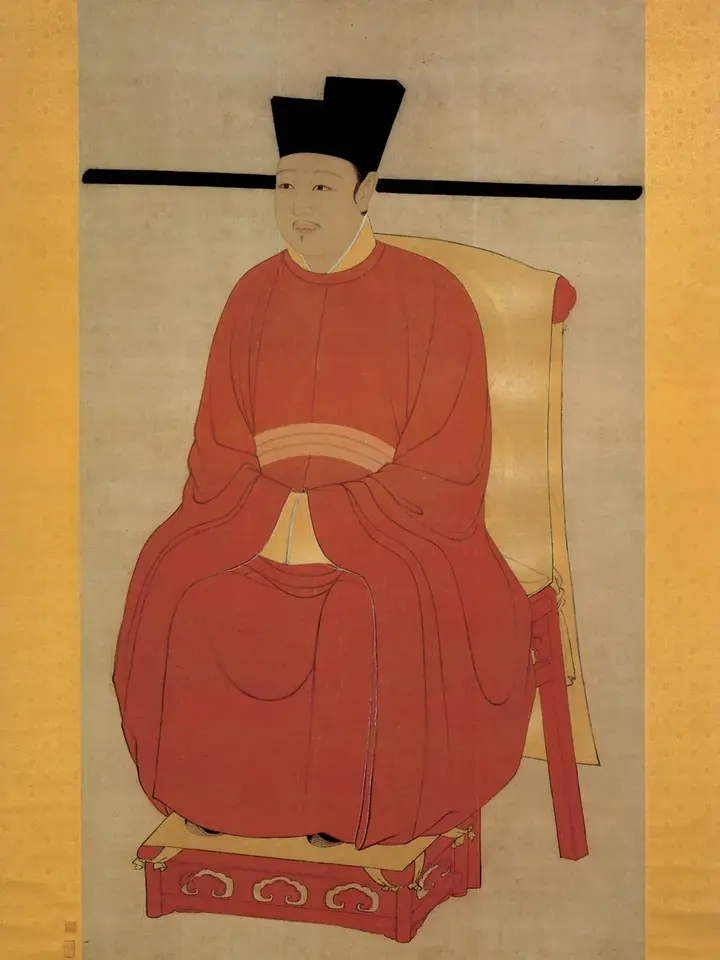
文同
Wen Tong (1018–1079), courtesy name Yuke, style Master Xiaoxiao and Jinjiang Daoren, self-styled Danyuan Jushi, was a native of Zitong County in Zizhou (modern Sichuan). He was a preeminent scholar-official, poet, calligrapher, and painter of the mid-Northern Song dynasty, revered across East Asian art history as the supreme patriarch of ink bamboo painting (mozhu). Attaining his jinshi degree in 1053, Wen Tong served in…
Wen Tong (1018–1079), courtesy name Yuke, style Master Xiaoxiao and Jinjiang Daoren, self-styled Danyuan Jushi, was a native of Zitong County in Zizhou (modern Sichuan). He was a preeminent scholar-official, poet, calligrapher, and painter of the mid-Northern Song dynasty, revered across East Asian art history as the supreme patriarch of ink bamboo painting (mozhu). Attaining his jinshi degree in 1053, Wen Tong served in various regional administrative posts across western China, including Vice Prefect of Qiongzhou and Prefect of Dayi, Lingzhou, Yangzhou, and Xingyuan. In 1078, he was appointed Collator in the Imperial Library and Prefect of Huzhou. Because he passed away in Chenzhou en route to his post, he was universally remembered by contemporaries as "Wen of Huzhou" (Wen Huzhou). Throughout his administrative career, he was celebrated for benevolent governance, light taxation, and deep affection for the populace. Wen Tong occupies an exalted summit in Chinese aesthetics. He transformed ink bamboo into a high vehicle for literati philosophical expression, pioneering the Huzhou Bamboo School. Observing the lifecycle of bamboo in Yangzhou's Yandang Valley, he formulated the revolutionary creative doctrine that "one must have the bamboo already formed in the chest before putting brush to paper" (xiong you cheng zhu), which gave birth to China's celebrated idiom. Inventing the technique of applying dark ink for the face and pale ink for the back of bamboo leaves, his artistic partnership with his maternal cousin Su Shi defined the golden age of Song literati painting.
Born into a distinguished scholarly lineage in Zitong, Sichuan, demonstrating brilliant erudition from boyhood.
Traveled to Kaifeng and attained the jinshi degree, receiving appointment as Vice Prefect of Qiongzhou.
Governed Dayi County as provisional magistrate, painting ink bamboo murals across mountain monasteries.
Governed Lingzhou, reforming salt well levies, suppressing local bullies, and eliminating litigation backlogs.
Transferred as Prefect of Yangzhou, cultivating bamboo groves in Yandang Valley to observe their natural life.
Governed Xingyuan Prefecture in Hanzhong, reconstructing Han dynasty hydraulic canals to irrigate farmlands.
Elevated to Collator in the Imperial Library and appointed Prefect of Huzhou, departing westward.
Succumbed to chronic illness at an inn in Chenzhou at age sixty-two; deeply mourned by Su Shi and Sima Guang.
Wen Tong was born into an illustrious administrative family in Zitong, Sichuan. Endowed with austere integrity and immense creative vitality, he mastered Confucian classics and historical treatises from childhood. Uninterested in superficial ornate prose, he gravitated toward sketching ancient trees, gnarled stumps, and wild bamboo in ink.
In 1053, Wen passed the metropolitan examinations in Kaifeng and was assigned as Vice Prefect of Qiongzhou. Soon afterward, he served as provisional magistrate of Dayi County in western Sichuan. Dayi was blessed with magnificent peaks, and Wen governed with mildness, delighting in administrative leisure. During his days off, he walked into mountain temples such as Yaoshi Rock and Heming Mountain, writing poetry and painting vigorous bamboo murals directly onto plaster walls.
Wen subsequently served as Vice Prefect of Puzhou and Prefect of Lingzhou (modern Renshou, Sichuan). In Lingzhou, where commercial interests over salt wells caused frequent conflicts, Wen personally investigated registers, suppressed local monopolies, and promoted agriculture, earning deep popular affection.
Tradition holds that at Black Dragon Pool in Lingzhou, Wen left a miraculous carved stone: on ordinary dry days the stone appeared completely smooth and blank, but whenever water was splashed across its surface, a vivid, dark-ink bamboo stalk emerged with lifelike realism.
In 1069, Wen was appointed Prefect of Yangzhou in southern Shaanxi. Yangzhou was sheltered by the Qinling Mountains and filled with lush bamboo groves. On the eastern outskirts of the city, Wen cleared and landscaped the Yandang Valley, planting thousands of bamboo stalks. He built pavilions amidst the groves, spending daily hours studying bamboo in scorching sun, gentle breezes, pelting rain, and winter snow. He observed bamboo shooting through earth, jointing into columns, branching outward, and withstanding frosty storms.
In 1072, he transferred to Xingyuan Prefecture (modern Hanzhong). As civil governor of this strategic gateway, Wen reconstructed ancient Han dynasty irrigation weirs, watering tens of thousands of acres of rice paddies, prompting local farmers to erect living shrines in his honor.
Wen Tong and his younger maternal cousin Su Shi shared an intimate, lifelong friendship. The two were intellectual soulmates who constantly exchanged verses, paintings, and playful jokes. Su Shi attributed his own bamboo painting technique entirely to Wen's mentorship, while Wen often told associates: "None in the world truly understands me, save for Zizhan (Su Shi) alone!"
While in Yangzhou, Wen asked Su Shi to compose poems for thirty scenic spots, including the Yandang Valley. Su tease him with a poem: "Along the Han River, slender bamboo is cheaper than weeds; when has the woodsman's axe ever spared the emerging shoots? I suppose our hungry, impoverished magistrate harbors a thousand acres of Wei River groves in his belly!" Wen and his wife were boiling bamboo shoots for supper when the letter arrived; reading Su's poem, Wen burst into uncontrollable laughter, spraying rice across the dinner table.
In another letter, Wen jokingly complained that scholars throughout the empire were besieging his door with rolls of silk, treating him as a source of socks: "I have announced to the literati that my school of ink bamboo has moved to Pengcheng with Su Zizhan; you may all go gather your sock material from him!" Their correspondence radiated warmth and unaffected genius.
During the late Xining era, Emperor Shenzong summoned Wen to the central administration as Collator in the Imperial Library. In 1078, the emperor specially appointed him Prefect of Huzhou. Wen set out from Hanzhong along the central postal routes.
In January 1079, while resting at a postal station in Chenzhou (modern Huaiyang, Henan), Wen's chronic lung ailments flared, and he passed away peacefully at age sixty-two. Because he died holding the commission for Huzhou, scholars universally called him "Wen of Huzhou."
In July that year, while serving as Prefect of Huzhou, Su Shi was airing out his private library when he discovered Wen's gift painting Bent Bamboo of Yandang Valley. Overwhelmed with sorrow, Su collapsed in tears and penned his immortal essay Account of Wen Yuke Painting the Bent Bamboo of Yandang Valley (Wen Yuke Hua Yandanggu Yanzhu Ji), preserving Wen's artistic philosophy for eternity.
Wen Tong's preeminent achievement in world art history was founding the Huzhou Bamboo School, standing as the undisputed father of Chinese ink bamboo painting.
Prior to Wen Tong, artists painted bamboo with color outlines or heavy mineral pigments. Wen pioneered monochromatic ink painting (shuimo), developing the revolutionary method of using dark ink for the face and pale ink for the back of bamboo leaves (shen mo wei mian, dan mo wei bei). This variation in ink tone captured the shifting light, thickness, and wind-blown motion of leaves with stunning three-dimensional vitality.
Most crucially, Wen Tong created the foundational aesthetic doctrine: "having the bamboo already formed in the chest" (xiong you cheng zhu). As recorded by Su Shi: "When bamboo first germinates, it is merely an inch-long shoot, yet joints and leaves are already complete within... Therefore, to paint bamboo, one must first possess the complete bamboo formed within the chest. Holding the brush and gazing intently, the painter perceives what he wishes to execute; then leaping up swiftly, he moves the brush directly to pursue what he has seen, like a falcon swooping upon a springing hare—for the slightest hesitation and it is gone forever!" This principle of internalizing objective nature through deep observation into an intuitive mental image became the cornerstone of classical Chinese literati painting theory.
Successive generations of masters—including Zhao Mengfu, Li Kan, Wu Zhen, Ni Zan, Ke Jiusi, Wang Fu, and Zheng Xie—revered Wen Tong as the supreme patriarch of bamboo painting.
Wen Tong's authentic surviving paintings are exceedingly rare. His signature masterwork Ink Bamboo (Mozhu Tu), preserved in the National Palace Museum in Taipei, depicts an S-shaped bamboo branch cascading downward from a cliff, bending gracefully before arching upward at its tip, symbolizing resilience in adversity.
Executed without outlines, the leaves interlace with natural density, capturing the play of light between front and reverse leaves. It remains celebrated as the gold standard of Chinese monochromatic painting.
Wen Tong's paintings were an expression of moral self-cultivation rather than decorative commerce. As noted in the Xuanhe Catalogue of Paintings, his ink bamboo expressed the same unyielding moral integrity found in Qu Yuan's Elegies of Chu and Tao Yuanming's pastoral verse.
By identifying the bamboo's hollow center, firm joints, and evergreen endurance with the scholar's inner purity and steadfastness, Wen and Su Shi established bamboo as the foremost subject among the "Four Gentlemen" (meilan zhuju) of Chinese art.
Beyond painting, Wen Tong attained exceptional renown in poetry, prose, and calligraphy. Admiring Mei Yaochen, his socially conscious verses, such as Lament of the Weaving Woman (Zhifu Yuan), exposed the heavy burdens of state labor service and taxation imposed upon common artisans, demonstrating deep humanitarian empathy.
His landscape poetry exhibited the expansive compositional eye of a master painter, capturing natural vitality with unadorned spontaneity. Following his death, his son gathered his remaining writings into the forty-volume Danyuan Collection (Danyuan Ji). Su Shi praised Wen's literary works as matching the grandest Han and Tang dynastic masters, revering his prose, poetry, calligraphy, and painting as peerless masterpieces of their generation.
FIGURES ASSOCIATED WITH THIS DYNASTY