Spared in Treason Case
Implicated through association in Wei Feng's conspiracy at Ye; spared execution by Cao Cao due to his father's military merits.
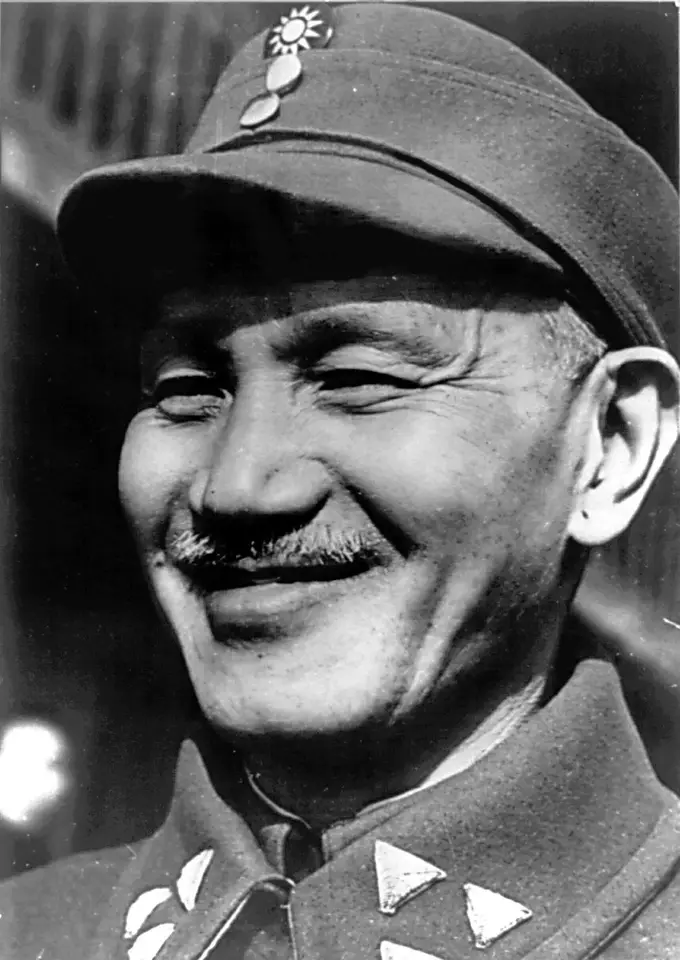
文钦
Wen Qin (文钦, ?–258), courtesy name Zhongruo (仲若), was a native of Qiao County, Pei State (present-day Bozhou, Anhui). A notable military commander of Cao Wei and Eastern Wu during the Three Kingdoms period, he rose to become General of the Front and Inspector of Yangzhou in Wei, and later General Who Guards the North and Governor of You Province in Wu. As the son of general Wen Ji, Wen Qin was known for his personal daring…
Wen Qin (文钦, ?–258), courtesy name Zhongruo (仲若), was a native of Qiao County, Pei State (present-day Bozhou, Anhui). A notable military commander of Cao Wei and Eastern Wu during the Three Kingdoms period, he rose to become General of the Front and Inspector of Yangzhou in Wei, and later General Who Guards the North and Governor of You Province in Wu. As the son of general Wen Ji, Wen Qin was known for his personal daring and fiery temperament. Closely allied with Regent Cao Shuang, he was entrusted with major frontline commands in Huainan, achieving distinguished victories including the defeat of Zhuge Ke's rear guard at Heyu in 253. Following the downfall of the Cao faction and the deposition of Cao Fang, Wen Qin allied with General Guanqiu Jian in 255 to launch the Second Huainan Rebellion against Regent Sima Shi. During the fierce nocturnal clash at Lejia, Wen Qin and his son Wen Yang executed an audacious cavalry charge that threw the imperial main body into turmoil. Following the defeat of the rebellion, Wen Qin fled to Eastern Wu, where he received high military honors. In 257, Wen Qin led tens of thousands of Wu troops into Shouchun to reinforce the Third Huainan Rebellion led by Zhuge Dan. Besieged for months by Sima Zhao's grand army, acute starvation bred intense discord, leading Zhuge Dan to execute Wen Qin inside the fortress in 258.
Implicated through association in Wei Feng's conspiracy at Ye; spared execution by Cao Cao due to his father's military merits.
Served as Gate Commander, Administrator of Lujiang, and Soaring Eagle General under Emperor Ming of Wei.
Impeached by Wang Ling for tyranny and misusing official supplies; exonerated through his patron Cao Shuang and appointed Champion General.
Promoted to General of the Front and later Inspector of Yangzhou to stabilize his allegiance after Cao Shuang's execution.
Intercepted Zhuge Ke's retreating Wu army at Heyu following the siege of Hefei New City, claiming over ten thousand enemy casualties.
Joined Guanqiu Jian in raising an army at Shouchun against Sima Shi; defeated at Lejia and defected to Eastern Wu.
Appointed Governor of You Province and General Who Guards the North in Wu, assisting Sun Chen in internal power struggles.
Led tens of thousands of Wu troops into Shouchun to reinforce Zhuge Dan against Sima Zhao's grand encirclement.
Slain by Zhuge Dan inside Shouchun over strategic discord regarding food rations, prompting his sons to defect to Sima Zhao.
Wen Qin hailed from a distinguished military family in Qiao County. His father, Wen Ji, served as a brave cavalry general under Cao Cao during the Jian'an era. Endowed with martial courage and audacity, Wen Qin entered military service at an early age. In 219, when Wei Feng orchestrated a failed insurrection at Ye, Wen Qin was implicated due to casual associations with the conspirators. He was subjected to severe flogging in prison and faced capital punishment, but Cao Cao intervened to spare his life in memory of his father's service.
During the Taihe era of Emperor Ming, Wen Qin was appointed to command the Five Camps and later dispatched as a garrison officer to Huainan, eventually rising to become Administrator of Lujiang and Soaring Eagle General. Wen Qin possessed an abrasive, arrogant personality and repeatedly flouted administrative regulations. He constructed unauthorized fortified stations along strategic roads to harbor runaways from Eastern Wu, provoking border friction. When regional commander Wang Ling discovered that Wen Qin had requisitioned government boats to transport lime for personal residences, he impeached Wen Qin for extortion. Wen Qin was recalled to the capital for investigation.
In Luoyang, Wen Qin pleaded his case before Regent Cao Shuang, who was his fellow clansman from Qiao. When Cao Shuang questioned him regarding the lime, Wen Qin cleverly claimed he had burned the lime specifically for Cao Shuang's private mansions. Highly pleased, Cao Shuang dismissed all charges and reinstated Wen Qin as Administrator of Lujiang with the elevated rank of Champion General. Emboldened by imperial favor, Wen Qin became increasingly haughty, boasting of his martial talents among the regional command.
In 249, Sima Yi executed Cao Shuang in the Gaoping Tomb coup, leaving Wen Qin filled with dread and apprehension. To appease the influential frontier general, the Sima-dominated court promoted him to General of the Front and shortly thereafter appointed him Inspector of Yangzhou. In 250, Wen Qin fabricated a surrender overture to lure Wu commander Zhu Yi into an ambush. However, Zhu Yi saw through the deception, and Wu Emperor Sun Quan sent a heavily armed force under Lu Ju to receive him. Seeing the enemy fully alert, Wen Qin aborted the scheme.
Throughout his tenure in Huainan, Wen Qin repeatedly clashed with neighboring commanders, harboring mutual hostility with Zhuge Dan. Although Wen Qin achieved numerous tactical successes along the border, he routinely inflated his casualty counts and captive lists to petition for exorbitant rewards. When imperial auditors rejected his claims, his resentment toward the Sima clan grew acute. The newly appointed General Who Guards the East, Guanqiu Jian, recognized Wen Qin's military prowess and courted his goodwill, winning his complete devotion.
In 253, Eastern Wu Regent Zhuge Ke invaded Wei with two hundred thousand troops, surrounding Hefei New City. Wen Qin and Guanqiu Jian held the border firmly, and after the Wu army retreated due to pestilence, Wen Qin spearheaded a pursuit to Heyu. He launched a surprise strike against the retreating enemy rear guard, inflicting immense casualties and capturing vital supplies.
In 254, Sima Shi deposed Emperor Cao Fang. In the first month of 255, observing a magnificent comet spanning the northwestern sky, Wen Qin and Guanqiu Jian regarded it as a heavenly sign. Forging a secret decree from Empress Dowager Guo, they raised the banner of rebellion at Shouchun to overthrow Sima Shi. After gathering sixty thousand troops, they marched west to Xiang County, leaving Shouchun under garrison protection.
Sima Shi personally led the grand imperial army to counter the uprising, deploying Wang Ji at Nandun and ordering Deng Ai to station several thousand troops at Lejia to feign vulnerability. Wen Qin fell into the trap and launched a nocturnal strike against Lejia. However, Sima Shi had secretly concentrated the imperial main force inside the city. Confronted by dense ranks of imperial banners, Wen Qin's eighteen-year-old son, Wen Yang, urged an immediate pre-dawn cavalry charge before the enemy could establish defensive perimeters.
Dividing their cavalry into two strike forces, Wen Yang led a daring raid directly into the imperial compound. His charge created immense chaos, causing Sima Shi, who suffered from a severe eye infection, such shock that his eyeball burst out of its socket. However, Wen Qin failed to coordinate his secondary thrust in time. At daybreak, observing the overwhelming strength of the imperial host, Wen Qin ordered a retreat. Wen Yang fought off pursuing cavalry single-handedly, slaying over a hundred horsemen. As the rebel forces disintegrated under pursuit by Sima Ban's elite cavalry, Wen Qin abandoned his army and fled south across the Huai River to Eastern Wu. Guanqiu Jian's army collapsed in panic, and Guanqiu Jian was soon tracked down and killed.
Welcomed warmly by Eastern Wu Regent Sun Jun, Wen Qin was appointed Governor of You Province, enfeoffed as the Marquis of Qiao, and granted the grand military rank of General Who Guards the North. Over the next two years, he took part in Wu border campaigns and supported Sun Chen during internal factional purges in the southern capital.
In 257, Zhuge Dan revolted against Sima Zhao at Shouchun, sending his son Zhuge Jing as a hostage to Eastern Wu to request military support. Sun Chen ordered Wen Qin, along with Quan Yi, Quan Duan, and Tang Zi, to lead tens of thousands of elite Wu troops into Shouchun. Sima Zhao surrounded the fortress with over two hundred thousand troops, constructing double trenches and impassable palisades. Wen Qin repeatedly led fierce sorties against the perimeter works, but the defensive lines held firm.
By the winter of 258, provisions within Shouchun were utterly depleted, and the garrison resorted to cannibalism and eating tree bark. Faced with imminent starvation, Wen Qin advised Zhuge Dan: "Our northern and southern soldiers are starving together. We should expel all northern soldiers from the city to conserve grain, leaving only the southern Wu troops to defend the citadel until help arrives." Zhuge Dan, who had long harbored deep grudges against Wen Qin, suspected that Wen Qin intended to betray him. In a fit of fury, Zhuge Dan summoned Wen Qin to his headquarters and had his guards execute him on the spot.
Hearing of their father's death, Wen Yang and Wen Hu escaped over the city walls and surrendered to Sima Zhao. Sima Zhao pardoned the brothers and granted them noble titles, causing the defenders' morale inside Shouchun to collapse. Shortly afterward, the fortress fell, and Zhuge Dan's faction was exterminated.
During the 253 invasion by Zhuge Ke, Wen Qin demonstrated exceptional tactical mobility by leading a cavalry strike against the retreating Wu army at Heyu, destroying over ten thousand enemy troops and capturing critical war materials.
At the battle of Lejia in 255, Wen Qin and his son Wen Yang executed one of the most daring night cavalry assaults of the Three Kingdoms era, penetrating deep into the imperial headquarters and throwing Sima Shi's main army into total disarray.
From 257 to 258, Wen Qin led tens of thousands of Wu elite soldiers into the beleaguered fortress of Shouchun. Facing Sima Zhao's grand encirclement of over two hundred thousand troops, Wen Qin organized multiple sorties and defended the citadel under extreme starvation for eight months, demonstrating resilient battlefield leadership.
FIGURES ASSOCIATED WITH THIS DYNASTY