Birth into an Eminent House
Born into a distinguished scholarly lineage in Changzhou, Suzhou, receiving intensive family education in classical arts.
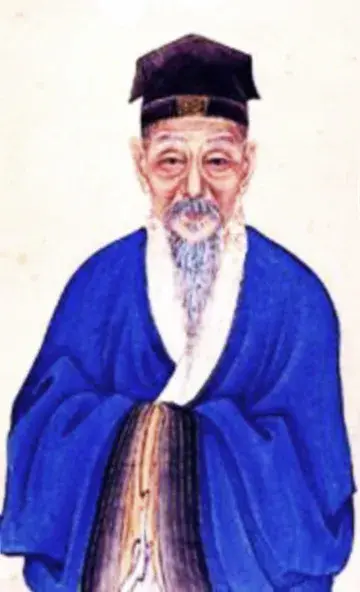
文彭
Wen Peng (1498–1573), courtesy name Shoucheng and art names Sanqiao and Yuyangzi, was a native of Changzhou, Suzhou Prefecture, South Zhili (modern Suzhou, Jiangsu). He was the eldest son of the Ming artistic titan Wen Zhengming, a celebrated calligrapher and poet, and the founding father of the school of literati seal engraving in Chinese history. Born into an eminent scholarly family with profound scholastic heritage, Wen…
Wen Peng (1498–1573), courtesy name Shoucheng and art names Sanqiao and Yuyangzi, was a native of Changzhou, Suzhou Prefecture, South Zhili (modern Suzhou, Jiangsu). He was the eldest son of the Ming artistic titan Wen Zhengming, a celebrated calligrapher and poet, and the founding father of the school of literati seal engraving in Chinese history. Born into an eminent scholarly family with profound scholastic heritage, Wen Peng was thoroughly versed in poetry, prose, calligraphy, and painting, attaining imperial fame particularly in seal carving and running-cursive script. In his earlier career, he entered the National University as a tribute student, served as Instructor in Jiaxing Prefectural School, and was promoted in his advanced years to Erudite in the National University in Nanjing. Wen Peng holds an epochal position in the annals of Chinese seal art. Prior to his breakthrough, seal designs drafted by scholars had to be delegated to professional metalsmiths and lapidaries who incised hard bronze, iron, jade, or ivory, completely separating literati aesthetics from carving craftsmanship. Encountering Qingtang soapstone (specifically lantern freeze stone) in Nanjing street markets, Wen Peng pioneered the substitution of hard jade with malleable stone, grasping the burin to carve seals himself. This breakthrough eliminated artisan monopolies over seal carving and inaugurated the golden era of Chinese literati seal engraving. Emulating Qin and Han classical archaism with pristine elegance, he is revered as the founding patriarch of literati seal carving alongside He Zhen, collectively termed "Wen-He."
Born into a distinguished scholarly lineage in Changzhou, Suzhou, receiving intensive family education in classical arts.
Inherited calligraphic principles from his father Wen Zhengming, rigorously copying Qin-Han seals and Song-Yuan rubbings.
Entered the Imperial Academy in Nanjing as an annual tribute student, studying classical canons and earning metropolitan fame.
Purchased Qingtian soapstone at Xihe Bridge and pioneered direct carving on stone by literati, transforming the art world.
Appointed Instructor in Jiaxing Prefectural School, supervising student curricula and nurturing literati culture.
Promoted to Erudite in the Nanjing National University, lecturing on Confucian classics to crowds of scholars.
Passed away in official residence at age seventy-six; his seal lineage was carried forward by He Zhen and disciples.
Wen Peng was born in 1498 into the prestigious Wen clan of Changzhou, Suzhou. His father, Wen Zhengming, was the towering leader of the Wu School of calligraphy and painting. Gifted with sharp intellect and artistic sensitivity, Wen Peng grew up immersed in inkstones, brushes, and classical scrolls. Under his father's rigorous tutelage, he not only mastered Confucian classics and historical treatises but also revealed rare genius in calligraphy, landscape painting, and classical poetry.
In his youth, Wen Peng exhibited an expansive, generous disposition, mingling comfortably with foremost literati. He deeply investigated Greater Seal, Lesser Seal, Clerical, and Running-Cursive scripts, taking particular delight in the balance and negative space of Qin and Han seals. Elders of the Wu cultural circle, including Shen Zhou, Tang Yin, and Zhu Yunming, regarded Wen Peng as the finest prodigy of the Wen family. Although he inherited the family painting tradition—following the refined, crisp landscapes of Zhao Mengfu and Wang Meng—he chose not to remain in his father's artistic shadow, dedicating his primary creative passion to unlocking the secrets of calligraphy and seal engraving.
In civil examinations, Wen Peng shared a trajectory remarkably similar to his father, never passing the metropolitan civil service examinations. Despite repeated disappointments in provincial examinations, his cultural reputation as Wen Sanqiao spread throughout the empire.
During the Jiajing era, Wen Peng secured admission to the National University in Nanjing as an annual tribute student (suigong). During his stays in Beijing and Nanjing, princes, noble grandees, and high-ranking scholars besieged his residence, competing for his calligraphic works and personalized seals. In 1556, approaching sixty years of age, Wen Peng accepted the post of Instructor in the Prefectural School of Jiaxing, Zhejiang. In this educational post, he was gentle, approachable, and patient, mentoring young scholars in classical studies and winning deep reverence from local intellectuals. In the early Longqing reign, favored for his seniority and spotless moral standing, he was promoted to Erudite in the Nanjing National University, where his lectures on canonical philosophy drew devoted crowds.
The most legendary turning point in Wen Peng's career was his discovery and popularization of stone carving. Prior to the mid-Ming dynasty, seal materials were virtually restricted to bronze, iron, jade, ivory, and rhinoceros horn. Literati brushed ink drafts onto the seal surface, which were then transferred to professional metalsmiths or lapidaries for incising. Because craftsmen were illiterate in archaic seal scripts, they frequently distorted delicate brush modulations, locking the medium into rigid mechanical imitation.
One day during the Jiajing era, while walking near Xihe Bridge in Nanjing, Wen Peng met an old merchant carrying four baskets of raw Qingtian stone intended for women to make cosmetic seal wax. Examining the stones, Wen Peng realized that the mineral was silky, dense, and receptive to fine steel blades. The translucent, yellowish specimens possessed crystalline clarity, representing the rare "lantern freeze" (dengguang dong) variety. Overjoyed, Wen Peng emptied his purse to purchase two baskets and transported them back to his residence.
Locking himself in his studio, Wen Peng experimented with carving directly into the Qingtian stone with small handheld blades. The stone yielded smoothly beneath the blade edge, naturally preserving calligraphic modulation and spontaneous line rhythm. Wen Peng thereby established the technique of wielding the carving knife as a brush. The innovation electrified Jiangnan literati circles; scholars abandoned hard ivory and jade to embrace soft stone, ushering Chinese seal carving into its golden age of personal creative authorship.
In his twilight years, Wen Peng enjoyed peerless prestige across the empire. Admirers clamoring for his seals were countless, with some offering substantial silver sums merely to have him apply several cuts with his knife. Despite his stature, Wen Peng remained humble, warm, and generous, devoid of sectarian prejudice. He taught disciples across Nanjing and Suzhou, directly instructing seminal figures like He Zhen and Su Xuan.
In 1573, during the first year of the Wanli reign, Wen Peng passed away while serving as Erudite in the Nanjing National University at seventy-six years of age. Literati throughout Jiangnan mourned the loss of a foundational master of the arts.
Wen Peng's most transformative contribution to Chinese art was establishing seal engraving as an independent fine art on equal footing with poetry, calligraphy, and painting. By discovering and promoting Qingtian soapstone, he shifted the medium from cumbersome lapidary grinding wheels to lightweight engraving knives, enabling scholars to fuse their calligraphy, epigraphic research, and aesthetic sensibilities directly onto the seal face.
Wen Peng liberated seal art from the stiff, delicate conventions of the late Yuan and early Ming. Drawing inspiration directly from the monumental vigor of Qin and Han official seals, he crafted asymmetrical, dynamic spatial balances. In knife technique, he synthesized straight thrusting cuts (chongdao) with slicing cuts (qiedao), producing vigorous, archaic lines brimming with epigraphic charm. By establishing the principle that literati must conceptualize, carve, and impress their seals personally, Wen Peng served as the epoch-making pioneer who transitioned seal making from an artisanal craft to an expressive literati fine art.
Beyond his own creative achievements, Wen Peng was a magnanimous leader who organized and nurtured the seal carving community. Centered in Suzhou, he founded the illustrious Wu School of Seal Carving and generously patronized He Zhen, a brilliant young engraver from Huizhou. He Zhen absorbed Wen Peng's methods and developed his own energetic style, creating the Wan School (Huizhou School). Together, Wen Peng and He Zhen were venerated as "Wen-He," representing the twin summits of Ming literati seal art.
Wen Peng shared his technical knowledge without reservation. His pupils spread stone carving practices across the realm, profoundly influencing subsequent generations including the Eight Masters of Xiling, Deng Shiru, and modern giants such as Wu Changshuo and Qi Baishi.
In the realm of calligraphy, Wen Peng achieved outstanding eminence. His regular and running scripts inherited the elegant grace of his father Wen Zhengming, but his cursive script charted a distinct path, drawing heavily on Sun Guoting's Treatise on Calligraphy (Shupu) and Huaisu's wild cursive style, displaying dynamic, sweeping brush energy.
His seal and clerical scripts drew upon the monumental gravity of Han and Wei steles, featuring balanced, dignified characters untainted by the conventional stiffness of bureaucratic examination scripts. Ming connoisseur Zhu Mouxian observed in Sequel to the History of Calligraphy (Xu Shushi Huiyao): "His Greater Seal script is exquisite and subtle, his Lesser Seal majestic and rare, his brush moving as though assisted by spirits; his cursive script possesses transcendent character, celebrated nationwide as a model to emulate."
History of Ming (Ming Shi, Volume 287, Biographies of Literary Figures) states: "Wen Peng, courtesy name Shoucheng, was the eldest son of Zhengming. From youth he inherited family learning, excelling in cursive and clerical scripts, and was especially consummate in seal carving. Later he served as Instructor in Jiaxing and was transferred to Erudite in the National University in Nanjing. Those throughout the empire seeking his calligraphy, paintings, and engraved seals constantly crowded his gates."
Ming scholar Shen Defu wrote in Wild Gatherings of the Wanli Reign (Wanli Yehuobian): "Ever since Wen Shoucheng invented stone carving for seals, classical methods suddenly revived. Shoucheng's seals are archaic, pure, and elegant, entirely free of mundane dust; he was truly the patriarch of an entire era."
Qing connoisseur Zhou Lianggong wrote with profound veneration in Biographies of Seal Engravers (Yinren Zhuan): "Taking Han seals as the supreme model began with Sanqiao; replacing bronze and jade with stone began with Sanqiao. When Sanqiao emerged, the study of seals became splendidly complete; his merit endures for thousands of generations!"
FIGURES ASSOCIATED WITH THIS DYNASTY