Birth into Prestigious Lineage
Born into the aristocratic Jingzhao Wei clan, blessed with high noble pedigree and literary heritage.
韦应物
Wei Yingwu (韦应物) (737–791), courtesy name Yibo (义博), was an eminent poet, scholar, and benevolent statesman of the Mid-Tang Dynasty, originating from Duling in Jingzhao (present-day Xi'an, Shaanxi Province), belonging to the prestigious Xiaoyao branch of the aristocratic Jingzhao Wei clan. Revered throughout Chinese literary history as a crowning master of landscape and pastoral poetry, he was popularly celebrated under the…
Wei Yingwu (韦应物) (737–791), courtesy name Yibo (义博), was an eminent poet, scholar, and benevolent statesman of the Mid-Tang Dynasty, originating from Duling in Jingzhao (present-day Xi'an, Shaanxi Province), belonging to the prestigious Xiaoyao branch of the aristocratic Jingzhao Wei clan. Revered throughout Chinese literary history as a crowning master of landscape and pastoral poetry, he was popularly celebrated under the titles "Wei Suzhou", "Wei Jiangzhou", and "Wei Zuosi". In his youth, Wei entered imperial service through hereditary privilege as an imperial bodyguard, attending Emperor Xuanzong amidst the lavish gaiety of the high Tianbao era. Following the catastrophic outbreak of the An Lushan Rebellion in 755 and the emperor's flight to Sichuan, Wei was stranded in fallen Chang'an, experiencing sudden poverty and national devastation. Deeply shaken, he resolved to reform his character, withdrawing from frivolous company to master Confucian classics, Buddhist philosophy, and historical canons. Entering regular administrative service under Emperor Daizong, he served with integrity and diligence as Assistant Magistrate of Luoyang, Merits Administrator of Jingzhao, and Magistrate of Gaoling and Hu County, earning wide renown for protecting commoners from predatory taxation. Later promoted to Director in the Department of State Affairs and dispatched as Prefect to Chuzhou, Jiangzhou, and Suzhou, he governed with quiet forbearance and cultivated profound poetry reflecting pastoral serenity. His poetry inherited the archaic tranquility of Tao Yuanming and the ethereal clarity of Wang Wei and Meng Haoran, earning him a place alongside Wang Wei, Meng Haoran, and Liu Zongyuan among the Four Great Landscape Poets of the Tang. He died in 791 at the age of fifty-five in the Yongding Monastery of Suzhou.
Born into the aristocratic Jingzhao Wei clan, blessed with high noble pedigree and literary heritage.
Entered service as Imperial Bodyguard in the palace, attending Emperor Xuanzong on royal outings.
Stranded in Chang'an during the An Lushan Rebellion, profoundly repenting past frivolity to master classical texts.
Commenced administrative service as Assistant Magistrate of Luoyang and Military Section Administrator of Henan.
Appointed Merits Administrator of Jingzhao, subsequently governing Gaoling and Hu County with compassionate rule.
Mourned the untimely passing of his wife Lady Yuan Ping, composing immortal elegies and her stone epitaph.
Elevated to Vice Director of the Bureau of Evaluations in the Department of State Affairs in the capital.
Dispatched as Prefect of Chuzhou, where he composed his immortal masterpiece West Stream at Chuzhou.
Promoted to Grand Master for Court Dispersion and Prefect of Jiangzhou, immersing himself in Lu Shan's landscapes.
Appointed Prefect of Suzhou and created Baron of Fufeng, governing with benevolence and fiscal moderation.
Retired from office and resided at Yongding Monastery in Suzhou, passing away in poverty at age fifty-five.
Wei Yingwu was born into the Jingzhao Wei clan, universally acknowledged as one of the preeminent aristocratic houses of medieval China. The family belonged to the distinguished Xiaoyao branch: his fifth-generation ancestor Wei Ting served as a prominent minister under Tang Taizong; his great-grandfather Wei Daijia rose to the premiership under Empress Wu Zetian; his grandfather Wei Lingyi held office as Vice Minister of the Court of the Imperial Clan; and his father Wei Luan served as Judicial Administrator of Xuanzhou, celebrated for painting landscapes, flowers, and stones. Reared in the capital amidst elite aristocratic splendor, Wei received extensive early classical education.
Around 750, at age fourteen, Wei was appointed Senior Imperial Bodyguard (You Qianniu Beishen) and assigned to the Three Guard Corps (Sanweilang) through ancestral privilege. Clad in embroidered robes and carrying decorative weaponry, young Wei guarded Emperor Xuanzong and Consort Yang Guifei across the imperial palaces and accompanied royal cavalcades to the Huaqing Hot Springs at Mount Li. In his youth, Wei was spirited, arrogant, and fond of falconry, martial sports, and urban entertainment. Years later, he candidly recalled his youthful vanity in verse: "In youth I served the Martial Emperor, relying upon imperial favor without restraint; acting as a company commander, I visited noble estates with crossbow in hand."
In the eleventh month of 755, the catastrophic An Lushan Rebellion erupted. In the summer of the following year, rebel forces breached Tongguan Pass, compelling Emperor Xuanzong to abandon Chang'an and flee toward Sichuan. Rebel troops occupied the imperial capital, pillaging aristocratic estates and executing imperial attendants. In the sudden panic, the nineteen-year-old Wei was left behind, reduced to a homeless fugitive in fallen Chang'an.
The sudden fall from pampered court favorite to destitute survivor amidst burning ancestral altars and massacred civilians exerted an overwhelming psychological shock upon Wei. Witnessing the horrific price paid by common citizens, he experienced a profound spiritual awakening, recognizing the emptiness and irresponsibility of his early life. He resolved to completely alter his destiny through disciplined Confucian learning. For several years, he lived in ascetic seclusion, reading night and day through the Confucian classics, historical annals, philosophical treatises, and Buddhist and Daoist scriptures. This sustained labor transformed him from a reckless youth into a grave, erudite, and contemplative scholar.
Following the recovery of the two capitals by Tang forces, Wei reentered public service under Emperor Daizong. In the autumn of 763, he was appointed Assistant Magistrate of Luoyang (Luoyang Cheng). Luoyang had suffered catastrophic destruction from rebel occupation, its population decimated and its civil registers in ruin. In this challenging post, Wei administered with meticulous fairness, restraining oppressive military officers and succoring displaced survivors. Later transferred to Military Section Administrator of Henan (Henan Bingcao), he spent his leisure recovering from illness at the Tongde Monastery, studying Chan Buddhism and refining his poetic voice.
In 774, Wei was recalled to the capital as Merits Administrator of the Jingzhao Metropolitan Prefecture, overseeing civil service reviews. He subsequently governed the metropolitan counties of Gaoling and Hu County as magistrate. In local administration, Wei practiced a philosophy of administrative frugality and leniency, refusing to burden agricultural households with irregular labor demands and strictly forbidding subordinate clerks from extorting rural communities. During the catastrophic regional droughts of the Dali era, he was dispatched to inspect conditions in Yunyang, where he witnessed peasants foraging for wild grasses to survive, composing agonized verses that reflected his deep sympathy for the peasantry.
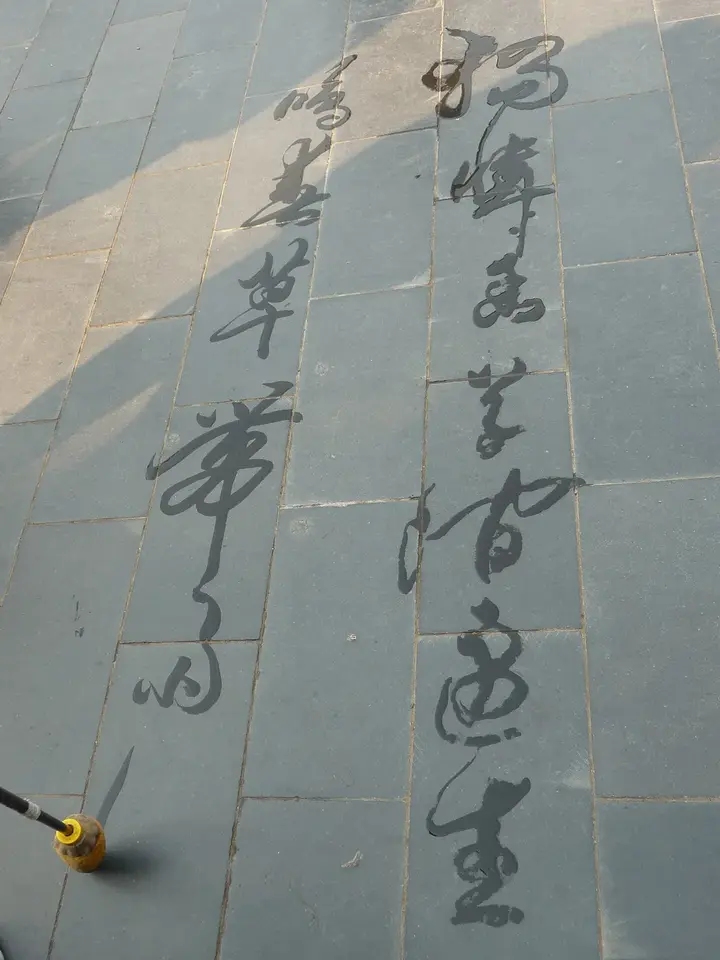
In 781, Emperor Dezong promoted Wei into the Department of State Affairs as Vice Director of the Bureau of Evaluations (and subsequently Director of the Left Bureau), auditing national revenues and ministerial accounts. In 783, he was dispatched as Prefect of Chuzhou. In Chuzhou, he governed with tranquility, reducing penal severities and encouraging sericulture. During moments away from public business, Wei walked alone along the secluded mountain streams west of the prefectural seat, immersing himself in pristine nature and composing his celebrated masterpiece West Stream at Chuzhou.
When the Jingyuan Mutiny erupted late in 783, forcing Emperor Dezong to flee to Fengtian, Wei looked northward toward the battlefields with sorrow, composing heartfelt poems expressing loyalty to the dynasty and anxiety for his siblings. In the autumn of 785, he was promoted to Grand Master for Court Dispersion and appointed Prefect of Jiangzhou. At Jiangzhou, bordering the scenic splendor of Mount Lu and the Yangtze River, his poetic artistry reached mature perfection. Masterpieces such as Sent to Li Dan and Yuan Xi and Watching the Farming Families harmonized profound social concern with sublime, unadorned aesthetic clarity.
In 788, in recognition of his spotless administrative record, Emperor Dezong appointed Wei Prefect of Suzhou, the economic and cultural hub of Jiangnan, conferring upon him the hereditary title of Dynastic Baron of Fufeng with three hundred households. Arriving in the bustling commercial metropolis, Wei maintained his frugal lifestyle, lowering local levies, dredging regional canals, and supporting rural silkworm cultivators. The local populace loved him as a parental benefactor, celebrating his memory as "Wei Suzhou".
In the autumn of 790, weakened by age and recurring illness, Wei resigned his magistracy. Having never accumulated private fortune or acquired land during his long official career, he lacked even the financial means to travel back to his ancestral estate in Chang'an. Taking his youngest daughter with him, he took up residence in a modest guest room within the Yongding Monastery outside Suzhou. There, he spent his final months in Buddhist meditation, writing verse and conversing with monastic scholars. In the autumn of 791, Wei Yingwu passed away peacefully at the age of fifty-five. His young daughter died of grief within the same month. His remains were later escorted back to the family cemetery at Shaoling Plain outside Chang'an, revered by posterity as a paragon of scholarly purity and administrative virtue.
Wei Yingwu's greatest monument in Chinese literary history was his expansion and perfection of the landscape and pastoral poetic tradition. While Six Dynasties poets Tao Yuanming and Xie Lingyun established the genres of rural retreat and mountain verse, and High Tang masters Wang Wei and Meng Haoran elevated them through Buddhist emptiness and natural grace, Wei Yingwu wrote amidst the turbulent collapse of the post-rebellion era. He synthesized Confucian civic responsibility, Daoist naturalism, and Chan serenity into the celebrated "Wei Suzhou Style".
Traditional critics grouped him with Wang Wei, Meng Haoran, and Liu Zongyuan as the Four Great Landscape Poets of the Tang (Wang Meng Wei Liu). Song Dynasty master Su Shi characterized Wei's verse as "radiating delicate richness from archaic simplicity, conveying profoundest flavor through quiet restraint." Song theorist Yan Yu in Canglang Shihua established an independent category for the "Wei Suzhou Style." His immortal poem West Stream at Chuzhou—capturing yellow warblers calling from lush groves, late mountain rains swelling spring tides, and a deserted ferryboat drifting idly across the stream—is universally hailed as one of the supreme achievements of seven-character quatrains in Chinese literature.
Unlike recluse poets who observed rural life as detached aesthetic spectators, Wei Yingwu was a dedicated frontline administrator across numerous prefectures and counties, including Luoyang, Gaoling, Hu County, Chuzhou, Jiangzhou, and Suzhou. Throughout his thirty-year career, he made administrative leniency and protection of vulnerable farmers his cardinal tenets, refusing to impose unauthorized exactions to curry imperial favor.
Faced with severe central tax quotas and regional militarist pressures, Wei regularly risked his career to protect impoverished peasants, remitting arrears and granting tax reprieves during famine years. In his celebrated poem Sent to Li Dan and Yuan Xi, he lamented with touching humility: "Afflicted with frequent illness, my heart yearns for the rustic fields; seeing refugees flee our county, I feel ashamed to receive my official salary." This profound civic conscience elevated his landscape poetry into an enduring testament to humanitarian statecraft.
Wei Yingwu's enduring devotion to his wife Lady Yuan Ping constitutes one of the most moving chapters in classical Chinese literature. Yuan Ping, a descendant of the Northern Wei imperial house, shared twenty years of hardship with Wei following the An Lushan Rebellion, bearing two sons and two daughters before dying prematurely in 776. Deeply devastated, Wei never remarried.
Expressing his grief, he personally composed the stone epitaph Epitaph of the Late Lady Yuan of Henan alongside poignant elegiac poems such as Grief Expressed to an Old Friend and Staying Overnight in a Desolate Chamber Outside the Pass. Southern Song critic Liu Kezhuang observed in Houcun Shihua that in elegiac literature, Pan Yue of the Jin was matched only by Wei Yingwu of the Tang. Casting aside ornamental rhetoric, Wei expressed his sorrow through plain, understated descriptions of everyday domestic life, pioneering a new aesthetic of authentic grief in Chinese mourning verse.
Beyond landscape serenity, Wei's traumatic experience of the rebellion infused his ancient-style ballads with acute social realism. In satirical poems such as Watching the Farming Families, The Jade Collector, and The Flower Seller, he laid bare the exploitation of commoners by imperial taxes and corrupt officials.
In Watching the Farming Families, he juxtaposed the ceaseless toil of farmers following the first thunder of spring with the predatory extortion of tax collectors who seized their last grain. This commitment to using classical ballads to expose injustice directly inspired the subsequent New Yuefu Movement launched by Bai Juyi and Yuan Zhen. Bai Juyi revered Wei, placing him on equal footing with Tao Yuanming and consciously emulating his administrative and poetic conduct.
Wei Yingwu's poetic output was widely celebrated and transcribed throughout his lifetime. In the Tang Dynasty, his works circulated in multiple editions, surviving today in the ten-fascicle Wei Jiangzhou Ji, the two-fascicle Wei Suzhou Shiji, and the ten-fascicle Wei Suzhou Ji. The Ming Dynasty compilation Complete Tang Poems (Quan Tangshi) preserves 568 of his poems, spanning ancient verse, regulated lines, quatrains, and ballads.
Qing scholar Wang Shizhen praised him as a core model of the "Divine Rhyme" (Shenyun) theory of poetry, while Shen Deqian acclaimed his five-character ancient verse as possessing "archaic elegance and effortless poise, creating an unrivaled style of its own." The discovery in modern Xi'an of both Wei Yingwu's stone epitaph and that of his wife has provided invaluable empirical confirmation of his personal integrity and profound literary legacy.
FIGURES ASSOCIATED WITH THIS DYNASTY