魏承班
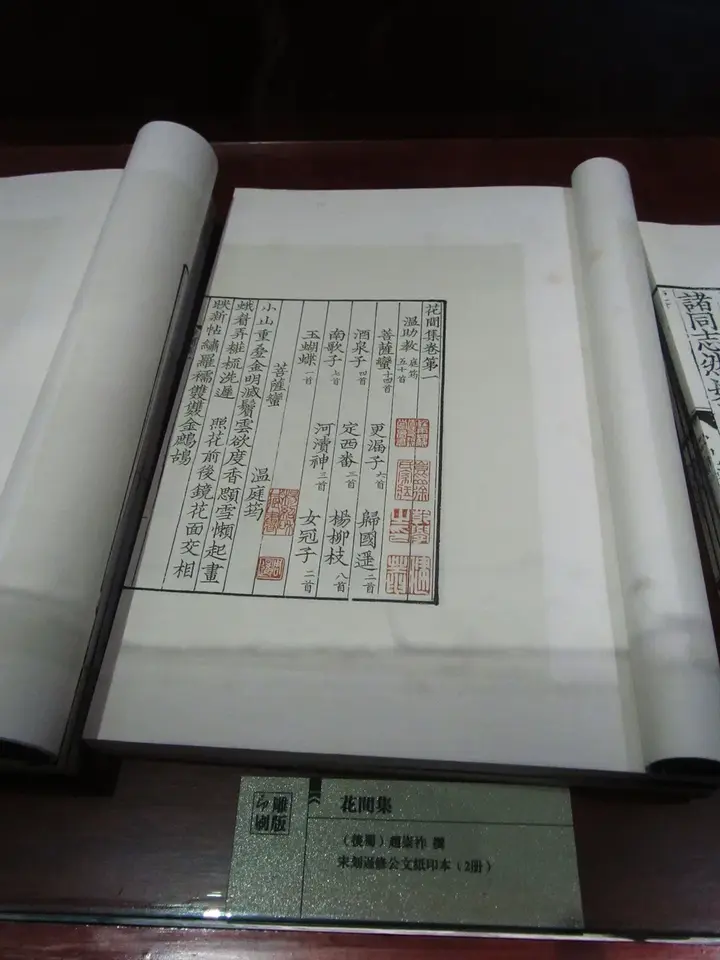
Classical woodblock edition / text (Huajian Faction)
Image credits猫猫的日记本 · CC BY-SA 3.0Image source

Historical figure

Wei Chengban (魏承班)

魏承班

Wei Chengban (魏承班, ?–926), a native of Xuzhou (modern Xuchang, Henan), was a prominent imperial relative, senior court official, and distinguished lyric poet of the Former Shu dynasty during the Five Dynasties period, and an important master of the Huajian School. His father, Wei Hongfu, was adopted as a foster son by Founding Emperor Wang Jian of Former Shu, granted the imperial surname Wang, renamed Wang Zongbi, and…

Era not stated

PROFILE

Wei Chengban (魏承班, ?–926), a native of Xuzhou (modern Xuchang, Henan), was a prominent imperial relative, senior court official, and distinguished lyric poet of the Former Shu dynasty during the Five Dynasties period, and an important master of the Huajian School. His father, Wei Hongfu, was adopted as a foster son by Founding Emperor Wang Jian of Former Shu, granted the imperial surname Wang, renamed Wang Zongbi, and ennobled as Prince of Qi, serving as Chancellor and wielding supreme state power. Because of his family's exalted status, Wei Chengban married a Former Shu princess and was appointed Commandant-Escort, subsequently rising under the Last Sovereign Wang Yan to the supreme ministerial post of Defender-in-chief. During the decadent final years of Former Shu under Wang Yan, the central court succumbed to administrative corruption and self-indulgence. In late 925, Emperor Zhuangzong of Later Tang dispatched Prince Li Jiji and General Guo Chongtao to conquer Shu, causing Former Shu frontier defenses to disintegrate rapidly. Seeking to preserve his own power, Wei Chengban's father, Wang Zongbi, launched a treacherous palace coup, seizing Emperor Wang Yan, the imperial family, and state treasuries before opening the gates of Chengdu to surrender to Later Tang forces. Wang Zongbi attempted to leverage the captive emperor to demand appointment as Military Governor of Western Sichuan. Disgusted by his disloyalty and greed, Later Tang commander Guo Chongtao executed Wang Zongbi and his sons in Chengdu in January 926, and Wei Chengban was executed alongside his family. Despite his tragic political demise, Wei Chengban achieved enduring literary fame through his lyric poetry. Fifteen of his poems were anthologized in Zhao Chongzuo's Among the Flowers (Huajian ji) (with twenty-one surviving across broader compilations). Renowned for lush elegance, delicate depictions of boudoir romance, and harmonious musical cadence, his verse was praised by the Jin-Yuan literary master Yuan Haowen for possessing "pure and luminous conception without straining after artificial effect."

Ancestral Home
Xuzhou (present-day Xuchang, Henan)
Date of Death
January 926 (12th Month, 3rd Year of the Tongguang Era, Later Tang / 1st Year of the Xiankang Era, Former Shu)
Highest Office
Defender-in-chief, Commandant-Escort
Historical Identity
Former Shu imperial relative, eminent Five Dynasties lyric poet, master of the Huajian School

LIFE TIMELINE

Relationship graph

BIOGRAPHY

Chronology

  • 895 (Around the Qianning Era) | Birth into Military Lineage | Born into a military family in Xuzhou; followed his father Wei Hongfu (Wang Zongbi) into Sichuan.
  • 907 (1st Year of the Wucheng Era) | Imperial Clan Status | Wang Jian founded Former Shu, adopting his father as a royal prince; the family attained exalted court status.
  • 918 (1st Year of the Qiande Era) | Imperial Marriage | Married an imperial princess of Former Shu; appointed Commandant-Escort, participating in inner court banquets.
  • 920 (2nd Year of the Qiande Era) | Elevation in Rank | Acclaimed for lyrical brilliance; promoted through court ministries, eventually attaining Defender-in-chief.
  • 925 (9th Month, 3rd Year of the Tongguang Era) | Later Tang Invasion | Later Tang armies launched a multi-pronged assault on Former Shu, quickly breaching mountain passes.
  • 925 (11th Month, 3rd Year of the Tongguang Era) | Treacherous Coup | Assisted his father in seizing Emperor Wang Yan and the palace before surrendering Chengdu to the invaders.
  • 926 (12th Month, 3rd Year of the Tongguang Era) | Execution in Chengdu | General Guo Chongtao executed Wang Zongbi and his sons for high treason; Wei Chengban perished with his clan.
  • 940 (3rd Year of the Guangzheng Era) | Anthologized in Huajian | Fifteen of his lyric poems were included in Among the Flowers (Huajian ji), preserving his artistic legacy.

Life and Career

Lineage Background and Imperial Alliance

Wei Chengban's family originally hailed from Xuzhou in Henan, belonging to the Zhongwu military commandery. Amid the devastating Huang Chao Rebellion at the end of the Tang Dynasty, his father Wei Hongfu followed regional warlord Wang Jian into Sichuan. In building his regional regime, Wang Jian adopted valiant military commanders as foster sons to secure their personal loyalty, granting Wei Hongfu the imperial surname Wang and renaming him Wang Zongbi. Wang Zongbi rendered distinguished battlefield service in the founding of Former Shu, rising to Chancellor and Prince of Qi.

Raised in the affluent culture of Chengdu, Wei Chengban received a refined classical education while immersing himself in the flourishing musical entertainment culture of the Sichuan court. Gifted with an intuitive command of musical meter and elegant diction, he cut a dashing figure in metropolitan society. Given his illustrious family pedigree and personal charm, he was selected by the imperial house to marry a Former Shu princess, receiving the commission of Commandant-Escort. In this capacity, Wei Chengban enjoyed intimate access to the inner palace, frequently composing lyrics for court banquets that were widely performed by palace musicians.

Aristocratic Splendor and Lyrical Production

Following the accession of the young emperor Wang Yan, the Former Shu court abandoned itself to lavish pageantry, hunting excursions, and nocturnal revels. In imperial pleasure grounds such as the Xuanhua Garden and Yishen Pavilion, Wang Yan hosted endless banquets, commanding scholar-courtiers and courtesans to exchange newly tuned songs. As an imperial son-in-law and acknowledged master of verse, Wei Chengban served as a constant companion on these excursions, producing a prolific stream of song lyrics.

Wei Chengban's verse inherited the lush, ornate style of late Tang master Wen Tingyun, yet introduced a flowing structural grace of his own. Whether depicting the sorrow of parted lovers in secluded chambers or celebrating the sparkling silk attire of banqueters, his diction was luminous and melodious. Within Former Shu, from the emperor and imperial consorts down to tavern musicians, his works were revered as exemplary models of Western Sichuan lyricism. In recognition of his favor, Wang Yan elevated him through high ministerial ranks, ultimately appointing him Defender-in-chief, the summit of bureaucratic prestige.

Dynastic Collapse and Bloody Fall in Chengdu

However, the self-indulgence of Former Shu proved fragile before the veteran armies of the north. In the autumn of 925, Emperor Zhuangzong of Later Tang launched an invasion of Sichuan commanded by Prince Li Jiji and Privy Councilor Guo Chongtao. The demoralized Former Shu armies collapsed at the mountain passes, and northern cavalry quickly advanced to the outskirts of Chengdu.

Confronted with the collapse of the realm, Wei Chengban's father, Wang Zongbi, showed no inclination to defend the state. Instead, he organized an armed coup within the capital, seizing Emperor Wang Yan, the empress dowager, and the imperial treasury. Wang Zongbi then dispatched envoys to offer submission to Later Tang, claiming credit for bloodlessly surrendering the city while demanding appointment as Military Governor of Western Sichuan. Wei Chengban was drawn into this treacherous political maneuver alongside his father.

Upon entering Chengdu, Later Tang commander Guo Chongtao was repulsed by Wang Zongbi's treachery and greed. Guo Chongtao condemned him openly: "Wang Zongbi held supreme office as chancellor and general, enjoying the richest honors of Shu; unable to die for his dynasty, he plotted to betray his sovereign for personal gain, marking him as a traitor to the realm!" In January 926 (the 12th month of Tongguang 3), Guo Chongtao ordered the immediate execution of Wang Zongbi and his sons outside the Chengdu military headquarters. Wei Chengban was beheaded alongside his father and brothers, bringing a violent end to the aristocratic poet.

Major Achievements

Master of Romantic Elegance in the Huajian School

Wei Chengban's enduring reputation rests entirely upon his poetic artistry. When Zhao Chongzuo compiled Among the Flowers (Huajian ji) in Later Shu, he anthologized fifteen of Wei Chengban's poems, while modern anthologies collect twenty-one surviving works. His poetic style was characterized by rich romantic coloring, capturing the subtle emotions of parting lovers while preserving clarity of thought. Jin-Yuan literary giant Yuan Haowen evaluated his corpus in Zhongzhou Ji, declaring: "The lyrics of Wei Chengban are all expressions of romance; their core conception is bright and clear, avoiding the strain of artificial competition."

Masterpieces of Boudoir Longing: Yugezi and Su Zhongqing

Wei Chengban excelled in rendering the inner world of women through delicate psychological description. His acclaimed lyric Yugezi (Willows Like Eyebrows) opens: "Willows resemble eyebrows, clouds resemble hair; delicate silks envelop fragrant snow. Startled from dreams, the water-clock falls silent; outside the window, morning orioles chirp beneath the fading moon. So much love, nowhere to speak; blossoms fall and willow catkins drift at the Qingming Festival. The youthful gallant departs so lightly; once gone, all letters are cut off." The verse captures the melancholic passing of youth with musical lightness. Furthermore, his sequences to Su Zhongqing and Shengchazi set benchmarks for delicate romantic verse in the Five Dynasties.

Aristocratic Perspective and Court Pageantry

Unlike commoner poets who imagined court life from afar, Wei Chengban wrote from the lived experience of an imperial son-in-law and Defender-in-chief. His twin pieces to the tune Yulouchun portray royal music halls with documentary precision: "Lightly furrowing jade eyebrows to reveal pearl-white teeth, orioles warble from within the shadows of blossoms. Note by note, clear and distant, halting the passing clouds; silently, dark dust stirs along the painted rafters." These works possess both refined aesthetic charm and unique documentary value for understanding late Tang and Five Dynasties court culture.
Relationships

  • Father: Wei Hongfu (Wang Zongbi,?–926), Former Shu Chancellor and Prince of Qi, executed by Guo Chongtao following the conquest of Shu.
  • Father-in-law: Wang Jian (847–918), Founding Emperor of Former Shu, who granted the family the royal surname Wang and chose Wei Chengban as imperial son-in-law.
  • Imperial Sovereign: Wang Yan (901–926), Last Sovereign of Former Shu, who elevated Wei Chengban to Defender-in-chief.
  • Executing General: Guo Chongtao (865–926), Later Tang commander who ordered the execution of Wang Zongbi and Wei Chengban for treason.
  • Anthologist: Zhao Chongzuo, Later Shu official who preserved fifteen of Wei Chengban's poems in Among the Flowers (Huajian ji).

Historical Evaluations

  • Yuan Haowen, Zhongzhou Ji: "The lyrics of Wei Chengban are all expressions of romance; their core conception is bright and clear, avoiding the strain of artificial competition."
  • Zhao Chongzuo, Among the Flowers (Huajian ji), Vol. 6: "The lyrics of Defender-in-chief Wei are ornate, dense, and melodious. In expressing love, they flow like clear springs over jade, stirring the depths of the heart."
  • Chen Tingzhuo, Remarks on Ci from the White Rain Studio: "Wei Chengban's verse is as exquisitely wrought as that of Wen Feiqing, yet possessed of a more flowing brushwork. In Yugezi, the poetic imagery is natural and free from contrivance."
  • Wu Renchen, Spring and Autumn Annals of the Ten Kingdoms, Vol. 43: "Wang Zongbi harbored treacherous cunning, bringing execution upon his lineage; that Wei Chengban, with all his romantic talent, was dragged to the yellow springs beside him is truly lamentable!"

Related Entries

  • Among the Flowers (Huajian ji)
  • Wang Zongbi
  • Wang Jian
  • Wang Yan
  • Guo Chongtao
  • Yugezi
  • Former Shu

FIGURES ASSOCIATED WITH THIS DYNASTY

Bibliography

  • New History of the Five Dynasties, Vol. 63, "Hereditary Families: Former Shu"
  • Old History of the Five Dynasties, Vol. 71, "Imperial Lineage Biographies: Wang Zongbi"
  • Spring and Autumn Annals of the Ten Kingdoms, Vol. 43, "Biographies: Wang Zongbi and Wei Chengban"
  • Zizhi Tongjian, Vol. 274, "Later Tang Chronicle III"