Birth in Yangzhou
Born into poverty in Jiangdu County, losing his father at age seven.
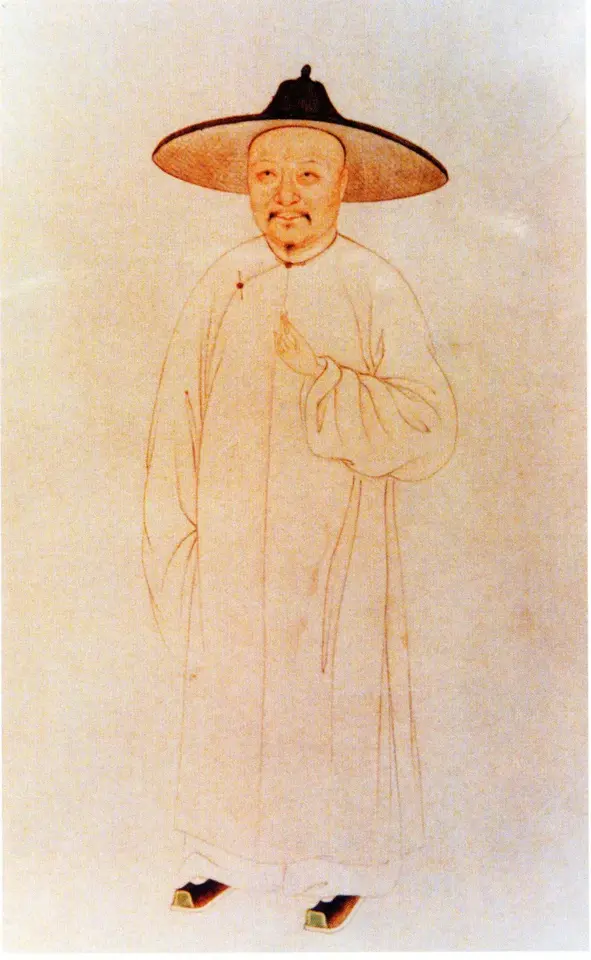
汪中
Wang Zhong (汪中, January 15, 1745 – December 11, 1794), courtesy name Rongfu, was a preeminent scholar, thinker, evidential philologist, and prose stylist of the mid-Qing dynasty, originating from Jiangdu, Yangzhou. Universally acclaimed as the foremost master of parallel prose of the Qing era and a central thinker of the Yangzhou School, he was orphaned at age seven in destitution, learning classical primers from his mother…
Wang Zhong (汪中, January 15, 1745 – December 11, 1794), courtesy name Rongfu, was a preeminent scholar, thinker, evidential philologist, and prose stylist of the mid-Qing dynasty, originating from Jiangdu, Yangzhou. Universally acclaimed as the foremost master of parallel prose of the Qing era and a central thinker of the Yangzhou School, he was orphaned at age seven in destitution, learning classical primers from his mother before serving as an apprentice in a local bookstore at fourteen, where he devoured ancient histories and philosophers. At age twenty-seven, his tragic masterpiece Lament for the Salt Boats stunned the literary world, prompting scholar Hang Shijun to celebrate it as heartbreaking and worth a thousand pieces of gold per word. A disciple of Gu Yanwu practical statecraft, Wang Zhong broke through orthodox conventions, challenging Song neo-Confucian orthodoxy by writing Discourse on Xunzi and Preface to Mozi, elevating Mozi as a benevolent savior and Xunzi as the true transmitter of the Five Classics, an intellectual stance that anticipated modern Chinese enlightenment thought. After obtaining his senior licentiate degree in 1777, he shunned bureaucratic office, serving as private secretary to governors Zhu Yun and Bi Yuan, managing the imperial collection at the Wenhui Pavilion, and proofreading the Siku Quanshu at the Wenzong and Wenlan pavilions. He succumbed to exhaustion at age fifty in Hangzhou, leaving behind his seminal philosophical collection In Pursuit of Learning.
Born into poverty in Jiangdu County, losing his father at age seven.
Entered a bookstore as an apprentice, reading voraciously across classical canons.
Ranked first in the Yangzhou prefectural examination with Rhapsody on Shooting Geese.
Composed Lament for the Salt Boats, hailed as an immortal masterpiece by Hang Shijun.
Selected as senior licentiate, subsequently declining imperial examinations to serve his mother.
Served as secretary in the secretariats of Zhu Yun, Shen Yefu, and Feng Tingcheng.
Assisted in compiling Grand Records of the Southern Imperial Tours in Nanjing.
Appointed to proofread the imperial Siku Quanshu manuscripts at Wenzong Pavilion.
Traveled while ill to proofread the Wenlan Pavilion collection, dying in a West Lake monastery.
Wang Zhong was born on January 15, 1745, in Jiangdu County within the prosperous commercial prefecture of Yangzhou. His ancestral roots traced back to She County in Huizhou, though his forebears had long settled in Yangzhou. In 1751, when Wang Zhong was seven years old, his father died prematurely, leaving the household destitute. Without funds to afford formal private tutoring, the boy relied entirely on his widowed mother, Madame Zou, who sustained the family by sewing cloth shoes late into the night while chanting verses from the Book of Songs and the Zuo Tradition to tutor her son.
By 1759, when family poverty worsened, fourteen-year-old Wang Zhong was apprenticed to an antique bookstore in urban Yangzhou. This hardship became an intellectual turning point. Surrounded by mountains of rare books, the adolescent laborer spent every spare moment voraciously reading, absorbing the Thirteen Classics, pre-Qin philosophers, dynastic histories, and geographical gazetteers. Endowed with near-photographic memory, he emerged from the bookshop with encyclopedic learning, inspiring the local adage that there was no book left unread by Wang Zhong.
In 1763, nineteen-year-old Wang Zhong sat for the prefectural examination, composing the brilliant Rhapsody on Shooting Geese. His paper outshone hundreds of competitors, earning him first rank and admitting him to the local government academy. However, subsequent provincial examinations repeatedly ended in failure. Recognizing that civil service exams wasted creative intellect, he renounced the civil examination system in 1768 to dedicate his life to philological evidential scholarship.
In 1771, a horrific maritime catastrophe occurred on the Yangtze River near Yizheng, where an accidental fire ignited hundreds of crowded salt boats. Trapped by river gales, hundreds of civilian boatmen burned or drowned amidst screams and floating debris. The twenty-seven-year-old Wang Zhong, witnessing the horror firsthand, composed the immortal Lament for the Salt Boats. Written in majestic Han-Wei parallel prose, the elegy portrayed the cataclysm with unvarnished compassion. Imperial scholar Hang Shijun wept upon reading it, praising it as heartbreaking prose worth a thousand pieces of gold per character. Leading literati Zhu Yun and Zheng Huwen acclaimed him as a singular genius, catapulting his literary fame across China.
In 1777, Wang Zhong was selected as senior licentiate of Yangzhou Prefecture. Although this credential entitled him to sit for metropolitan appointments in Beijing, he refused to abandon his aging mother and remained a lifelong commoner. To earn a livelihood, he joined the secretariats of prominent regional dignitaries, including Anhui Education Commissioner Zhu Yun, Taiping Prefect Shen Yefu, and Ning-Shao-Tai Circuit Intendant Feng Tingcheng. Zhu Yun, a leading patron of evidential scholarship, treated Wang Zhong with boundless courtesy. In these secretariats, Wang Zhong gained access to rare imperial editions and forged deep intellectual ties with leading scholars Wang Niansun, Liu Taigong, Jiang Deliang, and Ling Tingkan.
In 1783, when the Qianlong Emperor undertook his final southern inspection tour, an editorial bureau was opened in Nanjing to compile Grand Records of the Southern Imperial Tours. Wang Zhong joined the bureau as an expert consultant, collating geographical landmarks, administrative codes, and historical precedents. In 1788, Salt Commissioner Quan De established the Wenhui Pavilion at Tianning Temple in Yangzhou to store the imperial copy of the Siku Quanshu, appointing Wang Zhong as director of the collection.
In 1790, after imperial censors discovered numerous transcription errors within the southern imperial copies of the Siku Quanshu, provincial governors sought out elite philologists for systematic revision. Wang Zhong was dispatched to the Wenzong Pavilion at Jinshan Temple in Zhenjiang, where he spent months scrutinizing thousands of volumes against Song and Yuan editions, inserting hundreds of critical annotations. A passionate bibliophile, he housed tens of thousands of rare volumes in his private library, the Studio for Inquiring into Principles, where he studied surrounding himself with bronze and stone inscriptions.
Wang Zhong possessed a fiery, uncompromising personality, openly expressing contempt for hypocritical bureaucrats and dogmatic pedants. During his studies at the Anding Academy, whenever a newly appointed academy director arrived, Wang Zhong would approach carrying obscure classical questions; if the director hesitated or failed to answer, Wang Zhong would laugh boisterously and walk away. He famously proclaimed that in all of Yangzhou, only three scholars truly understood classical learning: Wang Niansun, Liu Taigong, and himself. Yet beneath his acerbic exterior lay profound empathy for vulnerable outcasts, courtesans, and impoverished scholars.
Exhausted by childhood malnutrition and decades of nocturnal study, Wang Zhong suffered from chronic pulmonary bleeding and insomnia. In late 1794, despite worsening sickness, he accepted an invitation from Zhejiang officials to travel to Hangzhou to inspect the Siku Quanshu at the Wenlan Pavilion on Solitary Hill. Battling cold winter storms, his health collapsed, and he passed away on December 11, 1794, inside a monastic lodging on Geling Hill at West Lake, at the age of fifty. News of his death plunged the cultural community of Jiangnan into grief; scholars gathered at West Lake to hold memorial ceremonies, with Ruan Yuan inscribing an honorific plaque praising his virtue and Li Zhaoluo presenting an elegy. In 1812, Yangzhou Prefect Yi Bingshou renovated his tomb, erecting the stele Tomb of Qing Scholar Wang.
Wang Zhong most celebrated literary accomplishment was revitalizing classical parallel prose, establishing himself as the undisputed master of the genre during the Qing dynasty. For centuries, parallel prose had been dismissed by the Tang-Song essayists as decadent wordplay suited only for ceremonial flattery. Drawing direct inspiration from Han, Wei, and Six Dynasties masters, Wang Zhong restored archaic vigor and philosophical depth to the form.
His masterpiece Lament for the Salt Boats dismantled the taboo that parallel prose could not record raw human suffering, painting the agony of ordinary boatmen with searing realism. In In Mourning for Ma Shouzhen, he mourned a late Ming courtesan to challenge repressive patriarchal moral codes; in Lament for Huang Zu, he mourned third-century scholar Mi Heng to voice anger against the neglect of intellectual genius; and in Praise of the Thief of Hufu, he defended righteous outlaws against corrupt elites. His Spirit Stele for My Late Mother Madame Zou expressed filial grief with heartbreaking sincerity. Scholar Liu Taigong celebrated his prose as linking classical canons with Han-Tang grandeur, creating a timeless stylistic monument.
As a pillar of the Yangzhou School of evidential scholarship, Wang Zhong excelled in discovering universal interpretive principles across classical Chinese literature. Rather than accumulating isolated textual variants, he formulated systematic linguistic rules that resolved ancient philological puzzles.
In his groundbreaking treatises Explaining Three and Nine and Explaining Three, Six, and Nine, Wang Zhong conducted statistical analyses across dozens of pre-Qin and Han texts, proving that numerals such as three, nine, and thirty-six were rarely literal numbers, but rather rhetorical conventions used by ancient authors to denote multiplicity or supreme magnitude. This linguistic discovery emancipated Chinese philology from mystical numerology and speculative cosmological readings. His primary scholarly treatise, In Pursuit of Learning in six volumes, tackled ancient mourning rituals, patriarchal lineage structures, and historical geography, prompting Wang Yinzhi to praise him for deriving truth directly from ancient models.
In intellectual history, Wang Zhong was a daring philosophical iconoclast who challenged centuries of Song neo-Confucian dogmatism. While orthodox Confucianism elevated Mencius and dismissed other pre-Qin schools as heretical, Wang Zhong authored Preface to Mozi and Comprehensive Discourse on Xunzi, launching the modern revival of pre-Qin philosophy.
In Preface to Mozi, Wang Zhong celebrated Mozi as an authentic benevolent sage of the ancient world, demonstrating that universal love and anti-aggression doctrines were vital responses to Warring States chaos, while refuting Mencius slander that Mozi lacked filial piety. In Comprehensive Discourse on Xunzi, he traced the lineage of the Five Classics, proving that Han classical scholarship derived entirely from the teachings of Xunzi rather than Mencius. He boldly advocated honoring Confucius and Xunzi alongside each other, directly subverting Song neo-Confucian orthodoxy. Though condemned by conservative contemporaries as an enemy of moral orthodoxy, his iconoclasm was later recognized by Liang Qichao and Hu Shih as a foundational milestone in modern Chinese intellectual enlightenment.
Throughout his career, Wang Zhong contributed to the preservation and collation of rare Chinese texts. During his assignments at the Wenzong and Wenlan pavilions, he systematically examined the Siku Quanshu manuscripts, identifying thousands of transcription errors across ancient historical and philosophical editions, preserving the textual integrity of the imperial encyclopedia.
Furthermore, out of love for his regional heritage, he dedicated years to researching the historical geography of Yangzhou, producing the ten-volume Comprehensive Records of Guangling, alongside monographs such as Table of the Qin Ingestion of the Six States and Investigation into the Maps of Jinling. His personal library, the Studio for Inquiring into Principles, preserved dozens of unique Song and Yuan editions that were subsequently passed down to modern research institutions, providing vital historical resources for late imperial historiography.
FIGURES ASSOCIATED WITH THIS DYNASTY