Elite Birth
Born into the illustrious scholar-official Wang family of Taicang, Jiangsu, as the grandson of painting master Wang Shimin.
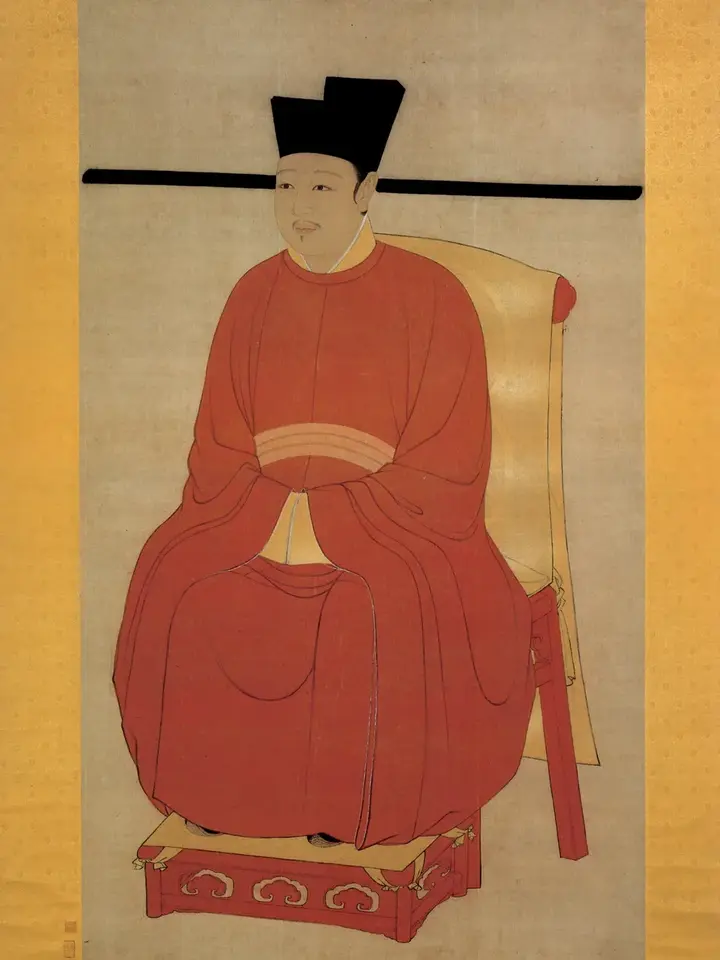
王原祁
Wang Yuanqi was an eminent court scholar-official, imperial connoisseur, and dominant landscape painter during the Kangxi reign of the Qing dynasty. He was the youngest yet most accomplished master among the orthodox "Four Wangs" (Wang Shimin, Wang Jian, Wang Hui, and Wang Yuanqi) and is numbered among the "Six Masters of the Qing Period" alongside Wu Li and Yun Shouping. He was also the founder and foremost exponent of the…
Wang Yuanqi was an eminent court scholar-official, imperial connoisseur, and dominant landscape painter during the Kangxi reign of the Qing dynasty. He was the youngest yet most accomplished master among the orthodox "Four Wangs" (Wang Shimin, Wang Jian, Wang Hui, and Wang Yuanqi) and is numbered among the "Six Masters of the Qing Period" alongside Wu Li and Yun Shouping. He was also the founder and foremost exponent of the influential Loudong School of painting, which dominated Chinese literati art for three centuries. He hailed from the prestigious Wang clan of Taicang and was the grandson of the early Qing painting master Wang Shimin. Passing the imperial examinations as a jinshi in 1670, Wang Yuanqi served as magistrate of Ren County in Zhili, supervising censor in the Office of Scrutiny for Punishments, and compiler in the Hanlin Academy. Appointed to the prestigious Southern Study (Nanshu Fang), he gained the deep trust and patronage of the Kangxi Emperor due to his artistic mastery and profound connoisseurship, eventually rising to Left Vice Minister of Revenue, commonly known as "Minister Wang" (Wang Sinong). At court, he served as chief editor of the monumental hundred-volume imperial compilation Peiwenzhai Shuhuapu (Catalogue of Calligraphy and Painting of the Hall of Admired Culture) and supervised the painting of the Wanshou Shengdian Tu (Illustrations of the Grand Birthday Ceremony), establishing the official stylistic canon for Qing court and literati landscapes. In his artistic practice, Wang inherited his grandfather's lineage, reinterpreting Yuan dynasty master Huang Gongwang and integrating Song and Yuan aesthetics. He formulated the influential structural theory of "dragon veins as substance, opening and closing as function" and advocated for an aesthetic positioned "between the raw and the ripe." Characterized by dry brushwork, burnt-ink layers, and a rich interplay of pale and dark washes, he famously claimed that his brush possessed the weight of an "indestructible diamond pestle." His work left an enduring imprint on Chinese art, consolidating the orthodox literati landscape tradition.
Born into the illustrious scholar-official Wang family of Taicang, Jiangsu, as the grandson of painting master Wang Shimin.
At age thirteen, hung his landscape painting on his studio wall; his grandfather mistook it for his own work and began personal instruction.
Passed the palace examination to obtain the jinshi degree, beginning his bureaucratic career as an observer in the Ministry of Personnel.
Appointed magistrate of Ren County, Zhili, dredging the Fu and Zhang rivers, relieving flood disasters, and obtaining permanent tax exemptions.
Promoted to supervising censor of punishments in Beijing, later transferring to compiler in the Hanlin Academy.
Ordered by imperial decree to authenticate ancient paintings in the palace collection, broadening his aesthetic vision.
Appointed Reader and Lecturer in the Hanlin Academy and admitted to the Southern Study; Kangxi frequently observed him paint.
Commissioned as chief compiler of the hundred-volume imperial art encyclopaedia Peiwenzhai Shuhuapu.
Commissioned to lead the execution of the monumental pictorial scroll Wanshou Shengdian Tu celebrating Kangxi's sixtieth birthday.
Elevated to Left Vice Minister of Revenue, managing imperial fiscal administration.
Died in Beijing at his official post at the age of seventy-four; bestowed state funeral honours and given the posthumous name Wenjing.
Wang Yuanqi was born in 1642 in Taicang, Changzhou Prefecture, Jiangsu Province. The Wang family of Taicang had been a premier gentry clan of Jiangnan since the Ming dynasty. His great-grandfather Wang Heng took second place in the imperial metropolitan examination, and his great-great-grandfather Wang Xijue served as Senior Grand Secretary in the Ming cabinet. His grandfather Wang Shimin was a preeminent cultural figure and painting master who held the post of Vice Minister of the Court of Imperial Sacrifices before retreating into scholarly seclusion following the Ming-Qing transition, establishing the Loudong lineage of literati landscape art.
Raised within an environment overflowing with classical scholarship, rare books, and genuine masterpieces of calligraphy and painting, Wang Yuanqi displayed an early fascination with landscape art. At the age of thirteen, he casually painted a small landscape scroll and pasted it onto his study wall. When Wang Shimin entered the room, he mistook the painting for an old draft of his own. Upon discovering that his thirteen-year-old grandson was the painter, Wang Shimin was astonishment and declared that the boy's talent would inevitably surpass his own. From that moment, Wang Shimin took his grandson under his direct tutelage, systematically instructing him in the styles of the Four Great Masters of the Yuan Dynasty—Huang Gongwang, Ni Zan, Wang Meng, and Wu Zhen—grounding the youth in deep classical brushwork.
In addition to mastering the brush, Wang excelled in classical examination learning. In 1670, at the age of twenty-nine, he passed the metropolitan and palace examinations to obtain the jinshi degree in the same cohort as his eighth paternal uncle, Wang Shan, bringing great honor to the Taicang Wang family. He was assigned to observe administrative affairs in the Ministry of Personnel and subsequently served as an associate examiner for the Shuntian provincial examinations, gaining distinction for fair and rigorous assessment.
In 1681, Wang was appointed magistrate of Ren County in Shunde Prefecture, Zhili (now Renze District, Xingtai, Hebei). Ren County was situated at the downstream convergence of nine northern river systems. Prolonged silt accumulation in the Fu and Zhang rivers frequently inundated fertile lands. Between 1684 and 1685, torrential autumn rains caused catastrophic river breaches, submerging farmlands and plunging local communities into famine.
As magistrate, Wang demonstrated remarkable practical administrative skill. He inspected the flooded marshlands in person and petitioned the governor-general and the imperial court, successfully securing a permanent waiver of over three thousand taels of silver in annual floodland taxes following precedents from the Huai-Yang canal zones. He mobilized local laborers to dredge the ancient river channels, constructed reinforced dykes, erected stone bridges to restore trade, opened public granaries to distribute relief grain, and suppressed banditry. His benevolent administration earned the lasting gratitude of local residents, who erected a shrine in his honor and had his tablet enshrined in the Ren County Temple of Eminent Officials in 1720.
In 1687, on account of superior performance ratings in Ren County, Wang was recalled to Beijing and promoted to supervising censor in the Office of Scrutiny for Punishments. In this surveillance post, he acted with impartiality. Recognizing his exceptional scholarly erudition, the court soon appointed him a compiler in the Hanlin Academy, assigning him to participate in the compilation of state histories.
In 1700, Wang's artistic and bureaucratic trajectory reached a major turning point. The Kangxi Emperor, who took a profound personal interest in Han Chinese literati painting, issued an imperial decree ordering trusted officials to authenticate and classify the imperial palace's vast collection of ancient calligraphy and paintings. Blessed with exquisite hereditary connoisseurship, Wang was appointed to examine and verify the imperial collection. Working within the Forbidden City, Wang enjoyed unfettered access to Song and Yuan masterpieces that had been hidden in palace vaults for centuries, expanding his artistic horizons and catalyzing the maturation of his personal style.
In 1704, Wang was elevated to Reader and Lecturer in the Hanlin Academy and officially admitted into the Southern Study. The Southern Study served as the emperor's private literary and political bureau, accessible only to intimate literati confidants. Kangxi held Wang's painting skills in extraordinary esteem. After morning audiences, the emperor would often visit the Southern Study, instructing Wang to unroll paper and paint while the emperor stood beside his desk watching him wield the brush. Kangxi personally wrote and bestowed upon Wang an imperial poetic couplet praising his spontaneous composition and mental mastery, elevating Wang to the undisputed leader of the imperial painting circle.
In 1705, the Kangxi Emperor ordered the establishment of an editorial bureau to compile an exhaustive reference work on the history, theory, and connoisseurship of Chinese calligraphy and painting. Wang was appointed chief editor alongside Sun Yueban, Song Junye, Wu Jing, and Wang Quan to direct the compilation of the Peiwenzhai Shuhuapu. Wang established the structural blueprint, organizing scholars to comb through 1,844 ancient and contemporary texts. Completed in 1708, the hundred-volume encyclopaedia stands as the most comprehensive historical compendium of Chinese visual art.
In 1711, in anticipation of the Kangxi Emperor's sixtieth birthday, the court undertook the creation of the monumental commemorative scroll Wanshou Shengdian Tu. Wang was again chosen to direct the project, overseeing overall compositional architecture and landscape rendering across dozens of meters of panoramic silk. The work immortalized the celebratory crowds, pavilions, and bridges along the imperial procession route from Changchun Garden to the Forbidden City.
Due to his steadfast administrative loyalty and artistic brilliance, Wang continued to rise through the upper echelons of the bureaucracy. In 1712, he was promoted to Left Vice Minister of Revenue, ranking among the second-tier dignitaries of the central empire. Scholar-officials respectfully addressed him as "Minister Wang" (Wang Sinong) or "Wang Lutai."
Despite his elevated ministerial standing, Wang remained dedicated to painting throughout his life. In his Beijing residence, he built a studio named the "Yanhualou" (Tower of Variegated Clouds), where he spent his leisure hours painting regardless of seasonal extremes.
In his final years, Wang's painting achieved an exalted state of spiritual harmony and structural density. Moving beyond direct emulation of ancient masters, he unified classical principles with personal expression. After the age of sixty, his brushwork developed an astringent, rugged maturity, skillfully combining ochre and malachite washes to create works hailed as divine masterpieces. However, decades of dual burdens—managing imperial finances and fulfilling court painting commissions—gradually took a heavy physical toll.
In 1715, Wang passed away in his Beijing residence while still serving in the Ministry of Revenue, at the age of seventy-four. The Kangxi Emperor deeply mourned his passing, granting imperial condolences, a standard state funeral, and the posthumous name Wenjing. Following his death, his disciples, including Tang Dai, Wang Jingming, and Zhang Zongcang, continued to serve in the imperial court, establishing the Loudong School's aesthetic canon as the official orthodox style of the Qing empire for generations.
Wang Yuanqi's most enduring cultural contribution was the founding and theoretical systematization of the Loudong School of painting. Hailing from Taicang (historically called Loudong), Wang Shimin and Wang Yuanqi built upon Dong Qichang's literati painting lineage to restore classical discipline to seventeenth-century Chinese art.
While Wang adhered strictly to ancestral canons in his youth, he achieved complete synthesis in his later years. He advocated that fine painting should reside "between the raw and the ripe," seeking qualities that were "ripe without sweetness, raw without awkwardness, pale yet substantial, solid yet translucent." In brushwork, he famously claimed that his brush held the weight of a "diamond pestle," emphasizing powerful bone-structure. He applied light ink outlines first, followed by successive layers of dry, scorched-ink rubs and washes repeated more than ten times. This technique transcended flat decorative coloring, lending his mountains and stones an imposing density and ancient dignity. Through his work, the Loudong School gained preeminence not only throughout Jiangnan but also within the imperial court, defining the standard of orthodox literati landscapes.
In 1705, Wang was commissioned by the Kangxi Emperor to serve as chief editor of the Peiwenzhai Shuhuapu. This hundred-volume compendium represents the crowning achievement of imperial Chinese art historiography.
Under Wang's editorial guidance, the compendium was organized into seven comprehensive divisions: imperial writings, calligraphy theory, painting theory, biographical records of calligraphers and painters, authenticated masterworks, collector colophons, and connoisseurship seals. The project systematically digested material from 1,844 classical historical works, private memoirs, gazetteers, and anthologies dating from antiquity through the late Ming dynasty. Wang applied his expertise to verify textual attributions and rectify historical inaccuracies. Published by the imperial palace in 1708, the work became an essential standard text for subsequent generations of art historians and collectors.
Wang was not only an exceptional landscape painter but also a profound art theorist. In treatises such as Yuchuang Manbi (Random Notes from a Rainy Window) and Lutai Tihua Gao (Inscriptions on Paintings from the Lutai Studio), he formulated groundbreaking concepts on spatial structure.
His most notable theoretical contribution was the introduction of the geomantic concept of "dragon veins as substance, opening and closing as function" into aesthetic analysis. Wang posited that a masterwork must possess internal rhythmic continuity and skeletal energy. The "dragon vein" referred to the dynamic flow and structural momentum connecting peaks, ridges, valleys, and waterways; "opening and closing" governed compositional balance between tension and release, void and solid, danger and stability. He asserted that every opening movement must have a corresponding closure, creating harmonious unity within complexity. This analytical framework elevated Chinese landscape composition from passive scenic reproduction to an abstract investigation of structural rhythm, prompting modern international scholars to draw parallels with the formal architectural analysis of Paul Cezanne.
In 1711, on the occasion of the Kangxi Emperor's sixtieth birthday, the court commissioned the creation of the Wanshou Shengdian Tu. Wang was appointed to direct the artistic execution of this monumental documentary project.
The scrolls depicted the entire imperial journey from the imperial suburban gardens of Yuanmingyuan and Changchun Garden back to the Forbidden City. Wang and his collaborators surveyed the imperial highway in detail, accurately rendering hundreds of ceremonial archways, pavilions, bridges, and thousands of celebrating imperial subjects, tributary envoys, and merchants. Wang integrated vast urban panoramas with natural landscapes, harmonizing imperial grandeur with literati brushwork. Later carved onto fine palace woodblocks and distributed across the empire, the work stands as a paramount achievement of Qing documentary court art.
FIGURES ASSOCIATED WITH THIS DYNASTY